
10 Cozy Bedroom Ideas to Turn Your Space into a Serene Haven
Turning your bedroom into a cozy haven is about much more than just buying a few throw pillows; it is about curating a personal sanctuary that serves as a barrier against the stress of the outside world. In interior design, we often talk about the concept of "visual quiet"—a space that feels comfortable, stylish, and deeply restorative. Whether you are an avid home decor enthusiast, a DIY lover, or someone simply looking to sleep better, transforming your space into a warm retreat is an achievable goal. By focusing on sensory details and strategic design choices, you can build a room that feels like a hug the moment you walk in. This comprehensive guide explores 10 essential ideas—from mastering the art of layering to selecting the perfect color temperature for your lighting—to help you craft the dreamy, relaxing bedroom you deserve.
BEDROOM
1. Layer Textures for Warmth
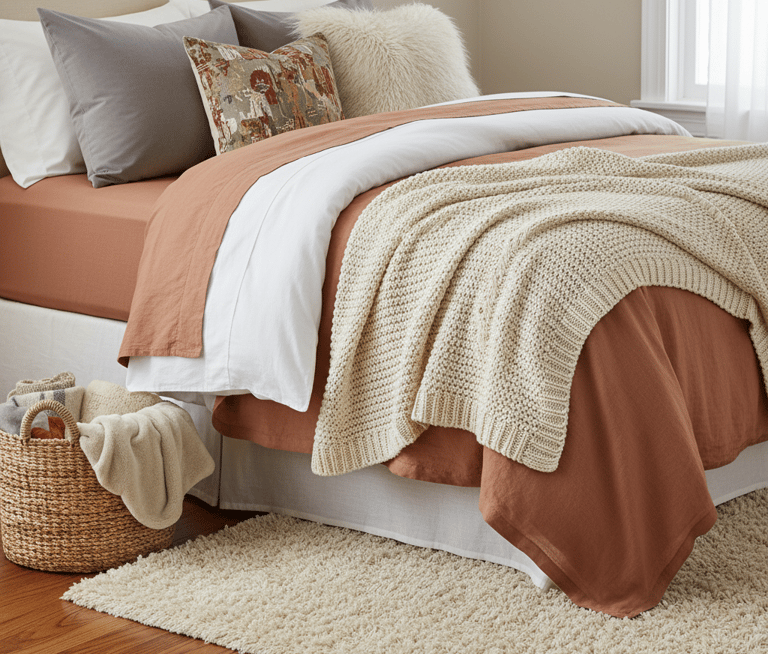
The secret to a truly cozy room isn't just about heat; it lies in the visual weight and tactile quality of its textures. "Flat" rooms often feel sterile or clinical. To fix this, you must introduce a rich variety of materials that catch the light differently and invite touch.
How to Style It: Think of texture as a recipe. You need a base, a middle, and a garnish.
The Base: Start with a smooth foundation, such as crisp percale sheets or a matte painted wall.
The Middle: Add a chunky knit throw blanket draped casually over the foot of the bed. This provides immediate visual weight.
The Garnish: Introduce cushions in contrasting fabrics. If your headboard is upholstered in linen, choose pillows in soft velvet or boucle. A sheepskin rug (faux or real) tossed over a wooden chair adds an organic softness that breaks up hard lines.
Real-World Examples:
Rustic Cozy: Pair a raw wood headboard with a chunky wool blanket and a burlap-style lampshade.
Modern Luxe: Mix a velvet duvet cover with silk pillowcases and a high-pile shag rug.
Pros and Cons:
Pro: Hides wear and tear. Textured fabrics often disguise wrinkles or small stains better than flat weaves.
Con: Dust accumulation. Heavily textured items like knits and faux fur tend to trap dust and require more frequent vacuuming or shaking out.
2. Embrace Warm Color Palettes
The colors you choose have a direct, psychological impact on the room's atmosphere. While cool blues and grays are often cited for sleep, they can sometimes feel chilly or detached. To create a cozy feeling, lean into warm, earthy, and enveloping color palettes that mimic nature.
Choosing Your Shade:
The New Neutrals: Move away from stark white. Look for "Greige" (beige + gray) or oatmeal tones. These reflect light softly without the harshness of pure white.
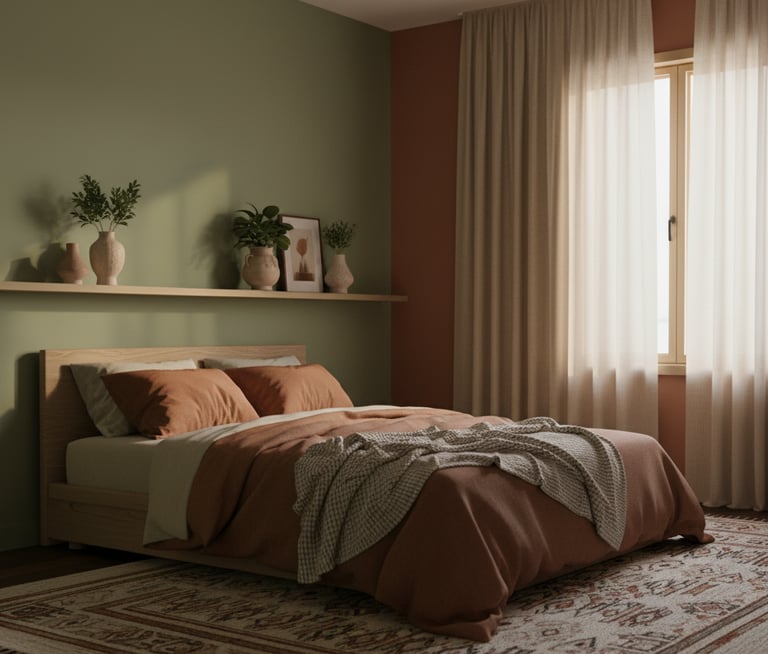
Deep and Moody: Don't be afraid of dark colors. A deep terracotta, muted rust, or a forest olive green can create a "cocoon" effect. When painted on all four walls (and even the ceiling!), these colors blur the boundaries of the room, making it feel intimate and secure.
Styling Tip: Follow the 60-30-10 Rule. Use your dominant warm neutral for 60% of the room (walls), a secondary earthy tone for 30% (bedding/rugs), and a metallic accent like brushed brass or copper for the final 10% to reflect the warmth.
Pros and Cons:
Pro: Emotional warmth. Warm colors are known to stimulate feelings of comfort and safety.
Con: Spatial perception. Darker, warmer colors can make a small bedroom feel smaller. To combat this, ensure you have adequate lighting.

3. Soft Lighting for Ambiance
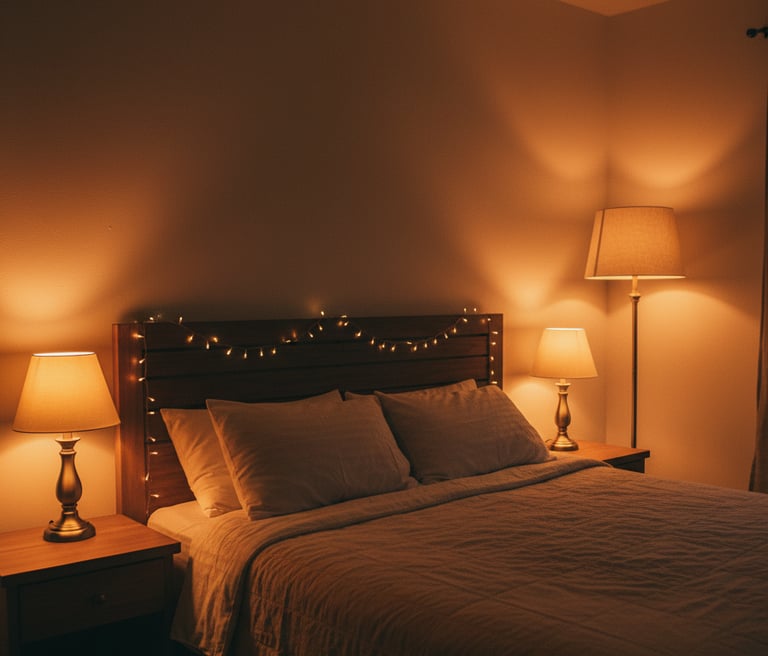
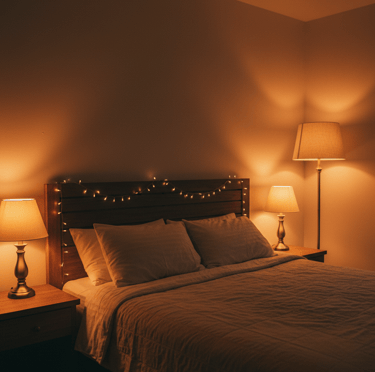
Nothing ruins a cozy vibe faster than a single, harsh overhead light. The "big light" is the enemy of relaxation. The key to ambiance is creating pockets of illumination using multiple sources of soft, warm light at varying heights.
The Lighting Plan:
Ambient Light: Instead of a flush mount ceiling light, consider a semi-flush fixture with a drum shade to diffuse the glare.
Task Light: Use bedside table lamps or wall sconces for reading.
Accent Light: This is where the magic happens. Place a small uplight behind a floor plant or drape delicate string lights along a curtain rod.
Technical Advice: The Kelvin Scale Pay attention to the light bulbs you buy. For a cozy bedroom, you want bulbs in the 2700K to 3000K range (Warm White). Anything higher (4000K-5000K) will look blue and resemble daylight or office lighting, which suppresses melatonin and keeps you awake.
Pros and Cons:
Pro: Versatility. Layered lighting allows you to change the room's function from a bright dressing area to a moody retreat instantly.
Con: Complexity. It requires more outlets and cords. You may need to use cord covers or smart plugs to manage the setup neatly.

4. Add Plush Bedding for Comfort
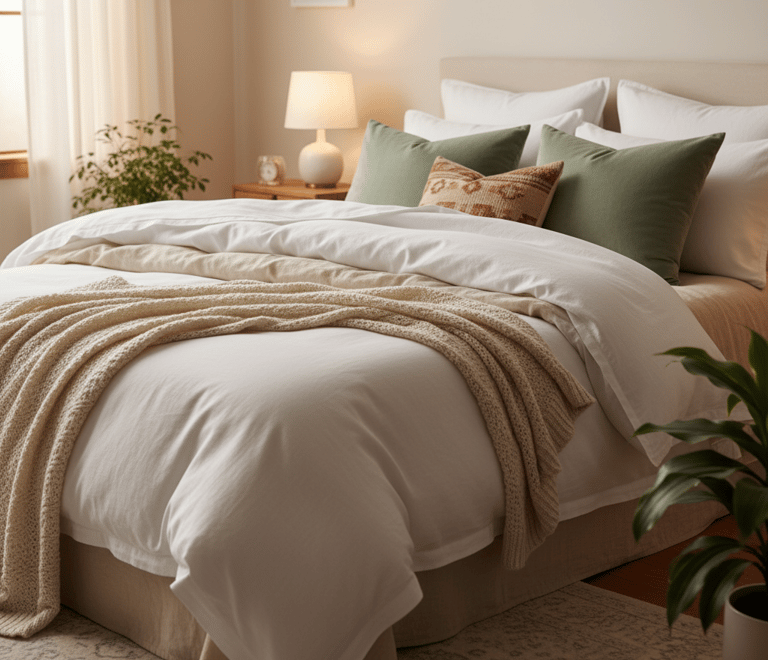
Your bed should be the undeniable centerpiece of comfort, the visual anchor of the room. A cozy bed isn't just about a mattress; it's about building a "cloud-like" architecture using high-quality bedding.
The "Duvet Sandwich" Trick: If your bed looks flat even with a duvet cover, try the interior designer trick of inserting two duvet inserts into a single cover. This instantly creates that lofty, high-end hotel look that makes you want to dive right in.
Material Matters:
Winter: Flannel or brushed cotton sheets trap body heat effectively.
Year-Round: 100% French Linen is an investment, but it regulates body temperature exceptionally well—keeping you warm in winter and cool in summer—and gets softer with every wash.
Pillow Arrangement: Don't be shy with pillows. Start with two Euro shams (large squares) against the headboard, followed by your two sleeping pillows, and finish with one or two smaller decorative lumbar pillows. This graduation in size adds depth.
Pros and Cons:
Pro: Immediate luxury. Changing bedding is the fastest way to upgrade a room without renovation.
Con: Laundry volume. More layers and pillows mean more laundry to wash, dry, and fold.
5. Incorporate Natural Elements
Introducing elements from the natural world—known as Biophilic Design—is a proven way to reduce stress and make a space feel grounded. Organic shapes and materials soften the rigid, straight lines of modern architecture.
Plant Selection: You don't need a green thumb to add life to your room.
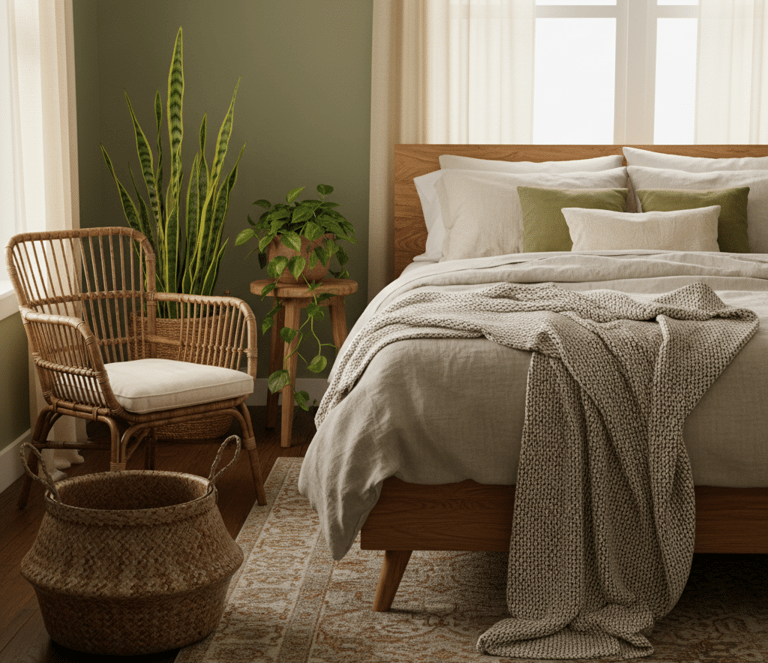
Snake Plant (Sansevieria): Indestructible and thrives in low light. It also releases oxygen at night.
Pothos: A trailing vine that looks beautiful cascading from a high shelf or dresser.
Peace Lily: Adds a touch of elegance with its white blooms and droops slightly when it needs water, telling you exactly when to care for it.
Beyond Plants: If you can't manage live plants, incorporate natural materials through furniture. A rattan armchair, a raw-edge wooden bench at the foot of the bed, or woven sea-grass baskets for laundry storage all add warmth.
Pros and Cons:
Pro: Air quality. Many plants naturally filter toxins from the air, creating a healthier sleeping environment.
Con: Pests and mess. Overwatering can lead to gnats, and dropping leaves require cleanup. Artificial plants are a valid alternative if they look realistic.
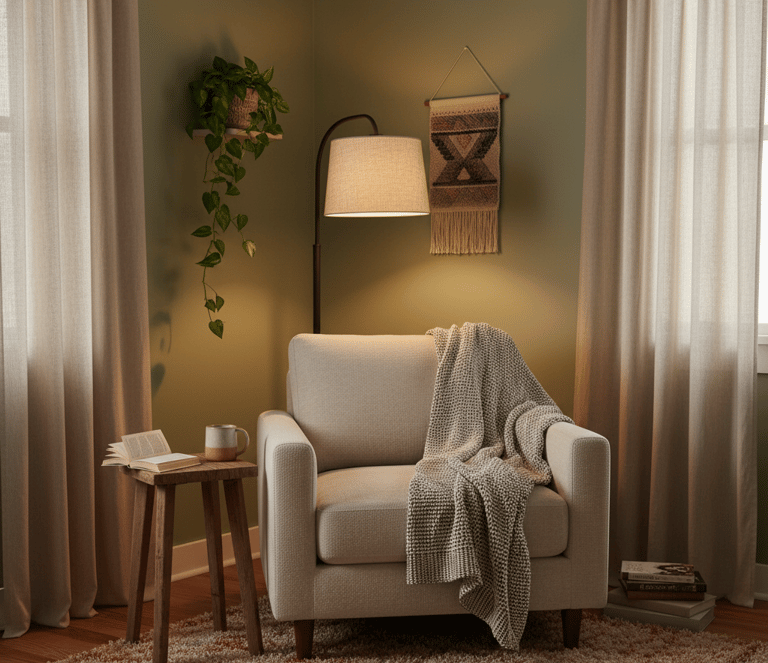
6. Create a Reading Nook
Even if your bedroom is small, designating a specific corner for relaxation helps mentally separate "sleep" from "winding down." A cozy reading nook serves as a visual reminder to disconnect from screens before bed.
How to Build It: You don't need a massive footprint.
The Chair: Select an armchair that wraps around you, like a wingback or a tub chair.
The Surface: A tiny drink table (martini table) is enough for a cup of tea or a book.
The Light: A dedicated floor lamp or a clip-on reading light is essential so you don't have to rely on the main room lighting.
Small Space Solution: If you don't have room for a chair, create a "nook" on your bed. Use a husband pillow (a pillow with arms) or a large wedge pillow that you only bring out for reading time.
Pros and Cons:
Pro: establishing a routine. It encourages a healthy bedtime ritual of reading or journaling.
Con: "The Chair" syndrome. If you aren't careful, this chair can easily become the place where you pile laundry that isn't quite dirty but isn't quite clean.

7. Use Rugs for Warmth Underfoot
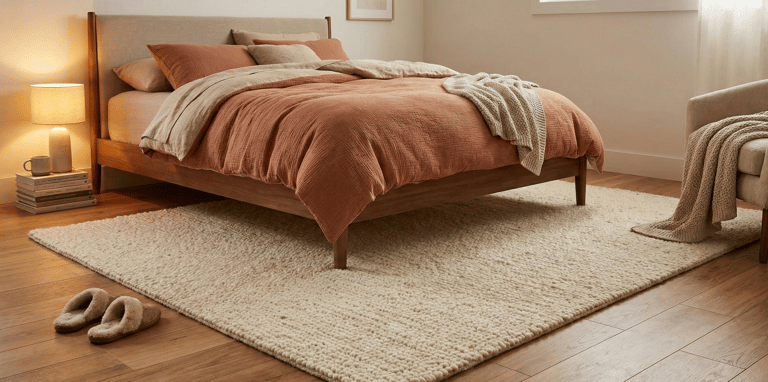
Don't overlook the floor. Stepping out of bed onto a cold, hard laminate or tile surface is a shock to the system that ruins the cozy vibe immediately. A plush area rug anchors the room and provides a thermal barrier.
Sizing and Placement: The biggest mistake people make is buying a rug that is too small.
The Rule: The rug should extend at least 18 to 24 inches on both sides of the bed.
Placement: Place the rug perpendicular to the bed. It should start about a foot away from your nightstands and extend past the foot of the bed.
Layering Rugs: For an extra bohemian or cozy look, try layering. Use a large, inexpensive natural fiber rug (like Jute or Sisal) as the base, and layer a smaller, softer faux-fur or vintage wool rug on top at an angle.
Pros and Cons:
Pro: Sound dampening. Rugs absorb echo, making the room sound quieter and more restful.
Con: Allergens. Carpets can trap dust and dander. If you have severe allergies, opt for low-pile washable rugs.
8. Hang Curtains for Softness
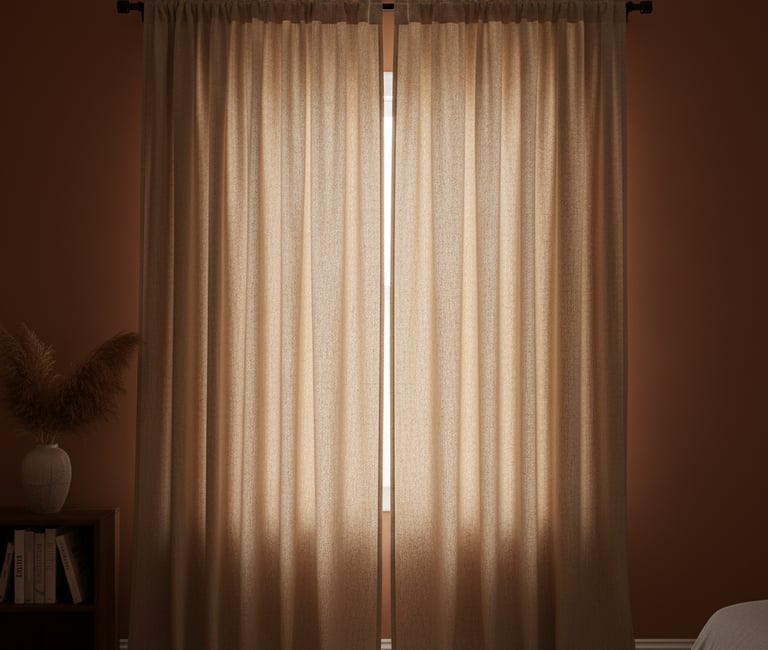
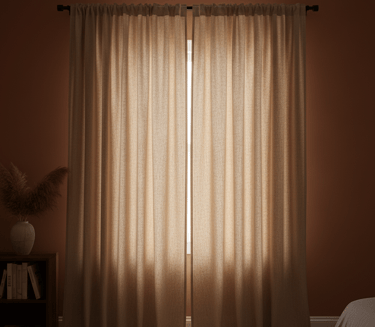
Bare windows can make a room feel stark, unfinished, and exposed. Curtains are essential not just for light control, but for adding a vertical layer of softness that "dresses" the room.
The "High and Wide" Rule: To make your ceiling feel higher and your windows larger, hang your curtain rod 4 to 6 inches above the window frame (or as close to the ceiling as possible) and extend the rod 3 to 6 inches beyond the width of the window on each side.
Fabric Choice:
Velvet: incredible for insulation and blocking drafts in older homes. It adds instant glamour.
Linen: filters light beautifully for a breezy, organic feel.
Blackout Liners: For the ultimate sleep sanctuary, ensure your curtains have a blackout lining. This blocks streetlights and early morning sun.
Pros and Cons:
Pro: Insulation. Heavy curtains can significantly reduce energy costs by keeping heat in during winter and out during summer.
Con: Visual weight. In very small rooms, heavy dark drapes can feel oppressive. Match the curtain color to the wall color to make them disappear and open up the space.
9. Personalize with Wall Art
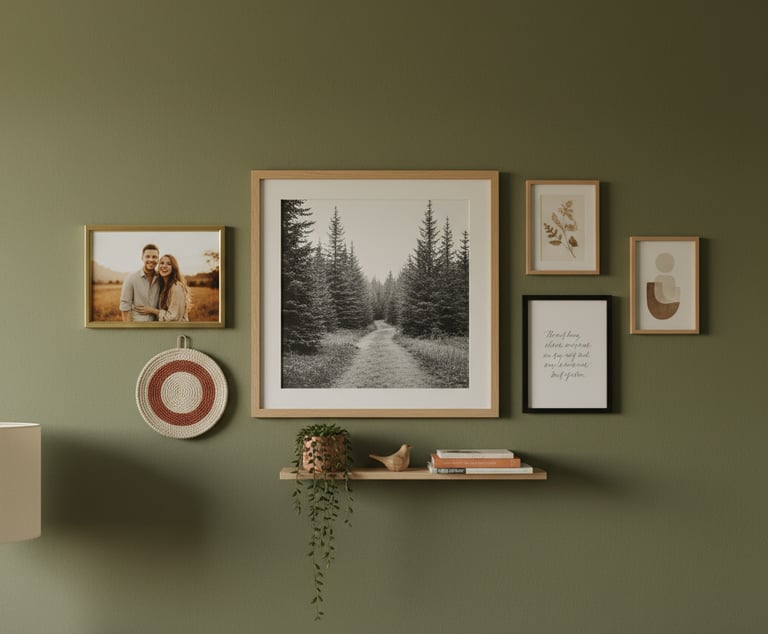
Your bedroom should reflect who you are, not just look like a page from a catalog. Bare walls can feel impersonal and transient. Adding wall art is the perfect way to inject your soul into the space.
Curating Your Collection:
Subject Matter: Choose artwork that is calming. Landscapes, abstract watercolors, or botanical prints are generally more conducive to sleep than chaotic, high-energy geometric patterns.
The Gallery Wall: If you have many smaller pieces (postcards, photos, sketches), arrange them in a gallery wall. Keep the frames consistent (all black, or all wood) to maintain a sense of order.
Textile Art: Consider hanging a woven tapestry or a macramé piece. This adds art and texture simultaneously, doubling the coziness factor.
Renter-Friendly Tip: If you can't drill holes, use heavy-duty adhesive strips. Alternatively, lean large framed art pieces against the wall on top of a dresser or floor for a casual, atelier vibe.
Pros and Cons:
Pro: Emotional connection. Seeing images of loved ones or places you have traveled brings a sense of joy and belonging.
Con: Visual clutter. Too many small frames can make a room feel busy. sometimes one large statement piece is better than ten small ones.
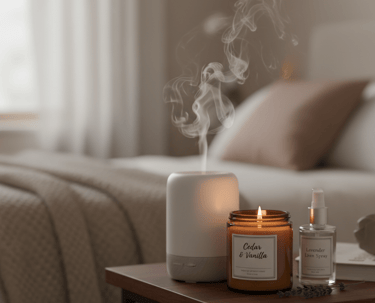
10. Add Scent for a Sensory Experience
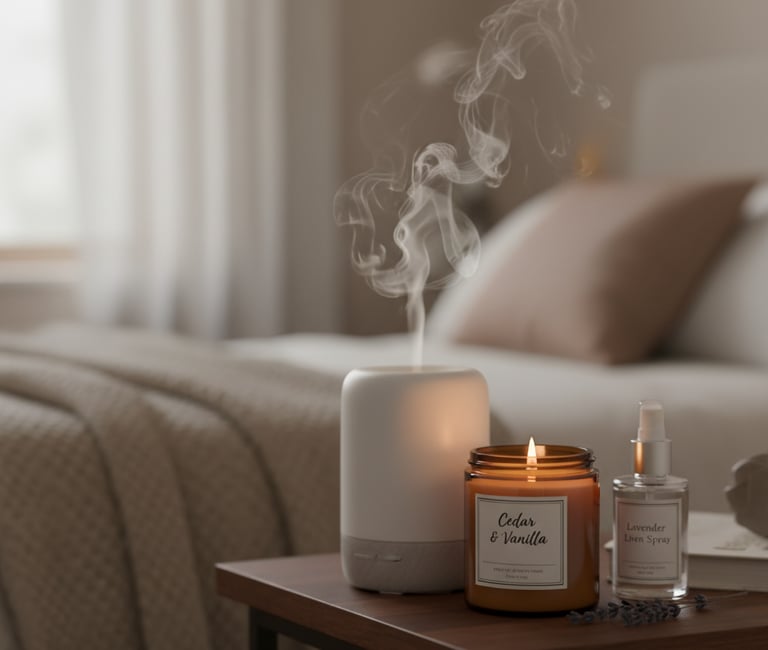
Coziness isn't just about what you see; it's about what you feel and smell, too. Olfactory design is often the missing link in interior styling. A subtle fragrance creates a sensory trigger that signals your brain that it is time to wind down.
Scent Profiles for Sleep:
Lavender: The gold standard for relaxation and sleep induction.
Vanilla & Amber: Warm, sweet, and comforting, perfect for creating a "homey" feel.
Cedarwood & Sandalwood: Earthy and grounding, great for reducing anxiety.
Delivery Systems:
Reed Diffusers: Provide a constant, low-level scent without the need for a flame or electricity.
Linen Spray: A light mist on your pillow 10 minutes before bed adds a touch of luxury.
Candles: The flicker of a candle flame adds to the visual ambiance, but remember to extinguish it before sleep.
Pros and Cons:
Pro: Mood enhancement. Scent is directly linked to the limbic system, which controls emotion and memory.
Con: Sensitivities. Artificial fragrances can trigger headaches or allergies. Opt for high-quality essential oils or soy-based candles for a cleaner burn.
Conclusion
Creating a serene haven is ultimately about curating a space that invites you to pause, recharge, and feel completely at ease. By integrating these elements—from the tactile warmth of layered textures to the soothing ambiance of soft lighting—you can transform your bedroom into more than just a place to sleep, but a true personal sanctuary. Remember that you don't need to overhaul everything at once; simply start with the changes that speak to you most, and watch as your room evolves into the cozy, restful retreat you deserve.