
10 Stunning Wall Decor Ideas to Transform Your Living Room
Staring at a blank wall? I’m sharing 10 essential wall decor ideas to transform your living room. From creating the perfect gallery wall to using mirrors to maximize space, discover practical styling tips to make your home feel inviting.
LIVING ROOM
Your living room walls are essentially a massive blank canvas waiting for your personal touch. While your sofa and coffee table define the function of the room, your wall decor defines its soul. Whether you lean towards the clean lines of modern minimalism, the cozy warmth of rustic charm, or the vibrancy of eclectic maximalism, the right wall treatments can turn a stark, boxy area into a warm, inviting sanctuary.
However, staring at a large white wall can be intimidating. Where do you start? How high should you hang art? How do you mix textures? To help you curate a space that feels both stylistically cohesive and comfortably inhabited, here are ten essential wall decor concepts. We have expanded on these ideas to provide you with practical styling tips, pros and cons, and real-world application advice.
1. Curate a Personal Gallery Wall
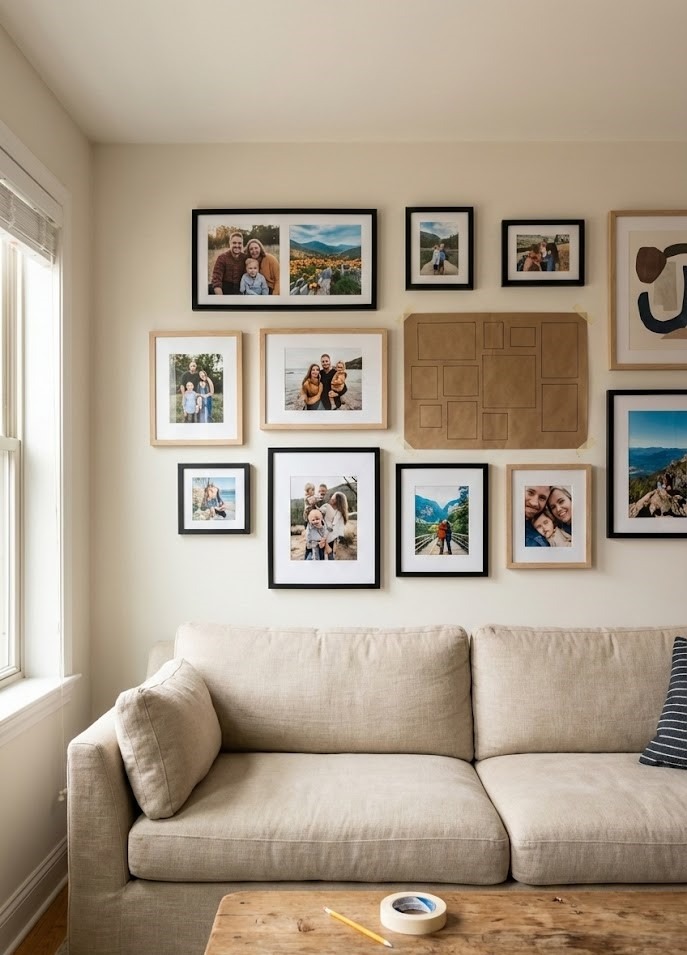
Nothing establishes the personality of a home quite like a gallery wall. This approach allows you to showcase a collection of what matters most to you—be it family portraits, travel photography, or curated art prints. It turns a flat surface into a visual storytelling medium.
How to Style It Like a Pro: The most common mistake with gallery walls is spacing. A good rule of thumb is to keep 2 to 3 inches of space between each frame. If the spacing is too wide, the collection loses its cohesion; too tight, and it looks cluttered.
The Cohesive Look: For a clean, museum-quality aesthetic, use identical frames (e.g., all thin matte black or natural oak) and print your photos in black and white. Use a grid layout for symmetry.
The Eclectic Look: Mix and match vintage gold frames with modern white ones. Incorporate non-photo items like a framed postcard, a wooden letter, or a small mirror to add depth.
Practical Tip: Never start hammering nails immediately. Trace your frames onto kraft paper or newspaper, cut them out, and tape these templates to the wall. This allows you to rearrange the composition without damaging your paint.
Pros and Cons:
Pros: Highly customizable, covers a large area inexpensively, great conversation starter.
Cons: Requires precise measuring; can look chaotic if not planned; frames gather dust easily.
Categories
2. Maximize Space with Statement Mirrors
Mirrors are a designer’s secret weapon, effectively serving as "architectural hacks." Beyond their practical use for checking your reflection, oversized mirrors manipulate the eye into perceiving more square footage than actually exists. They bounce natural light deep into the room, banishing shadows from dark corners.
Placement and Shape:
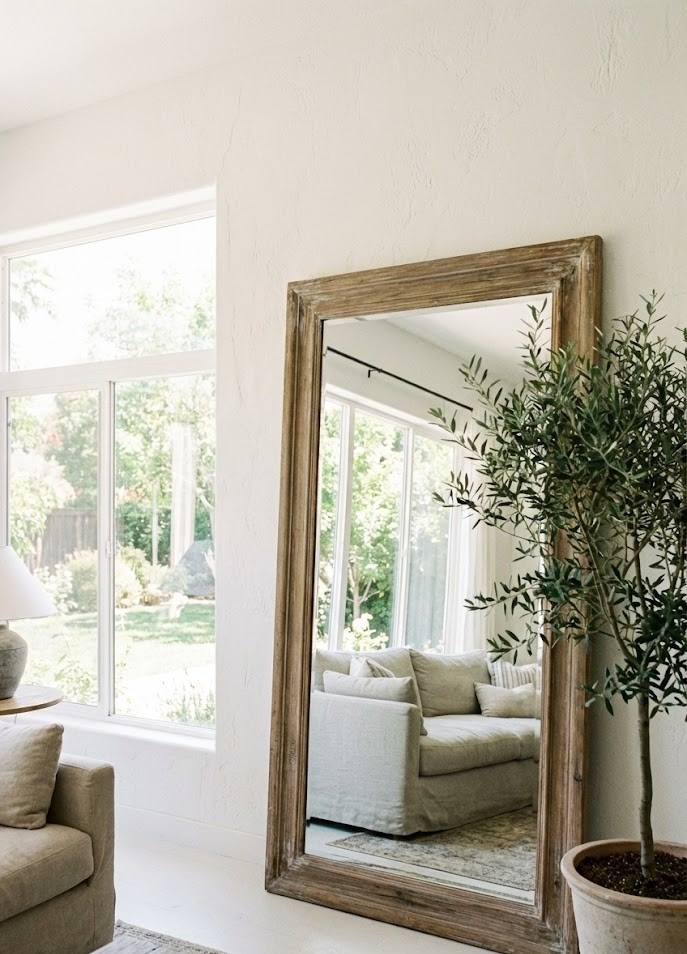
The Window Effect: Place a large mirror directly opposite a window. This effectively "doubles" the window, reflecting the outdoors and maximizing daylight.
Shape Matters: A large rectangular mirror leaning against a wall adds a casual, loft-like vibe. Conversely, a round or arched mirror softens the harsh vertical and horizontal lines of a room full of cabinets and rectangular furniture.
Real-World Example: For a modern farmhouse look, look for a "windowpane" mirror with a distressed wood frame. For a sleek, contemporary apartment, opt for a frameless circle mirror or one with a thin brass edge.
Pros and Cons:
Pros: Instantly brightens a room, makes small spaces feel huge, adds elegance.
Cons: Heavy mirrors require heavy-duty anchors (toggle bolts recommended); requires frequent cleaning to remove fingerprints and dust.
3. Install Stylish Floating Shelves
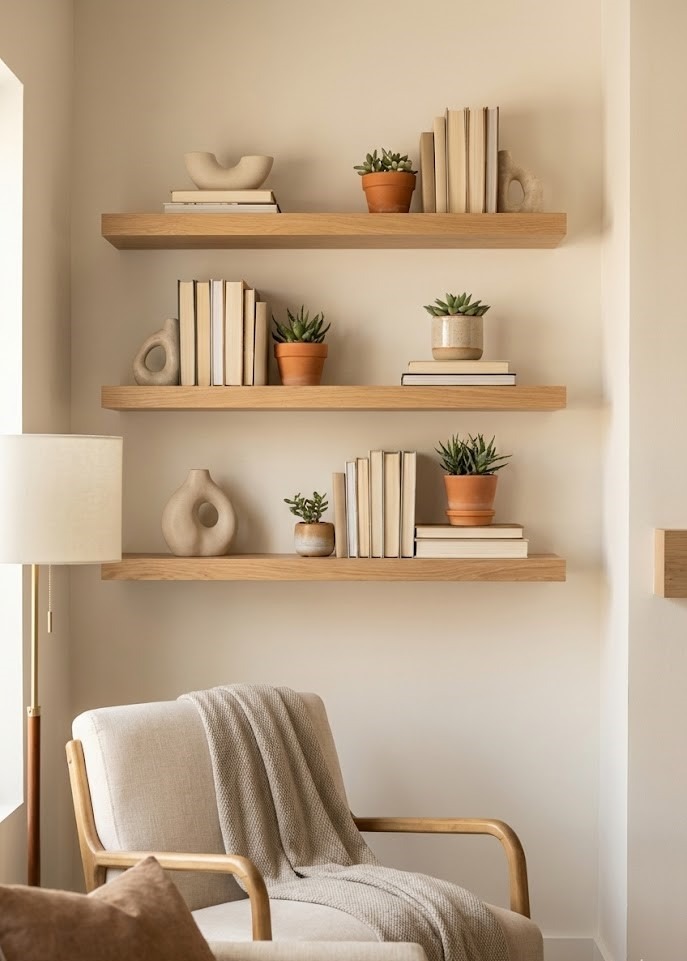
If you want a blend of utility and beauty, floating shelves are the answer. They provide vertical storage without the visual bulk of a bookcase, keeping the floor area open and making the room feel wider. They are perfect for awkward nooks or the space beside a fireplace.
The "Rule of Three" Styling Guide: Don't just line up books spine-out. Interior designers style shelves by creating vignettes.
Vary Height: combine a tall vase, a medium photo frame, and a small stack of books.
Triangulation: Imagine a triangle across your shelves. If you have a gold object on the top left shelf, place another gold object on the bottom right to lead the eye across the display.
Negative Space: Leave some empty space on the shelf. If it is packed edge-to-edge, it looks like storage, not decor.
Material Ideas:
Walnut or Oak: Adds warmth and texture to a white-walled room.
White Lacquer: Disappears into a white wall, making the objects appear to truly float.
Pros and Cons:
Pros: versatile (can change decor seasonally), budget-friendly, saves floor space.
Cons: Installation can be tricky (must hit studs or use serious anchors); requires regular dusting and styling upkeep.
4. Anchor the Room with Large-Scale Art
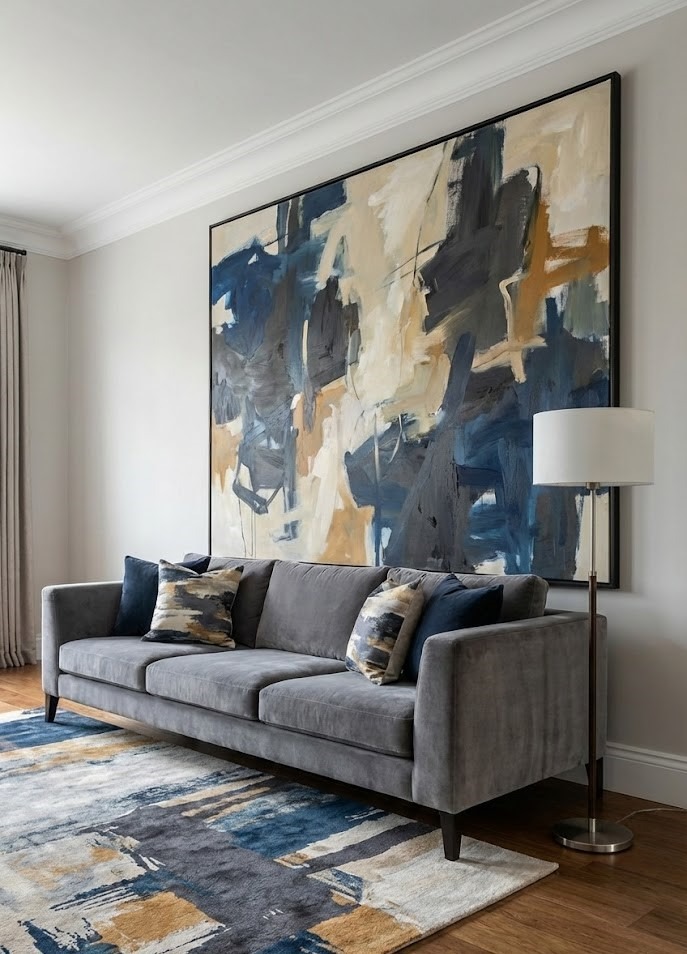
Sometimes, less is more. The "one big piece" approach is perfect for minimalists or those who find gallery walls too busy. A substantial piece of artwork serves as a powerful focal point, anchoring the furniture below it and dictating the color palette for your cushions and rugs.
Sizing and Hanging Standards: The biggest error homeowners make is buying art that is too small.
The Width Rule: The art piece should be roughly two-thirds to three-quarters the width of the furniture it hangs above (e.g., your sofa or sideboard).
The Height Rule: The center of the artwork should be at eye level, which is generally 57 to 60 inches from the floor. If hanging above a sofa, leave 6 to 10 inches of clearance between the top of the sofa and the bottom of the frame.
Budget-Friendly Options: Large art can be expensive. Consider buying a large painter's drop cloth or canvas and creating your own abstract art with house paint, or purchasing a high-resolution digital download from an artist and having it printed as an "engineering print" at a local office supply store.
Pros and Cons:
Pros: Creates an immediate "finished" look, less clutter, sets a distinct mood.
Cons: Large framing is expensive; transporting and hanging oversized pieces can be difficult.
9. Soften the Space with Textile Art
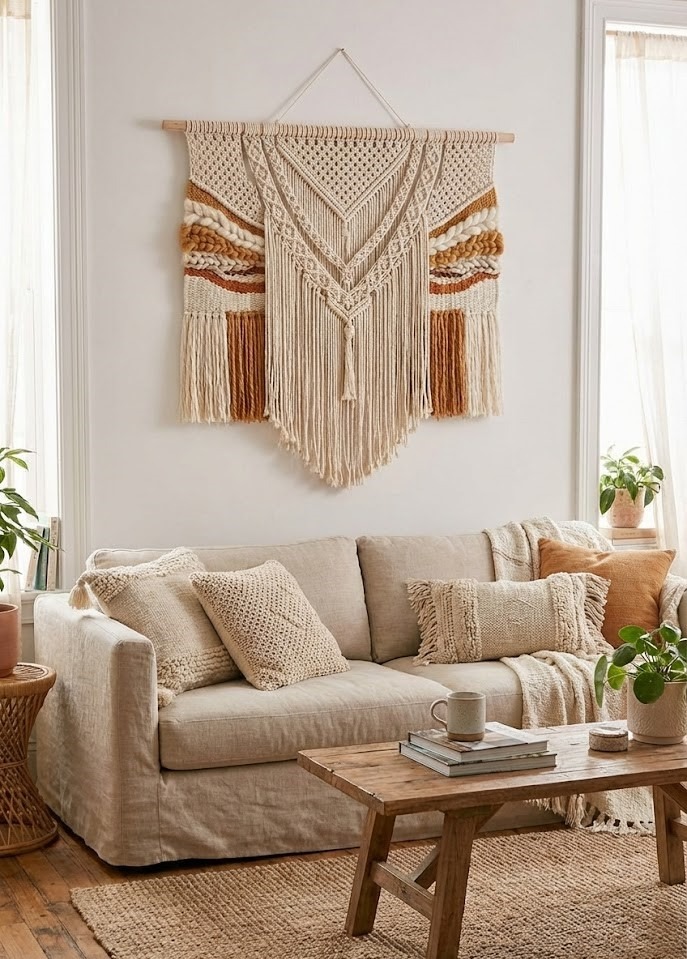
Living rooms are often full of hard surfaces: glass coffee tables, wooden floors, metal electronics, and drywall. To counter this, introduce softness with fabric wall hangings. Macramé, woven tapestries, quilts, or even framed silk scarves add warmth and acoustic dampening.
Styles to Consider:
Bohemian: A large macramé piece on a driftwood branch creates a relaxed, earthy vibe.
Global/Eclectic: Consider an African Juju hat (feather headdress) or a vintage Kilim rug hung on the wall using a rug clamp.
Modern: A minimalist woven tapestry with wool and copper accents acts as abstract art with texture.
Why It Works: Textiles add a tactile element that makes a room feel "safe" and cozy. The fibers absorb sound, reducing the echo in rooms with high ceilings or hardwood floors.
Pros and Cons:
Pros: Adds literal warmth and texture, dampens noise, usually lightweight and easy to hang.
Cons: Can trap dust and allergens (vacuum gently using the upholstery attachment); some styles may feel dated if not curated well.


10. Incorporate Functional Art with Oversized Clocks
While we all have phones to tell the time, a large wall clock serves as a striking structural element. It bridges the gap between function and decor, filling a large void without feeling like "just another picture."
Style Matching:
Industrial: Look for open-face metal clocks with Roman numerals and visible gears. These look fantastic against brick or dark paint.
Scandi/Modern: Look for a clock with a solid face, simple baton hands, and a light wood frame.
Mid-Century: A "sunburst" or "starburst" clock is an iconic choice that serves as a piece of sculpture.
Scale and Placement: An oversized clock functions best as the sole item on a wall section—for example, above a console table or in the space above a doorway. Ensure you buy a "silent sweep" mechanism if the ticking sound bothers you while watching TV or napping.
Pros and Cons:
Pros: Highly functional, fills awkward spaces easily, timeless appeal.
Cons: Can look generic if you buy a mass-produced "big box store" design; changing batteries in high-hung clocks is a chore.
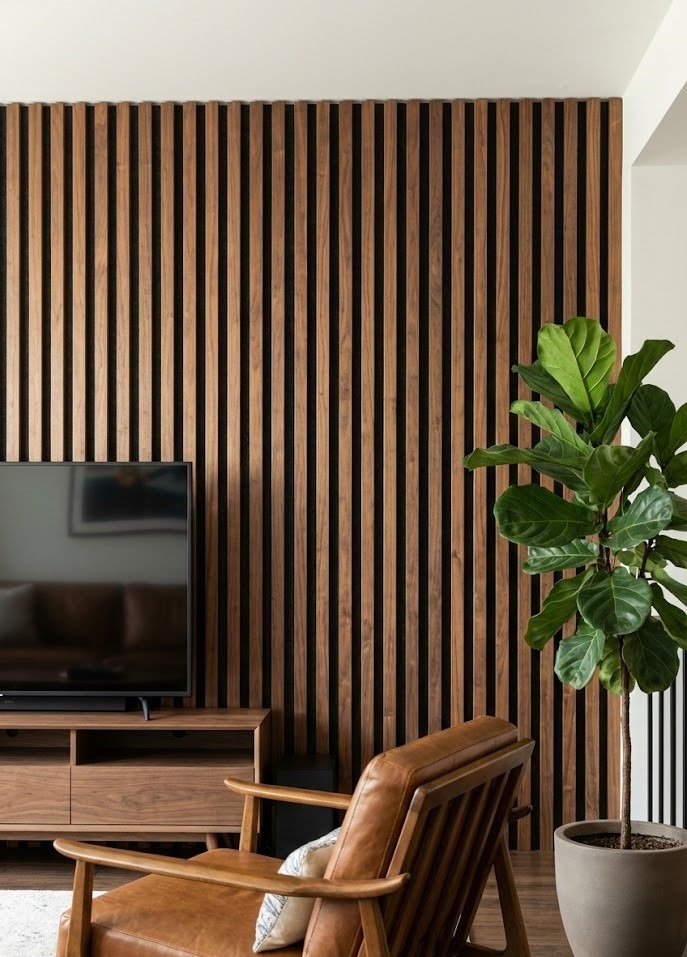
6. Introduce Texture with Accent Panels
Paint isn't the only way to treat a wall. Adding texture through wood slats, shiplap, molding, or 3D wall panels introduces depth and architectural interest to a plain boxy room. This is particularly effective in new-build homes that may lack historical character.
Popular Textural Styles:
Wood Slats: Vertical wood slats can make a low ceiling feel higher while adding warmth and sound dampening. This is very popular in Japandi and Mid-Century Modern designs.
Board and Batten/Wainscoting: Adds traditional elegance and value to a home. It creates a shadow play that changes throughout the day as the sun moves.
Shiplap: Offers a coastal or modern farmhouse feel.
Application: A wood slat wall behind the TV can warm up a modern space and hide unsightly cords. Alternatively, applying picture frame molding to walls and painting it the same color as the wall (monochromatic) looks incredibly high-end.
Pros and Cons:
Pros: Adds significant architectural value, hides wall imperfections, improves acoustics.
Cons: Labor-intensive installation; difficult to reverse or change later compared to paint.
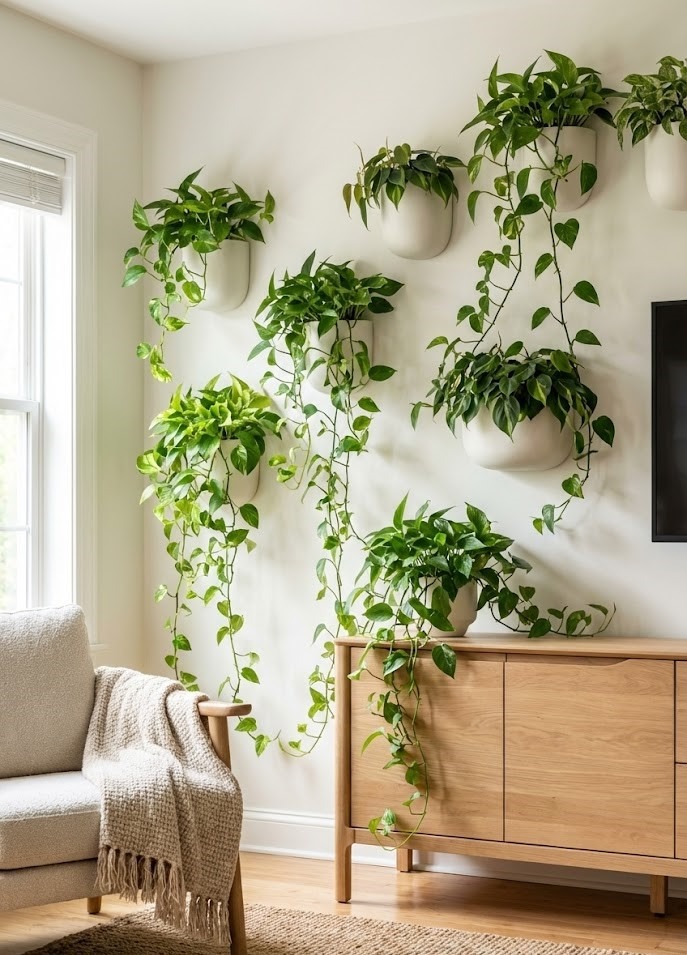
7. Embrace Nature with Vertical Greenery
Biophilic design—the practice of connecting with nature indoors—is a timeless trend that boosts mental well-being. Wall-mounted planters, hanging propagation stations, or "living walls" bring life and color to your vertical spaces, softening the hard lines of architecture.
Plant Selection & Lighting:
Low Light: If your wall is far from a window, use Pothos or Heartleaf Philodendrons. They are hardy and trail beautifully.
Bright Light: String of Pearls or Burro’s Tail succulents work well but need significant sunlight.
The Look: Choose uniform wall planters (e.g., three white ceramic wall pots in a vertical row) for a modern look, or macramé hangers for a bohemian vibe.
Maintenance Note: Always remove the inner nursery pot to water plants in the sink, allowing them to drain before returning them to the wall. This prevents muddy water from dripping down your wall paint.
Pros and Cons:
Pros: Purifies air, reduces stress, adds organic movement to the room.
Cons: Risk of water damage to walls; plants require care and can die; can attract pests if not maintained.
8. Create Drama with Wallpaper or Murals
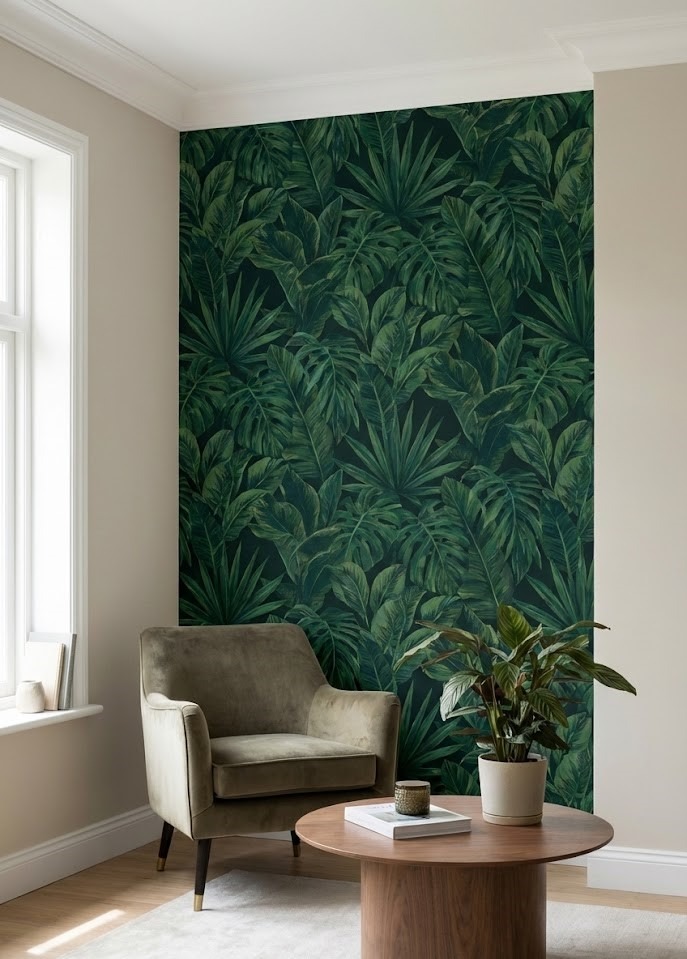
If you are ready for a bold change, an accent wall featuring wallpaper or a mural offers the highest visual impact. The days of impossible-to-remove wallpaper are gone; modern technology has introduced high-quality peel-and-stick options that are renter-friendly.
Choosing Your Pattern:
Small Rooms: Avoid tiny, busy patterns which can make the room feel chaotic. Opt for larger scale prints or murals that open up the space.
Large Rooms: You have more freedom here. Dark, moody florals or geometric patterns can make a cavernous room feel cozier.
Installation Insight: To avoid overwhelming the room, stick to one feature wall (usually the one you face when entering the room) and keep the adjacent walls neutral. If using a mural, ensure the furniture doesn't block the main element of the image.
Pros and Cons:
Pros: Massive visual transformation, hides wall texture issues, peel-and-stick is removable.
Cons: High-quality paper is expensive; pattern matching during installation requires patience and precision.
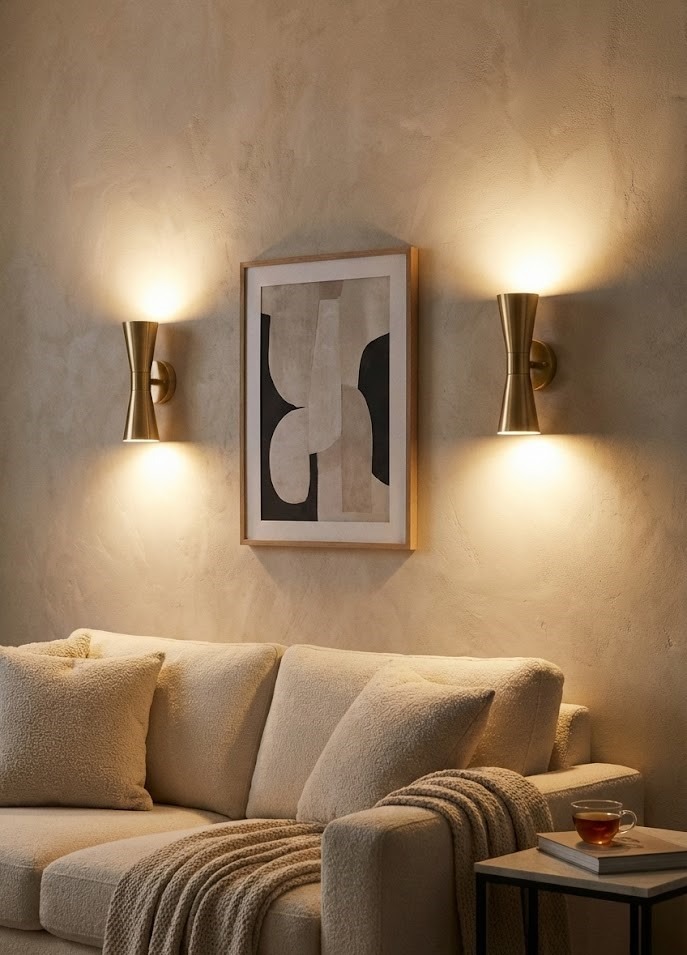
5. Elevate Ambiance with Wall Sconces
Lighting is often overlooked as "decor," but wall-mounted fixtures are essentially functional sculptures. Sconces add layers to your lighting scheme, providing a warm glow that harsh overhead lights cannot achieve. They are essential for creating "hygge"—a cozy, comfortable atmosphere.
Hardwired vs. Plug-in vs. Puck Lights:
Hardwired: Best for permanent homeowners and renovations. Requires an electrician but offers a clean, cord-free look.
Plug-in: Great for adding industrial or vintage charm. The exposed cord is part of the design.
The "Magic Light Trick": If you are a renter or don't want to drill into electricity, mount a sconce and glue a remote-controlled battery "puck light" inside the shade. No wiring needed!
Styling Tip: Install sconces on either side of a sofa, a mirror, or a piece of art to create symmetry. finishes like brushed brass, matte black, or polished nickel can act as the "jewelry" of the room.
Pros and Cons:
Pros: Frees up space on end tables (no table lamps needed), adds sophisticated ambiance.
Cons: Hardwiring is invasive; battery lights require frequent recharging/replacement.
Conclusion
Decorating your living room walls is about finding the balance between empty space and visual interest. By selecting items that resonate with your personal style—whether it's a gallery of memories, a space-enhancing mirror, or a bold piece of art—you can transform a house into a home. Start with one focal point, such as the wall behind your sofa, and build outward from there to create a cohesive and harmonious living space.