
15 Inspiring Artwork Ideas to Elevate Your Bathroom's Design
When we think about home renovations or quick refreshes, the bathroom is often the last room to receive decorative attention. We tend to view it strictly through a lens of utility: is the plumbing working? Is the tile clean? However, neglecting the aesthetic potential of a bathroom is a missed opportunity. Introducing art into this space can instantly transform a sterile washroom into a private, spa-like retreat. A well-chosen piece of art does more than just fill a blank wall; it injects personality, introduces a specific color palette, and adds an element of refinement that tile and porcelain simply cannot achieve on their own. But bathroom art comes with its own set of challenges, specifically regarding humidity and scale. This article provides creative, expert-approved suggestions for selecting and placing art in your bathroom. From moisture-resistant canvases to gallery walls that defy convention, we will examine different approaches to help you discover the ideal artwork. Read on to see how you can transform your bathroom into a more stylish and uplifting part of your home.
BATHROOM
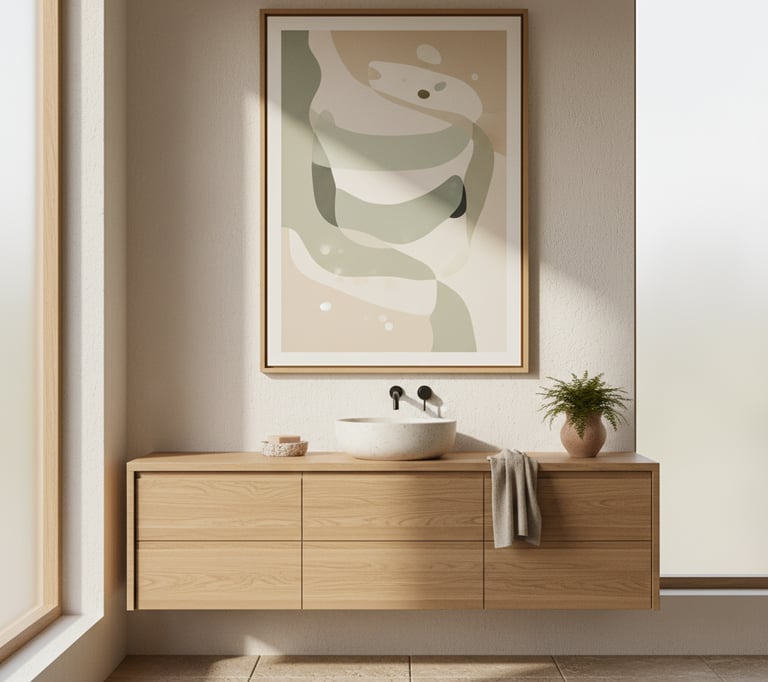
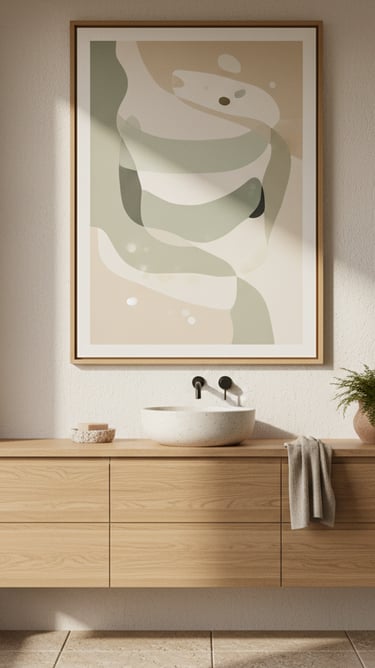
1. Abstract Warmth Over the Vanity
This design strategy anchors a room by building a single-color scheme, often utilizing warm, inviting tones like terracotta, blush pink, or burnt orange. By positioning a framed abstract print directly above a wood vanity, you create an immediate focal point that draws the eye away from the clutter of toiletries. An abstract design—perhaps featuring fluid shapes or a scene of figures toasting—adds a playful, sophisticated point of interest without being too literal.
Why It Works: Abstract art is excellent for bathrooms because it relies on color and form rather than detailed storytelling. In a space where you are often moving quickly, a "mood piece" is more effective than something that requires close reading.
Styling Tip: When hanging art over a vanity, ensure the bottom of the frame is at least 6 to 8 inches above the backsplash or faucet to avoid water splashes.
The Look: Pair a warm-toned abstract print with brass hardware and a natural wood vanity for an "organic modern" aesthetic.
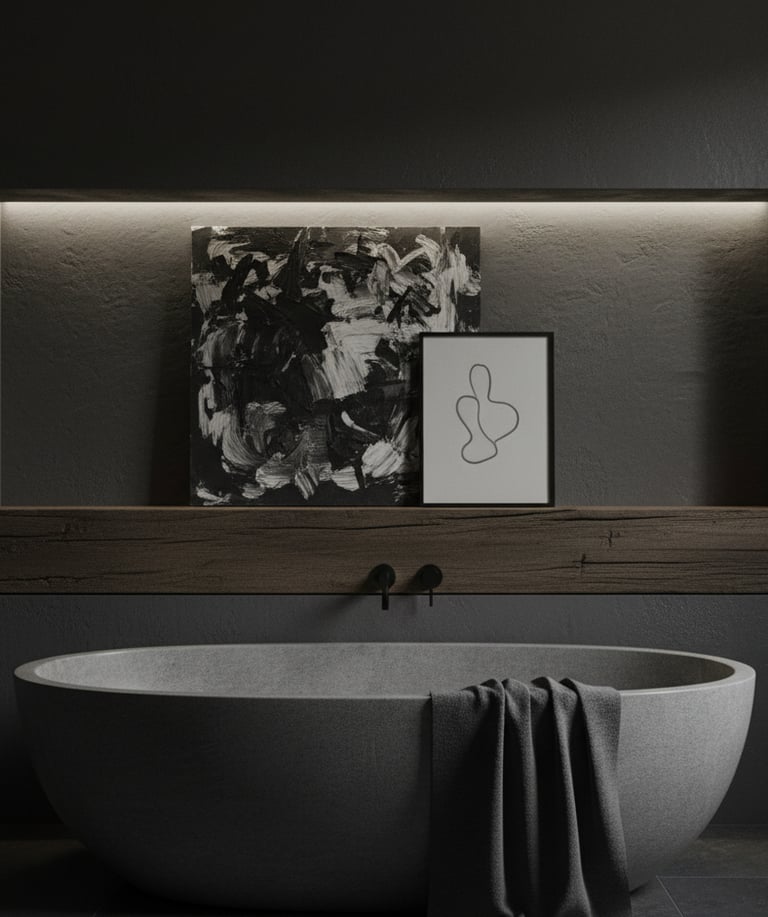
2. Layering Textures in a Dark Palette
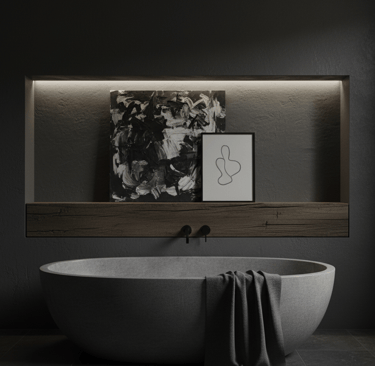
For a moody, high-end look, consider the technique of layering. In this design, a large, textured abstract piece with a light finish is placed on a recessed shelf or ledge above the tub. A second, smaller print with a darker frame is then set in front of it, slightly off-center. This layering adds immense visual interest and dimension, particularly effective against flat matte black or charcoal walls.
The Strategy: This approach uses art to break up the "heaviness" of dark paint. The texture provides a necessary contrast to the sleek surfaces of the tub and tile.
Pros and Cons: The pro is a highly curated, magazine-worthy look without drilling holes in the wall (perfect for renters). The con is that you must ensure the ledge is wide enough so the art doesn't slip.
Material Note: Look for "mixed media" art that incorporates plaster or heavy acrylic paint to maximize the texture.
3. Pairing Botanical Prints for Subtle Charm
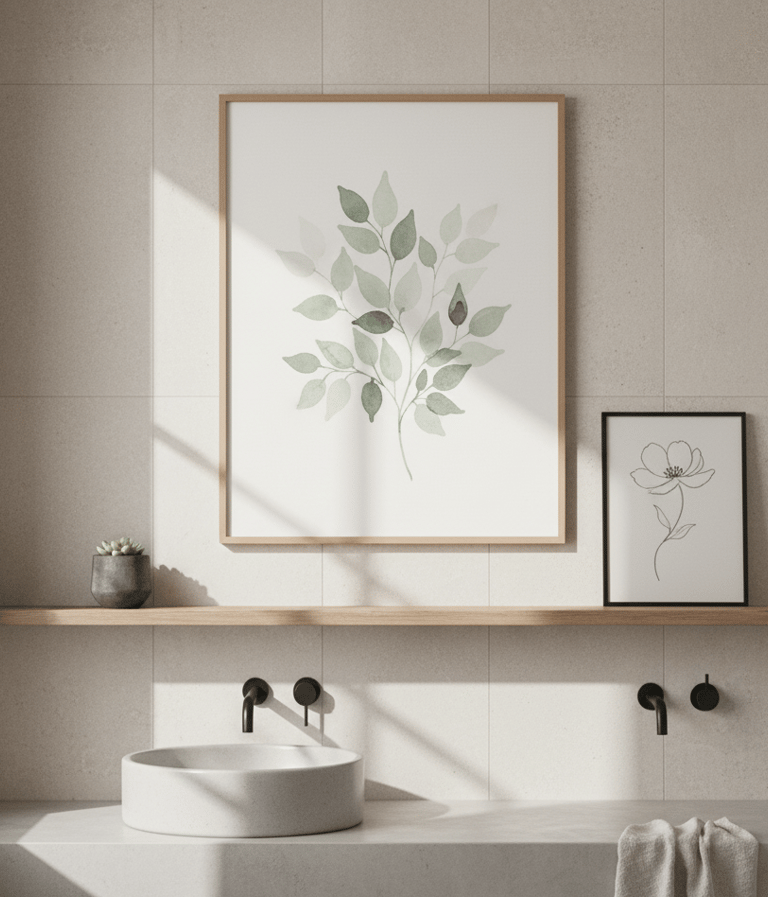
Botanical prints are a timeless way to introduce a biophilic (nature-inspired) element into a bathroom, which inherently softens the hard lines of ceramic and stone. In this example, a traditional framed watercolor of a hydrangea is hung on the wall, while a smaller, modern canvas featuring a minimalist black and white floral sketch is casually leaned on a surface below.
Why It Works: Combining a traditional framed print with a propped modern canvas creates a "transitional" style—a blend of old and new. It feels collected and thoughtful rather than store-bought.
Styling Tip: To keep this look cohesive, match the frame of the wall art to the vanity material (e.g., light oak frame with light oak cabinets).
Humidity Warning: For the leaned canvas, ensure it isn't sitting in a puddle of water. Place distinct rubber bumpers on the bottom corners to keep it slightly elevated off the countertop.
4. Floating Art on Deep Blue Walls
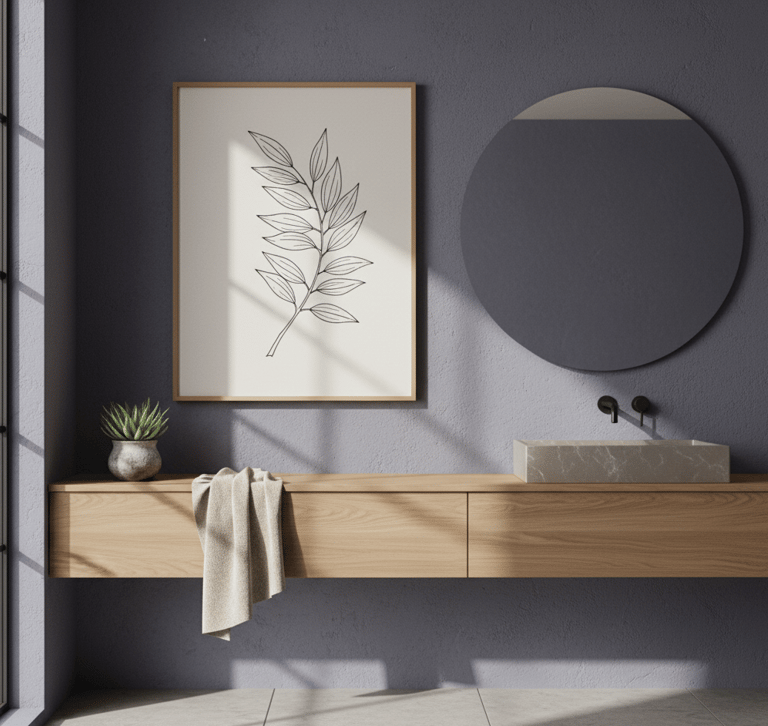
Small art can be incredibly powerful when it is given room to breathe. In a room featuring deep blue Venetian plaster or navy paint, a small oil landscape acts as a visual resting point. By setting a muted green and blue landscape into a bright white "floating" frame (where there is a gap between the canvas and the frame edge), you create a sharp, deliberate contrast.
Design Insight: The deep wall color absorbs light, while the white frame reflects it, making the art pop significantly. The simple subject matter invites a moment of quiet reflection, perfect for a long soak in the tub.
Best For: Powder rooms or guest bathrooms where you want to create a dramatic, jewel-box effect.
Lighting: Install a picture light above this small piece to elevate it from "decoration" to "gallery masterpiece."
5. Maximizing Impact with Single Statement Art
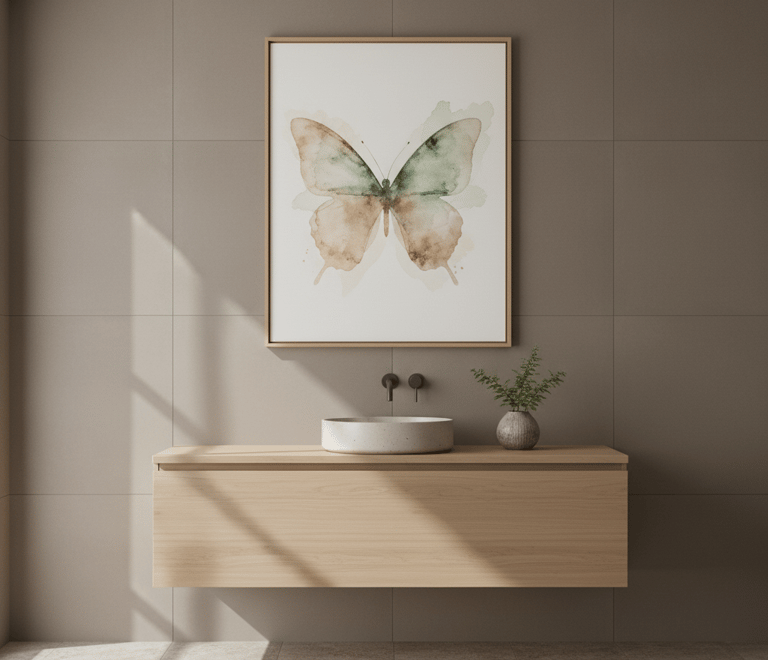
Sometimes, less is more—provided the "less" is physically large. This bathroom features a massive, striking watercolor of an insect (like a moth or beetle) or a botanical diagram. Earthy colors like olive green, brown, and ochre harmonize beautifully with vibrant green tiles or busy wallpaper. Using a simple, thin dark frame helps the artwork hold its ground without competing with the backdrop.
Why It Works: Opting for one large, significant piece prevents the "clutter core" look that can make small bathrooms feel messy. It establishes a single, undeniable focal point.
Styling Tip: The artwork should be roughly two-thirds the width of the furniture piece it hangs above (like the toilet or the vanity).
Visual Trick: Large art actually makes a small room feel bigger because it reduces visual fragmentation.
6. Pairing Figural Sketches with Abstract Art
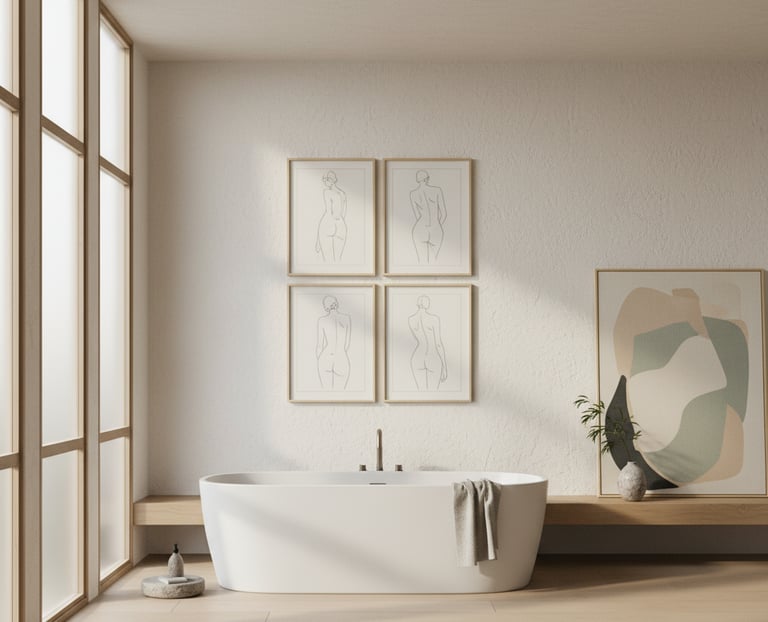
In a spacious, sophisticated bathroom, blending art styles creates a refined, eclectic atmosphere. Above the bathtub, try arranging a set of six matching figural sketches (human forms) in a tight grid. This gives the wall a structured, architectural appearance. To balance this rigidity, lean a large, vibrant abstract canvas against an adjacent wall.
The Strategy: This combination illustrates the design principle of "tension." The fine, disciplined lines of the sketches contrast with the loose, chaotic energy of the abstract piece.
Where to Find: You can often find sets of vintage sketches on Etsy or in thrift stores. Uniform framing is the secret to making them look expensive.
Styling Tip: Use matching mats (the cardboard border inside the frame) for the grid art to ensure uniformity.
7. Displaying Vintage Plates and Prints
If you love the "Cottagecore" or "Grandmillennial" aesthetic, this idea is for you. A collection of vintage decorative plates arranged organically above the vanity adds three-dimensional texture and nostalgic charm. When paired with a framed botanical print resting on a nearby shelf, the room feels cozy and lived-in.
Why It Works: Ceramic plates are inherently waterproof, making them one of the most practical art choices for a humid bathroom.
How-To: Use spring-loaded plate hangers or adhesive disc hangers to mount them safely. Ensure they are secure so vibrations from closing doors don't knock them loose.
Design Note: Mix scale! Use one large platter as an anchor and surround it with smaller saucers or tea plates.


8. Injecting Whimsy with Unexpected Photography
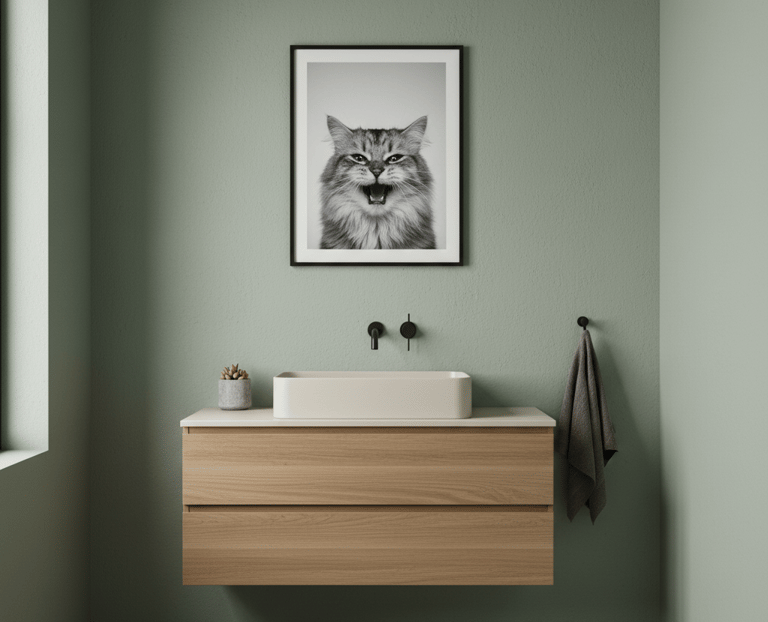
Powder rooms are the perfect place to take risks because people don't spend long periods there. Capture attention with a bold, humorous photograph. A large print showing animals in human situations—like a leopard wearing pearls or a giraffe in a bowtie—introduces fun and drama. High-contrast black and white photography pairs perfectly with neutral striped wallpaper or bold paint.
Why It Works: It breaks the ice. Guests will almost always comment on a funny piece of art in the bathroom. It proves that design doesn't always have to be serious.
Styling Tip: Go for a high-gloss frame. It reflects light and adds a sleek, modern edge to the humorous subject matter.
Subject Ideas: Vintage photos of people diving, animals in costumes, or surrealist photography work best here.
9. Minimalist Line Art Over the Tub
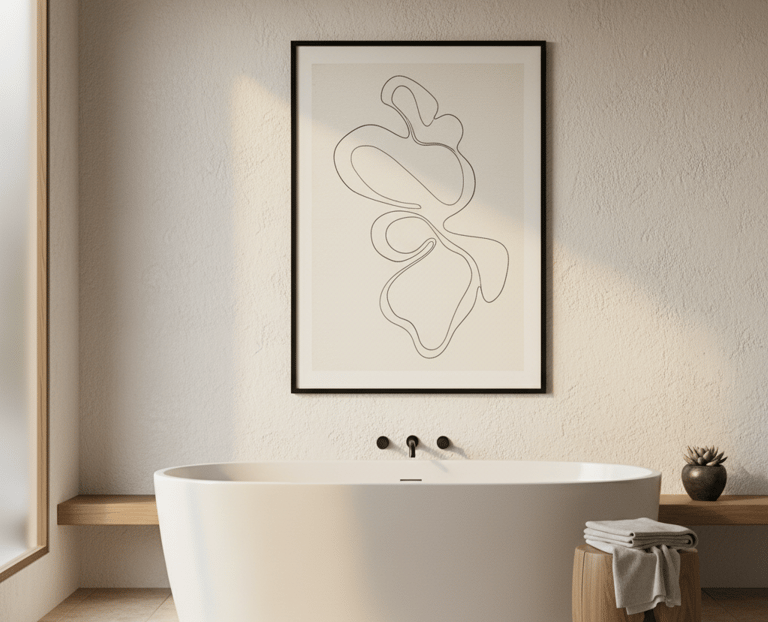
For those who prefer a "Zen" or spa-like atmosphere, visual clutter is the enemy. Highlight a serene, uncluttered room with a single, small framed print placed just above a freestanding tub. A simple, single-line drawing of a figure on textured paper offers a focal point that doesn't overwhelm the clean lines of the architecture.
The Strategy: This is about appreciation of negative space. The wall remains mostly bare, allowing the eye to rest.
Material Matters: Since line art is so simple, the quality of the paper matters. Look for prints on handmade cotton paper with deckled (rough) edges for an organic touch.
Placement: Hang this lower than you think—eye level for a person sitting in the tub, not standing up.
10. Grid of Seaweed Botanical Illustrations
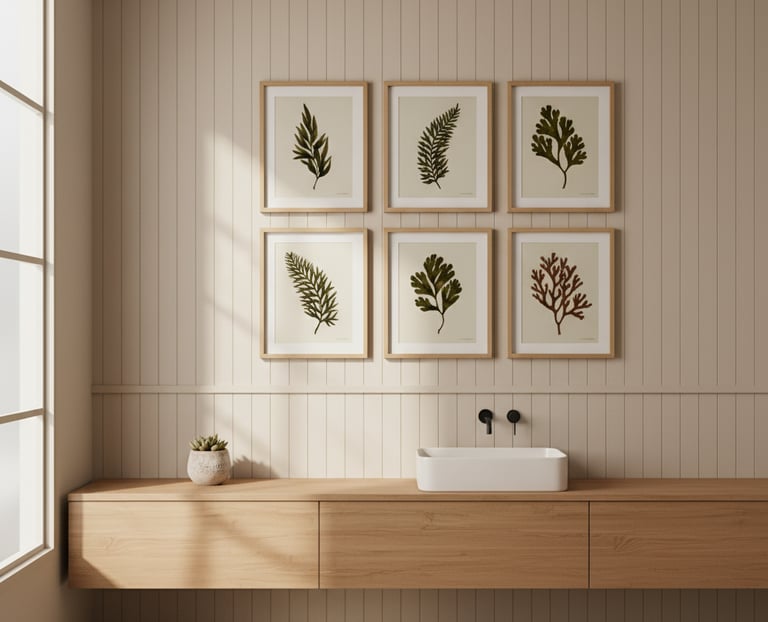
Themes can be tricky; you want to nod to the "water" element without hanging a cheesy "Beach" sign. A collection of six matching seaweed or coral illustrations organized in a clean two-by-three grid creates a sophisticated coastal vibe. Dark wooden frames provide a striking contrast against light gray beadboard or shiplap walls.
Why It Works: The grid layout brings order and symmetry to the room, which feels inherently clean—a desirable trait for a bathroom.
Installation Tip: Use a laser level. Grids only look good if they are perfectly straight. If one is off by a half-inch, the whole effect is ruined.
Spacing: Keep the gap between frames small and uniform—about 2 to 3 inches creates a cohesive unit.
11. Curated Gallery on Striped Walls
If you are a maximalist, this is your permission to go wild. In a bathroom featuring bold, vertical stripes in primary colors, a diverse gallery wall creates a fun, energetic effect. Focus on portraits or landscapes and use matching frames (e.g., all vintage gold) to unify the disparate images.
The Strategy: The art becomes part of the pattern. By using consistent framing, you calm the chaos, allowing the art to pop against the busy background rather than getting lost in it.
Styling Tip: Trace your frames onto kraft paper and tape them to the wall first to visualize the layout before hammering a single nail.
Lighting: Ideally, this wall should be opposite a mirror so the reflection doubles the visual excitement.
12. Monochromatic Art for Quiet Spaces
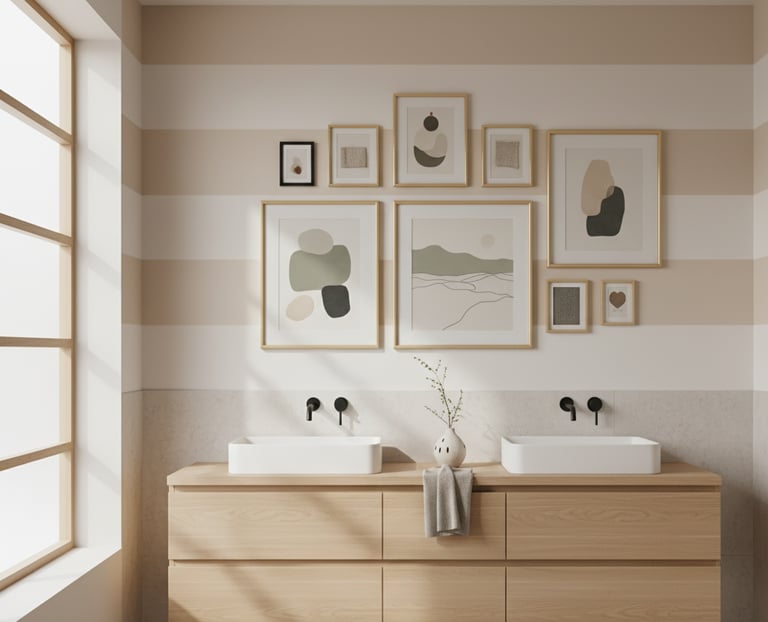
For a bathroom designed around minimalism and earth tones, loud colors can feel jarring. Instead, choose a large, vertical abstract print featuring simple textured horizons in tones of beige, cream, sand, and rust. These colors echo natural wood vanities and linen towels, preserving the room's tranquil feel.
Why It Works: It creates a "tonal" look where the art blends in rather than stands out. This is incredibly soothing and helps lower stress levels.
Frame Choice: Use a light wood frame (like ash, birch, or maple) to keep the contrast low and soft.
Texture: Look for art that implies texture, such as prints of brushstrokes, fabric weaves, or sand, to add depth without adding color.


13. Dark Floral Canvas for Dramatic Contrast
Channel the "Dark Academia" aesthetic by choosing a canvas print of a floral still life with a moody, black background—reminiscent of classic Dutch Golden Age paintings. The contrast between the deep background and the vivid flowers creates stunning depth. Hung against a white plank or subway tile wall, the artwork stands out dramatically.
Practical Benefit: Using a canvas print is a highly practical choice for full bathrooms with showers. Unlike framed prints, there is no glass to fog up or trap moisture behind, which can ruin paper prints over time.
Styling Tip: Treat the canvas with a UV-resistant and moisture-resistant matte varnish spray (available at art stores) to protect it from humidity.
Vibe: This creates instant luxury and feels very romantic.


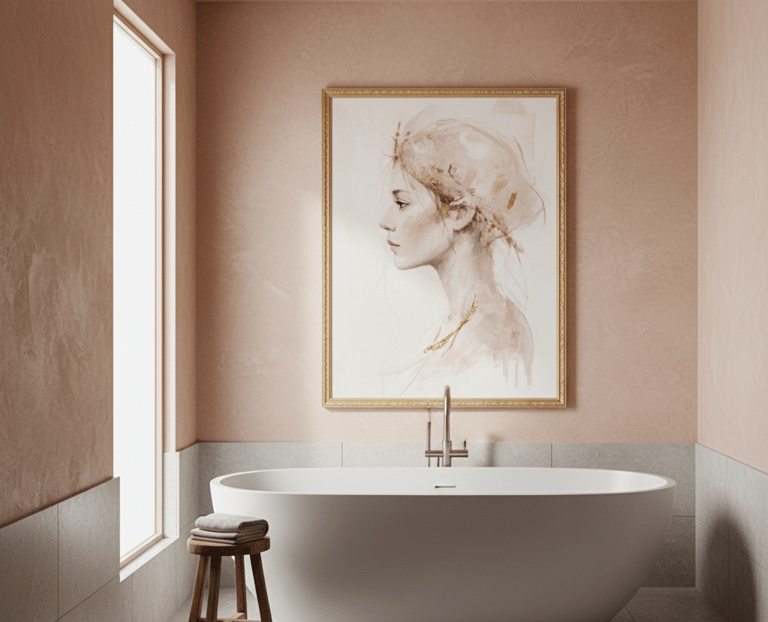
14. Feminine Portraiture to Echo Paint Tones
Art can serve as the bridge that connects different elements of your room. In a space using color-blocking (e.g., terracotta paint on top, gray tile on the bottom), a large, soft portrait featuring pink, gold, and cream hues connects the palette. The gentle curves of a portrait help soften the angular intensity of bold paint lines and square tiles.
Why It Works: Portraiture adds a human element to the bathroom, making it feel less sterile.
Placement: Position a large, elegant portrait beside the tub or on the wall opposite the vanity mirror.
Color Theory: Pick art that contains at least one shade found in your tiles or paint. This makes the art feel like it was commissioned for the space.
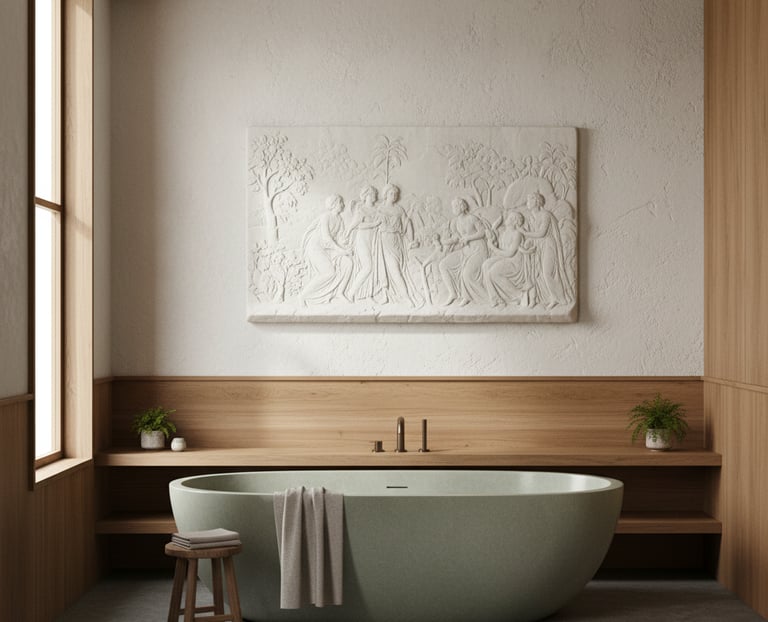
15. Classical Bas-Relief Sculpture Over Stone Tub
For the ultimate statement of luxury, move beyond 2D art. In an architecturally significant bathroom with a marble or stone tub, mount a classical bas-relief sculpture on the wall. The light-colored, three-dimensional texture of plaster or stone creates a powerful contrast against dark, sleek marble.
Why It Works: It adds history and gravity. It feels permanent and architectural rather than decorative.
Material: Ensure the sculpture is made of sealed plaster, resin, or stone that can withstand humidity. Unsealed plaster may yellow or degrade in very wet environments.
Lighting: This art needs directional lighting. A sconce placed above or to the side will cast shadows across the relief, highlighting the 3D texture.
Conclusion
The bathroom is often the most hardworking room in the house, but that doesn't mean it has to be strictly utilitarian. As these fifteen ideas demonstrate, the right piece of art—whether it’s a whimsical photograph, a serene landscape, or a classical sculpture—has the power to instantly soften hard surfaces and inject much-needed personality. Don't be afraid to experiment with scale, texture, and humor to create a space that feels less like a sterile washroom and more like your own private sanctuary.