
18 Breathtaking Mediterranean Living Room Ideas That Will Instantly Transport You to the Coast
There is a distinct reason the Mediterranean aesthetic never truly fades from the world of interior design. It is more than just a trend to be pinned on a mood board; it is a lifestyle philosophy manifested in physical space. It evokes the visceral sensation of warm sun on your skin, the saline scent of sea air, and the slow, deliberate pace of life found in iconic destinations like Santorini, Tuscany, and the French Riviera. If your current living space feels stagnant, dark, or uninspired, infusing it with Mediterranean charm is the ultimate remedy. This design language masterfully balances rustic earthiness with coastal elegance, creating a home that feels both luxurious and effortlessly livable. From architectural arches to sun-drenched color palettes, we have curated the top 18 Mediterranean living room ideas to help you transform your home into a European sanctuary.
LIVING ROOM
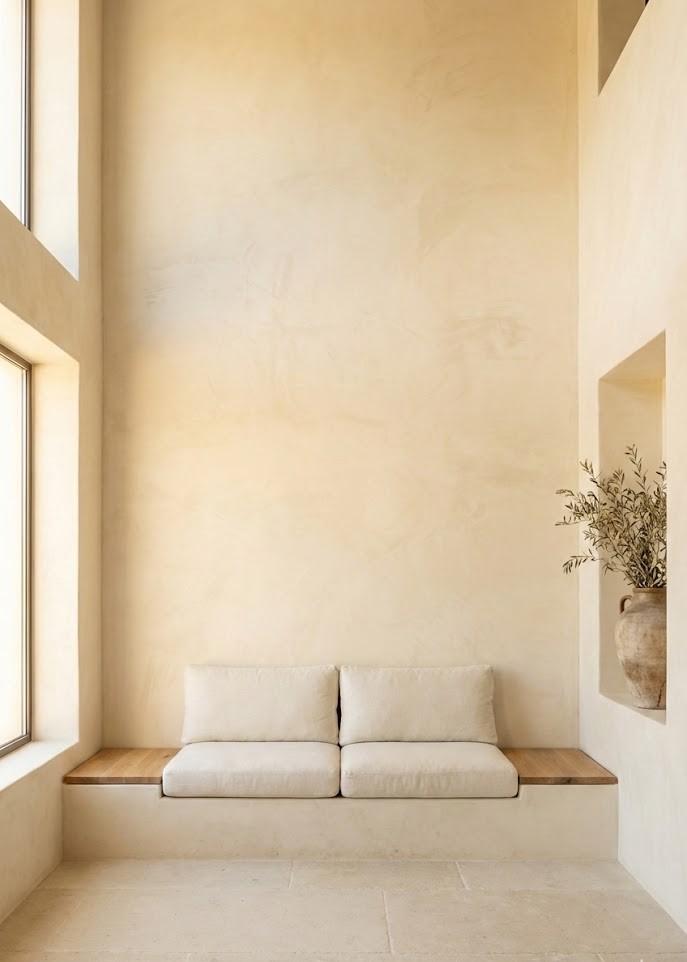
1. The Magic of Whitewashed Walls
To truly capture the essence of a Greek island villa, you must start with a clean slate. Whitewashed walls are the non-negotiable cornerstone of the coastal Mediterranean look. However, this is not about slapping on a coat of sterile, hospital-white paint. The goal is to achieve a texture that feels aged and organic.
Practical Styling Tip: Avoid high-gloss finishes. Instead, opt for matte paints or a traditional lime-wash application. Lime wash penetrates the masonry (or drywall) and creates a chalky, nuanced texture that changes as the sunlight moves across the room. Look for "warm whites" with yellow or red undertones—think Alabaster or Greek Villa—rather than cool, blue-based whites.
Pros: Reflects natural light beautifully, making small rooms feel massive; provides a neutral backdrop for art.
Cons: Matte and lime-wash finishes can be harder to clean than eggshell or satin paints; shows scuff marks easily in high-traffic areas.

2. Exposed Rustic Wooden Beams
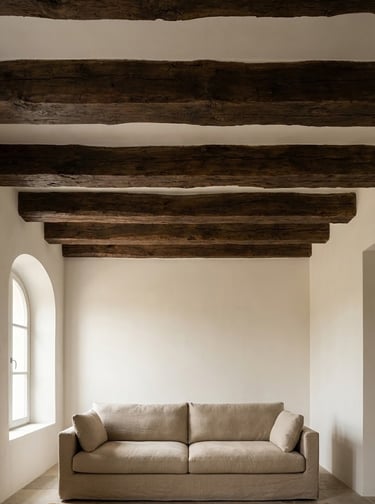
Look up—the ceiling is arguably the most underutilized surface in modern homes. In traditional Mediterranean architecture, the "bones" of the house are celebrated rather than hidden behind drywall. Installing exposed wooden beams adds immediate architectural weight and a sense of history to the living room.
Design Insight: If you don't have structural beams, you can install high-quality faux wood beams made from high-density polyurethane, which are lightweight and indistinguishable from wood once installed. For an authentic look, stain the wood in a dark walnut or espresso shade to create high contrast against your white ceiling.
Real-World Example: A "Reclaimed Oak" finish pairs perfectly with cream walls, while a "Driftwood" finish suits a more modern, beachy vibe.
Pros: Adds vertical interest and warmth; increases property value perception.
Cons: Dark beams can make low ceilings feel lower; real wood beams require heavy-duty installation support.


3. Authentic Terracotta Flooring
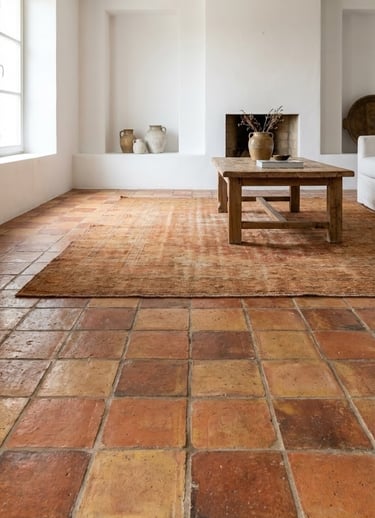
Step away from the ubiquity of cool gray luxury vinyl plank and embrace the warmth of the earth. Terracotta tiles, with their rich spectrum of burnt orange, rust, and ochre, are a staple in Spanish and Italian homes. These tiles provide a rustic foundation that grounds the entire room.
How to Style It: For a timeless look, use square 12x12 tiles. For a more intricate, design-forward approach, opt for a hexagon shape or a herringbone pattern. Because terracotta is porous, it must be sealed properly. If ripping up your floor isn't an option, mimic this aesthetic by layering a large, flat-weave wool rug in warm, spicy earth tones (rust, cinnamon, and clay) to anchor your furniture.
Pros: Hides dust and pet hair exceptionally well; naturally cool underfoot in summer; ages beautifully (patina).
Cons: Hard and cold in the winter; requires regular sealing to prevent staining; can be prone to cracking if a heavy object is dropped.


4. Architectural Arches and Curves
Modern design often relies on sharp angles and rigid squares, but the Mediterranean style is defined by the arch. Softening the harsh lines of your living room with arched doorways, windows, or built-in niches adds a sense of romance and fluidity that rectangular frames simply cannot achieve.
Renovation vs. Decor: If you are in the middle of a remodel, replacing a standard door frame with an arch is a high-impact upgrade. However, for a renter-friendly or budget-conscious update, you can paint a solid "arch" shape on a feature wall to frame a console table. Alternatively, introduce furniture with curved silhouettes—like a kidney-bean-shaped sofa or arched floor mirrors—to mimic the organic flow of the architecture without the construction dust.
Pros: Creates a custom, high-end look; improves the visual "flow" between rooms.
Cons: Custom doors and windows for arched openings are significantly more expensive than standard sizes.
9. Intricate Mosaic Tile Details
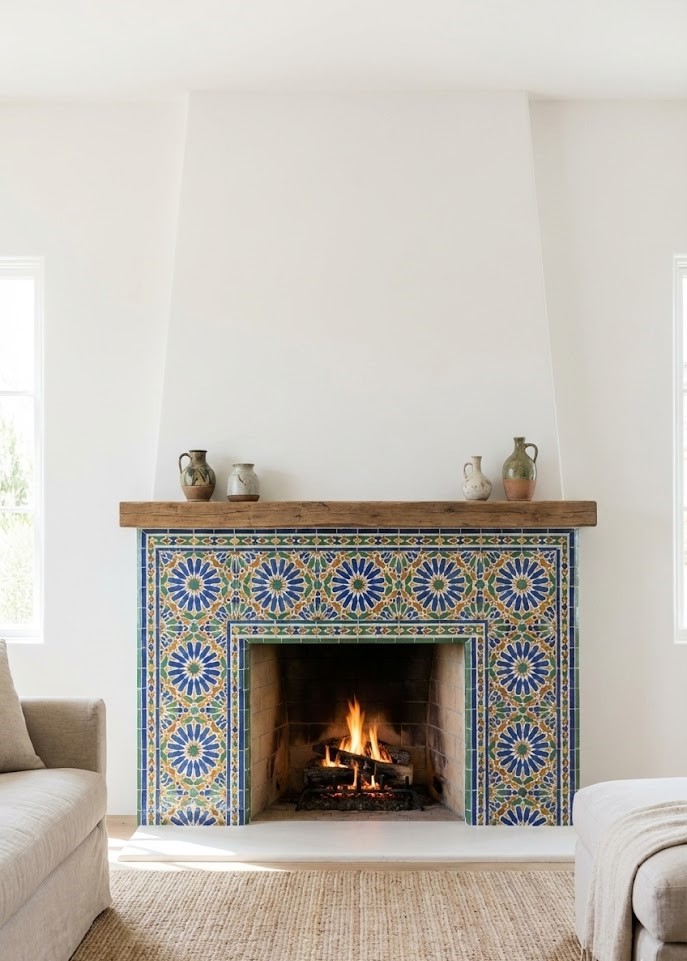
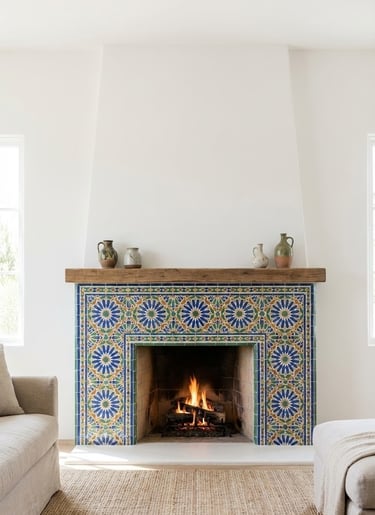
You don't need to tile the whole floor to make an impact. Introduce hand-painted mosaic tiles as a decorative accent. This design element pays homage to the Moorish and Spanish influences found throughout the Mediterranean region.
Placement Ideas: Think of tile as the "jewelry" of the room. A popular application is tiling the vertical risers of a staircase visible from the living room. You can also tile the surround of a fireplace or inset a tiled "rug" into a wooden floor. Look for patterns in vibrant azure, emerald, and saffron yellow.
Pros: Adds a pop of color and pattern without overwhelming the space; durable and water-resistant.
Cons: High-quality hand-painted tiles are expensive; grout lines require maintenance to keep clean.
10. The Olive Tree Centerpiece
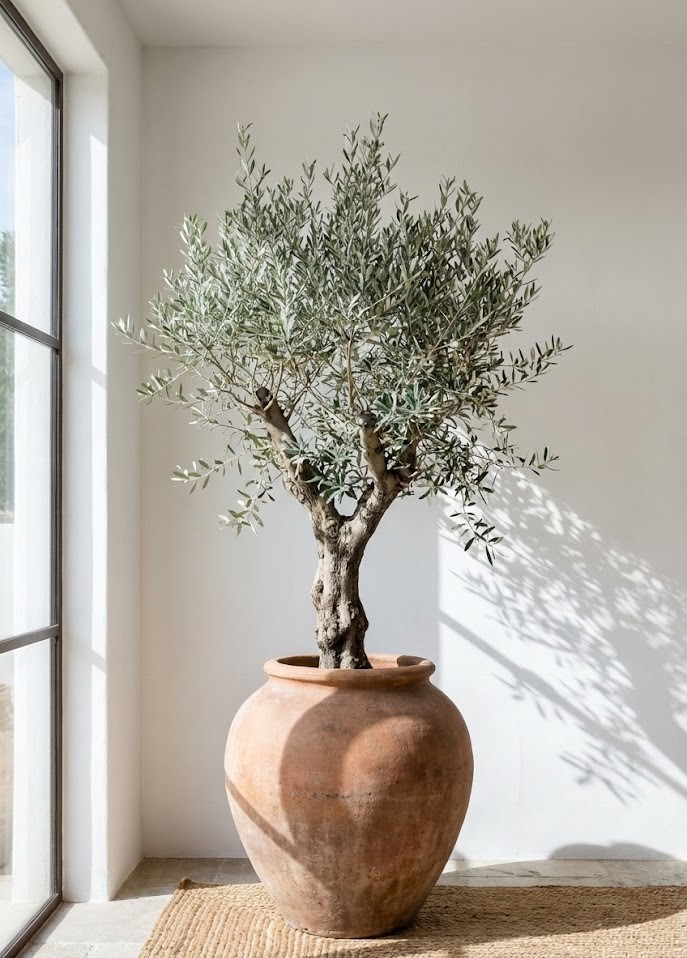
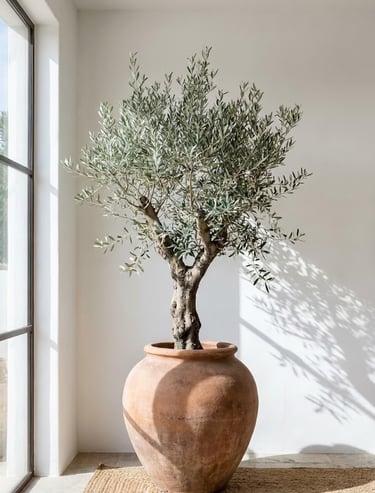
Nothing says "Mediterranean" quite like an olive tree. While full-sized trees belong in the groves of Tuscany, a potted olive tree is the ultimate indoor plant for this aesthetic. Its delicate, silvery-green leaves and gnarled, sculptural trunk add an element of sophistication that other houseplants (like the fiddle leaf fig) can't match.
Plant Care & Alternatives: Olive trees need a lot of direct sunlight. Place your tree in a large terracotta or woven basket directly in front of a south-facing window. If your living room is low-light, do not hesitate to buy a high-quality faux olive tree. Modern artificial trees are incredibly realistic and require zero maintenance.
Pros: Instantly establishes the theme; adds height to room corners; brings life to neutral palettes.
Cons: Real trees are fickle, prone to leaf drop, and susceptible to scale insects indoors.
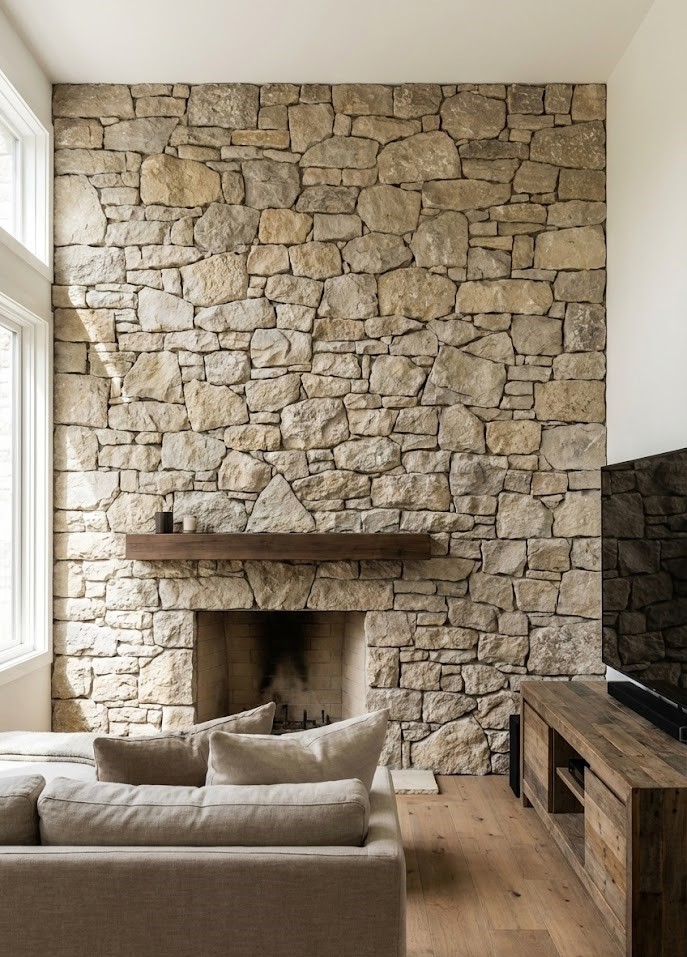
6. Raw Stone Accent Walls
Bring the rugged beauty of the coast indoors with a stone accent wall. Whether it is fieldstone, limestone, or sandstone, the texture of natural rock adds an element of "old-world" permanency to the living room. It connects the interior to the rugged landscape outside, blurring the lines between nature and architecture.
Installation Advice: A stone wall works best as a focal point—typically behind a fireplace or as the backdrop for a media center. If full stone is too heavy or expensive, investigate "stone veneer" or "ledger stone panels." These are thin slices of real stone that adhere to the wall like tile, offering the look of a solid wall without the structural weight.
Pros: Extremely durable; provides excellent sound insulation; adds significant texture.
Cons: Difficult to change once installed; rough textures can be dust magnets and hard to clean.
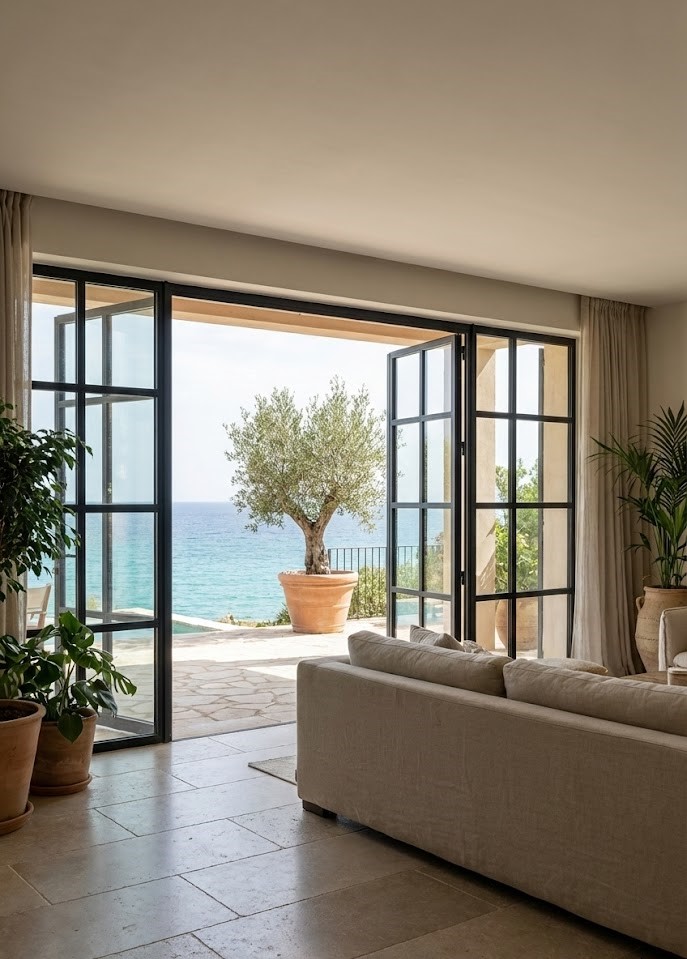
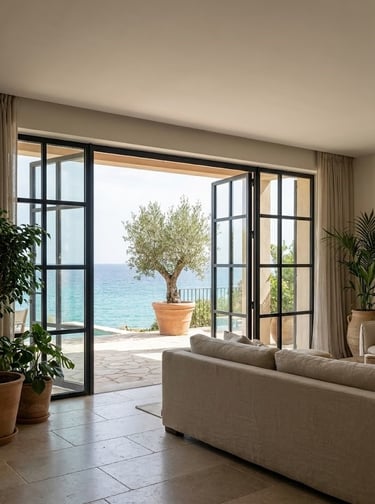
7. Seamless Indoor-Outdoor Flow
In the Mediterranean, life happens on the threshold between inside and out. To recreate this, you must maximize your connection to the outdoors. The goal is to make the transition from your sofa to your patio feel invisible.
How to Achieve It: If your budget allows, install large French doors or accordion glass walls that can be thrown open to the garden. Use the same flooring material (or a very similar color) for both the living room and the adjacent patio to visually extend the square footage. If you are in an apartment, orient your furniture toward the window rather than the television, and cluster tall indoor plants near the glass to bridge the gap between inside and out.
Pros: Makes small spaces feel larger; increases natural light and ventilation.
Cons: Can impact energy efficiency (heating/cooling loss); may invite insects indoors if screens aren't used.
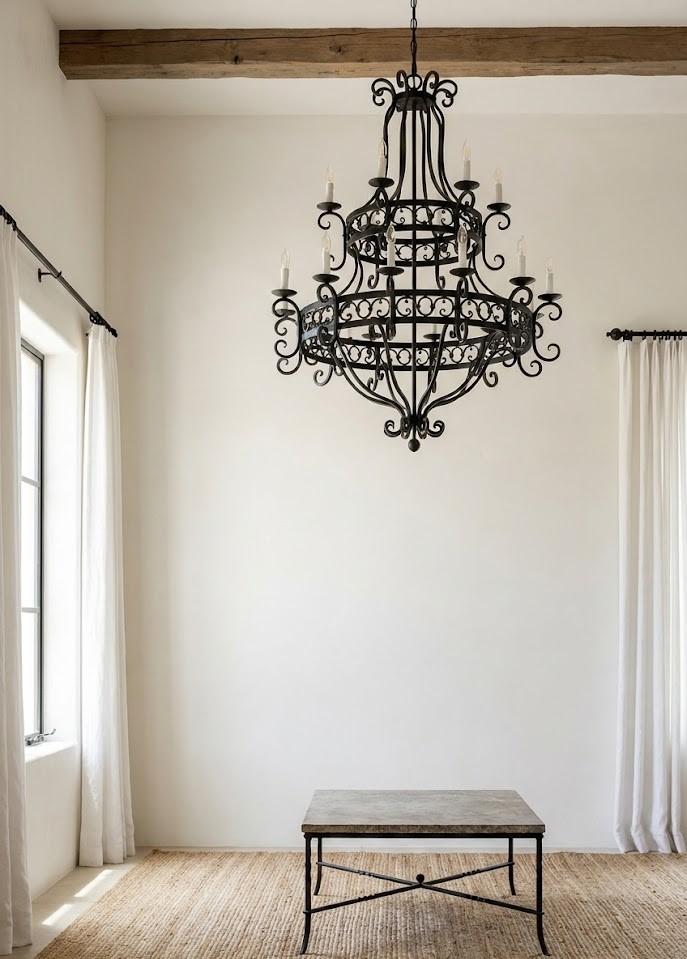
8. Elegant Wrought Iron Accents
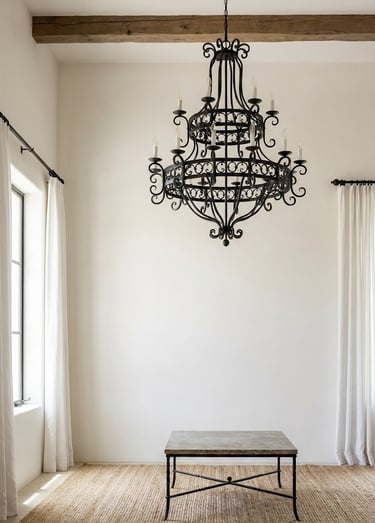
Swap out shiny chrome, brushed nickel, or brass for the timeless appeal of wrought iron. Black iron details provide a masculine, grounding contrast to the light and airy elements of a Mediterranean room. It anchors the eye and prevents the space from floating away.
Where to Use It: Incorporating iron doesn't mean your home needs to look like a dungeon. Use it sparingly for impact: thin matte black curtain rods, a geometric iron chandelier, stair railings, or the legs of a coffee table. The silhouette of slim wrought iron against a white plaster wall is a classic visual signature that feels historic and sophisticated.
Pros: Extremely durable and long-lasting; works with almost any color palette; adds a "custom" feel.
Cons: Can look heavy if overused; iron furniture is very heavy to move.
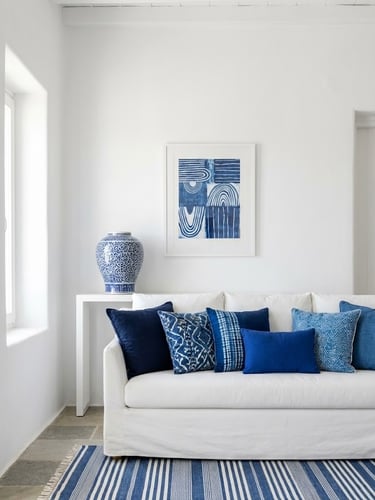
5. The Classic Blue and White Palette
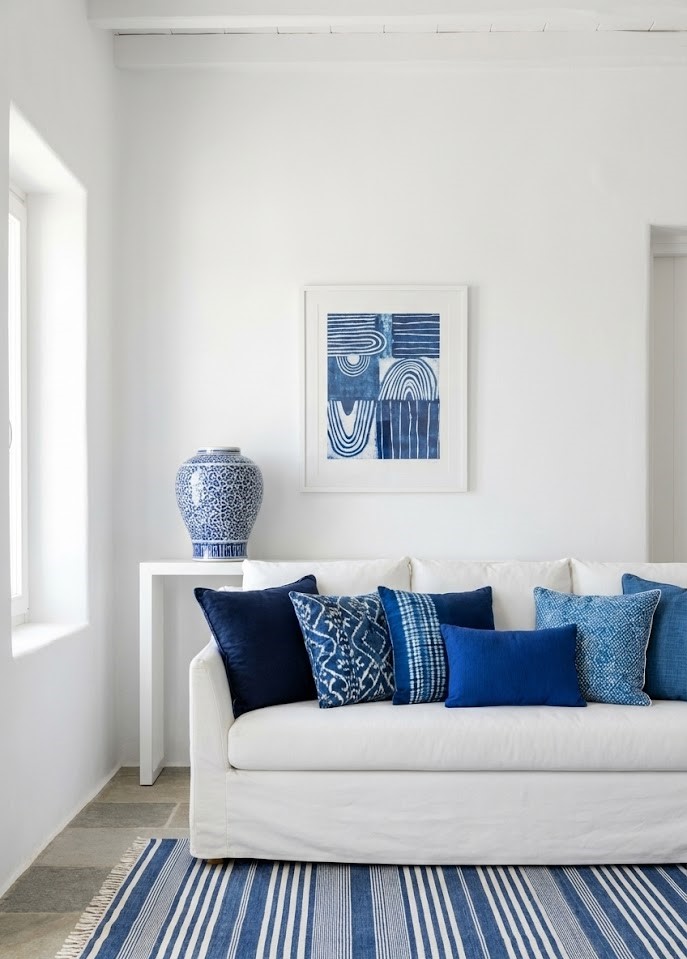
Channel the iconic cliffs of Santorini by adopting a high-contrast blue and white color scheme. This pairing is fresh, crisp, and undeniably coastal. The key to preventing this from looking like a generic nautical theme is in the specific shades you choose.
Color Guide: Stick to a base of warm white for 60% of the room (walls, large furniture). Use various shades of blue for the remaining 30-40%. Avoid "baby blue." Instead, layer deep Cobalt, Aegean Teal, and Navy. Introduce these colors through ceramic vases, patterned throw pillows, and even painted window frames.
Pros: Proven to be psychologically calming; easy to update seasonally by swapping accessories.
Cons: Can feel "cold" or uninviting in climates with long winters; risks looking cliché if you add motifs like anchors or seashells (avoid these!).
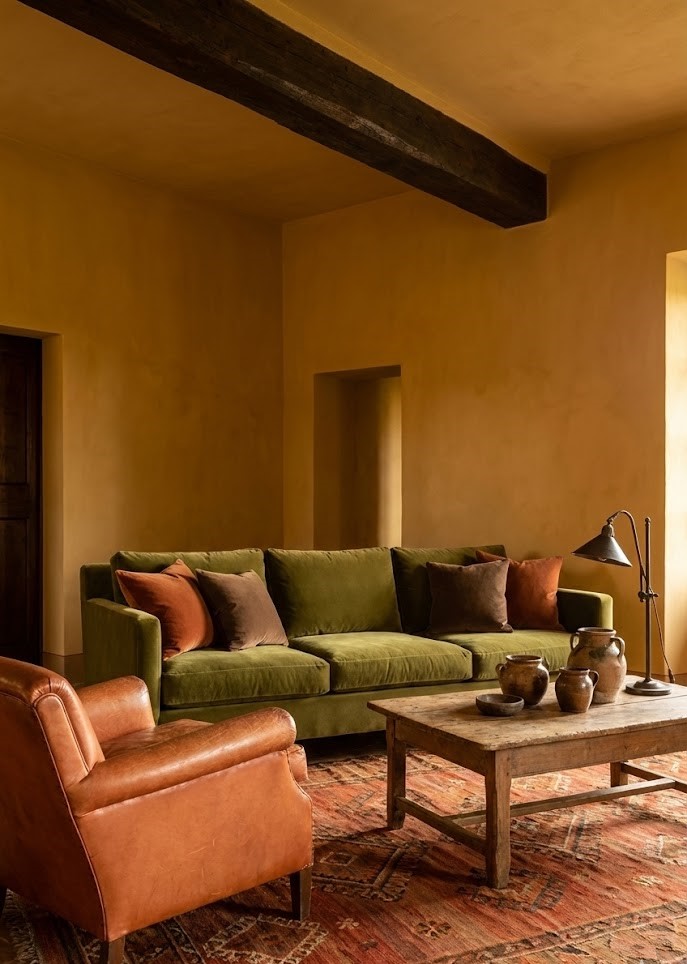
15. Warm Earthy Color Palettes
If the crisp white-and-blue look isn't for you, embrace the "Tuscan" side of the Mediterranean. This palette draws inspiration from the countryside, featuring warm ochre, burnt sienna, olive green, and deep umber.
Psychology of Color: These colors create a cozy, enveloping atmosphere that feels like a warm hug. They are particularly effective in living rooms that don't get a lot of natural light, as they lean into the moodiness rather than fighting it. Use these shades on walls, upholstery, and rugs to create a rich space perfect for evening gatherings and wine tasting.
Pros: Very cozy and inviting; hides dirt and wear better than white palettes; feels sophisticated.
Cons: Can make small rooms feel smaller if the lighting isn't adequate; requires careful balancing to avoid looking like a 1990s kitchen.
11. Breezy Linen Textiles
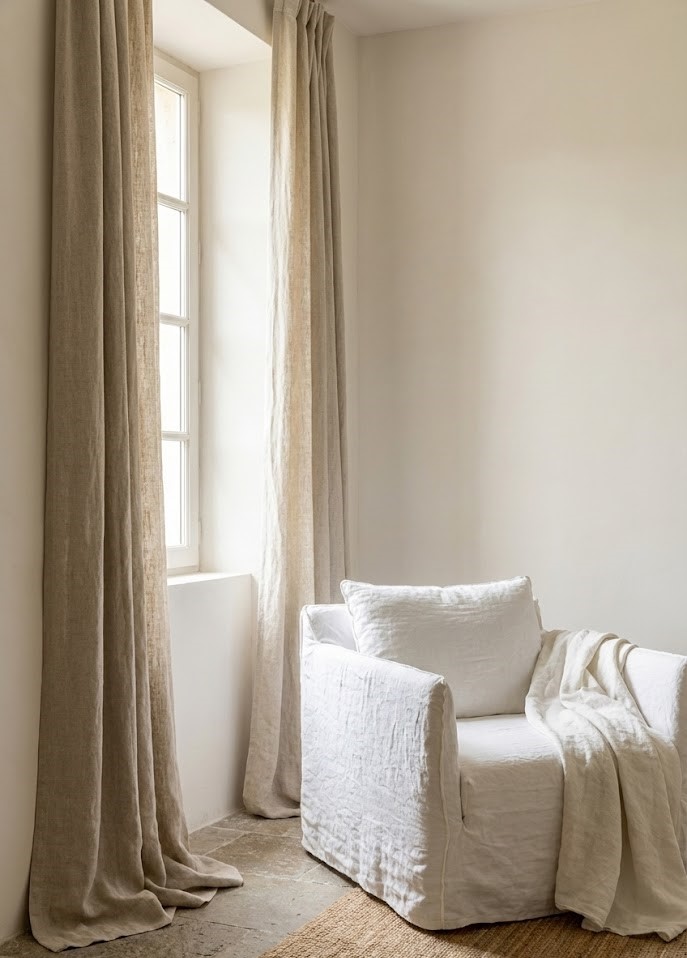
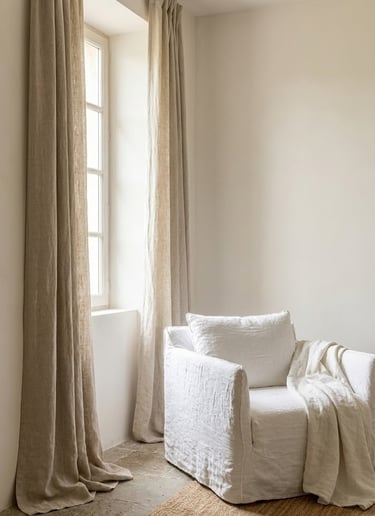
Texture is king in a monochromatic or neutral room. To get that relaxed, effortless vibe, you must swap out heavy velvets, shiny polyesters, or synthetics for pure linen. Linen possesses a natural irregularity that feels luxurious yet approachable.
Styling Tip: Use linen curtains that are slightly too long so they "pool" or "puddle" on the floor by 1-2 inches. This evokes a sense of relaxed luxury. Consider linen slipcovers for your sofas and armchairs; the natural wrinkling of the fabric is part of the charm, suggesting a home that is lived-in and comfortable rather than stiff and formal.
Pros: Breathable and eco-friendly; hypoallergenic; softens the acoustics of a room with stone floors.
Cons: Wrinkles easily (though this is part of the look); can be expensive compared to cotton or polyester blends.
12. A Stucco or Plaster Fireplace
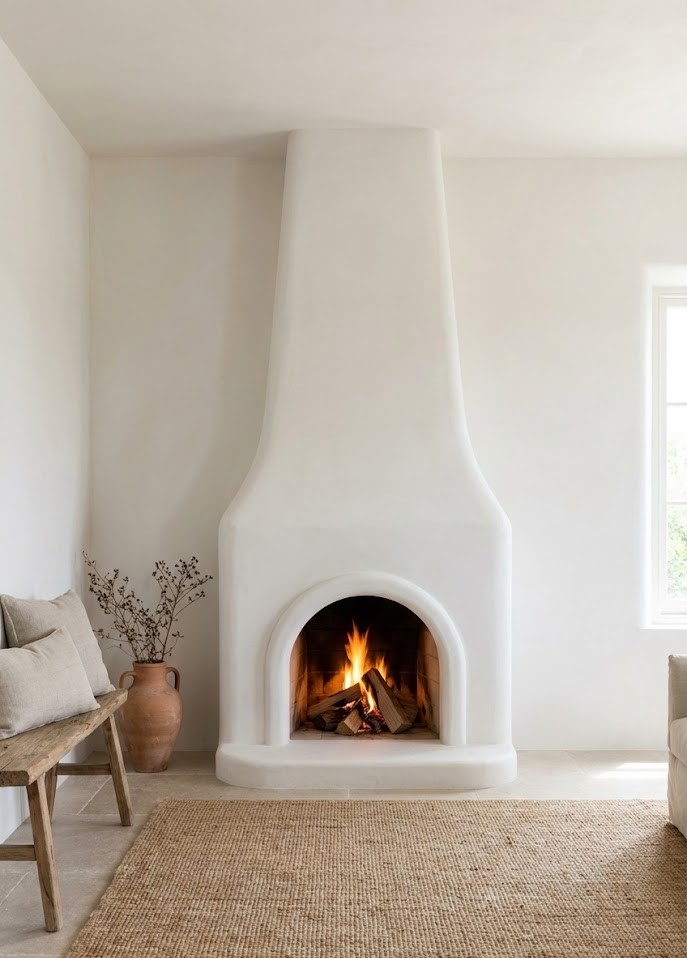
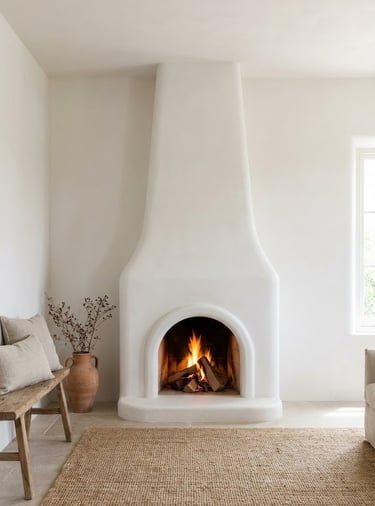
The hearth is the heart of the home. Move away from traditional wood mantels with intricate molding and opt for a fireplace finished in stucco or plaster with a tapered chimney breast. This smooth, sculptural look is common in Spanish Colonial and Greek interiors.
The Look: The goal is a "kiva" style or a simple, clean box shape that blends seamless into the walls. You can achieve this look on an existing fireplace by applying a Roman Clay or Venetian Plaster finish over the drywall or brick. It creates a soft, organic focal point that allows the crackling fire itself to take center stage.
Pros: Creates a calm, minimalist focal point; heat resistant; timeless design that won't date quickly.
Cons: Plaster can chip if hit with hard objects; lighter colors may show soot marks (requires regular cleaning).
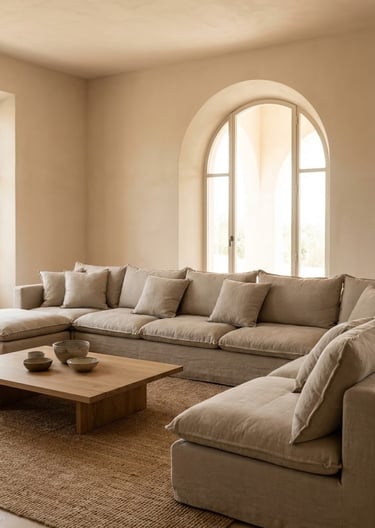
13. Low-Profile Lounging Furniture
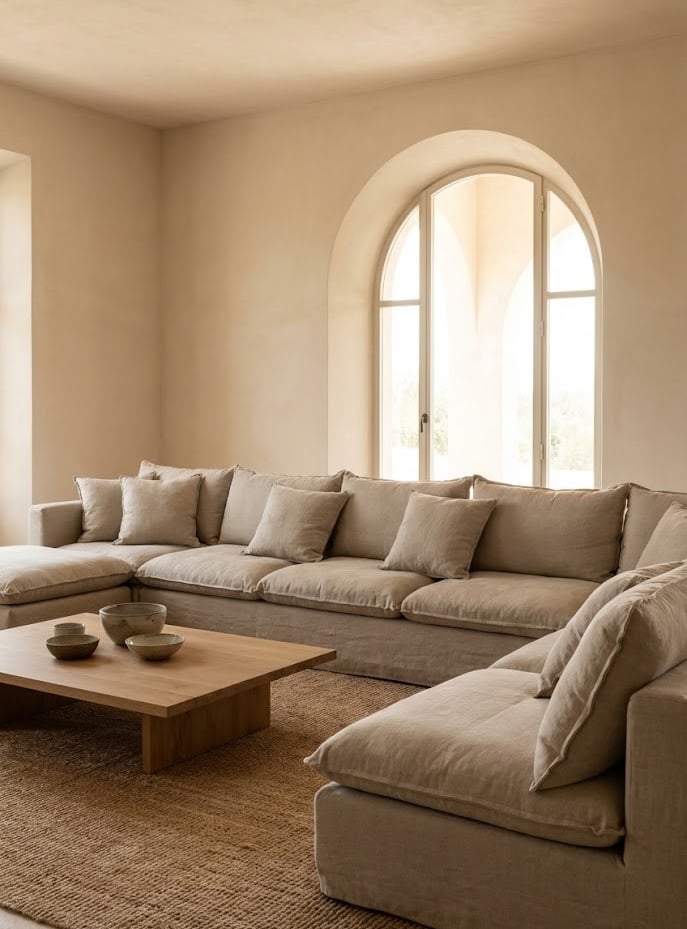
The Mediterranean lifestyle prioritizes relaxation, family, and long hours of socializing. Consequently, your furniture choices should invite guests to sink in and stay awhile. Avoid furniture that feels too tall, rigid, or formal.
What to Buy: Look for low-profile sofas with deep seats and plush, down-filled cushions. The goal is to create a majlis vibe—a sitting place where conversation flows easily. Low furniture also makes ceilings appear higher and keeps sightlines open to the windows. Modular sectionals in neutral tones work beautifully here.
Pros: Encourages a relaxed, casual atmosphere; makes rooms feel taller/more spacious.
Cons: Can be difficult for elderly guests or those with mobility issues to stand up from; requires occasional fluffing of cushions to maintain shape.
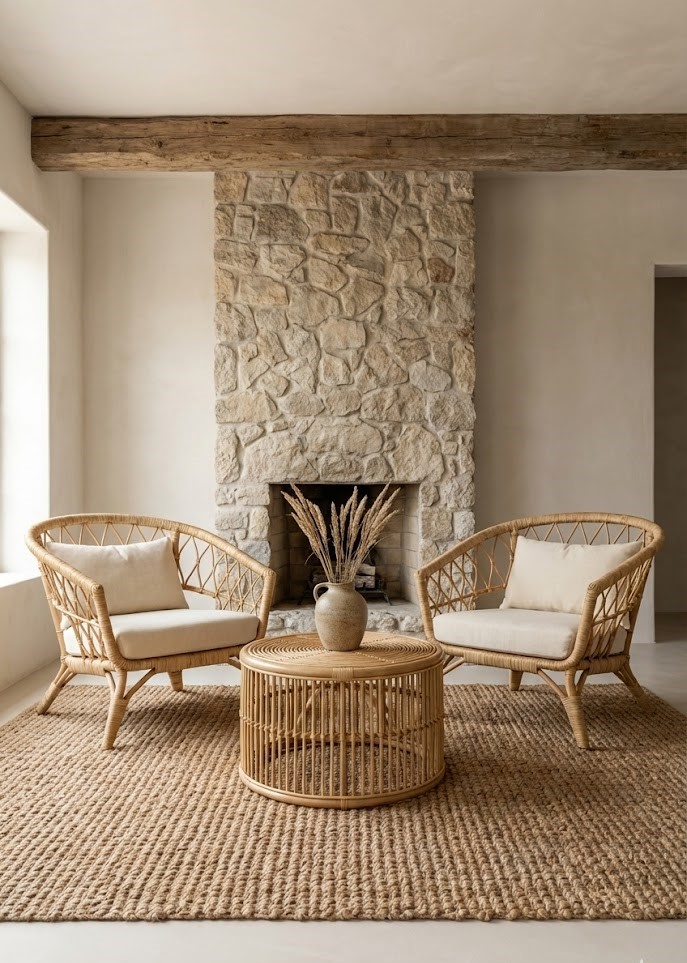
14. Organic Rattan and Woven Accents
To keep the space from feeling too heavy with stone, iron, and solid wood, you must introduce lighter natural fibers like rattan, wicker, bamboo, and jute. These materials bring a "boho-coastal" lightness that balances out the more serious architectural elements.
Mixing Textures: Pair a heavy velvet or linen sofa with a pair of airy woven accent chairs. Place a large jute area rug underfoot to layer texture on top of tile or wood. Woven pendant lights are also excellent for filtering light and casting warm, intricate shadows around the room in the evening.
Pros: Generally affordable; adds instant warmth and texture; lightweight and easy to move.
Cons: Natural fibers can shed; cats love to scratch rattan and jute (proceed with caution if you have pets!).
16. Curated Antique Decor
A Mediterranean living room should never look like it was bought entirely from a modern catalog or a big-box store showroom. It needs a sense of soul. The Mediterranean is a region steeped in history, and your decor should reflect that.
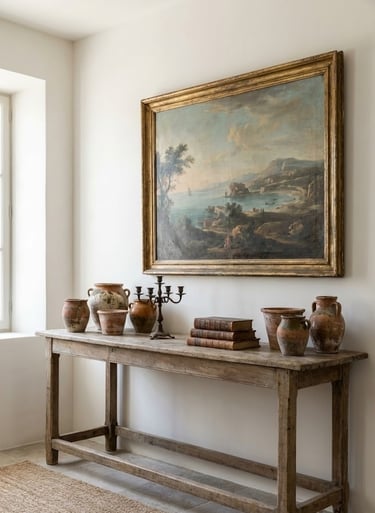
Where to Look: Incorporate antique or vintage pieces to ground the room. This doesn't mean expensive museum pieces; it could be a weathered wooden console table found at a flea market, an antique oil painting in a gilded frame, or a collection of vintage pottery. These items tell a story and prevent the design from feeling like a generic hotel lobby.
Pros: Adds unique character that can't be replicated; sustainable (recycling furniture).
Cons: Sourcing takes time and patience; antiques can be more fragile than modern reproductions.
17. Statement Pottery and Amphorae
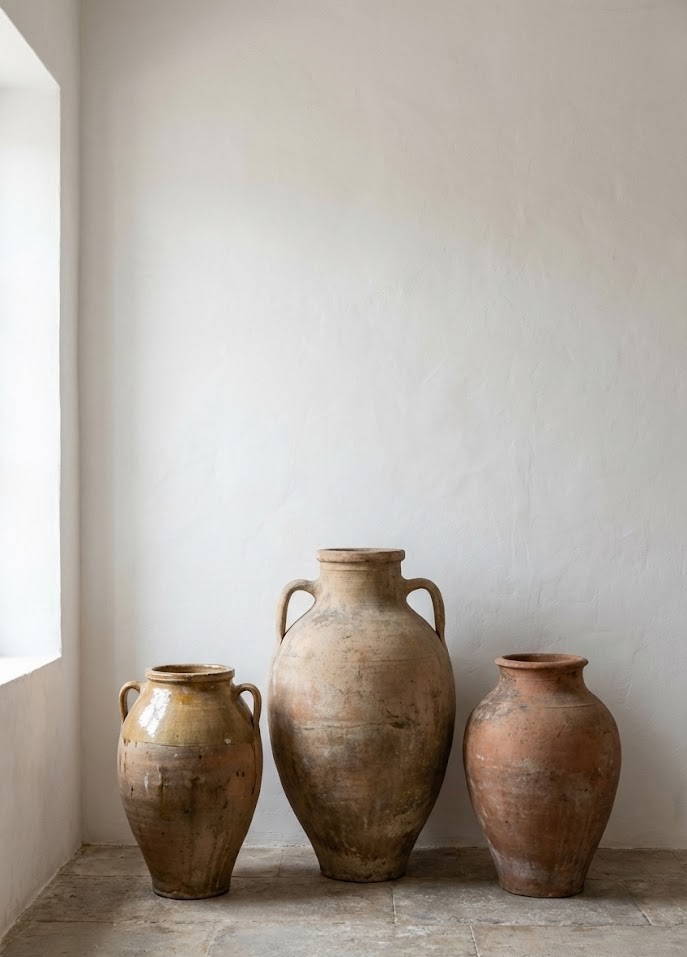
Large-scale ceramics are a non-negotiable accessory in this design style. Small trinkets create clutter; large vessels create drama. Look for oversized clay amphorae (ancient Greek-style jars with two handles), glazed urns, or rustic terracotta vases.
Styling Rule: Group pottery in odd numbers (sets of three are ideal) with varying heights. Place them on the floor in a corner, or on a sturdy hearth. Leave them empty to appreciate their sculptural form, or fill them with dried olive branches or pampas grass for added height and texture.
Pros: Acts as functional art; adds curves and organic shapes to the room.
Cons: Large pottery is fragile and can be a tipping hazard for toddlers or large dogs.
18. Minimalist Approach to Space
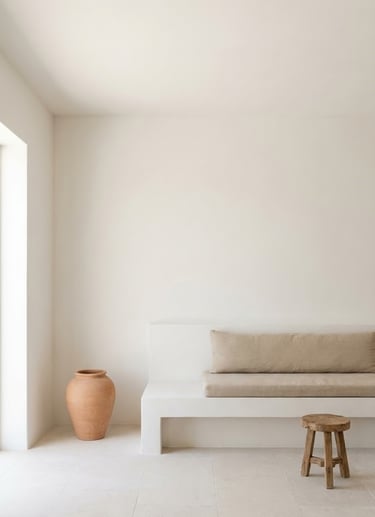
Finally, remember that Mediterranean design is often rooted in simplicity and "slow living." Do not overcrowd the room. The luxury of this style comes from the breathing room—the "negative space" where the eye can rest.
The Edit: A few high-quality, substantial pieces of furniture are far more effective than a room stuffed with clutter and filler items. Periodically "edit" your room by removing items that don't serve a function or bring you joy. This minimalist approach emphasizes the architecture, the quality of the light, and the people in the room, fostering a sense of peace and tranquility that is the true hallmark of the Mediterranean lifestyle.
Pros: easier to clean and maintain; reduces visual stress and anxiety; highlights your best decor pieces.
Cons: Requires discipline to prevent clutter accumulation; fewer storage options if you remove bulky cabinets.




Conclusion
Transforming your living room with Mediterranean influences is about more than just decoration; it is about curating a feeling. It is the feeling of an endless summer, a connection to the natural world, and a deep appreciation for history and craftsmanship.
Whether you adopt the breezy, sun-bleached whites of the Greek isles or the warm, rustic textures of the Italian countryside, these 18 ideas offer a roadmap to a home that feels like a permanent vacation. Start with the walls and floors, layer in natural textures, and finish with meaningful antiques. Embrace the warmth, let in the light, and enjoy your new sanctuary.