
18 Lived-In Earthy Living Room Ideas for a Warm, Grounded Home
Have you ever walked into a room that just felt right? It probably wasn’t pristine or perfectly staged. Instead, it felt authentic and welcoming. The sofa might have shown gentle wear, the wooden table might have had character marks, and the rug felt soft underfoot. This is the essence of an earthy living room. This style isn't about chasing fleeting trends you see online; it's about creating a space that supports your actual life—from quiet mornings to relaxing weekends and the happy chaos of family and pets. This guide is a practical framework for building that feeling. You'll learn how to establish a grounded foundation with materials that get better with age, balance color like nature does, and layer textures in a way that feels cozy, not cluttered. We'll explore specific ideas for materials, layout, and lighting that make every corner of your room feel intentional. By the end, your living room won't just look earthy—it will feel calm, lived-in, and uniquely yours. From the soft glow of string lights to charming DIY decorations, these budget-friendly tips are designed to bring warmth to your home, whether you live in a large house or a small apartment.
LIVING ROOM
1. Establish a Warm, Textured Foundation
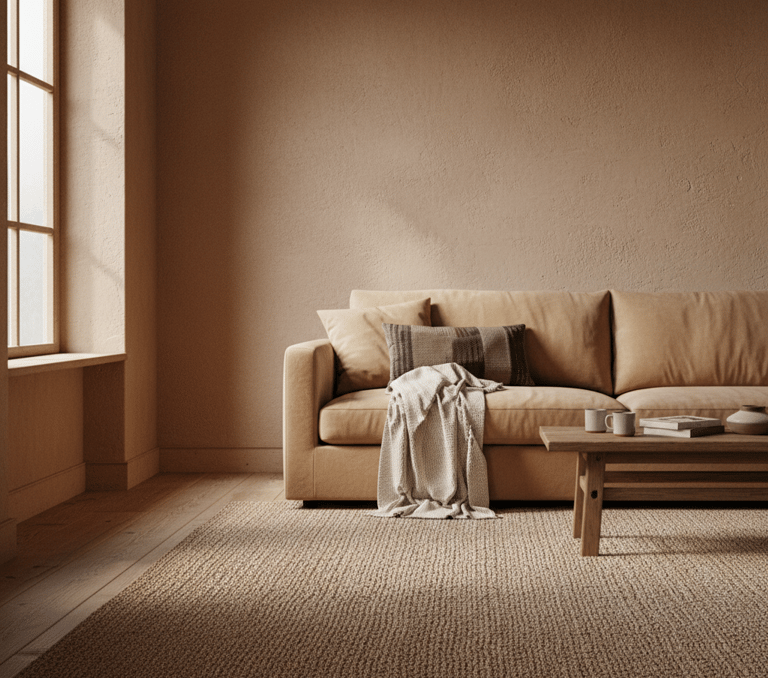
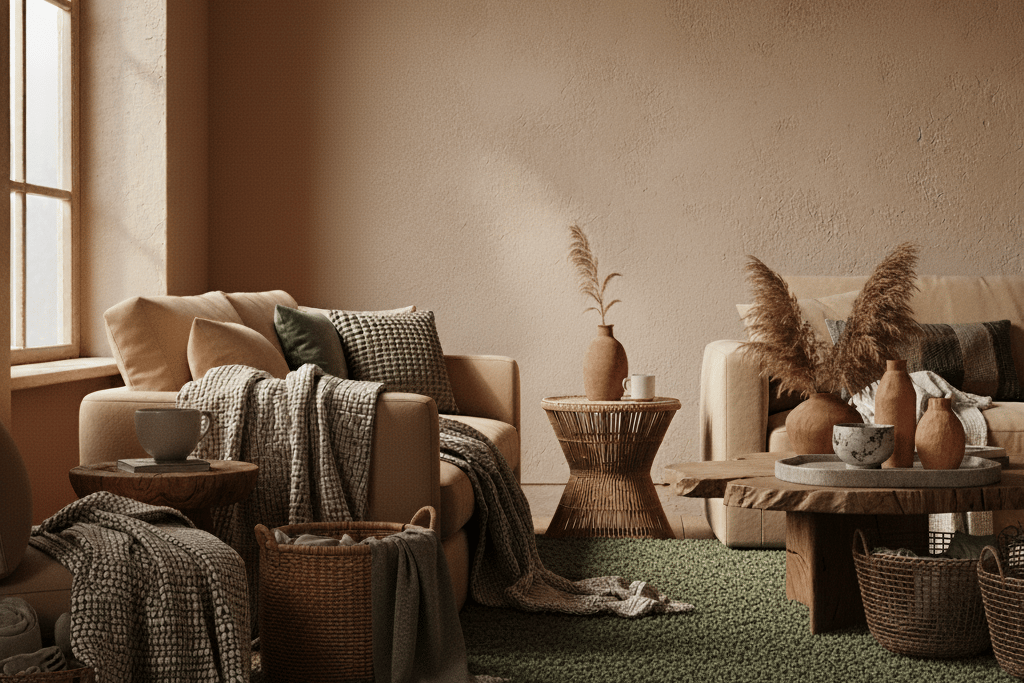
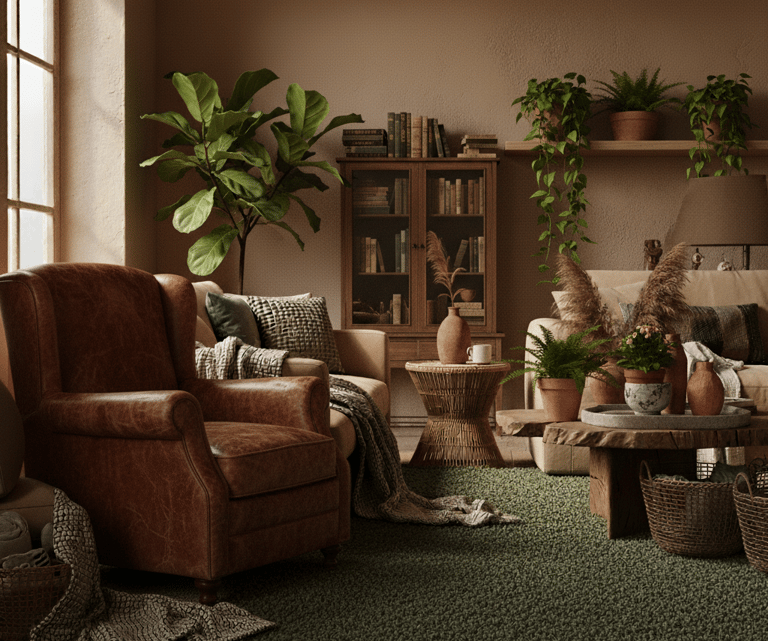
Before you add accessories, focus on the largest surfaces: your walls, floors, and main furniture. These elements set the mood for the entire space. A room with crisp white walls and cool, polished floors can feel sterile. By simply repainting the walls in a soft, sun-baked clay or warm beige, the entire room softens. This is often a budget-friendly project that delivers a major transformation.
For floors, if a full replacement isn't an option, layering is key. A large natural fiber rug, like jute or sisal (an 8 x 10 ft rug is a good starting point for most seating areas), anchors the space and adds essential texture. These materials age well, and minor imperfections over time only add to the room's character.
Renter-Friendly Tip: If you can't paint, consider a large-scale peel-and-stick wall mural in a clay, linen, or plaster texture. Many modern brands offer realistic finishes that are fully removable.
Categories
2. Introduce Organic Shapes and Natural Materials
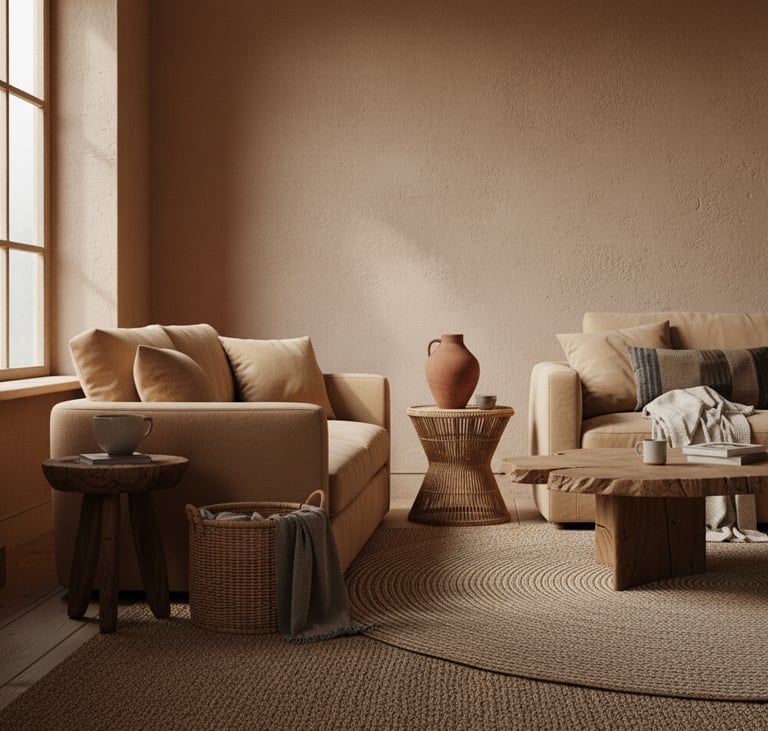
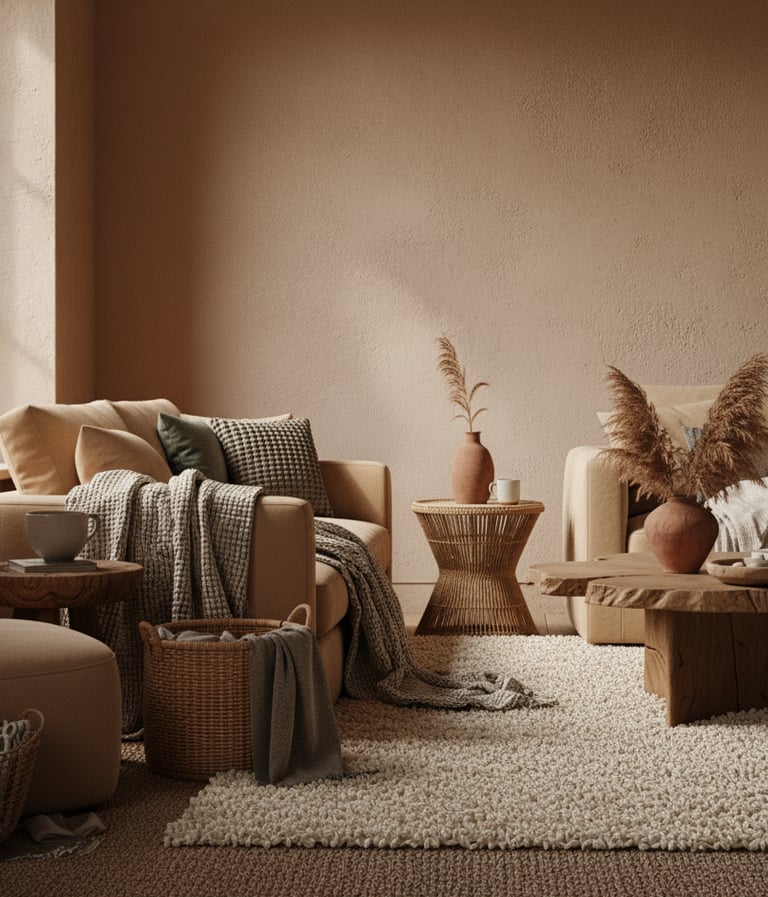
Modern design often favors sharp, straight lines, but an earthy aesthetic thrives on curves and natural imperfections. Look for furniture with softer silhouettes, such as sofas with rounded arms, coffee tables with a "live" or uneven edge, or circular side tables.
Replacing a standard rectangular table with a solid wood slab piece, for example, can instantly become the room's focal point. Prioritize materials like wood, rattan, stone, and ceramic over plastic or high-shine chrome. Even a small, hand-thrown ceramic stool adds tactile warmth.
Design Note: Avoid perfectly matched furniture sets. A living room with a sofa, loveseat, and armchair all from the same collection can feel impersonal. Create depth by mixing textures: try pairing a linen-blend sofa with a worn leather armchair and a wool-topped ottoman.
3. Apply Thoughtful Layers of Texture
Texture is the lifeblood of earthy design, but it requires balance. Too many competing textures can feel chaotic. The key is to create a rhythm.
Start with a base texture, like a nubby wool rug or hemp-blend curtains. Add mid-layer textures, such as a woven seagrass basket to hold blankets or a raw linen throw draped over the sofa. Finally, add smaller details: a terracotta vase, a carved wooden bowl, or an arrangement of dried grasses.
Pro Tip: Trust your sense of touch. When shopping, run your hand over the materials. If it feels cold, synthetic, or flat, it probably won't contribute to the warm, layered feel you're trying to achieve.
4. Select a Grounded, Nature-Inspired Color Scheme
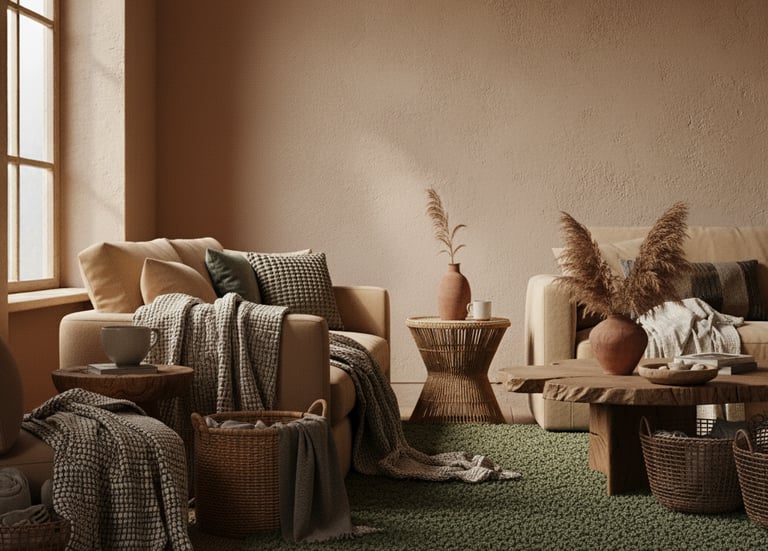
Earthy does not mean a monotone sea of beige. Think of the rich, complex colors you'd find on a walk in the woods: deep moss green, burnt umber, soft clay, slate gray, and warm ivory.
A simple formula to maintain balance is 70% warm neutral (like oatmeal or a warm greige), 20% mid-tone (like olive green, terracotta, or rust), and 10% accent (like a deep charcoal or rich ochre). This structure keeps the room grounded but visually interesting.
Design Note: If you stick to beige, choose one with depth. A flat beige can feel dull. Look for beiges with warm undertones of green, red, or yellow that will interact beautifully with natural light.
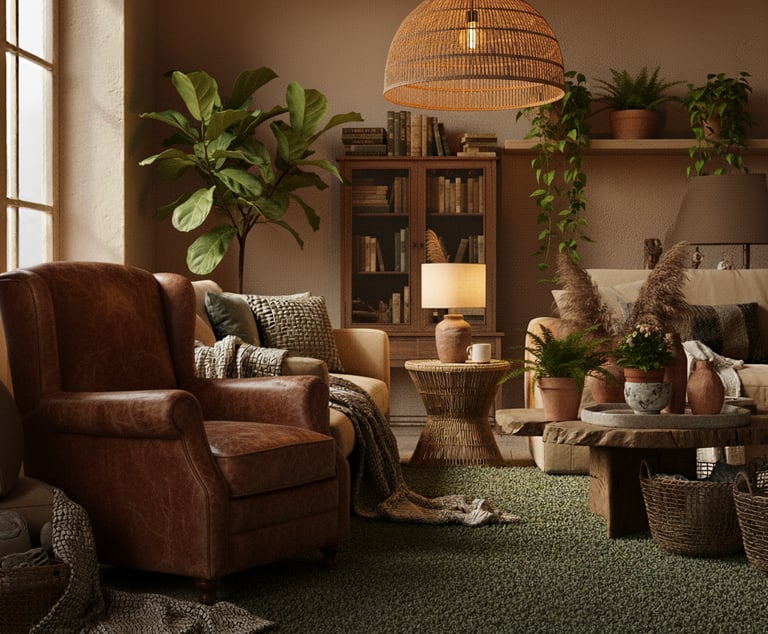
9. Design a Feature Wall with Natural Texture
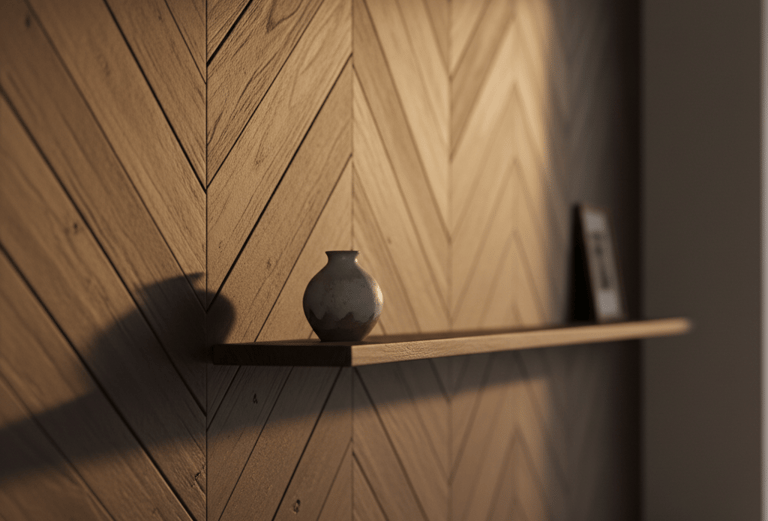
Instead of a plain painted wall, consider creating a focal point with natural materials. Reclaimed wood planks, applied horizontally or in a herringbone pattern, can add immense warmth. Sealing them with a matte oil rather than a glossy varnish preserves their raw, natural feel.
No-Renovation Alternative: If installing wood isn't an option, achieve a similar effect with a large-scale woven wall hanging, a gallery wall of framed pressed botanicals, or a lime-wash or clay-paint-effect mural.
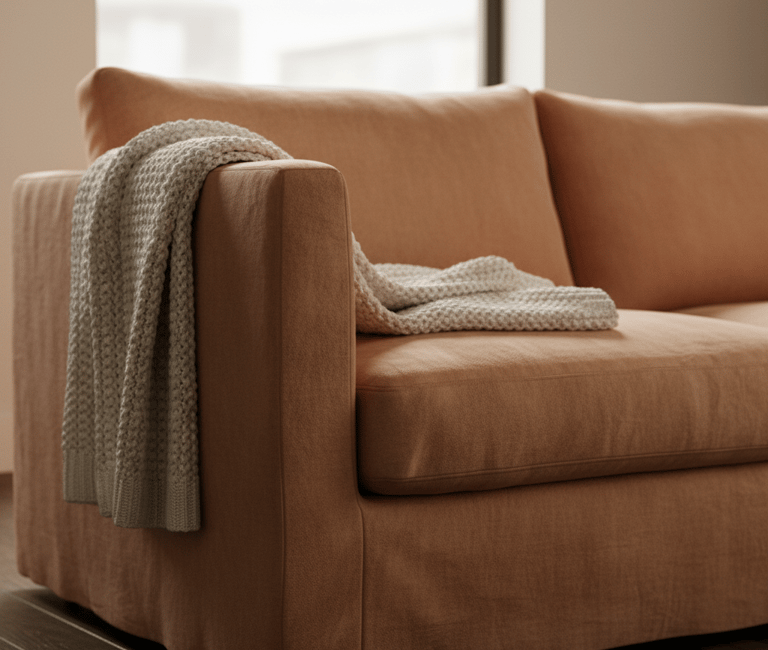
10. Select Upholstery That Develops Character
Choose fabrics that get better with age. Materials like linen, cotton canvas, and wool blends develop a soft, lived-in patina over time. A stone-washed linen sofa, for example, will soften, wrinkle, and fade slightly, making it feel more comfortable and inviting.
Family-Friendly Tip: For homes with pets or children, you don't have to sacrifice style. Many brands now offer "performance" fabrics, including wool blends and textured weaves, that resist stains and wear while still feeling warm and natural.
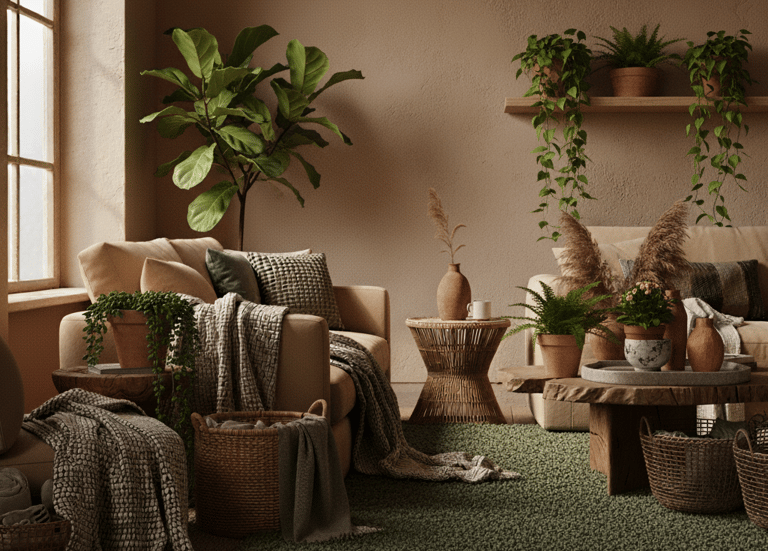
6. Integrate Greenery as Living Decor
Plants are more than just accessories; they are living, breathing texture. However, the goal is a calm sanctuary, not an overgrown jungle.
A good approach is the "rule of three": one large floor plant (like a Fiddle-Leaf Fig or Bird of Paradise), one or two medium plants on surfaces (like a Snake Plant or ZZ Plant in terracotta pots), and a few small accents (like a trailing Pothos on a bookshelf).
Pro Tip: Always use pots with drainage holes. It's a common mistake to plant directly in a beautiful, sealed ceramic pot, which can lead to root rot. Instead, keep the plant in its simple plastic nursery pot, place that inside the decorative pot, and remove it for watering.
7. Blend New Pieces with Vintage and Found Items
Earthy design honors history and character. That slightly chipped wooden stool or hand-me-down side table with a few scratches has a story. Don't rush to replace or hide these imperfections; they add soul to a room.
Pairing a vintage or flea-market find, like an old teak cabinet, with a modern, clean-lined sofa creates a beautiful contrast that feels curated and personal.
Budget Tip: Estate sales, antique shops, and online marketplaces are treasure troves for solid wood, metal, or ceramic pieces that have the authentic character mass-produced items lack.
8. Choose Lighting Fixtures with Natural Materials
The right lighting fixture can completely change a room's mood. Swap out generic or sleek metal pendants for fixtures made of woven rattan, paper, bamboo, or ceramic.
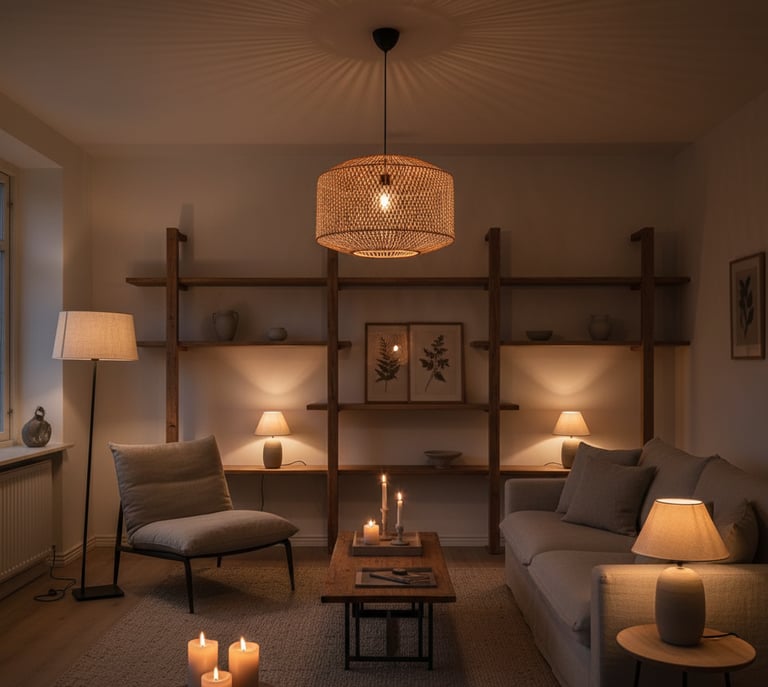
A large woven pendant light hung over a seating area casts soft, dappled shadows in the evening, creating a serene atmosphere similar to light filtering through leaves. For floor and table lamps, look for bases made of wood or blackened steel paired with simple linen shades.
Pro Tip: Use warm light bulbs (2700K–3000K). Cool-toned white bulbs (4000K+) can make an earthy palette feel sterile and harsh.
5. Incorporate Genuine Stone and Handcrafted Ceramics
Nothing signifies "earth" like real stone and clay. Even small applications can add a sense of weight and permanence. A set of slate coasters, a marble tray on the coffee table, or a heavy stoneware bowl for keys can make a big impact.
For a larger statement, consider a stone veneer or tile for a fireplace surround. Even peel-and-stick stone or slate tiles can create a surprisingly substantial and tactile feature wall.
Safety Note: If you're using heavy, real stone for shelving or wall treatments, always ensure your supports are properly rated for the weight.
15. Implement a Layered Lighting Plan
Relying on a single, harsh overhead light is the fastest way to ruin a room's ambiance. A layered lighting plan is essential.
Ambient: The main overhead light, like a rattan pendant or flush mount, on a dimmer switch.
Task: Focused lights for activities, like a floor lamp by a reading chair.
Accent: Soft, low light to create mood, like small table lamps on shelves or flameless candles.
16. Use Natural Storage to Conceal Clutter
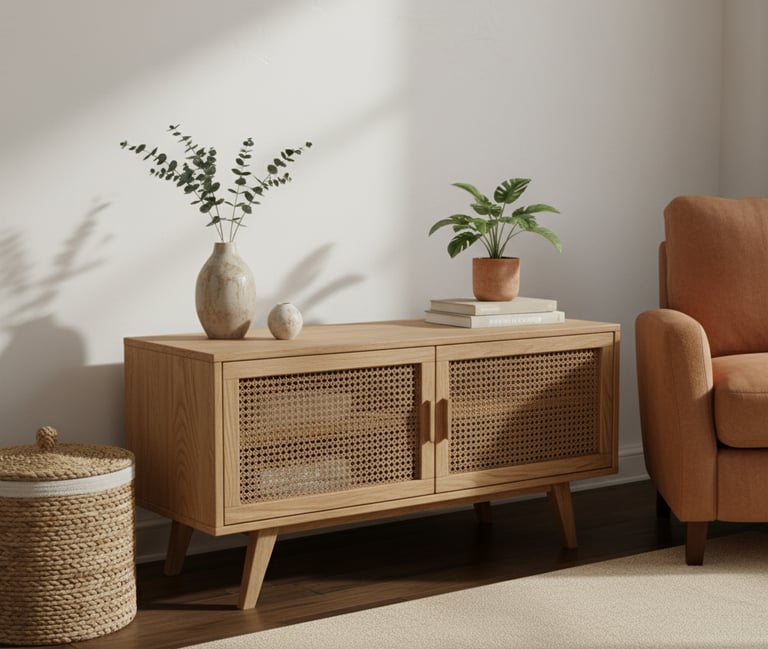
Earthy design embraces imperfection, but that's different from clutter. Use natural, closed storage solutions to hide the daily necessities (remotes, cords, games, etc.). Woven baskets, wooden chests, and media consoles with solid wood or cane doors keep the space serene.
Design Note: If you use open shelving, curate it. Don't fill it with random items. A balanced display might include a small stack of books, one ceramic piece, and one plant.
17. Display Meaningful, Personal Artwork
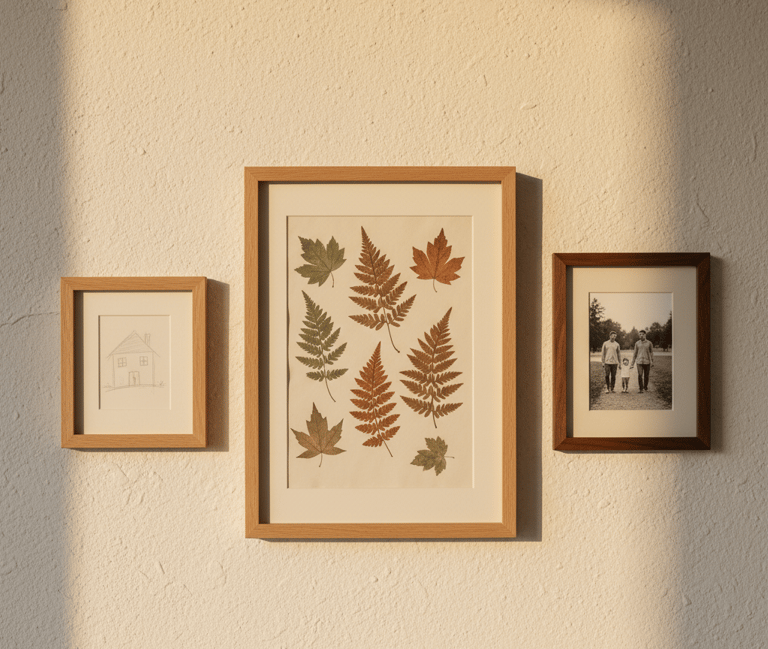
Skip the generic, mass-market canvas prints. An earthy space feels personal. Frame hand-drawn sketches, meaningful family photos in natural wood frames, or even your children's artwork. A framed collection of pressed leaves from a family walk can be more beautiful and meaningful than any store-bought art.
Pro Tip: If your art will be in a spot with direct sunlight, consider using UV-protective glass or acrylic in the frame to prevent fading.
18. Complete the Atmosphere with an Earthy Scent
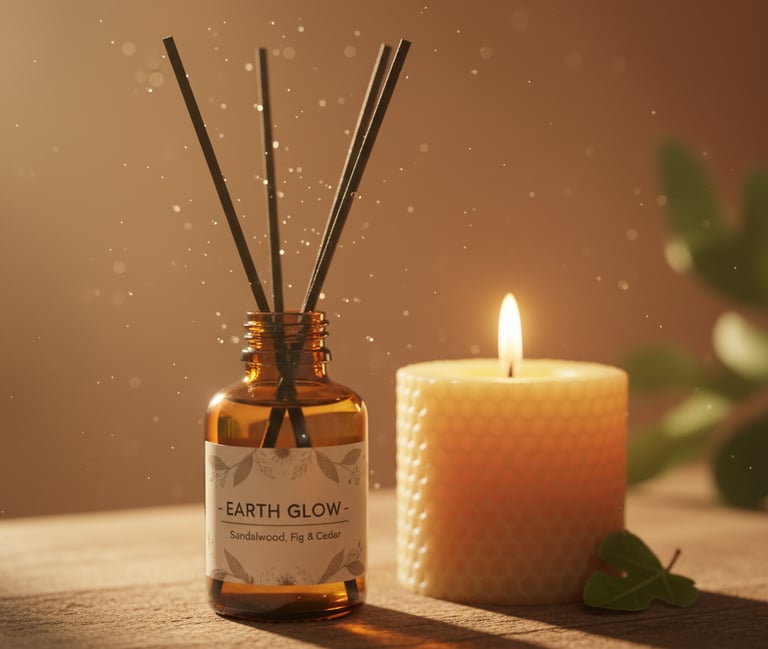
Scent is powerfully tied to memory and mood. Complete your earthy living room with a natural fragrance. Use a reed diffuser or a beeswax candle with notes of sandalwood, vetiver, cedar, or fig.
DIY Tip: Create your own simple diffuser blend by adding a few drops of essential oils (like cedarwood and bergamot) to a small bottle with a carrier oil, and add rattan reeds.
Frequently Asked Questions
1. How can I create an earthy feel in a small apartment? Focus on texture and low-profile furniture. Use a large jute rug to define the space, hang plants to draw the eye up, and use warm, layered lighting. Mirrors framed in natural wood can also make the space feel larger and reflect light.
2. How do I prevent the earthy style from looking too rustic or dated? Balance is key. Pair raw, rustic elements (like a live-edge table) with clean, modern lines (like a simple sofa or sleek black metal floor lamp). This contrast keeps the style feeling current and sophisticated.
3. What are the best non-permanent ideas for renters? Focus on things you can take with you. Use large rugs, peel-and-stick textured wallpaper, freestanding storage units, plug-in pendant lights, and lots of textiles (curtains, throws, pillows).
4. Is this style expensive to achieve? It doesn't have to be. You can start small with a new paint color, a secondhand rug, and some plants. The most authentic earthy rooms are built slowly over time, collecting meaningful secondhand and vintage pieces.
5. Is an earthy living room practical for kids and pets? Yes, it's one of the most practical styles. Natural materials like wood and leather hide wear and tear well. Choose durable natural fabrics (like cotton canvas or performance wool) and use plenty of closed storage to hide toys and clutter.
6. What's the difference between earthy and boho or farmhouse? Earthy design is typically more minimal and grounded than boho, which often features more color, pattern-mixing, and global-inspired items. It's also more authentic and less "themed" than modern farmhouse, which relies heavily on specific motifs like shiplap and barn doors. Earthy design is fundamentally about natural materials, a calm palette, and an authentic, lived-in feel.
11. Feature Handcrafted and Artisan Textiles
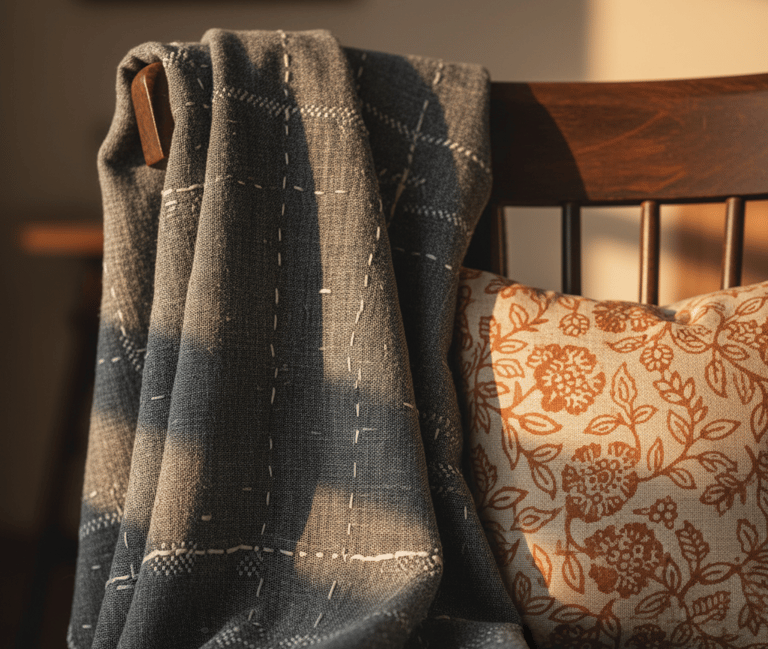
Mass-produced polyester throws and pillows can feel flat and lifeless. Seek out handcrafted textiles, such as hand-loomed blankets, cushions with irregular embroidery, or block-printed fabrics. A handwoven kantha throw, with its unique stitching and imperfect dye, adds a layer of story and humanity.
Budget Tip: Look for "imperfect" or "second" sales from artisans. A slightly crooked seam or minor dye variation is part of the charm and often comes at a significant discount.
12. Opt for Low-Profile, Grounding Furniture
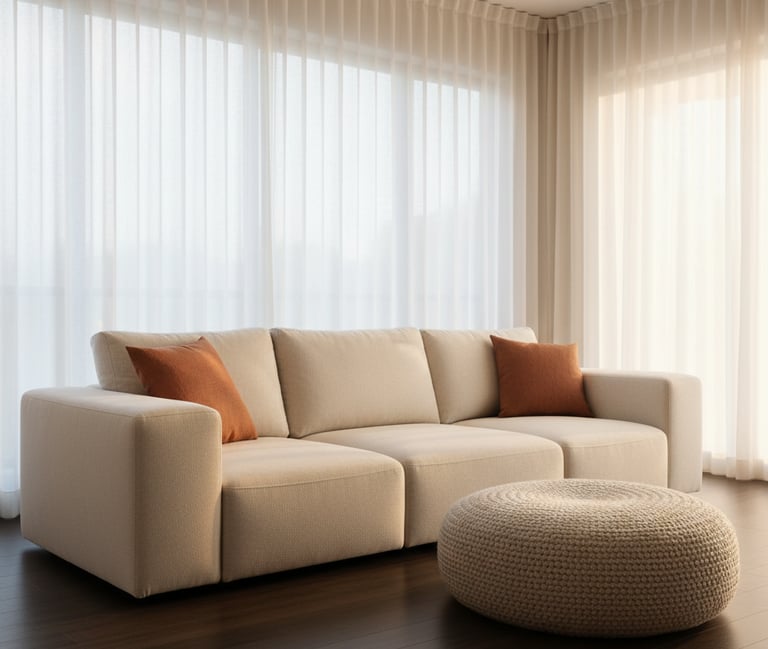
Spaces often feel calmer when the furniture is lower to the ground. This style creates a more relaxed, lounge-like atmosphere. Consider a low-slung sofa (with a seat height around 16–18 inches) or incorporate large, comfortable floor cushions.
Pro Tip: In a small living room, replacing a tall, bulky sectional with a lower-profile modular sofa can make the room feel significantly more open and spacious.
13. Arrange Dried Botanicals for Lasting Texture
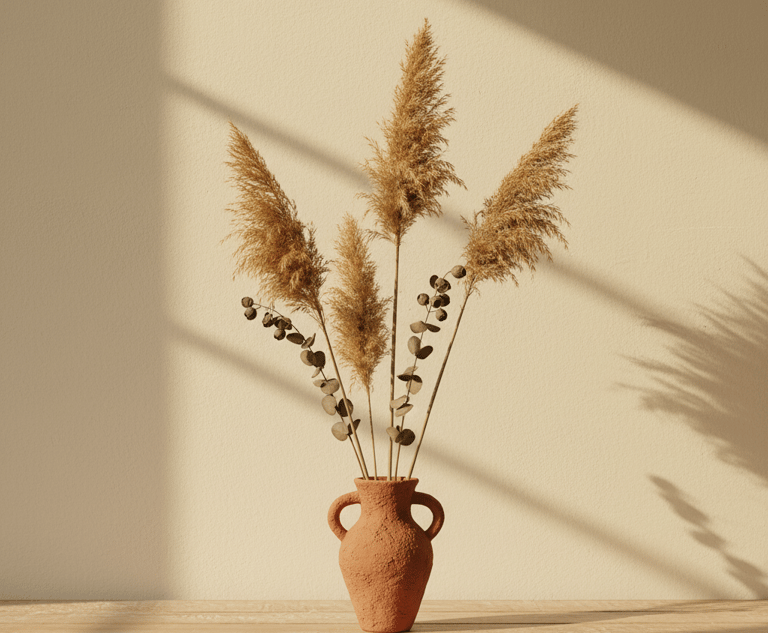
While fresh flowers are lovely, dried arrangements offer year-round texture and beauty. A tall terracotta vase filled with pampas grass, bunny tails, dried eucalyptus, or sculptural seed pods adds movement and a rustic touch.
Design Note: A little goes a long way. One or two thoughtfully placed arrangements are enough. Too many dried botanicals can quickly look dated or cluttered.
14. Appeal to All Senses, Not Just Sight
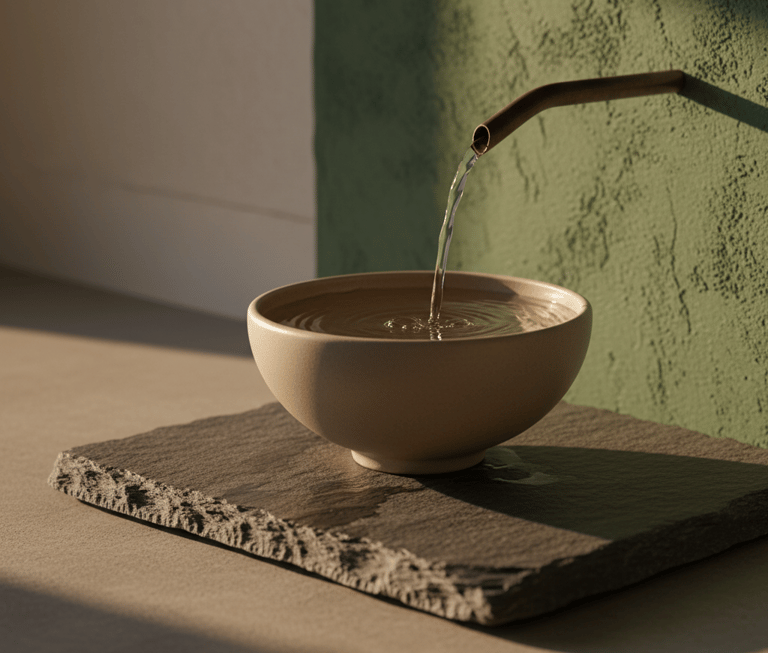
An earthy room doesn't just look good; it feels good. Consider the other senses. Introduce tactile elements, like a small panel of textured clay plaster on a wall, that invite touch. For sound, a small, quiet indoor water feature can add a "trickling stream" sound that grounds the space.