
18 Stunning Wall Art Ideas to Curate a Gallery-Worthy Home
Ready to transform your blank walls? I’m sharing 18 creative wall art ideas to curate a gallery-worthy home. From mastering the perfect family photo grid to using oversized mirrors and textiles, discover how to add personality to any room.
BEDROOMLIVING ROOM
Your walls are the largest surface area in your home, yet they often receive the least amount of intentional design attention. While the paint color sets the foundational tone of a room, it is the wall art that provides the personality, the narrative, and the finish. Whether you are aiming to create a cozy sanctuary, a vibrant entertainment space, or a minimalist retreat, the right decor can instantly elevate your interior design from "furnished" to "finished."
Transforming your home into a personal gallery doesn’t require a degree in art history or a museum-sized budget. It simply requires a bit of creativity, an understanding of scale, and a willingness to experiment. Below are 18 distinctive wall art concepts, arranged to help you maximize visual impact and express your unique style.
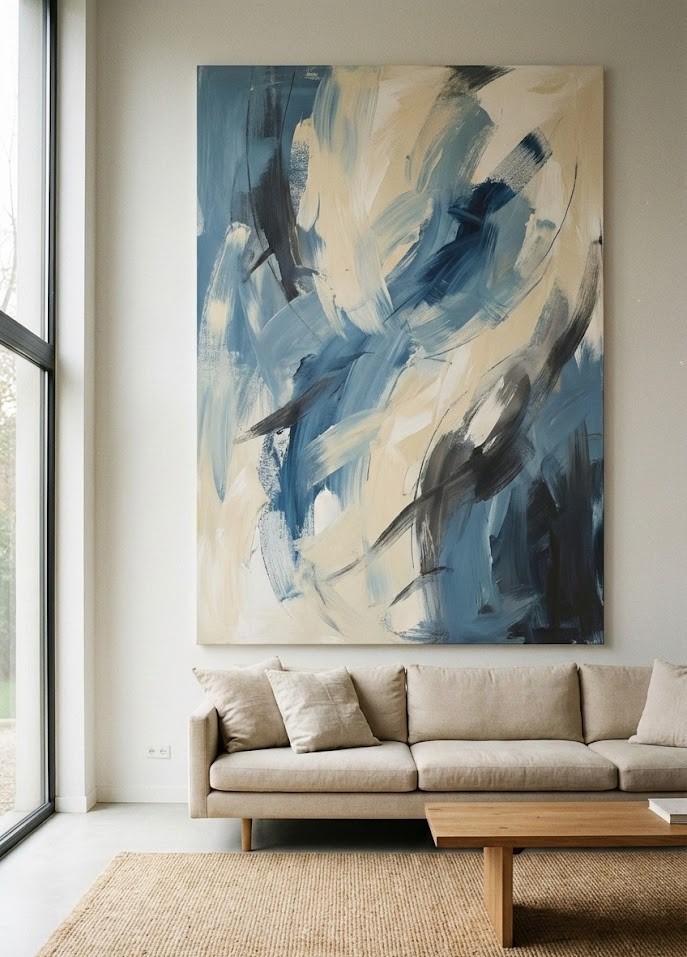
1. Anchor the Room with Large-Scale Canvas
Sometimes, one piece is all you need. In interior design, the concept of "negative space" is crucial; cluttering a wall with small items can sometimes make a room feel smaller. An oversized canvas acts as a powerful anchor for a living room or master bedroom. By choosing a single, massive piece of abstract art or a sweeping landscape, you create an immediate focal point that grounds the furniture below it.
Practical Styling Tips:
The Two-Thirds Rule: When hanging art above a sofa or bed, the piece should be approximately two-thirds the width of the furniture. If it is too small, it will look lost; too big, and it will feel top-heavy.
Eye Level: Ensure the center of the canvas is at eye level, which is generally 57 to 60 inches from the floor.
Pros and Cons:
Pro: Creates an immediate "wow" factor and creates a clean, minimalist aesthetic.
Con: Large-scale art can be expensive to frame and difficult to transport.
Categories
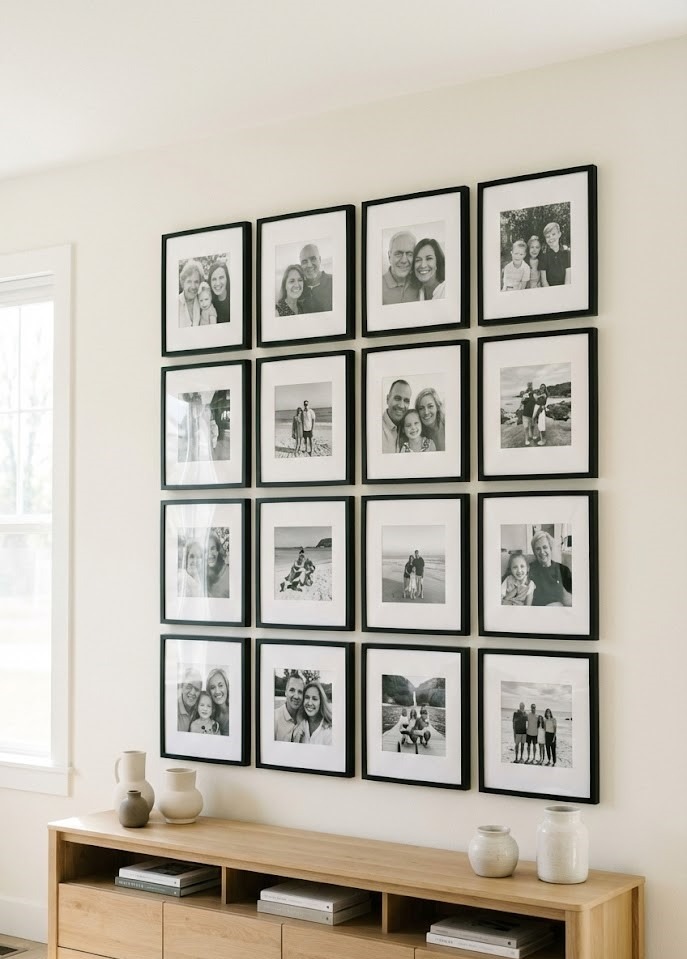
2. Curate a Nostalgic Family Photo Grid
Move beyond the standard mantelpiece frames and create a dedicated gallery wall for family memories. However, the difference between a messy collage and a high-end gallery wall lies in the execution. To keep the look cohesive and designer-friendly, uniformity is key. Using matching frames—such as sleek matte black, gallery white, or natural oak—ties the collection together.
Practical Styling Tips:
The Black and White Trick: Color photos can often clash due to different lighting conditions and clothing colors. Converting all photos to black and white instantly unifies the collection and adds a timeless, artistic quality.
Symmetry vs. Organic: For a formal living room, arrange frames in a strict, measured grid with equal spacing (usually 2 to 3 inches apart). For a hallway or stairwell, a salon-style arrangement feels more organic and allows you to add new photos over time.
Pros and Cons:
Pro: deeply personal and cost-effective.
Con: Requires precise measuring and leveling; a crooked grid is immediately noticeable.
3. Expand Space with Sculptural Mirrors
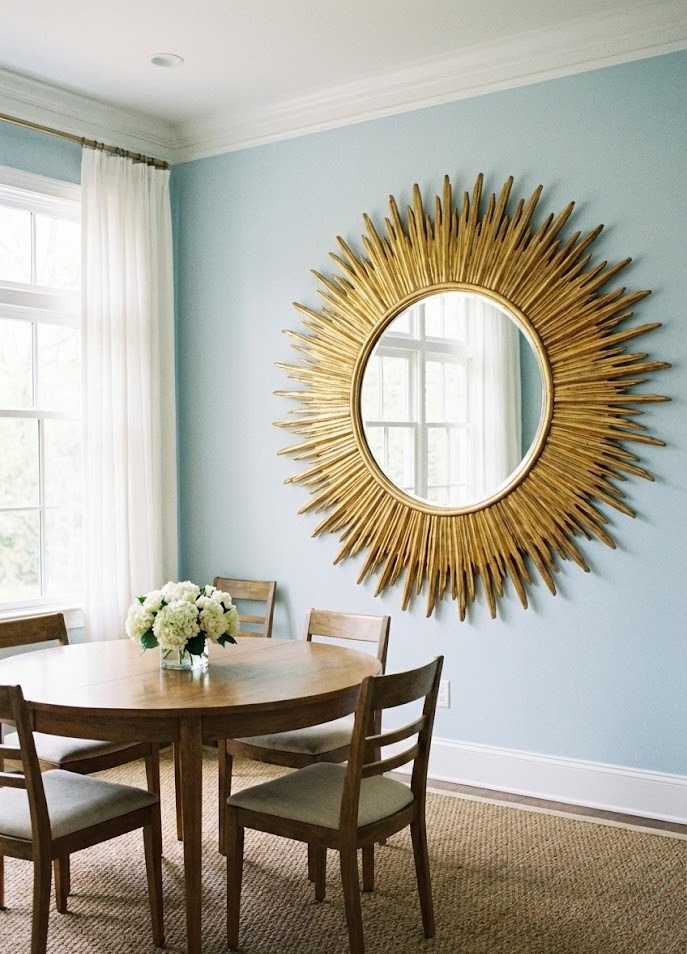
Mirrors are the ultimate dual-purpose decor. While they are functional for checking your appearance, a mirror with an ornate, geometric, or sunburst frame serves as a piece of art in its own right. Placing a large statement mirror opposite a window not only decorates the wall but also bounces natural light around the room, making smaller spaces feel significantly larger and airier.
Practical Styling Tips:
Check the Reflection: Before hanging a mirror, stand in the spot where it will go and look at what it will reflect. You want to reflect a nice view or a piece of art, not a cluttered corner or a bathroom door.
Go Round: If your room has a lot of straight lines (square sofa, rectangular rug, boxy windows), choose a round or oval mirror to soften the geometry of the space.
Pros and Cons:
Pro: Instantly brightens dark rooms and doubles visual depth.
Con: Heavy mirrors require heavy-duty wall anchors; glass requires frequent cleaning to remain streak-free.
4. Bring Nature Indoors with Botanical Series
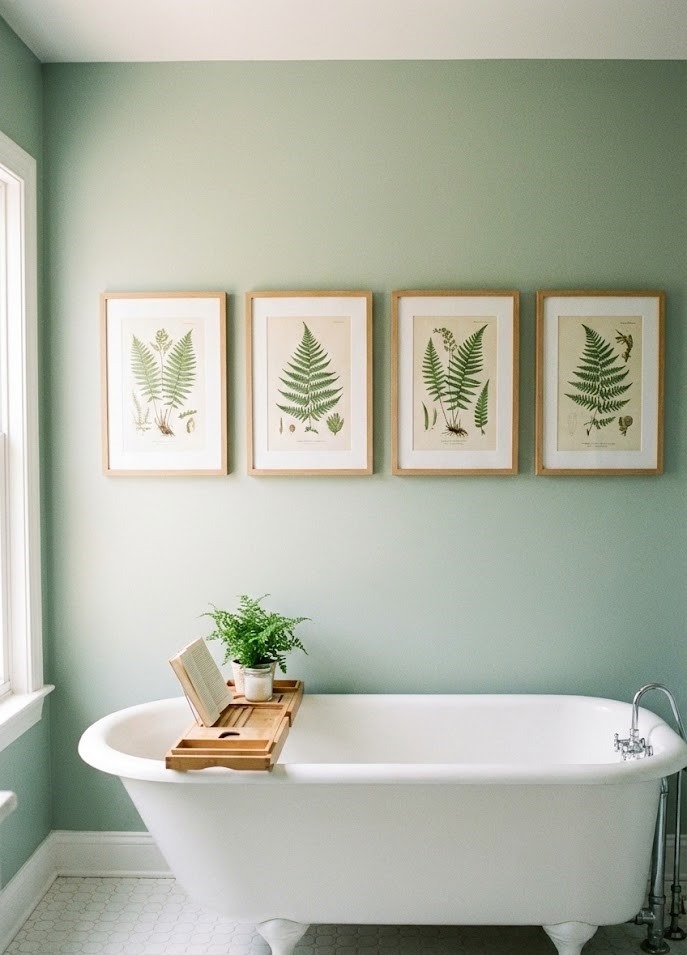
Biophilic design—the concept of connecting indoor spaces with the natural world—is a major trend for promoting well-being. If you want to create a calming, organic atmosphere, look to nature. A series of three or four framed botanical prints—whether they are vintage illustrations of ferns, pressed flowers, or modern high-contrast photographs of succulents—adds a fresh, green element to the room.
Practical Styling Tips:
The Triptych Effect: Hang three vertical botanical prints side-by-side above a console table or sideboard. This odd-number grouping is visually pleasing to the human eye.
Matting Matters: Use oversized white mats within the frames. This creates "breathing room" around the artwork, making even inexpensive prints look like high-end gallery pieces.
Pros and Cons:
Pro: Creates a serene, spa-like atmosphere perfect for bathrooms and dining areas.
Con: Can feel generic if you rely on mass-produced "big box store" art; try to source unique prints from independent artists.
9. Experiment with Removable Wall Decals
For renters or those afraid of commitment, high-quality wall decals are a game-changer. Modern decals have moved far beyond the simple stickers of the early 2000s; you can now find sophisticated geometric patterns, large-scale florals, or matte-finish graphics that look like hand-painted murals. They allow you to transform a room in an afternoon and can be removed without damaging the paint.
Practical Styling Tips:
Surface Prep: Clean the wall with a damp cloth and let it dry completely before applying. Dust prevents adhesion.
Placement: Use painter's tape to loosely position the decals before peeling off the backing, so you can step back and check the composition.
Pros and Cons:
Pro: Extremely renter-friendly and affordable.
Con: Can look cheap if the finish is too glossy; always opt for matte vinyl.
10. Add Dimension with 3D Sculptures
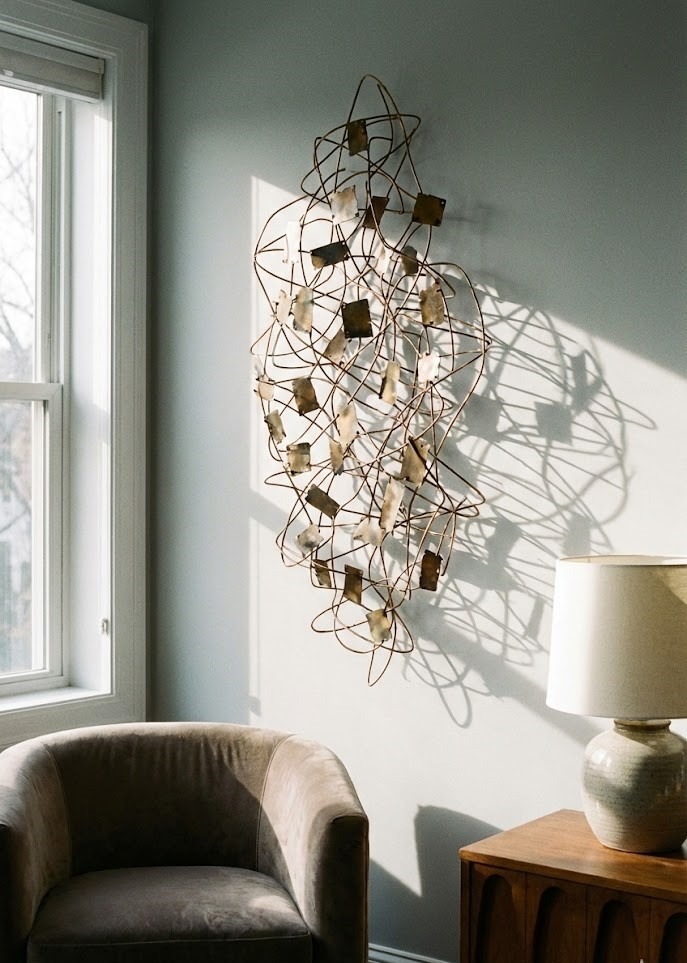
Break the monotony of flat frames by introducing three-dimensional art. Metal sculptures, ceramic wall flowers, Juju hats, or wire art cast interesting shadows that change throughout the day as the sun moves across the room. This adds a dynamic, living layer to your decor that flat paintings simply cannot replicate.
Practical Styling Tips:
Lighting: Install a picture light or direct a track light toward the sculpture. The interplay of light and shadow is half the appeal of 3D art.
Material Mix: If you have a lot of wood furniture, try a metal wall sculpture (brass, copper, or iron) to introduce a new material into the palette.
Pros and Cons:
Pro: adds depth and breaks up the "boxiness" of a room.
Con: awkwardly shaped items can be difficult to dust.
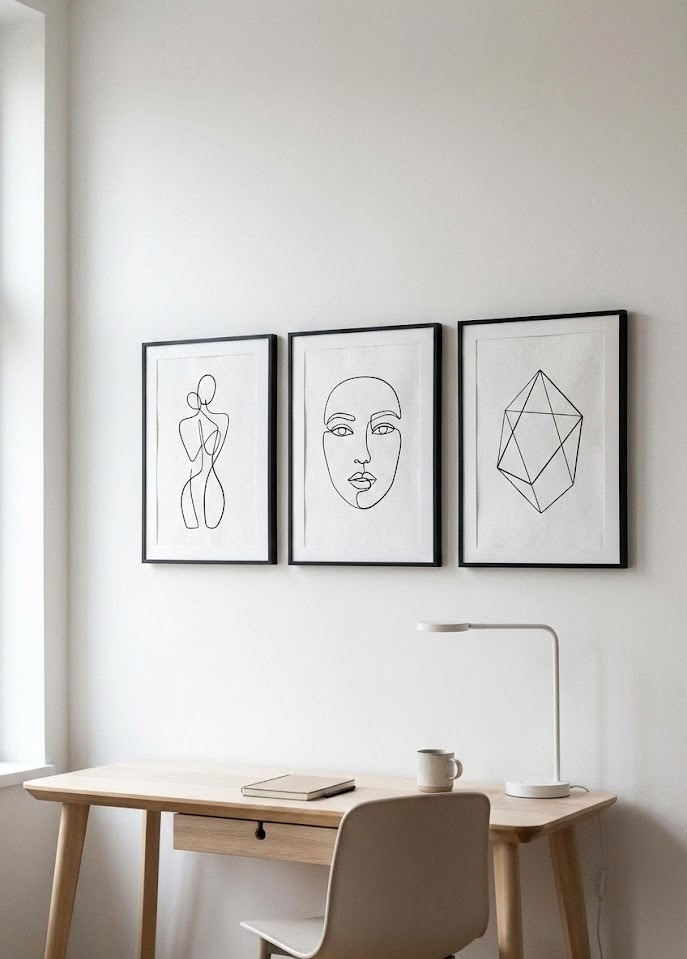
6. Embrace Simplicity with Line Drawings
Modern design often relies on the principle of "less is more." Minimalist line art—usually consisting of single continuous lines forming figures, faces, or abstract shapes—adds sophistication without overwhelming the eye. These pieces look exceptional in sleek, thin frames (like brushed gold or matte black) and pair beautifully with mid-century modern or contemporary furniture.
Practical Styling Tips:
Layering: Because line drawings are often visually "light," they are excellent candidates for leaning. Try leaning a smaller framed line drawing against a larger solid painting on a floating shelf or mantel.
Negative Space: Don't be afraid of white space. A small line drawing on a large wall can actually look very chic if the scale of the frame is substantial enough.
Pros and Cons:
Pro: subtle and sophisticated; unlikely to clash with colorful furniture or rugs.
Con: Can feel "incomplete" or underwhelming in maximalist rooms that require bold visuals.
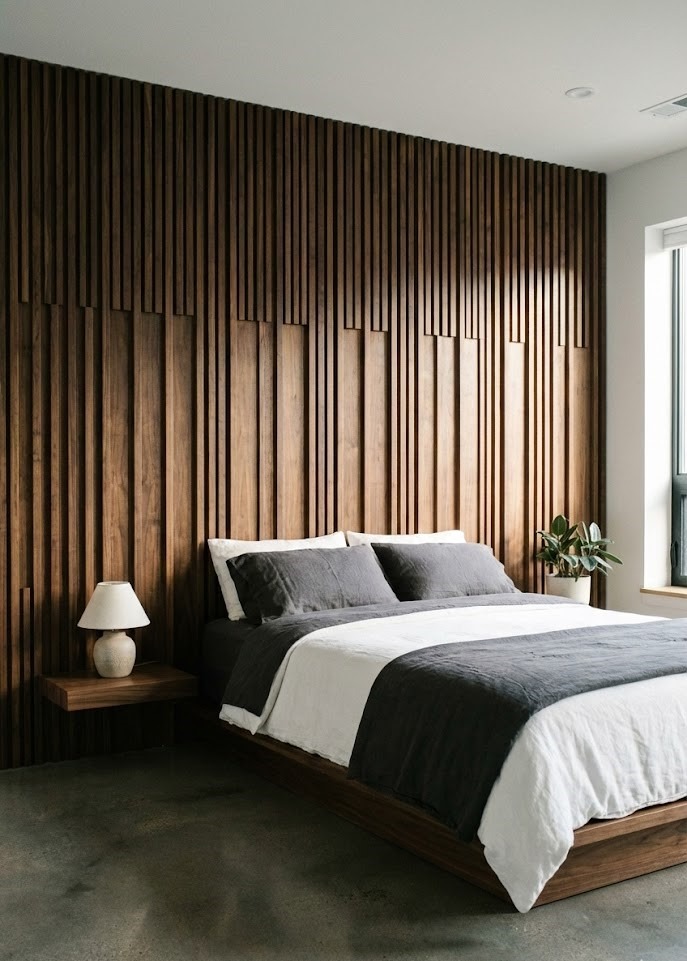
7. Install Architectural Wall Paneling
Art doesn't always have to be hung; sometimes, it can be built in. Installing decorative wall paneling, such as wainscoting, shiplap, board-and-batten, or geometric wood slats, turns the wall itself into a feature. This adds architectural depth and shadow lines that paint alone cannot achieve, providing a rich, textured backdrop for the rest of your decor.
Practical Styling Tips:
Paint Finishes: To highlight the architectural detail, use a satin or semi-gloss finish on the paneling, which catches the light better than flat matte paint.
Vertical vs. Horizontal: Vertical slats or paneling will make your ceilings feel taller, while horizontal shiplap will make the room feel wider.
Pros and Cons:
Pro: Increases property value and adds a custom, high-end look.
Con: It is a semi-permanent change that requires labor, tools, and a higher budget than hanging a picture.
8. Showcase Global Heritage and Artifacts
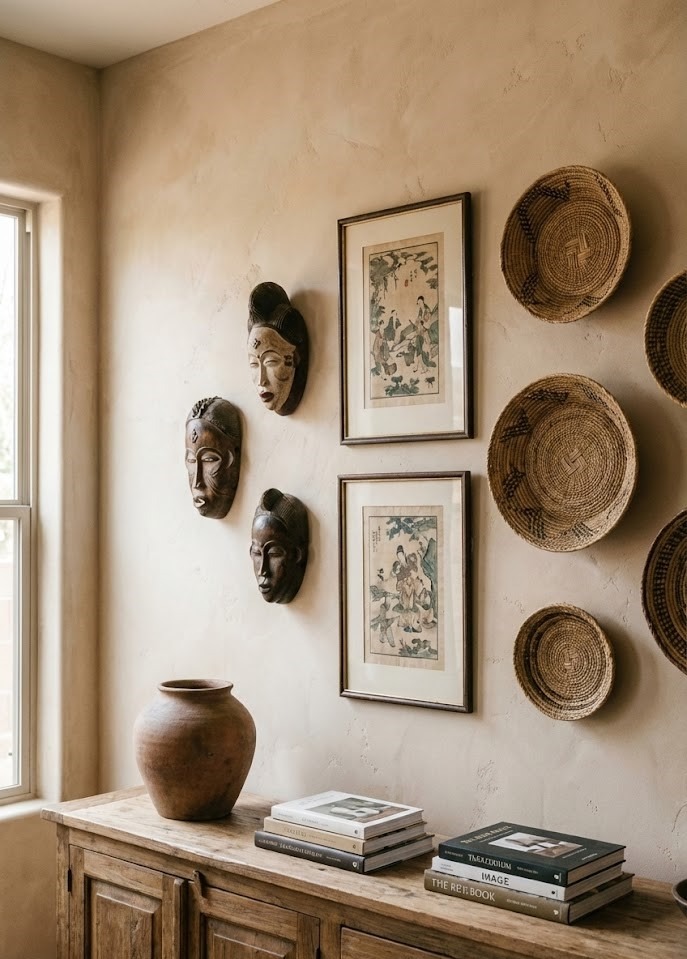
Your home should tell the story of who you are and where you’ve been. Displaying cultural artifacts, such as African masks, Asian silk prints, woven baskets from South America, or intricate plates, adds deep personal meaning and global flair. These items often serve as excellent conversation starters and celebrate the diversity of global craftsmanship.
Practical Styling Tips:
Shadow Boxes: For three-dimensional items or fragile textiles, use shadow box frames. This protects the item while giving it importance.
Grouping: Group smaller artifacts (like baskets) together in a cluster rather than scattering them. A "cloud" of woven baskets on a wall creates a massive, singular art statement.
Pros and Cons:
Pro: Highly unique; no one else will have the exact same wall as you.
Con: Requires a careful eye to ensure it looks curated rather than cluttered or chaotic.
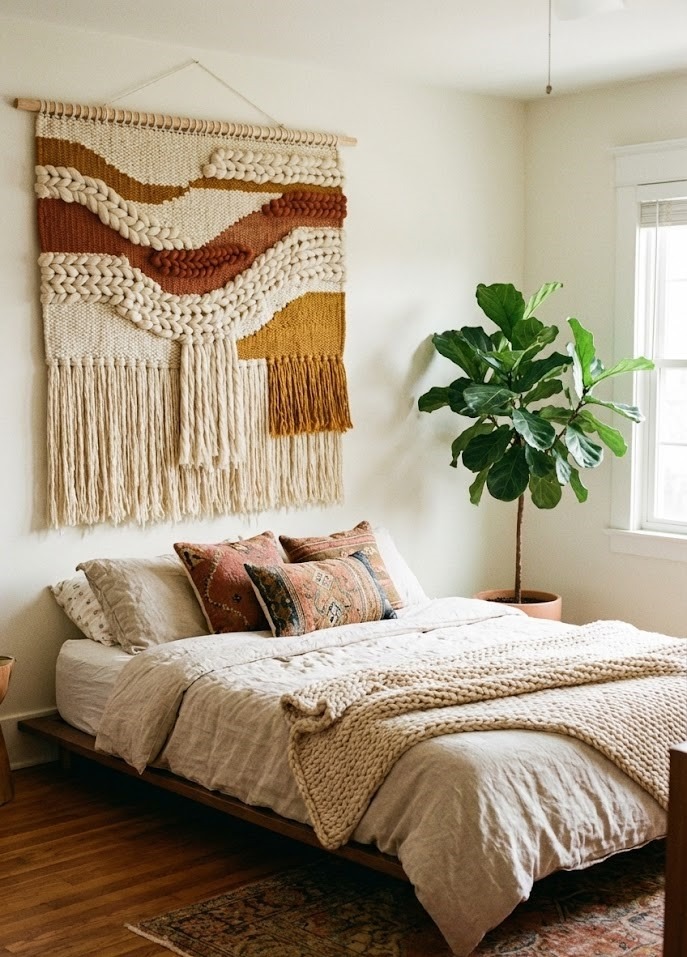
5. Soften Acoustics with Textile Art
Hard surfaces like hardwood floors, glass windows, and drywall can sometimes make a room feel cold or cause echoes. Combat this with textured wall hangings. Macramé pieces, woven tapestries, or fiber art add physical warmth and softness. These are ideal for bohemian interiors, nurseries, or bedrooms where you want to increase the "cozy" factor.
Practical Styling Tips:
Texture Contrast: If you have a sleek leather sofa or a modern glass table, a wool or cotton wall hanging provides necessary textural contrast, preventing the room from feeling sterile.
Hanging Hardware: Use a natural driftwood branch or a sleek copper pipe to hang the textile, depending on whether you want a rustic or industrial finish.
Pros and Cons:
Pro: Acts as a sound absorber, improving the acoustics of the room.
Con: Textures attract dust and can be difficult to clean compared to glass-framed art.
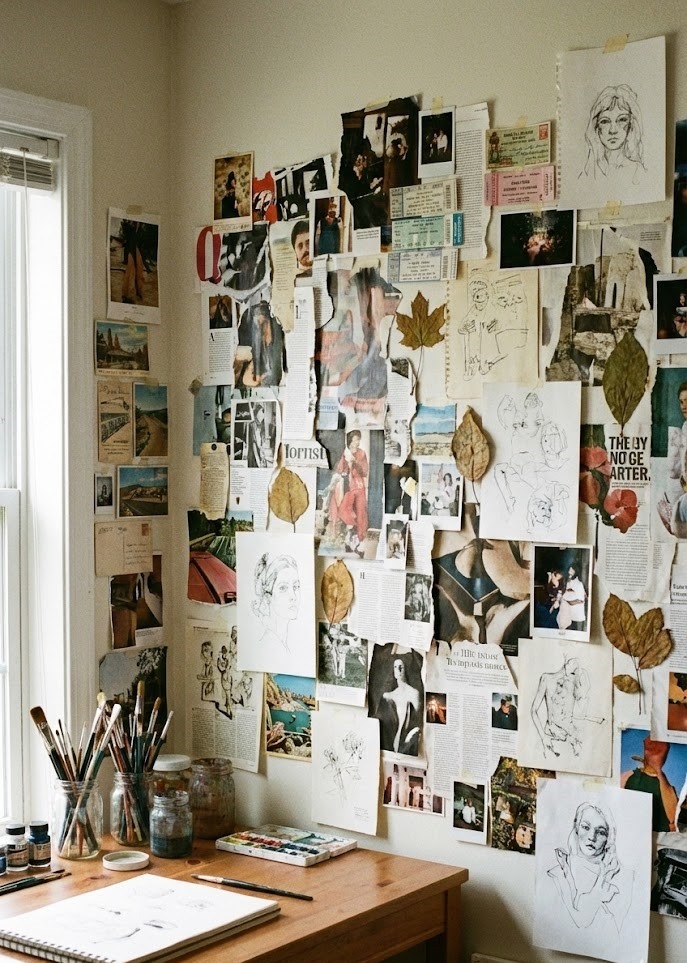
15. Personalize with a DIY Collage
Unleash your inner artist by creating a mixed-media collage. You can combine magazine clippings, postcards, ticket stubs, dried flowers, and sketches to create a raw, expressive display. This works particularly well in creative spaces like art studios, teenage bedrooms, or casual dens, where the chaotic energy fuels inspiration.
Practical Styling Tips:
Washi Tape: Use colorful Japanese Washi tape to adhere items directly to the wall. It holds paper well but peels off without leaving residue or damaging paint.
Color Palette: To prevent the collage from looking like a mess, stick to a specific color palette (e.g., only cool tones, or sepia and black).
Pros and Cons:
Pro: Zero cost and highly creative; easily changeable.
Con: Can look messy and disorganized; not suitable for formal spaces.
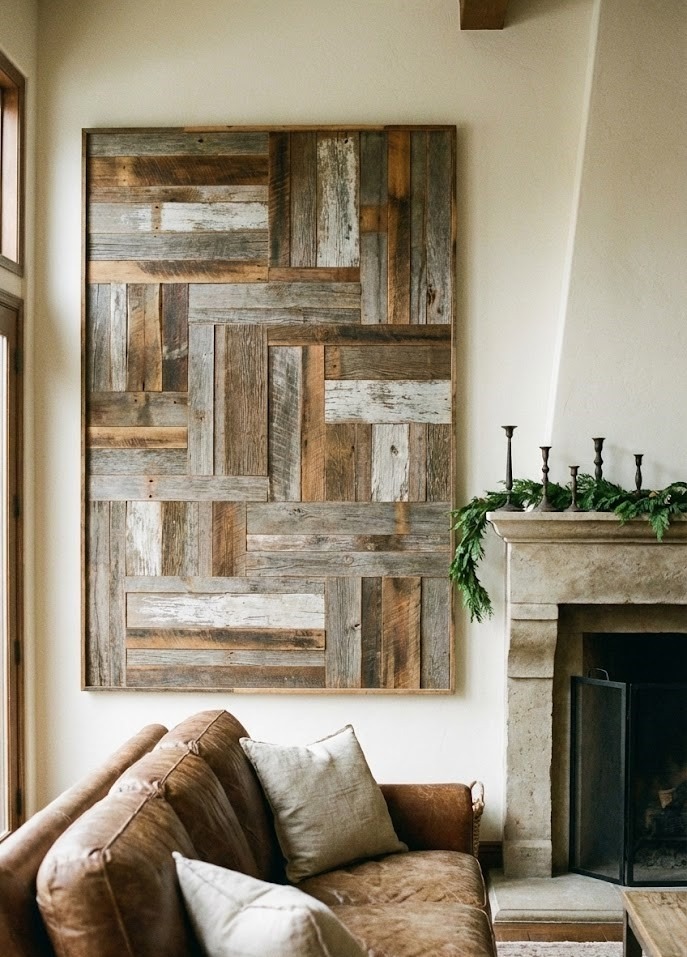
11. Infuse Warmth with Reclaimed Wood Pieces
Rustic chic remains a beloved style because of its inherent warmth and history. Wall art made from reclaimed wood—whether it is a mosaic of different timber stains, a carved wooden relief, or a barn quilt—brings texture and character to the space. This is a perfect match for farmhouse, industrial, or even coastal-style homes.
Practical Styling Tips:
Color Harmony: Ensure the wood tones in the art compliment the wood tones of your floor. They don't need to match perfectly, but they should share the same undertone (warm/red vs. cool/ash).
Anchoring: Wood art is often heavy. Always use wall anchors or drill directly into studs to ensure safety.
Pros and Cons:
Pro: Sustainable and durable; adds instant "hygge" (coziness).
Con: Can feel heavy or dark in a room that lacks natural light.
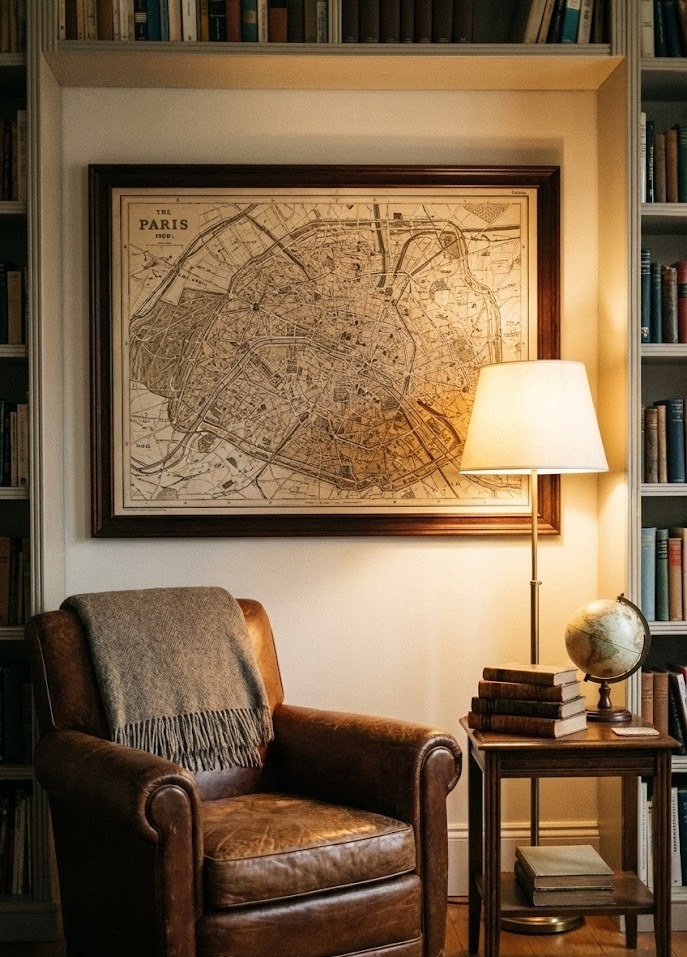
12. Chart Your Journey with Vintage Maps
There is a romantic quality to old cartography. Framed vintage maps of your hometown, favorite vacation spots, or dream destinations add a sense of wanderlust and intellect to a study, home office, or living area. The sepia tones, soft blues, and aged paper of antique maps also coordinate easily with neutral color palettes.
Practical Styling Tips:
Interactive Maps: For a family room, consider mounting a map on corkboard and removing the glass. Use color-coded pins to mark where you have been and where you want to go.
Split Designs: Take one large map and cut it into three distinct vertical sections, framing each separately. Hanging them with an inch of space between them creates a modern take on a classic subject.
Pros and Cons:
Pro: intellectually stimulating and visually neutral.
Con: Can look dated if not framed in a modern way (avoid ornate gold frames; stick to simple black or wood).
13. Motivate with Typographic Art
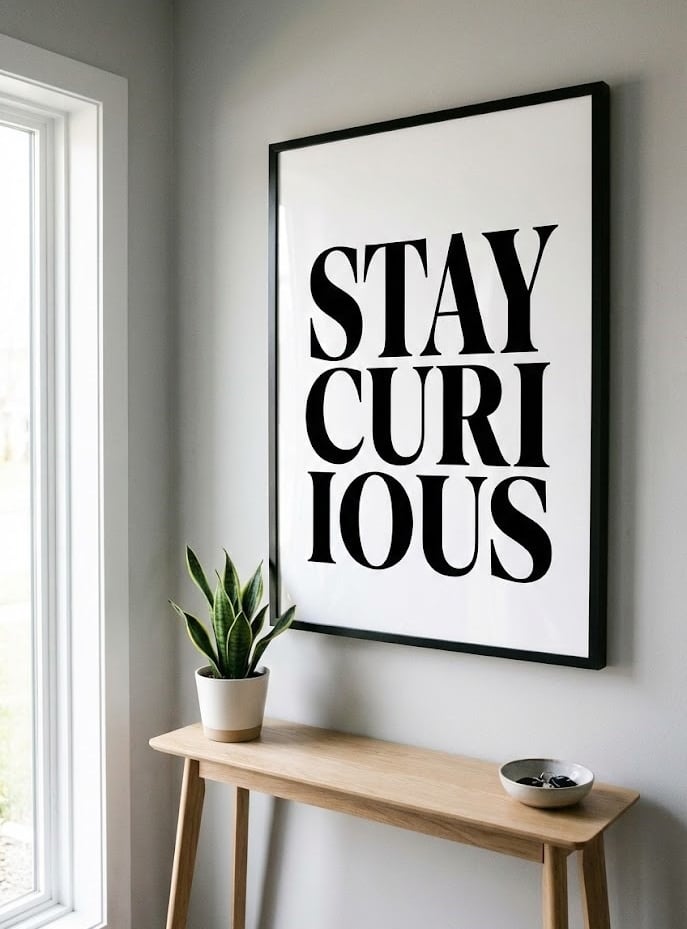
Words have power. Typography art allows you to display favorite quotes, family mottos, or single impactful words in a stylized font. When done correctly, the shape of the letters becomes the art form itself. This style is particularly popular in home offices, entryways, and kitchens to set a positive tone for the day.
Practical Styling Tips:
Font Choice: The font dictates the mood. A serif font (like Times New Roman) feels traditional and serious, while a sans-serif font (like Helvetica) feels modern and clean. Script fonts add whimsy.
Avoid Clichés: Steer clear of mass-produced, overused phrases (like generic "Live, Laugh, Love" signs). Choose quotes that actually mean something specific to you or your family.
Pros and Cons:
Pro: Highly customizable and motivating.
Con: Can easily look tacky if the typography is poor or the quote is too cheesy.
14. Hang Vibrant Tapestries for Bohemian Flair
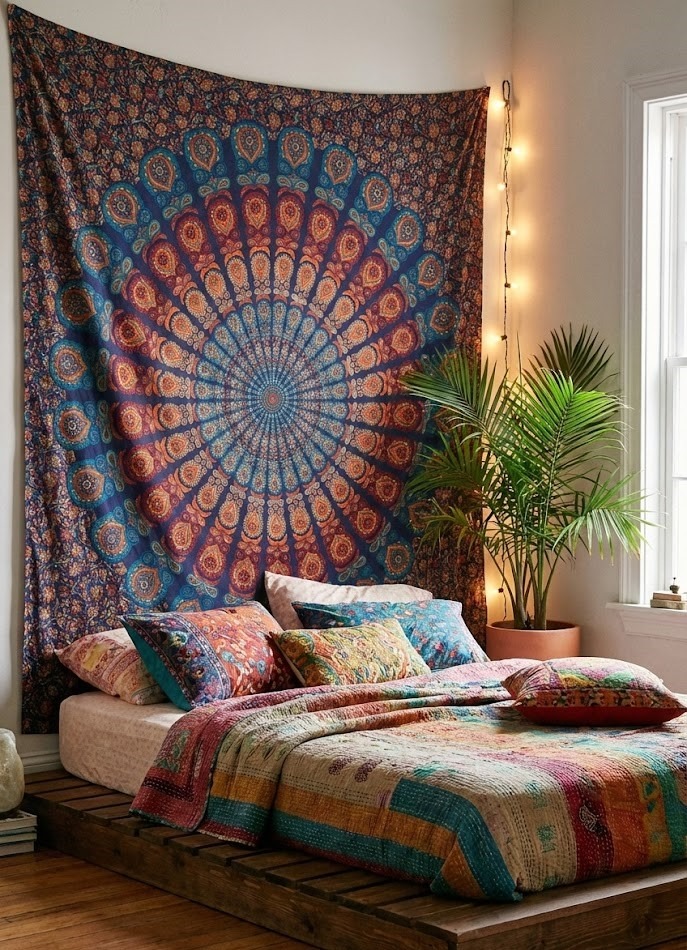
If you have a large, empty wall and a limited budget, a tapestry is a fantastic solution. These large fabric pieces cover significant square footage (often 5x7 feet or larger) and instantly inject color and pattern into a room. They are lightweight, easy to hang, and perfect for adding a relaxed, free-spirited vibe to a bedroom or lounge.
Practical Styling Tips:
Steam It: Never hang a tapestry straight out of the package. The fold lines make it look cheap. Use a handheld steamer to release the wrinkles for a polished look.
Framing Fabric: For a more elevated look, you can stretch a tapestry over a wooden canvas frame. This turns loose fabric into a structured art piece.
Pros and Cons:
Pro: The most cost-effective way to cover a large wall.
Con: Can give off a "dorm room" vibe if not styled carefully with other adult furniture.
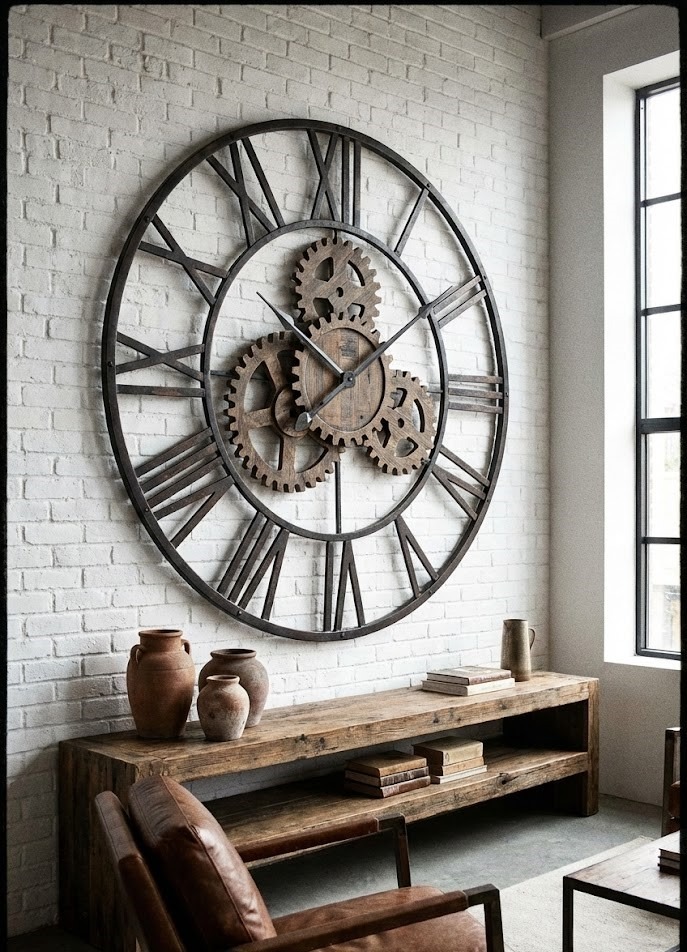
16. Combine Function and Style with Oversized Clocks
A clock is a necessity, but an oversized wall clock is a statement. Large open-face clocks made of iron or wood act as functional industrial art. They fill a large wall effectively without feeling too "heavy" or blocking the view, as the wall color shows through the open design of the clock face.
Practical Styling Tips:
Placement: These work best in "high traffic" zones where knowing the time is helpful, such as the kitchen or the living room.
Scale: Ensure the clock is at least 24 to 30 inches in diameter to qualify as a "statement piece." Anything smaller will just look like a standard utility clock.
Pros and Cons:
Pro: Fills space without visual bulk; highly functional.
Con: Some mechanisms can be loud; ensure you buy a "silent sweep" movement if it will be near a sleeping or reading area.
17. Rotate Decor with Seasonal Themes
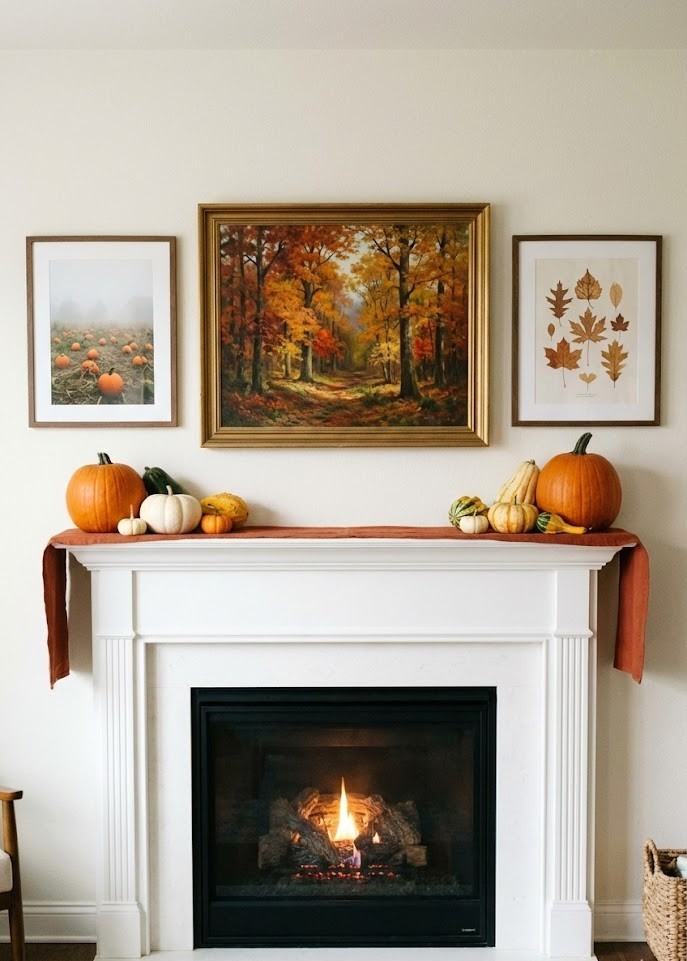
Keep your home feeling fresh year-round by designating a spot for seasonal art. You might swap in bright floral watercolors for spring, beach photography for summer, warm-toned harvest landscapes for autumn, and snowy scenes for winter. This keeps your gallery feeling dynamic and in tune with the time of year.
Practical Styling Tips:
Standard Sizes: Buy frames in standard sizes (like 16x20 or 18x24). This allows you to keep the same frames on the wall and simply swap out the prints inside, which is much cheaper and easier than storing four sets of framed art.
The Switch: Store off-season prints flat in an artist's portfolio case to keep them crisp and undamaged.
Pros and Cons:
Pro: Keeps the home feeling fresh and festive; prevents "decor blindness" where you stop noticing your art.
Con: Requires storage space and the effort to physically swap items four times a year.
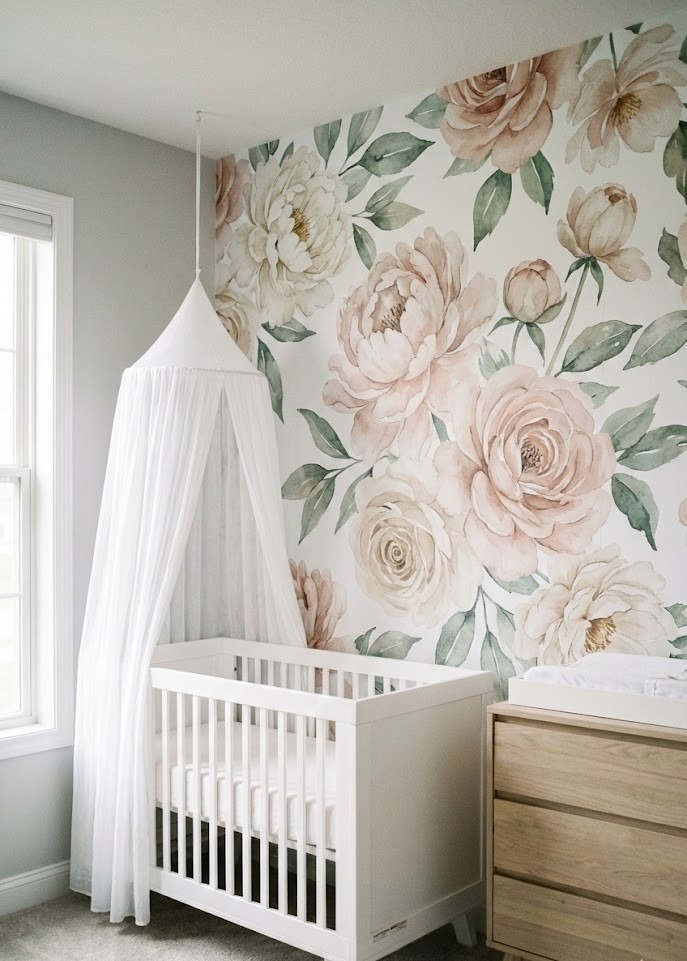
18. Go Bold with Floor-to-Ceiling Murals
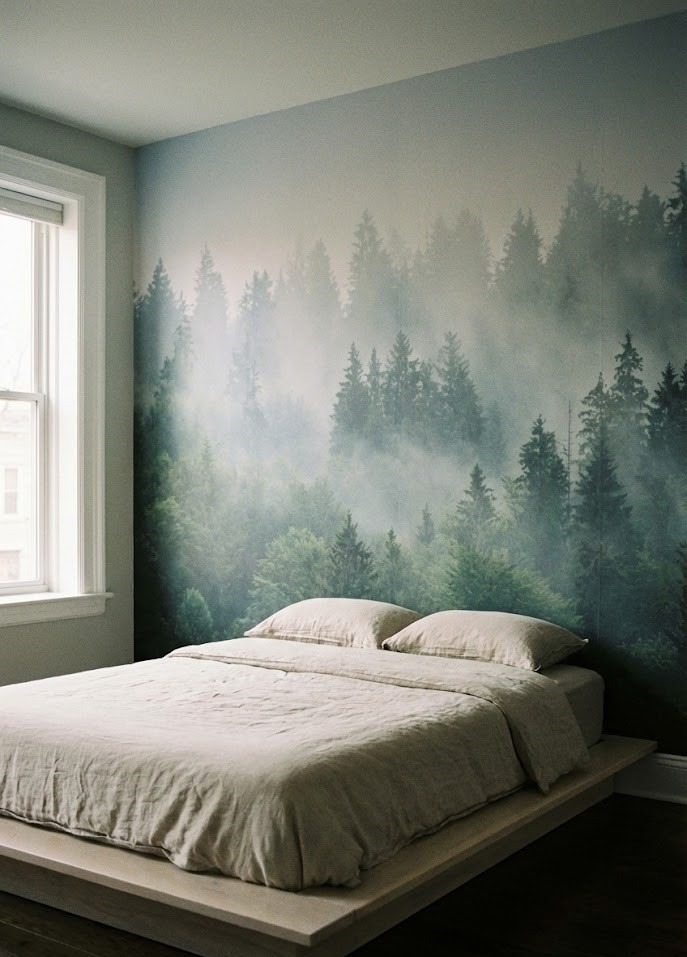
For the ultimate transformation, turn an entire wall into a mural. Whether you hire a local artist to paint a custom scene or use peel-and-stick mural wallpaper, this turns a wall into a massive immersive experience. From misty forests to geometric abstractions, a mural defines the entire mood of the room.
Practical Styling Tips:
The Accent Wall: Only use a mural on one wall (usually the wall behind the bed or the sofa). Doing all four walls can be overwhelming and claustrophobic.
Furniture pairing: Keep furniture in front of the mural relatively simple and low-profile so it doesn't fight with the artwork.
Pros and Cons:
Pro: Maximum impact; completely changes the architecture and vibe of the room.
Con: High difficulty level for installation; traditional wallpaper can be very difficult to remove.
Conclusion
Creating a gallery-style home is not about filling every inch of empty space, but rather about curating pieces that resonate with you. Whether you choose the structural elegance of wall paneling, the nostalgia of a photo grid, or the boldness of an oversized canvas, the goal is to create an environment that feels finished and inviting.
Don't feel pressured to complete your home in a day. Start with one wall, experiment with textures and scales, and allow your collection to grow organically. As you layer in these different elements, watch as your space transforms into a true reflection of your personality—a home that is not just seen, but felt.