22 Breathtaking Modern Tudor Exterior Ideas That Will Stop Neighbors in Their Tracks
The Tudor style is legendary. With its steep roofs, decorative timbering, and storybook charm, it is one of the most recognizable architectural styles in history. But for a long time, "Tudor" meant dark, heavy, and perhaps a bit outdated. Not anymore. Enter the Modern Tudor. This design revolution takes the classic bones of 16th-century English architecture and strips away the heaviness, replacing it with clean lines, high-contrast palettes, and massive light-filled windows. It is the perfect marriage of historical character and contemporary luxury. If you are looking to build a new home or renovate a tired 1980s mock-Tudor, these 22 ideas will give you the inspiration you need to create a curb appeal masterpiece that feels both timeless and aggressively modern.
OUTDOOR
1. Blend Textured Brick with Rough-Cut Stone
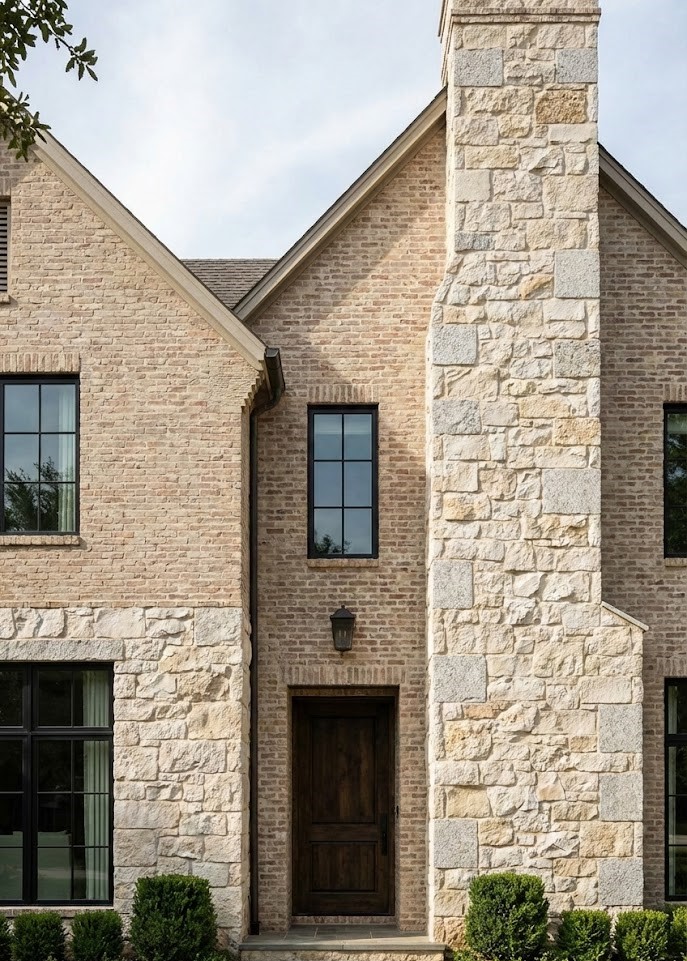
One of the hallmarks of the Tudor style is masonry, but the modern approach ditches the uniform red brick for something more dynamic. By mixing intricate brickwork with jagged, rough-cut stone accents, you create a facade that feels established and expensive.
The trick is in the color wash. Instead of stark red and grey, modern Tudors often use "slurry" or "German smear" techniques on the brick to soften the color, allowing the stone accents to provide the texture. This creates a monochromatic but deeply textured look that feels grounded and robust.
Expert Tip:
Use limestone or light granite for your stone accents to brighten the exterior. If your brick is dark, a heavy mortar wash can instantly modernize the home without painting it.
Categories
2. Install High-Contrast Black Window Frames
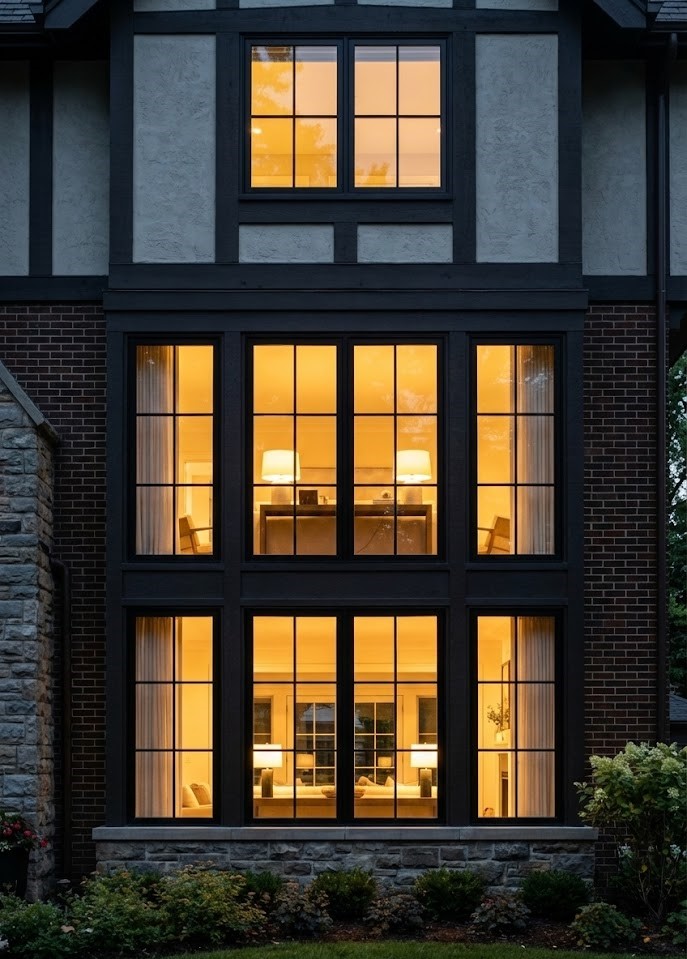
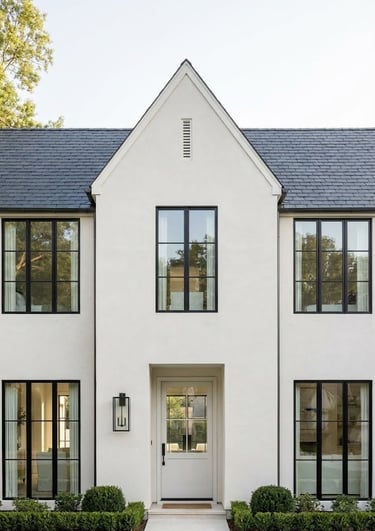
Nothing says "Modern Tudor" quite like the dramatic clash between light stucco and stark black window frames. Traditional Tudors used leaded glass with heavy wood; the modern update uses slim-profile aluminum or steel frames.
These dark frames act as eyeliner for your home, drawing attention to the architecture. They provide a sleek, industrial edge that cuts through the traditional softness of the stucco, creating a visual pop that is incredibly satisfying.
Expert Tip:
Remove the traditional heavy drapes inside. Let these black-framed windows stand as architectural art pieces on their own.

3. Embrace the Drama of Asymmetry
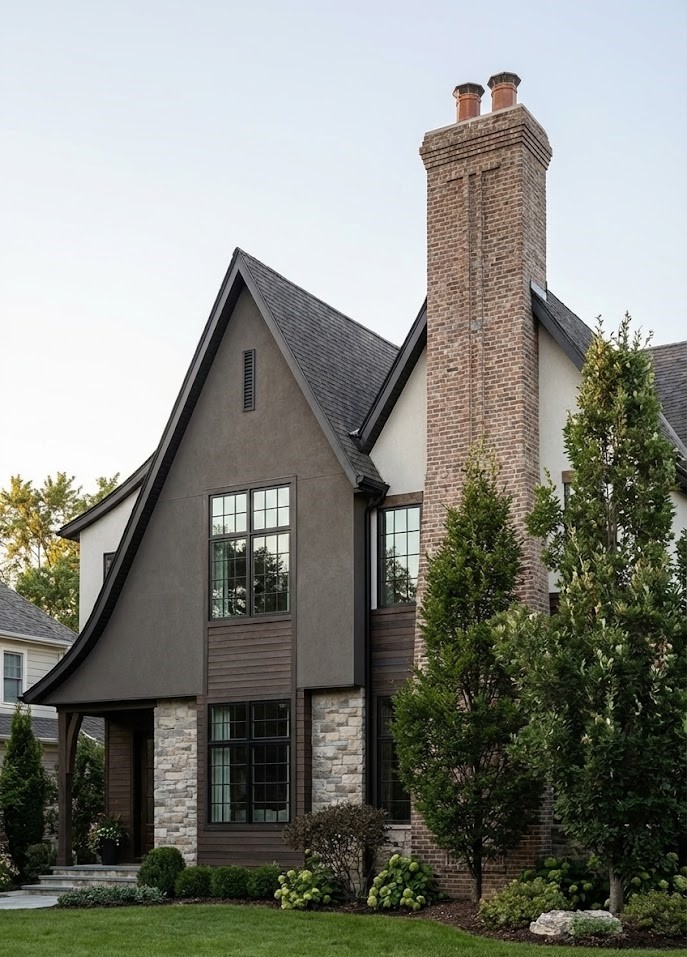
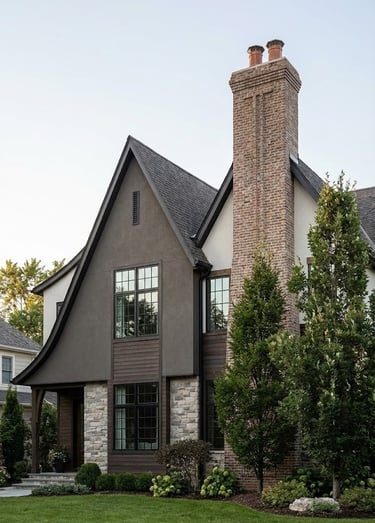
Classic architecture often relies on rigid symmetry, but Tudor homes have always been a bit rebellious with their asymmetrical lines. Modern design leans into this.
Don't try to force your facade to match perfectly on left and right. Embrace a sweeping roofline on one side and a turret or gable on the other. This dynamic imbalance creates movement and visual interest, making the home feel like it grew organically over time rather than being stamped out of a factory.
Expert Tip:
Balance the visual weight. If one side of the house has a massive gable, balance the other side with a large chimney or a cluster of mature landscaping.
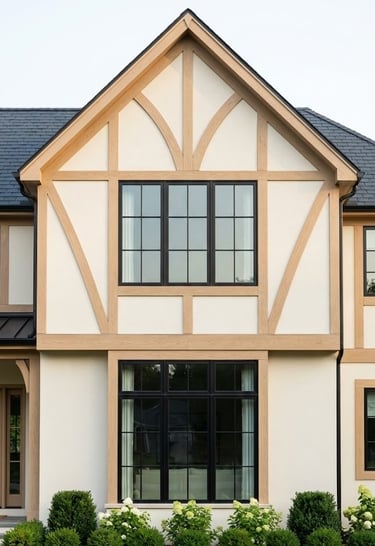
4. Lighten the Timber Framing
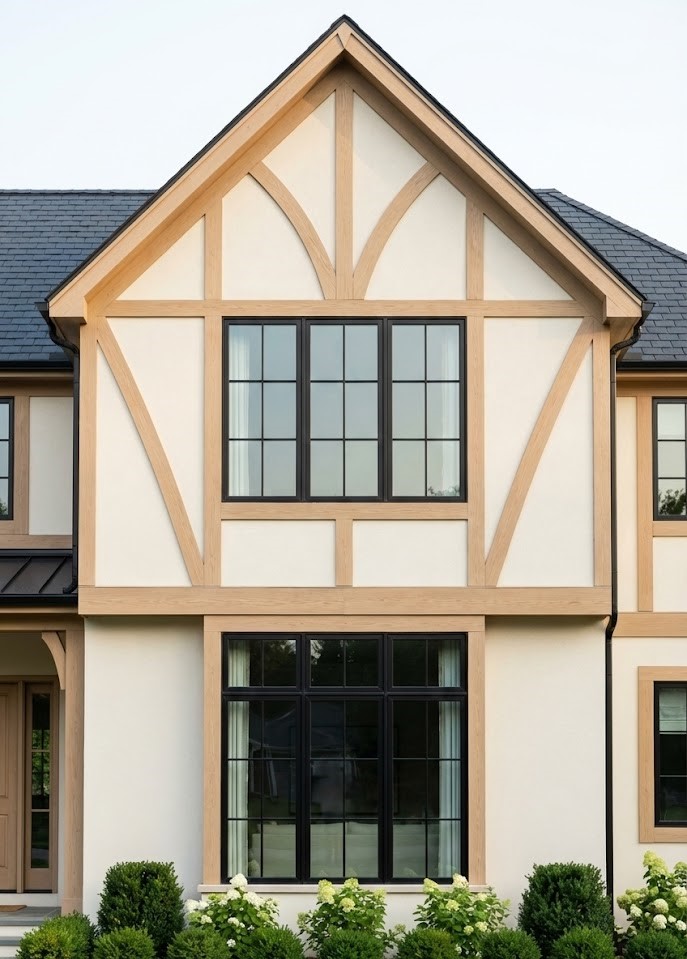
The defining feature of a Tudor is the "half-timbering"—the decorative wood beams on the facade. Traditionally, these were painted dark brown or black against white stucco.
To update this, consider a tonal shift. Stain the timber a natural cedar color, or paint it a soft grey that is only a few shades darker than the stucco. This "tone-on-tone" look preserves the historic pattern but removes the aggressive contrast, making the home feel lighter, taller, and more serene.
Expert Tip:
If you are building new, use composite lumber for the decorative beams. It won't rot, warp, or require annual staining like real wood.


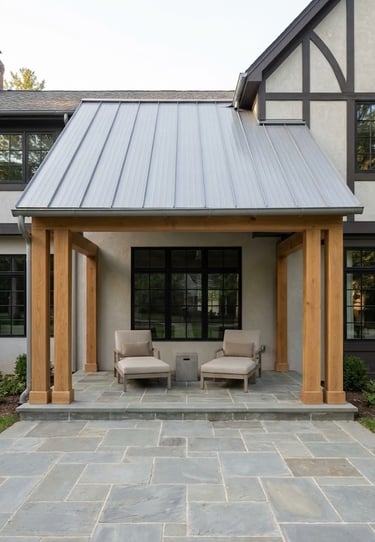
9. Use Architectural Lighting to Highlight Texture
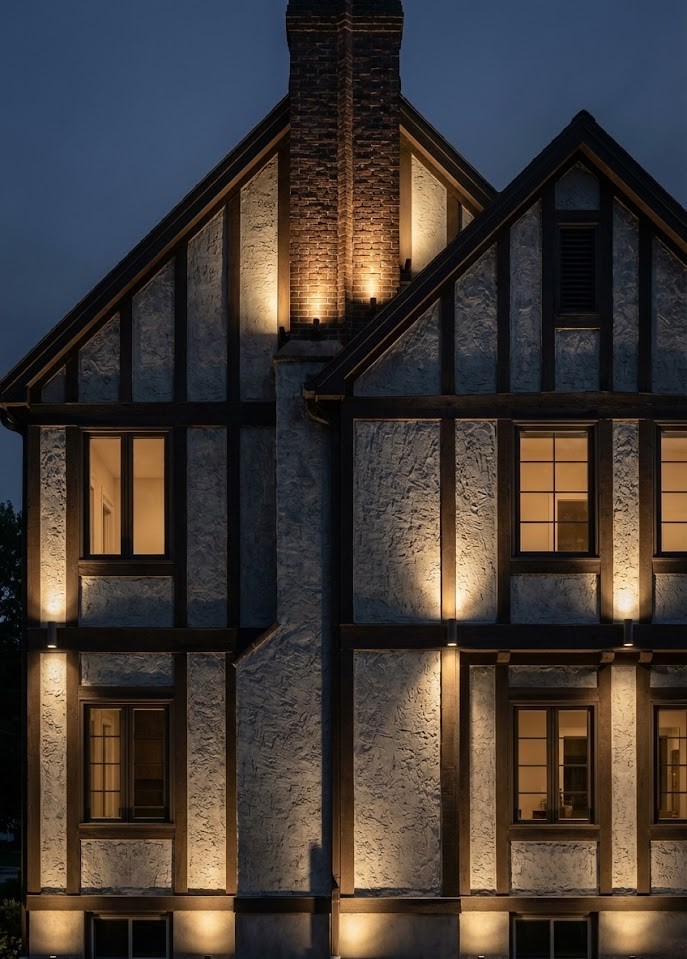
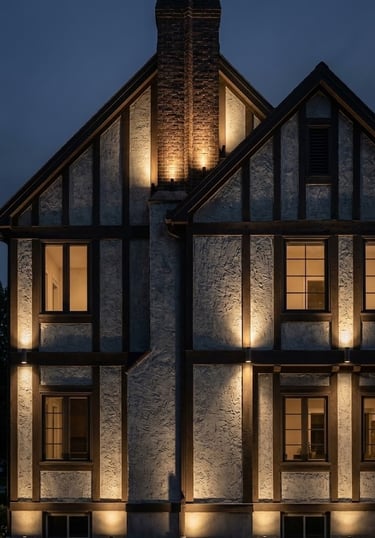
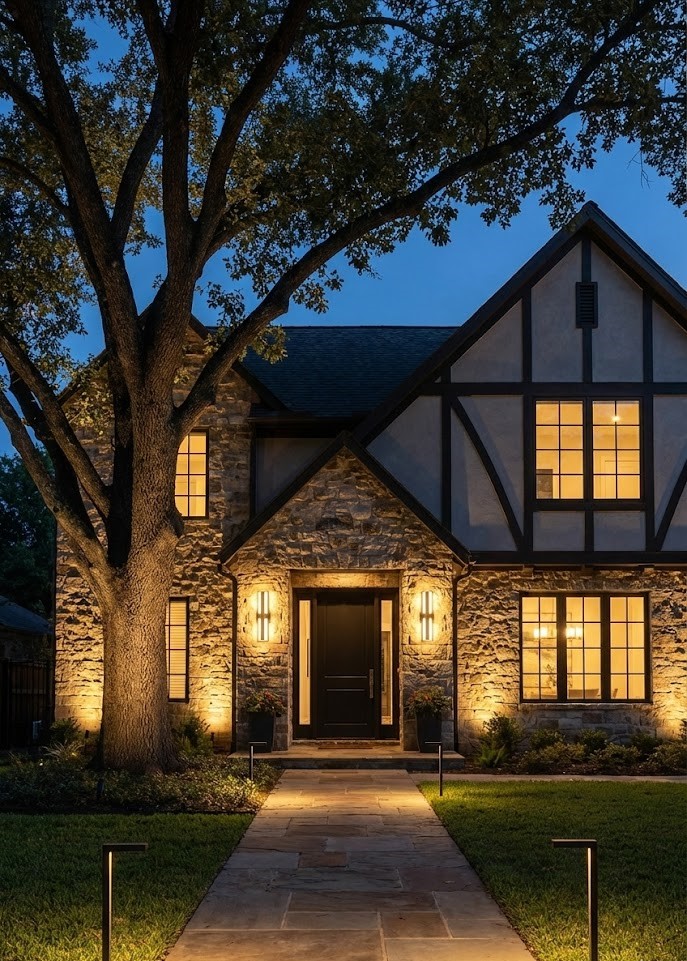
At night, a Modern Tudor should look magical. Use contemporary lighting fixtures—think sleek cylinders or linear LEDs—to wash light up the walls.
This "uplighting" catches the texture of the stucco, brick, and timbering, creating dramatic shadows. It turns the facade into a textured canvas. Avoid the old-fashioned carriage lights unless they have a very streamlined, modern silhouette.
Expert Tip:
Place uplights at the base of your chimney and between the timber bays to accentuate the height of the roof peaks.
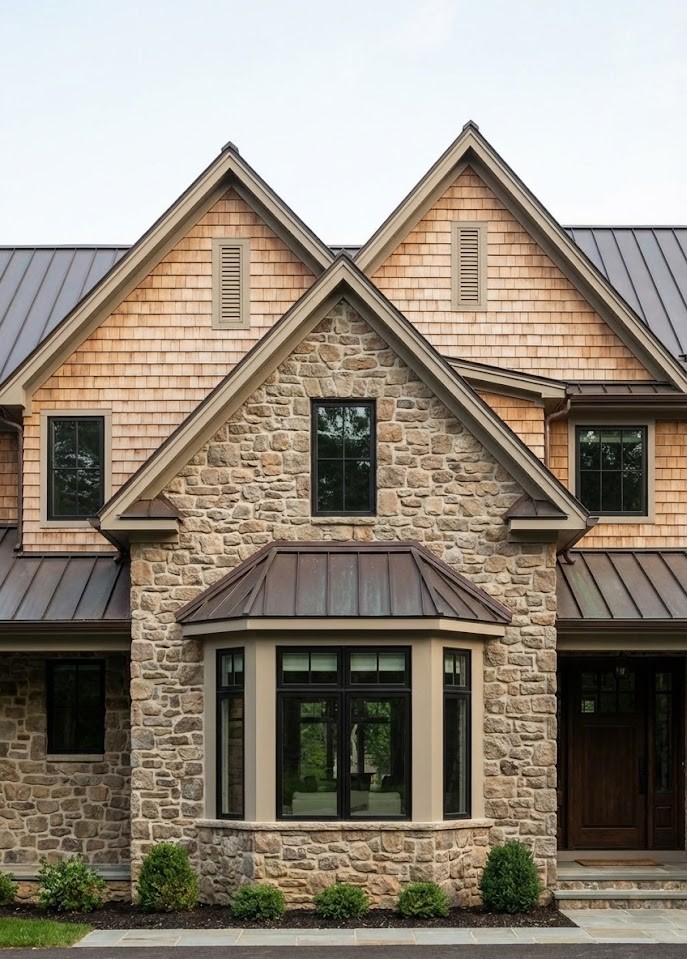
10. Mix Your Materials (Metal, Wood, Stone)
Don't be afraid to mix architectural metaphors. A Modern Tudor can feature a standing-seam metal roof (very modern) alongside rustic stone walls (very traditional).
This textural contrast is visually exciting. You might have a copper awning over a bay window, cedar shake siding on a dormer, and brick on the main level. The key is to keep the color palette cohesive so it doesn't look messy.
Expert Tip:
The rule of three: Try to limit your exterior materials to three (e.g., Brick, Stucco, and Wood) to keep the design elegant, not chaotic.
6. Simplify the Entryway with Minimalist Doors
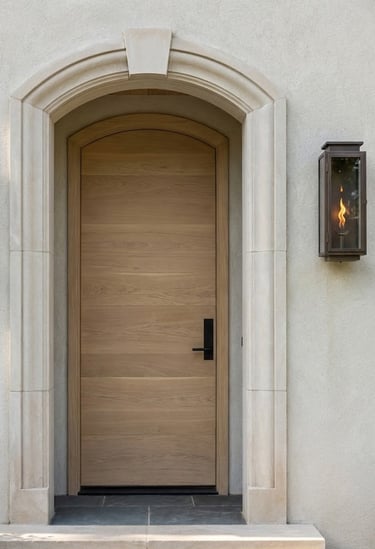
The front door is the handshake of your home. While old Tudors had heavy, arched wooden doors with iron straps, the modern version is cleaner.
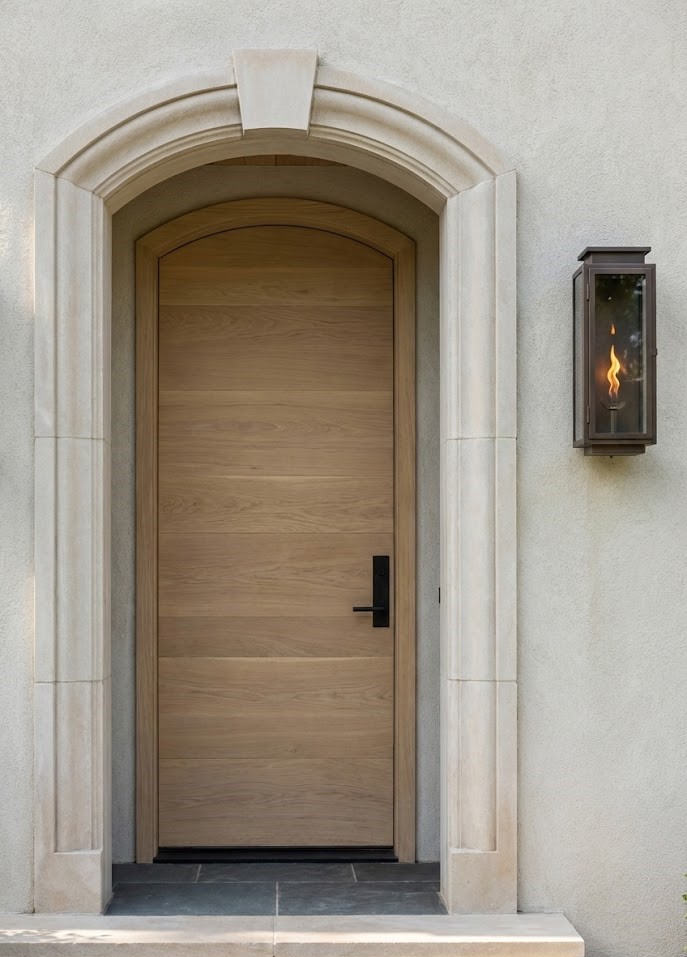
Look for solid wood doors with horizontal grain, or steel doors with a simple arched glass insert. You want to keep the arch—it’s quintessential Tudor—but strip away the ornate carvings. A simple, matte black handle set on a custom white oak door is perfection.
Expert Tip:
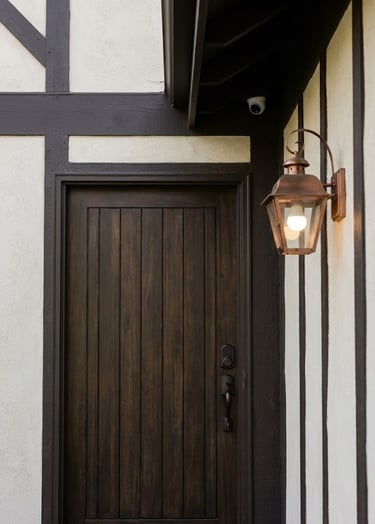
Install a gas lantern above or beside the door. The flickering flame adds that historic ambiance that electric lights just can't replicate.
7. Upgrade to High-Performance Insulation and Tech
Tudor homes, especially older ones, are notorious for being drafty. A true Modern Tudor renovation isn't just skin deep; it involves wrapping the exterior in modern insulation technology.
When re-stuccoing or siding, use rigid foam insulation layers beneath the facade. Combine this with triple-pane windows that mimic the look of single-pane distinctiveness. You get the Old World look with Passive House energy efficiency.
Expert Tip:
Smart thermostats and hidden solar panels (on the rear roof pitch) can make your 16th-century style home perform like a 21st-century machine.
8. Expand the Front Porch for Modern Living
Historically, Tudor homes had very small "stoops" rather than porches. Modern life, however, demands outdoor living space.
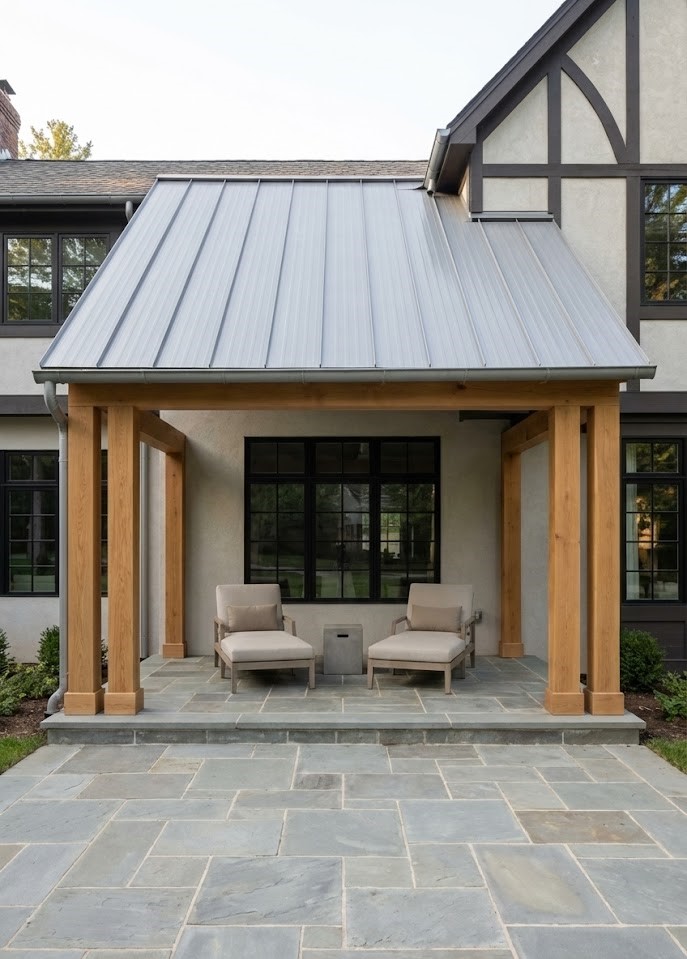
Adding a wide, sweeping front porch with timber columns can modernize the functionality of the home. Keep the roofline of the porch steep to match the house, but open up the floor plan to allow for seating areas. It bridges the gap between the enclosed Tudor fortress and the inviting modern farmhouse vibe.
Expert Tip:
Use flagstone or slate for the porch floor. It is durable and fits the historic narrative better than poured concrete or wood decking.
5. Integrate Structured "English Garden" Landscaping
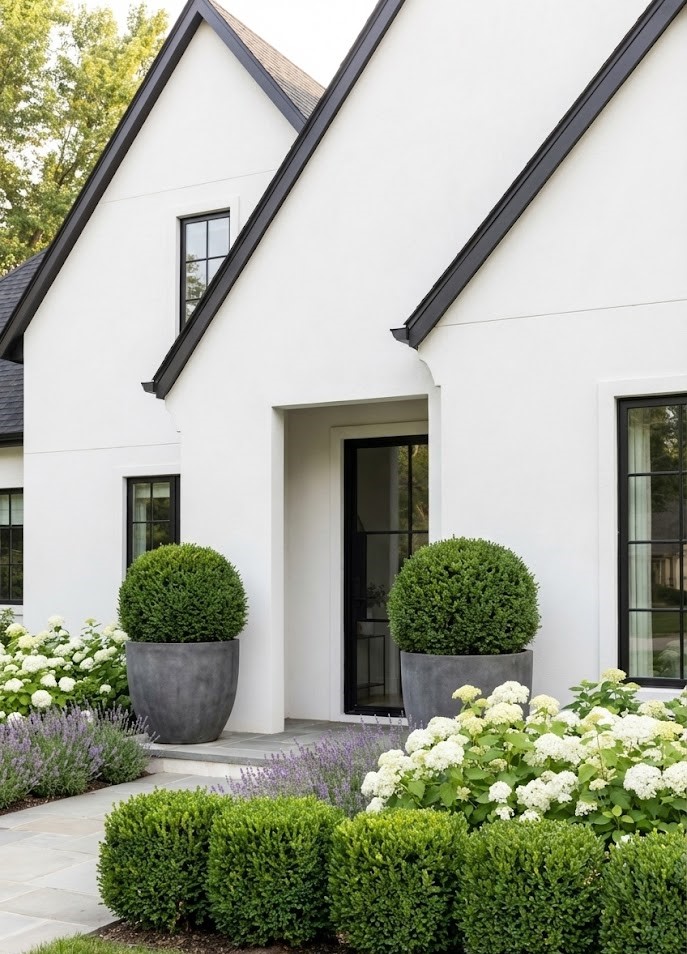
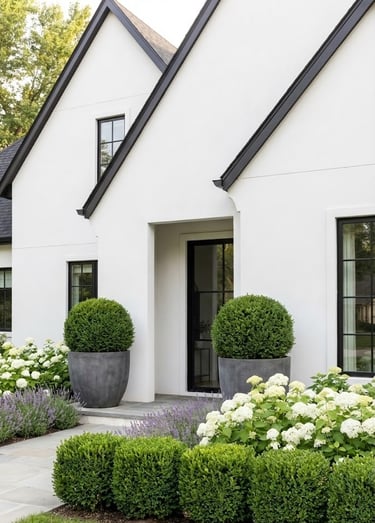
A Modern Tudor exterior isn't finished until the landscaping connects with the architecture. You want to evoke the feeling of an English estate, but with a cleaner, more manicured edge.
Think boxwood hedges clipped into tight spheres or squares, lined up against the wilder, softer texture of hydrangeas or lavender. The contrast between the rigid architecture and the lush, organized greenery creates a sense of luxury and order.
Expert Tip:
Use symmetry in your landscaping to ground the asymmetry of the house. Flanking the front door with identical oversized planters is a must.
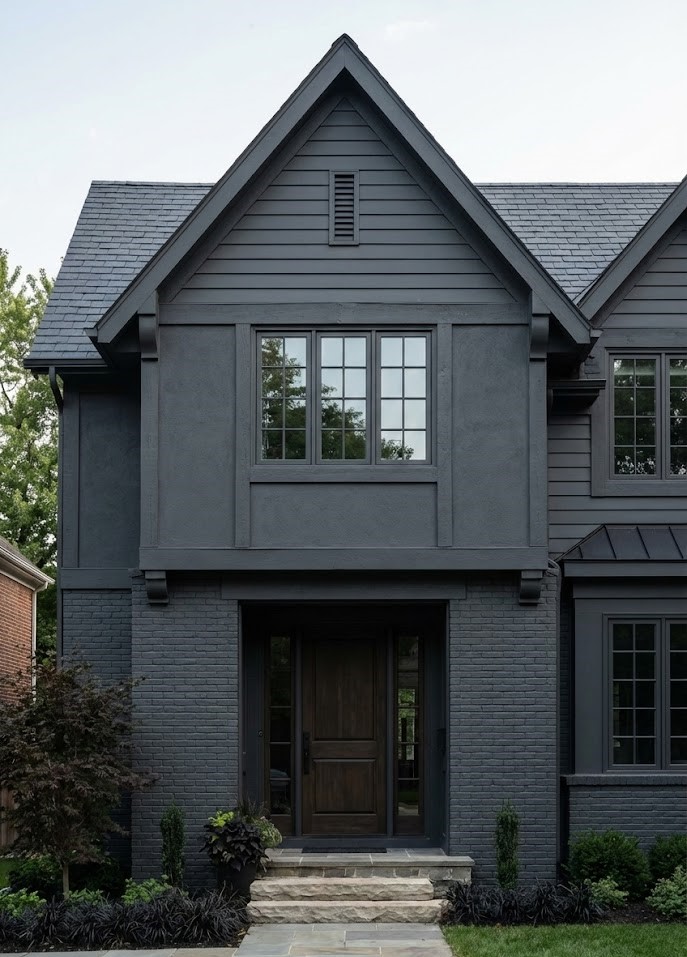
15. Adopt a Moody, Monochromatic Palette
Forget the brown-and-cream of the 1980s. The hottest Modern Tudors are going monochrome.
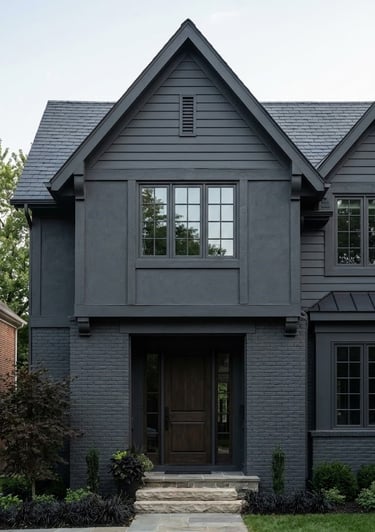
Paint the brick, stucco, trim, and siding all one color—usually a moody charcoal, navy blue, or a creamy off-white. This unifies the busy textures of the Tudor style into one cohesive, sculptural form. It looks incredibly chic and contemporary.
Expert Tip:
If you go all-white, use a "warm white" (like Swiss Coffee) rather than a sterile cool white. It works better with natural stone and greenery.
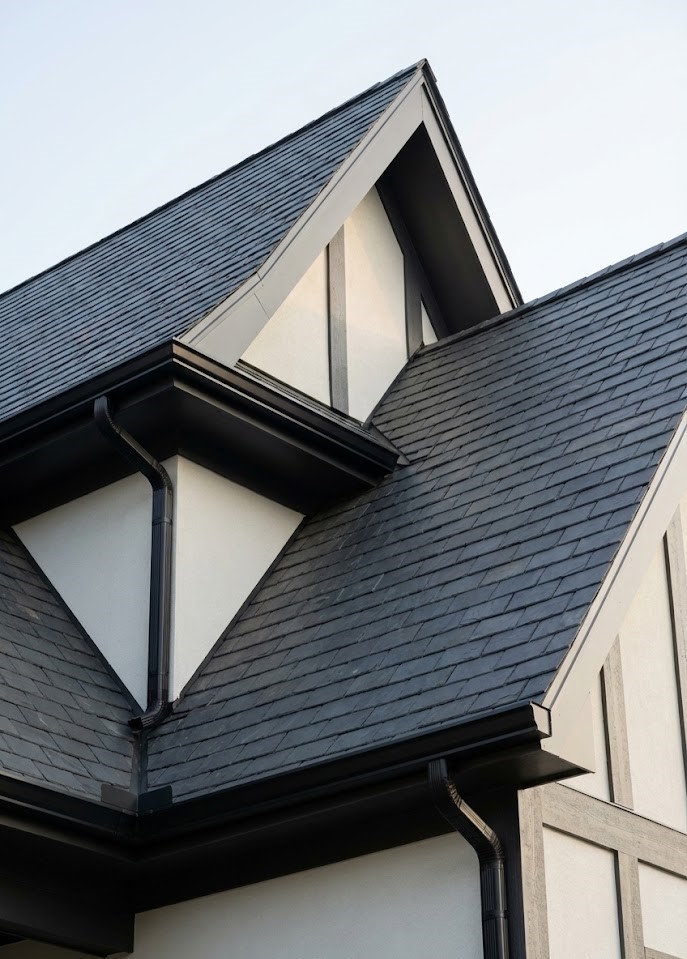
11. Sharpen the Rooflines
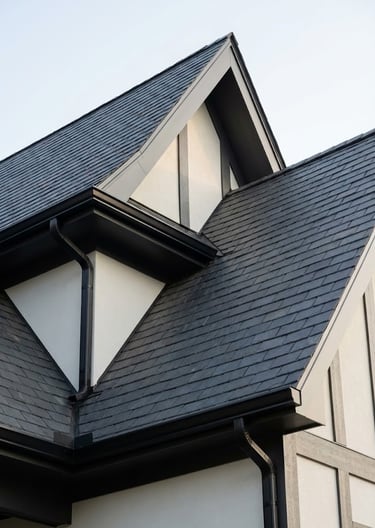
Tudors are famous for their steep, complex roofs. To modernize this, ensure the fascia boards and eaves are crisp and clean.
Remove ornate gingerbread trim or rotting wooden gutters. Replace them with sharp, square-profile gutters in copper or black aluminum. The silhouette should look like it was cut with a laser, emphasizing the dramatic geometry of the pitch.
Expert Tip:
If you need to replace the roof, consider slate or a high-end composite slate. It lasts 50+ years and looks incredibly authentic.
12. Create "Walls of Glass" in Gable Ends
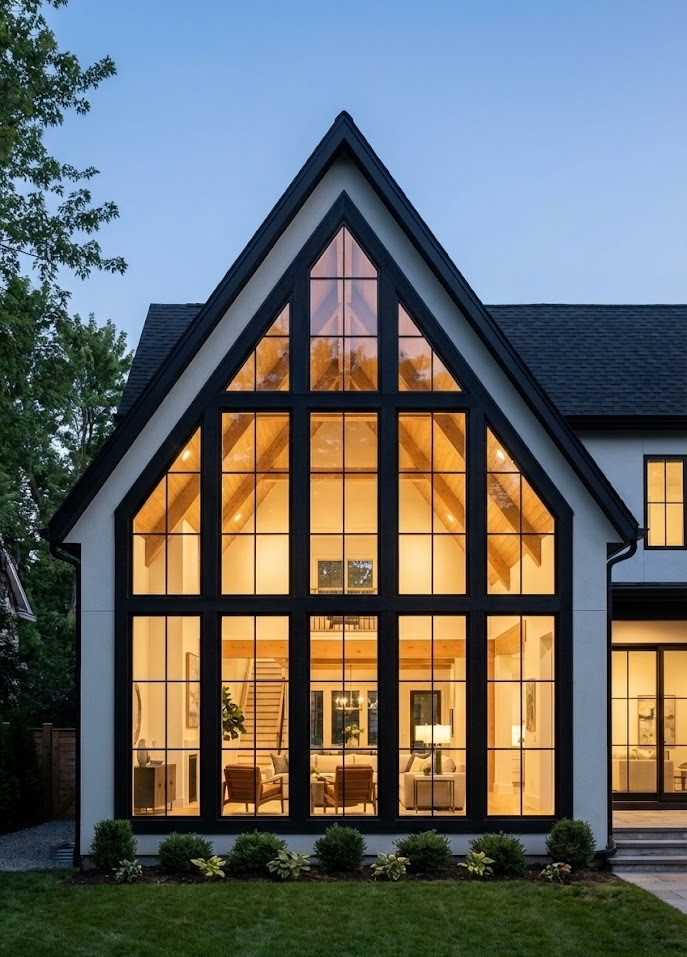
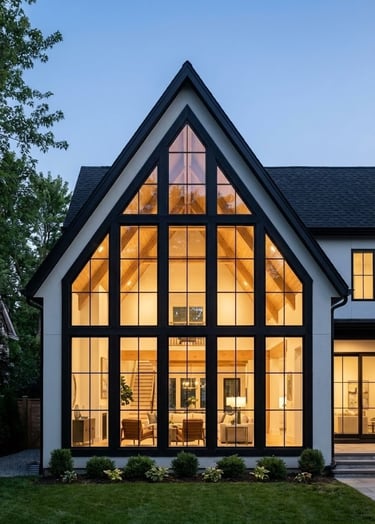
This is perhaps the most striking Modern Tudor trend. Take one of those steep triangular gable ends and, instead of filling it with stucco or brick, fill the entire triangle with glass.
This floods the interior vaulted ceilings with light and creates a stunning, lantern-like effect from the exterior at night. It completely removes the "dark and gloomy" stigma of traditional Tudor architecture.
Expert Tip:
Ensure this glass wall faces a private part of your yard or uses reflective coating, as it puts your interior life on display!
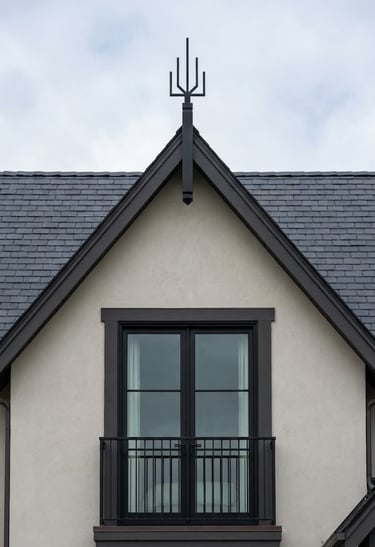
13. Use Custom Iron Finials and Details
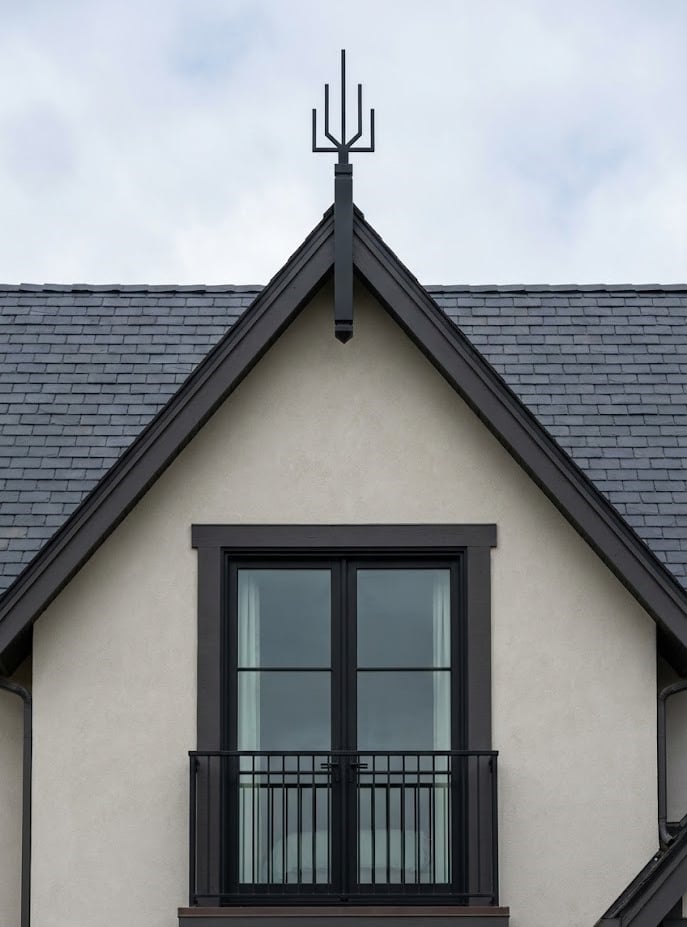
While we want to remove clutter, we don't want to remove character. A single, well-placed architectural detail can make the whole house pop.
Consider a custom wrought-iron finial at the very peak of your highest roof gable. Or, use modern iron railing on a balcony. These metal touches nod to the blacksmithing of the past but with cleaner, straighter lines.
Expert Tip:
Match your metal finishes. If your windows are black aluminum, your finials, railings, and light fixtures should be a matching matte black.
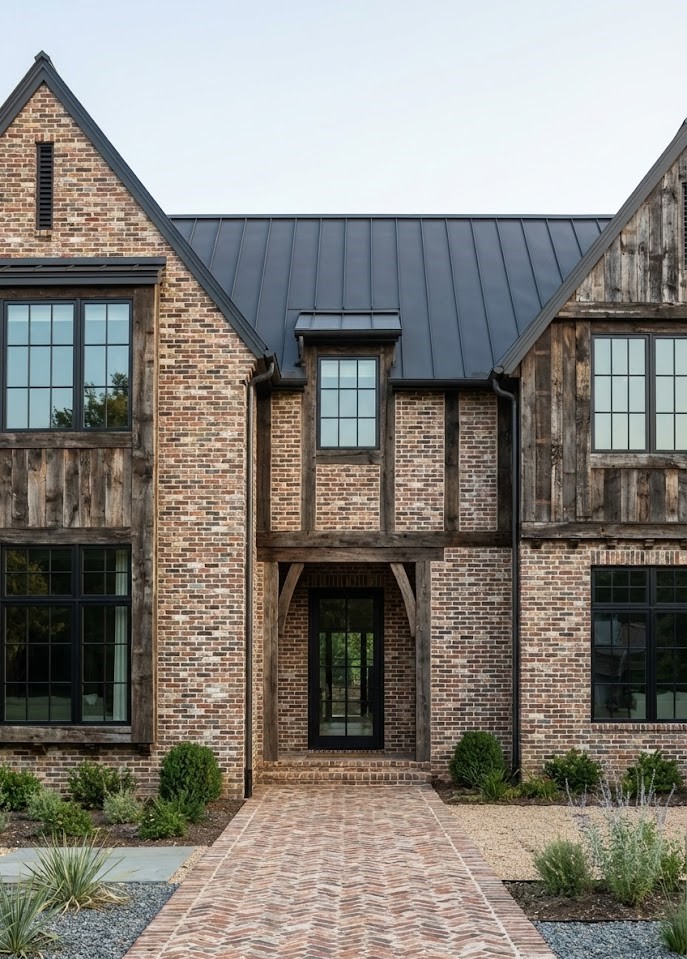
14. Prioritize Sustainable and Reclaimed Materials
Sustainability is a hallmark of modern building. Fortunately, the Tudor style lends itself perfectly to reclaimed materials.
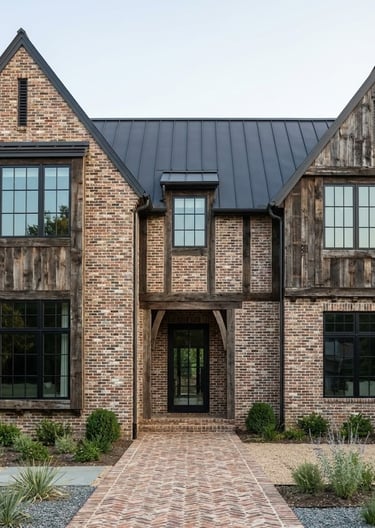
Use reclaimed bricks from an old factory for your driveway or facade. Use reclaimed barn wood for the timbering. These materials have a patina that new materials can't fake, and they reduce the carbon footprint of your renovation.
Expert Tip:
Look for "thin brick" veneers made from reclaimed brick. They are lighter and cheaper to ship but give the exact same look as full-sized bricks.
16. Sculpted Topiary Gardens
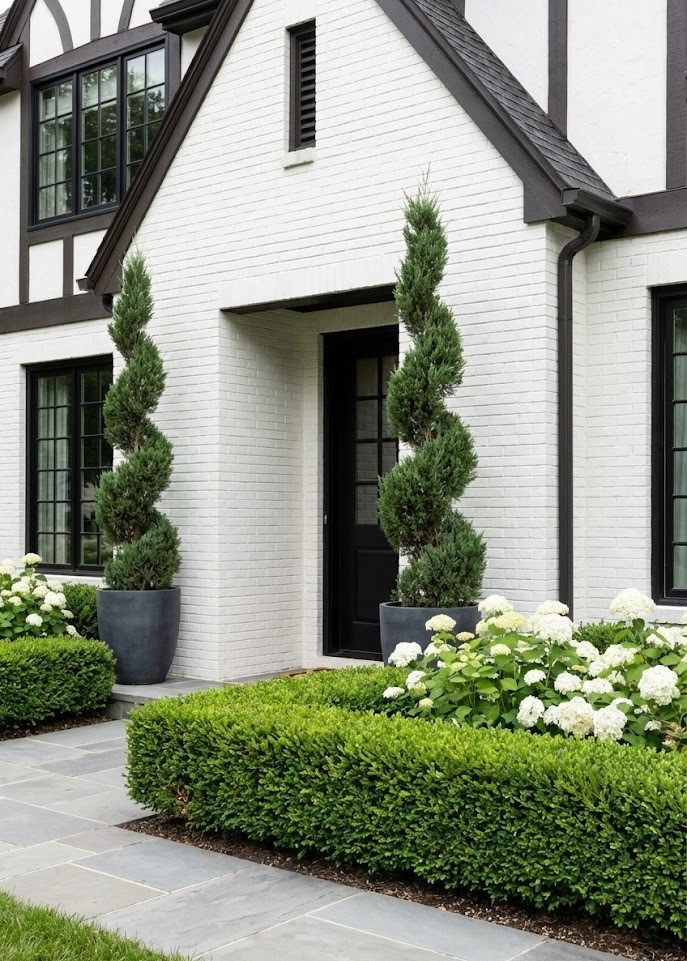
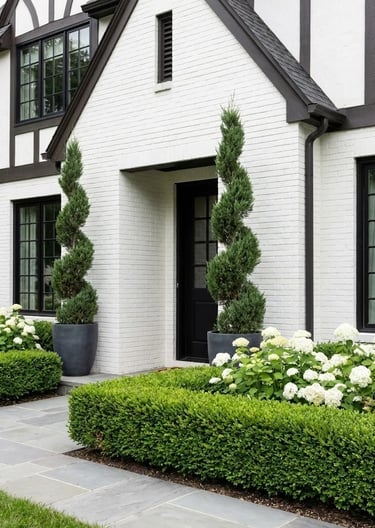
To complement the sharp lines of the roof, introduce sculpted greenery. Spiral junipers, cone-shaped boxwoods, or manicured hedging add a sophisticated, European flair.
This doesn't mean your yard has to look like Versailles. Just a few well-placed, shaped shrubs near the entryway can elevate the entire property, signaling that this is a designed, curated space.
Expert Tip:
Keep the planting palette simple: Green foliage and white flowers (like Annabelle Hydrangeas). This restraint looks very high-end.
17. Hide Tech with Classic Design
You want the video doorbell and the smart lock, but you don't want a plastic gadget ruining your 16th-century vibe.
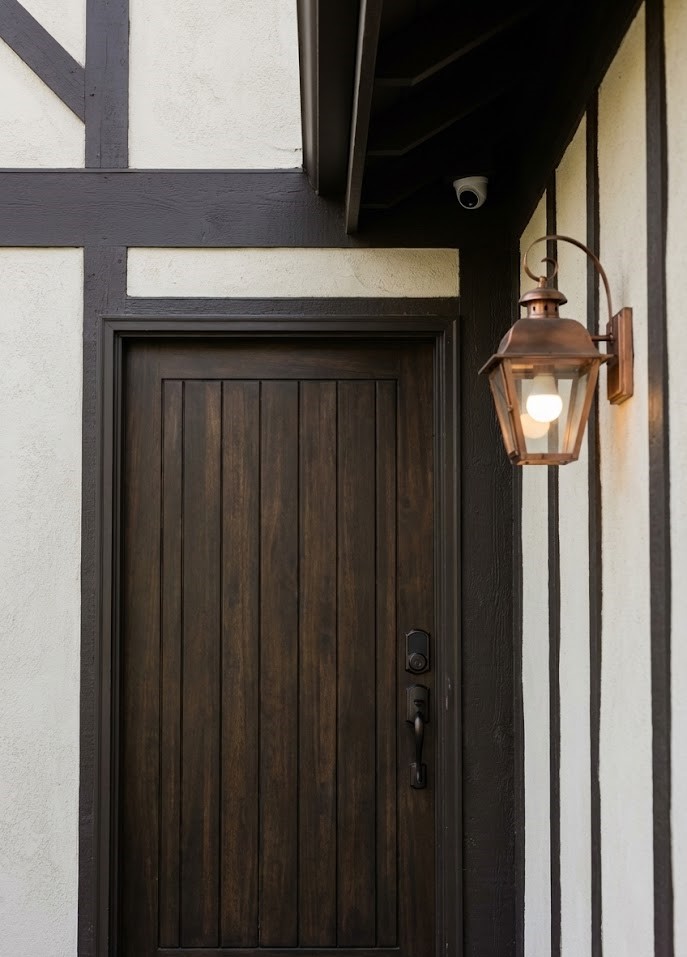
Choose technology with finishes that blend in. Bronze or matte black smart locks disappear against a dark door. Hide security cameras in the eaves where the shadows conceal them. The goal is a high-tech home that looks purely analog.
Expert Tip:
Use "smart bulbs" in your traditional lantern fixtures. You can control the color temperature and schedule from your phone without changing the historic look of the fixture.
18. Layer Your Exterior Lighting
Don't rely on a single porch light. Layering is key for luxury. You need ambient light (uplighting trees), task light (pathway lights), and accent light (sconces on the house).
This layering creates depth. It prevents the house from looking flat at night and ensures that the beautiful stone and stucco textures are visible even after the sun goes down.
Expert Tip:
Use warm LED light (2700K or 3000K). Anything cooler (4000K+) will make your home look like a hospital or a gas station.
19. Streamline the Chimney
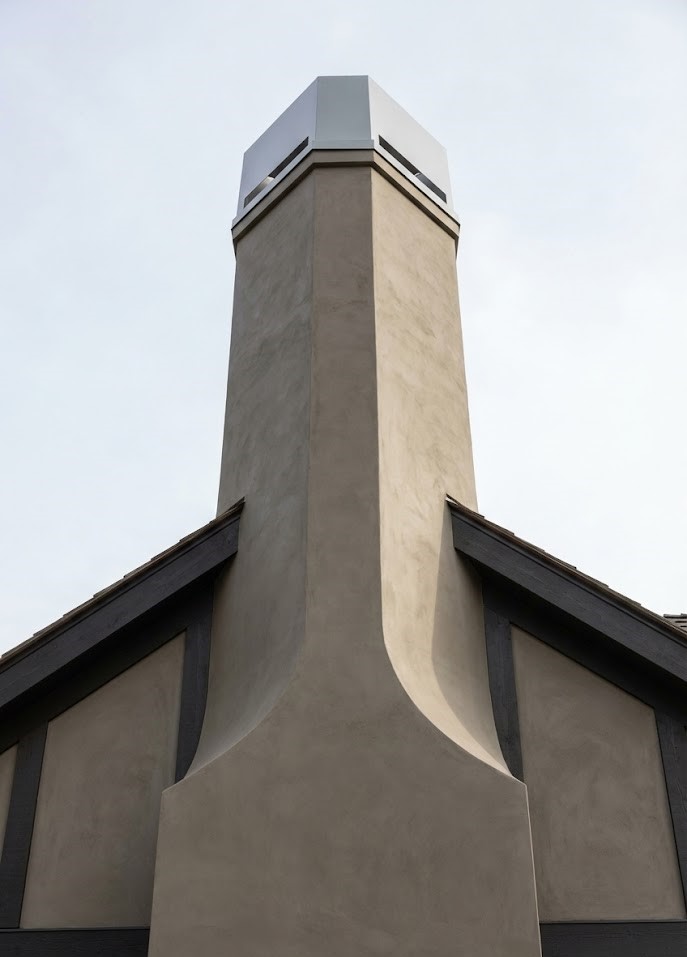
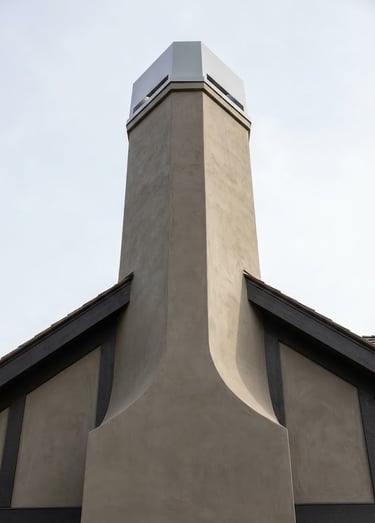
The massive chimney is a Tudor icon. In modern design, we clean it up.
Instead of ornate, twisted chimney pots, go for simple, straight clay pots or a clean cap. If the chimney is brick, consider plastering over it for a smooth, stucco look that rises dramatically against the sky. It becomes a sculptural vertical element.
Expert Tip:
If you have a non-functioning chimney, turn it into a chase for venting your modern HVAC or fireplace systems so it remains useful.
20. Seamless Indoor-Outdoor Patios
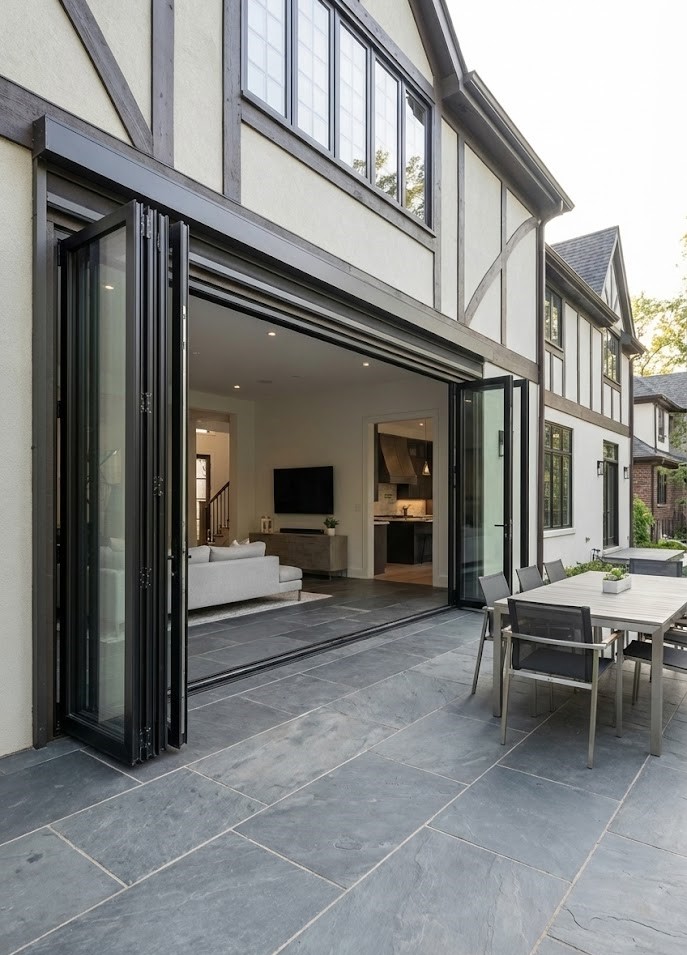
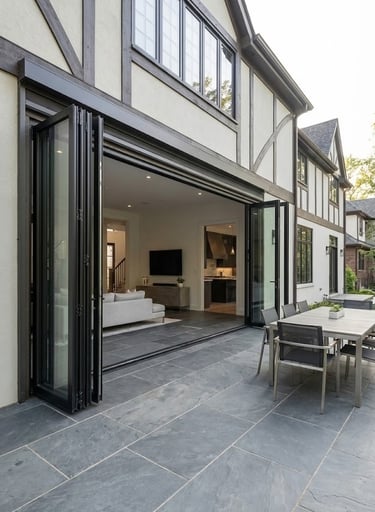
The Modern Tudor connects to the backyard. Replace small back doors with massive bi-fold or accordion doors that open the entire wall.
Extend the flooring material from the inside to the outside patio to blur the line. If you have slate floors inside, use slate pavers outside. This makes the home feel twice as big and encourages a modern, alfresco lifestyle.
Expert Tip:
Install a phantom screen or motorized screen system so you can leave the doors open without inviting every mosquito in the neighborhood inside.
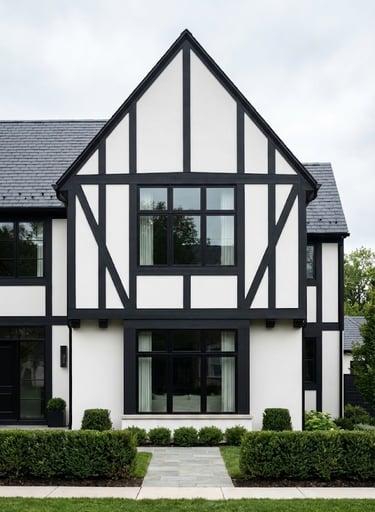
21. Bold, Graphic Lines
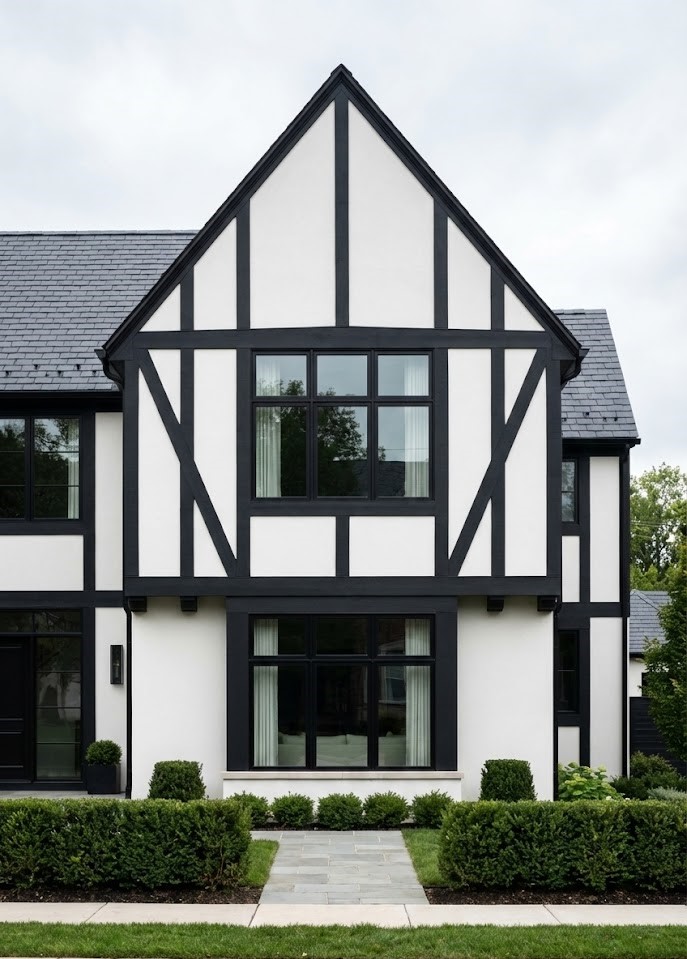
Tudor architecture is inherently graphic—it's essentially drawing with wood on a white canvas. Play this up.
Ensure your timbering lines are thick and intentional. Avoid thin, spindly trim. You want bold strokes that can be seen from the street. This graphic quality is what makes the style so photogenic and memorable.
Expert Tip:
Step back to the curb. If you can't clearly see the timber pattern from the street, the beams are too thin. Scale them up.
22. Light-Filled Interiors that Reflect Out
Finally, remember that the exterior reflects the interior. Modern Tudors prioritize light.
By opening up the interior floor plan and removing heavy drapes, you allow light to flow through the house. At night, a warm glow radiates from the windows, making the heavy Tudor exterior feel warm, welcoming, and lived-in.
Expert Tip:
Paint your interior window sashes black to match the exterior. It frames the view of the outdoors like a picture.
Conclusion
The Modern Tudor is more than just a renovation style; it is a rescue mission for one of the most beautiful forms of architecture we have. By respecting the steep pitches and robust materials of the past, but updating them with modern glass, monochrome palettes, and open layouts, you create a home that is truly timeless.
Whether you go for the moody, dark drama or the light, airy storybook vibe, these design choices ensure your home won't just look like a relic of the past—it will look like the future of design. Now, which of these ideas will you sketch out first?