22 Ideal Bathroom Ideas That Will Transform Your Morning Routine Into a Spa Experience
The primary bathroom has evolved from a utility space into the home’s most critical sanctuary. I break down 22 high-impact design ideas, including the benefits of floating vanities, why you should mix metals, and how to create a 'biophilic' shower garden for ultimate relaxation.
BATHROOM
For generations, the bathroom was treated as a strictly utilitarian space. It was a functional necessity—a small, tiled box designed for hygiene, hidden away behind a locked door and largely ignored by interior designers. But in modern home design, a massive shift has occurred. The "Primary Bathroom" (formerly known as the Master Bath) has evolved into perhaps the most critical sanctuary in the home.
Real estate experts often say that while kitchens sell houses, luxury bathrooms sell a lifestyle. It is the first room you enter to prepare for the day’s challenges and the last room you visit to wash away the stress of the world. Why should such an important space be defined by builder-grade beige tiles and harsh fluorescent lighting?
Whether you are planning a full-scale gut renovation or looking for high-impact upgrades to refresh your space, creating a personal retreat requires a careful balance of aesthetics and ergonomics. Below, we explore 22 transformative primary bathroom ideas that blend cutting-edge luxury with timeless functionality.
1. The Architectural "Wet Room"
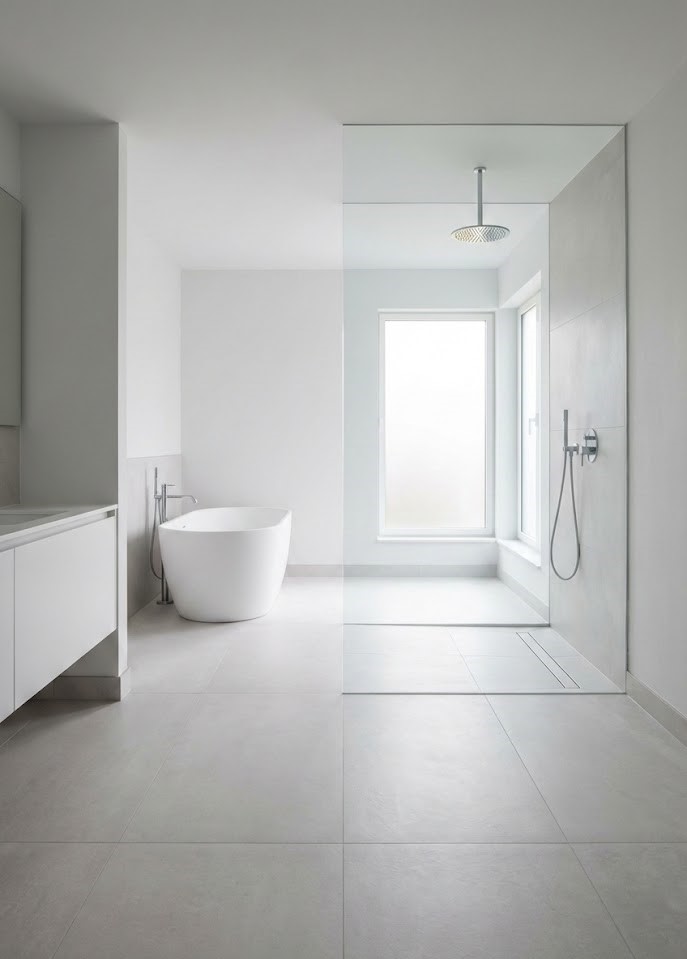
The "wet room" concept has migrated from high-end European hotels to American residential design, and for good reason. By tanking (waterproofing) the entire bathroom floor and placing the shower and freestanding tub behind a single glass partition—or no partition at all—you eliminate the visual clutter of bulky shower curbs and distinct zones.
The Design Impact: This layout makes small bathrooms feel significantly larger because the flooring continues uninterrupted from the vanity to the shower drain. It is also the gold standard for "universal design," making the space accessible for all ages and mobility levels.
Styling Tip: To ensure proper drainage, the gradient of the floor is crucial. Work with a contractor who specializes in wet rooms to ensure the slope is subtle enough to be comfortable to stand on, yet steep enough to drain water effectively.
Pros & Cons:
Pros: Creates a massive, open feel; easiest layout to clean; completely accessible.
Cons: Requires professional, high-grade waterproofing (tanking) to prevent leaks; everything in the "splash zone" will get wet, so towel placement is key.
Real-World Example: Use large-format slate grey porcelain tiles (24x48 inches) to minimize grout lines. Pair this with a linear drain along the back wall for a seamless, ultra-modern look.
2. Floating Vanities for Visual Flow
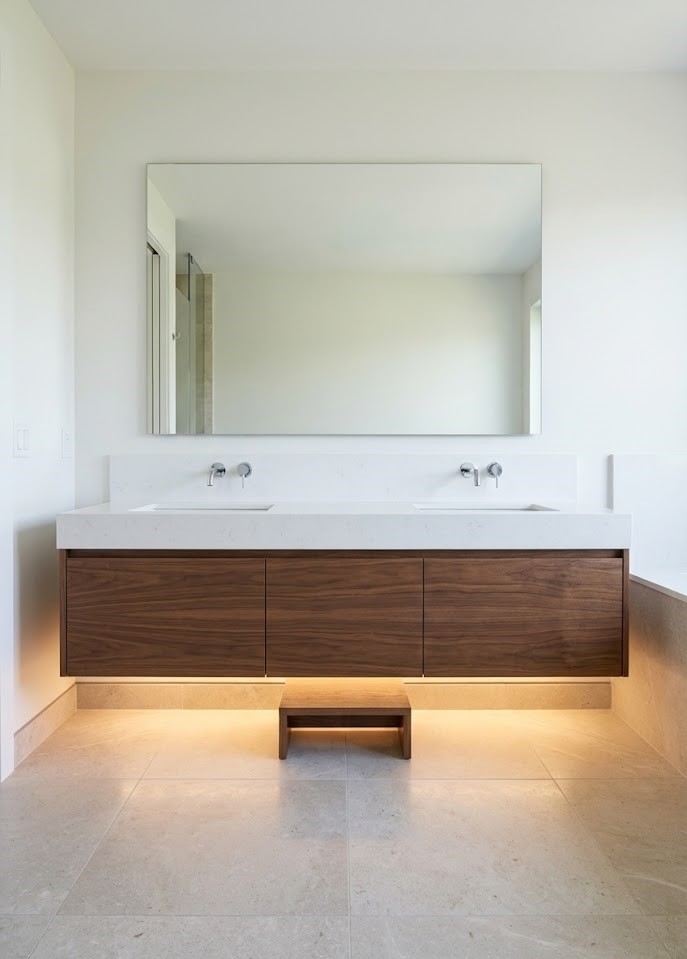
If your bathroom footprint is tight, a heavy cabinetry unit sitting on the floor can make the room feel claustrophobic and boxy. Wall-mounted "floating" vanities expose the flooring underneath, which tricks the eye into perceiving more square footage.
The Design Impact: Beyond the illusion of space, floating vanities offer a sleek, modern silhouette. They also allow for easier cleaning of the floor and provide a perfect recess for tucking away a bathroom scale or stepping stool.
Styling Tip: Install motion-sensor LED strip lighting on the underside of the vanity. This provides a soft, ambient "toe-kick" glow for late-night bathroom trips without waking you up with harsh overhead lights.
Pros & Cons:
Pros: customizable height (great for taller homeowners); makes the room look bigger; easy to clean underneath.
Cons: Generally offers slightly less storage space than floor-standing units; requires reinforcement in the wall studs to support the weight.
Real-World Example: A floating vanity in a warm walnut wood finish topped with a thin, matte white quartz counter creates a beautiful mid-century modern vibe.

3. The "Japandi" Fusion Aesthetic
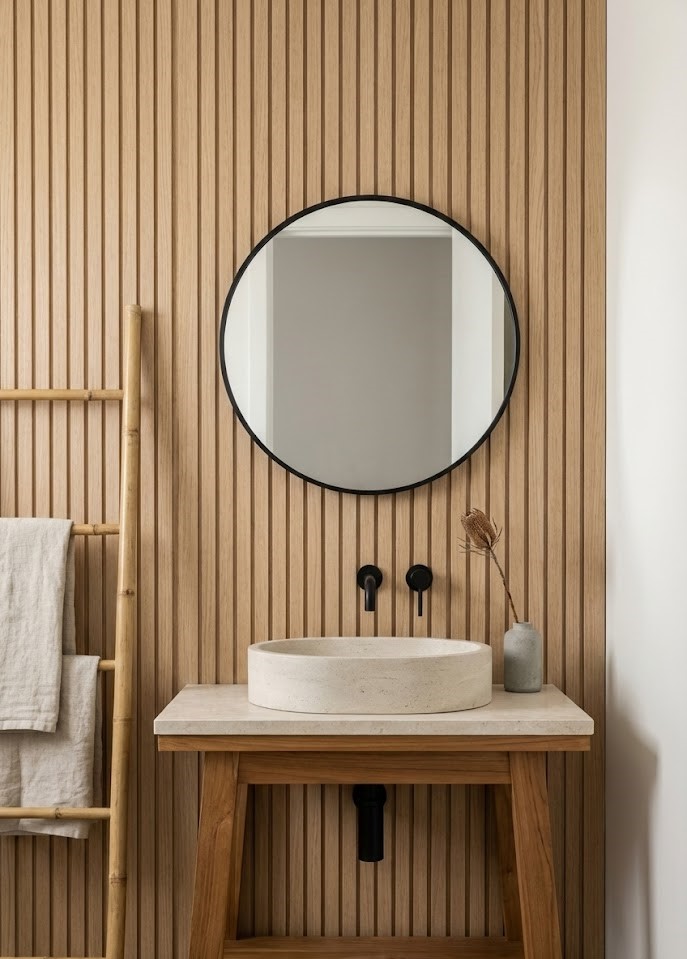
"Japandi" is the harmonious hybrid of Japanese rustic minimalism and Scandinavian functionality. It moves away from the sterile, all-white "clinical" bathroom look and embraces warmth, texture, and imperfection.
The Design Impact: Think matte black fixtures paired with light oak slat walls, stone basins, and plenty of negative space. The goal is to create a Zen atmosphere that lowers your heart rate the moment you step inside.
Styling Tip: Reduce clutter ruthlessly. Japandi relies on clean lines, so use hidden storage for all colorful plastic bottles and branded products. Keep only beautiful objects, like a wooden bath brush or a ceramic soap dispenser, on display.
Pros & Cons:
Pros: Incredible for mental health and relaxation; timeless and unlikely to date quickly.
Cons: Requires discipline to maintain; clutter immediately ruins the effect.
Real-World Example: Pair light blonde wood cabinetry with "Greige" (grey-beige) limestone floor tiles and matte black faucets.
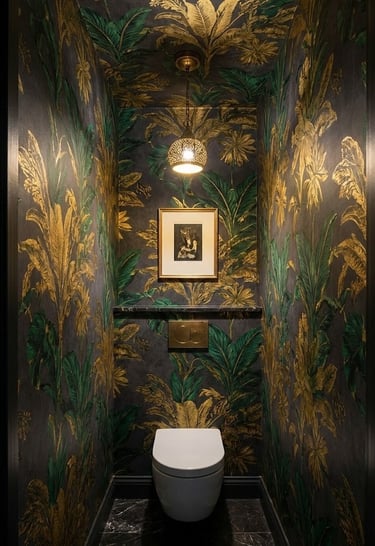
4. The "Jewel Box" Water Closet
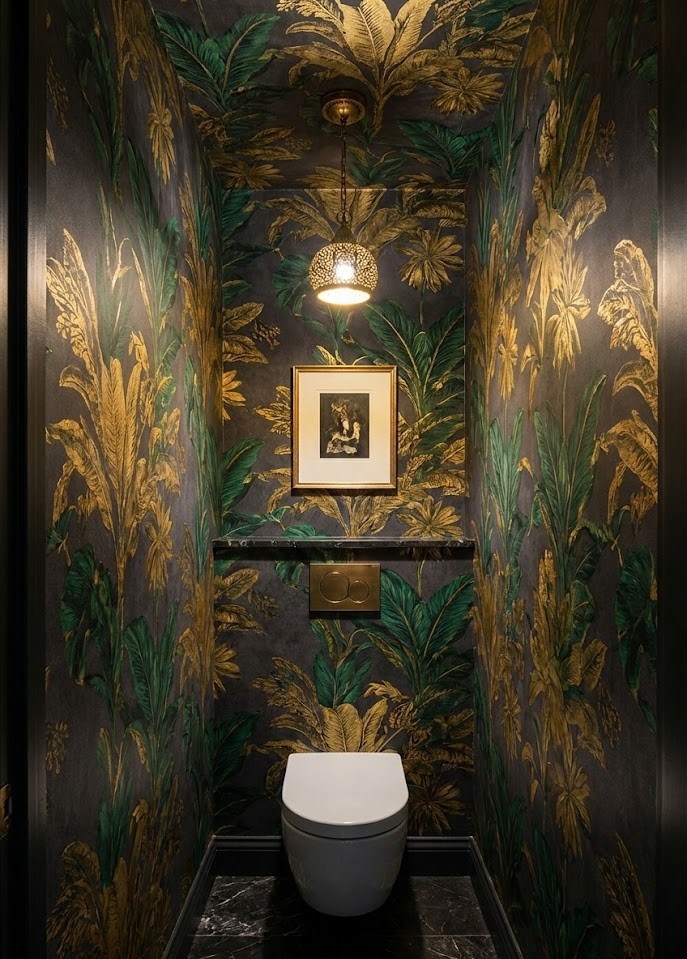
The separate toilet room, often called the water closet, is usually the most neglected space in the suite. However, because it is a small, enclosed room, it is the safest place to take a massive design risk without overwhelming the main bathroom.
The Design Impact: Treat this small room like a jewel box. Wrap all four walls (and even the ceiling) in a bold, moody wallpaper or a dark, dramatic paint color like charcoal or navy.
Styling Tip: Since bathrooms are humid, opt for a high-quality "paste-the-wall" vinyl wallpaper that can withstand moisture without peeling. Add a small piece of art and a dedicated sconce to make the room feel intentional, not just functional.
Pros & Cons:
Pros: A fun place to experiment with bold patterns; separates the "business" area from the relaxation area.
Cons: Can feel tight if the colors are too dark without adequate lighting.
Real-World Example: A dark emerald green wallpaper with a gold Art Deco geometric print, paired with a small brass chandelier.
9. Radiant Heated Flooring
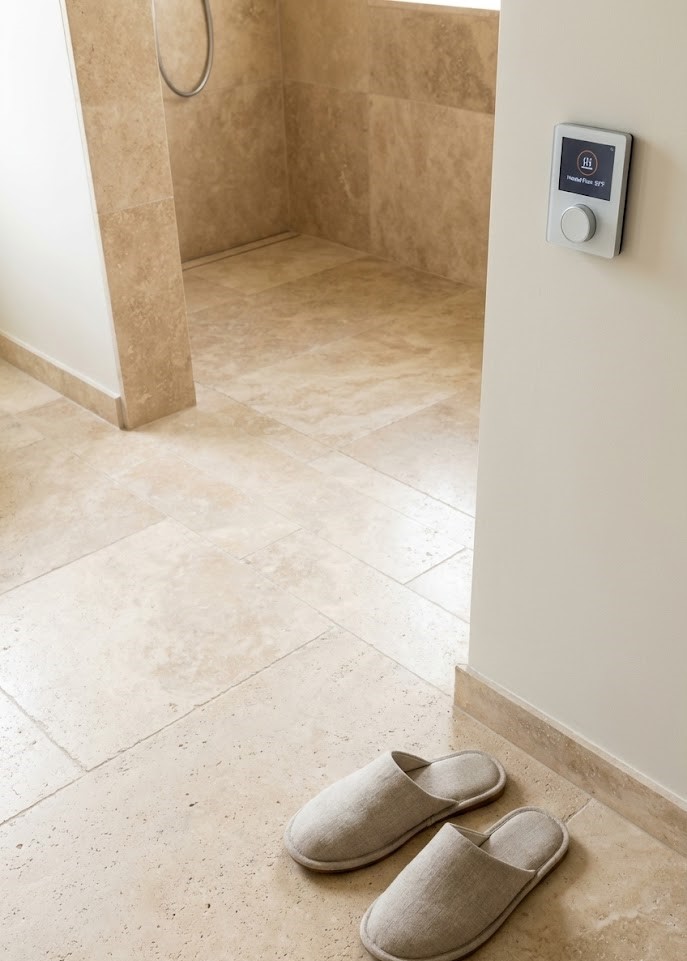
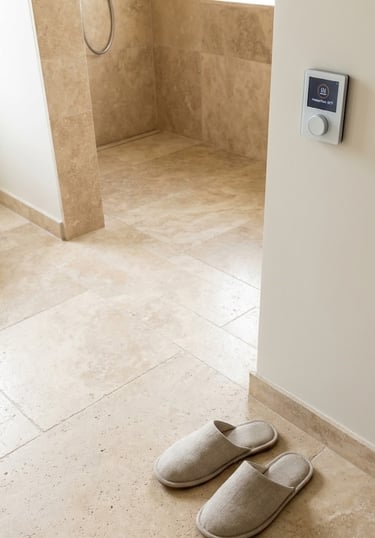
If you invest in only one invisible luxury, let it be radiant floor heating. Stepping out of a hot shower onto ice-cold tiles ruins the relaxation experience instantly.
The Design Impact: Beyond the comfort of warm feet, radiant heating is an efficient way to heat the room ambiently. It also helps dry out the floors faster after a shower, reducing the chance of mold or mildew growth.
Styling Tip: Don't stop at the main floor area; run the heating coils right onto the floor of the shower and into the drying area. It costs marginally more during installation but makes a massive difference in comfort.
Pros & Cons:
Pros: Energy efficient; silent heating; increases home resale value.
Cons: Expensive to retrofit (requires ripping up the floor); if it breaks, repair is invasive.
Real-World Example: An electric mat system (like Schluter-Ditra) installed under large-format slate tiles.
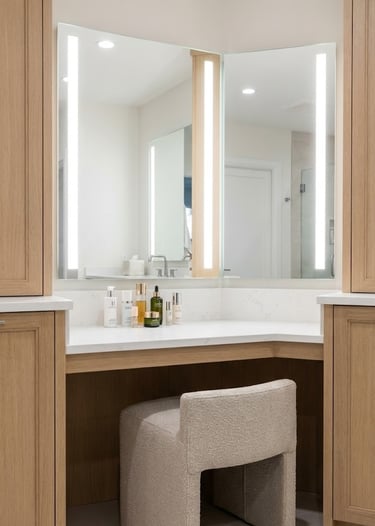
10. The Seated Vanity Station
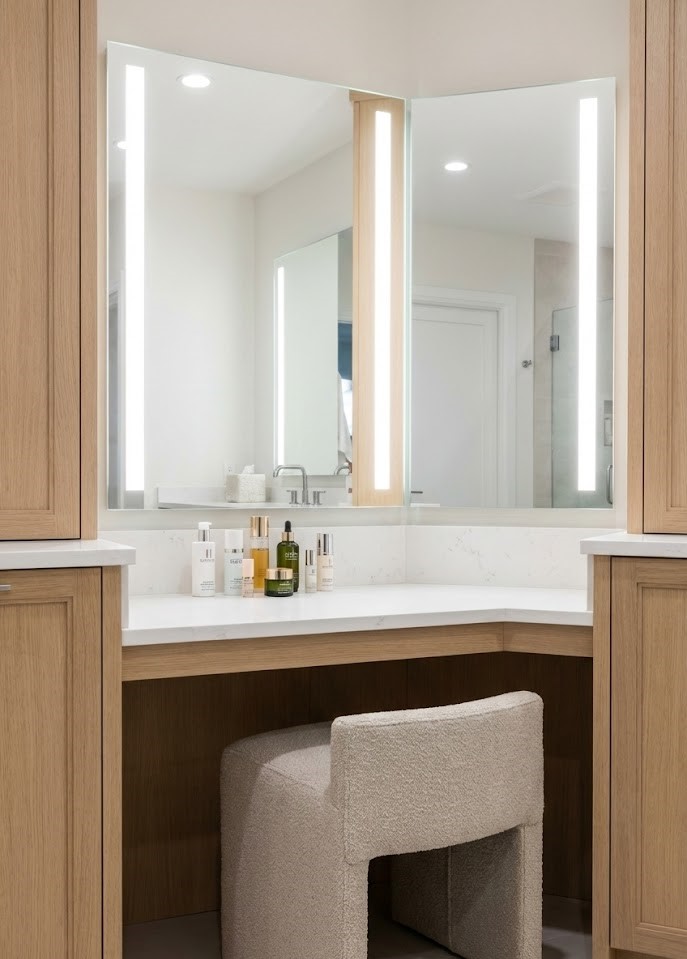
If space allows, drop a section of your countertop down to 30 inches (desk height) to create a dedicated makeup and grooming station.
The Design Impact: This adds a level of luxury convenience, allowing you to sit comfortably while drying hair or applying skincare. It also keeps the sink area free of clutter, as makeup can stay at the vanity station.
Styling Tip: Lighting is critical here. Ensure you have sconces or a lighted mirror that projects "Daylight" balanced light (around 5000K) for accurate color application. Avoid yellow-tinted warm light, which can skew how makeup looks.
Pros & Cons:
Pros: Ergonomic comfort; keeps the "wet" sink area cleaner.
Cons: You lose under-counter storage space to accommodate your legs and the chair.
Real-World Example: A lowered quartz counter section paired with a velvet-upholstered ottoman that can slide completely under the counter when not in use.
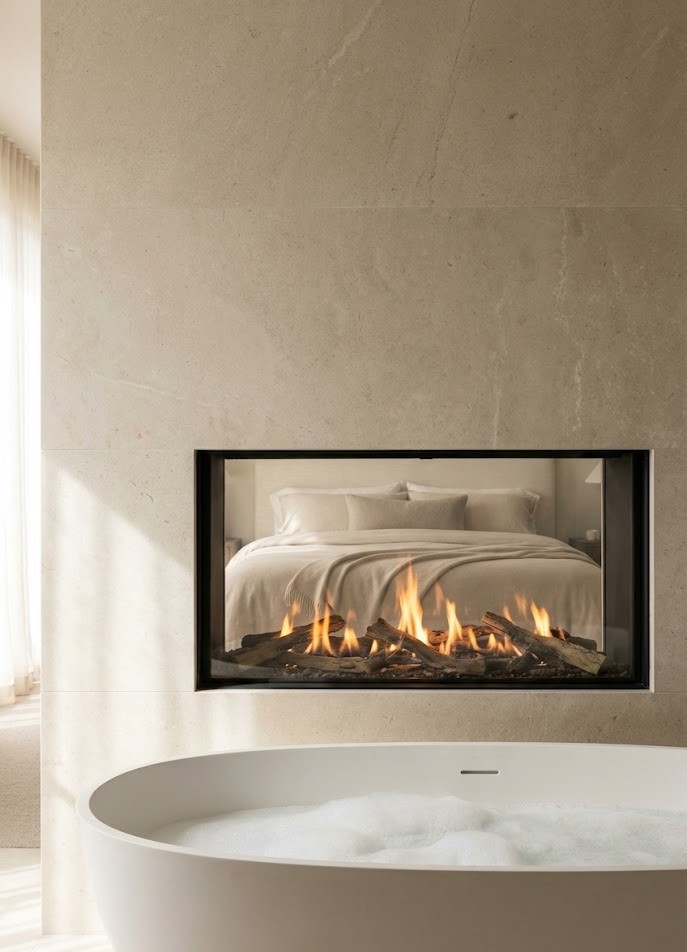
6. The Bedroom-Bathroom Connection (Fireplace)
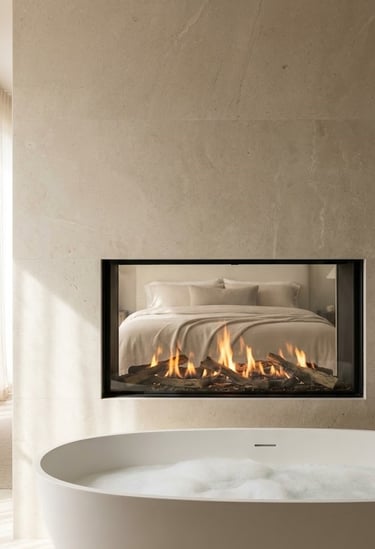
If your layout allows, consider blurring the lines between the primary bedroom and the bathroom. A double-sided gas fireplace installed in the dividing wall creates an ultra-luxury resort vibe.
The Design Impact: Imagine soaking in a bubble bath while watching the flickering flames that are also warming your bedroom. It adds romance, physical warmth, and a high-end architectural focal point.
Styling Tip: Ensure the fireplace is rated for bathroom use and has proper ventilation to keep the glass clean and fog-free. Use a cool-touch glass enclosure if you have children or pets.
Pros & Cons:
Pros: The ultimate luxury statement; provides efficient zone heating.
Cons: Expensive to install; requires gas line routing and specialized venting.
Real-World Example: A linear gas fireplace sitting at tub-height, framed in dark basalt stone, connecting a neutral bedroom to a white marble bathroom.
7. Mixing Metals is the New Standard
The old rule of "match every metal in the room" is dead. A curated, high-end bathroom creates depth by mixing metal finishes intentionally to avoid the "builder showroom" look.
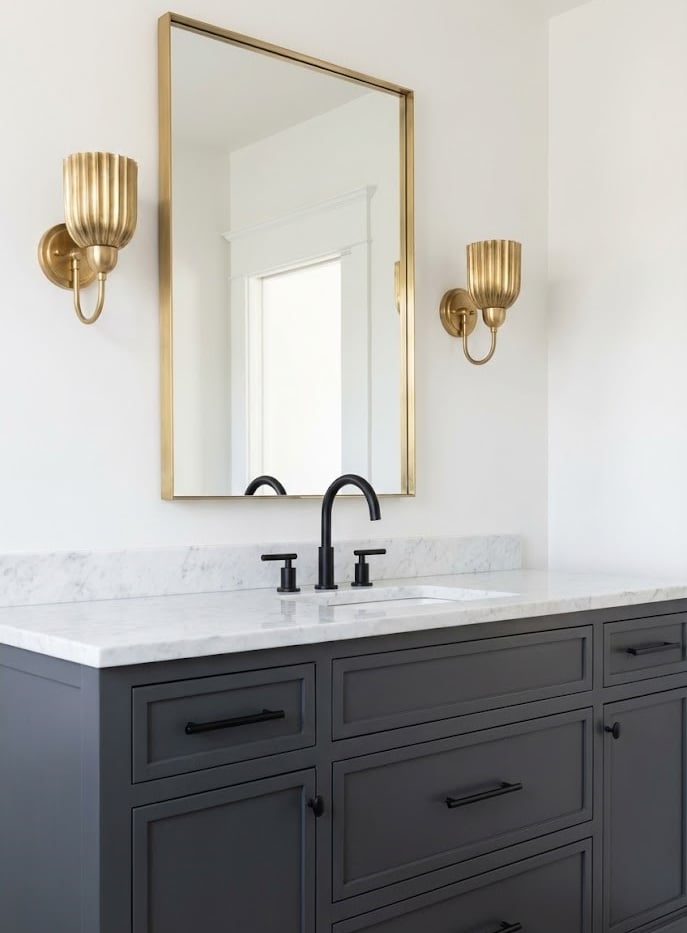
The Design Impact: A room where the faucet, lights, mirrors, and handles are all identical chrome can look flat. Mixing matte black plumbing fixtures with unlacquered brass lighting fixtures creates a layered, collected look.
Styling Tip: Follow the "Dominant/Accent" rule. Let one metal (e.g., Polished Nickel) take up 70% of the fixtures (faucets, shower heads), and use a warmer metal (e.g., Aged Brass) for the remaining 30% (mirrors, sconces, cabinet pulls) to add contrast.
Pros & Cons:
Pros: Looks custom and designer-led; allows you to mix vintage and new items.
Cons: Easy to overdo—stick to a maximum of two distinct finishes (plus maybe black).
Real-World Example: Matte Black shower fixtures and faucets mixed with Brushed Gold cabinet hardware and mirror frames.
8. The Biophilic Shower Garden
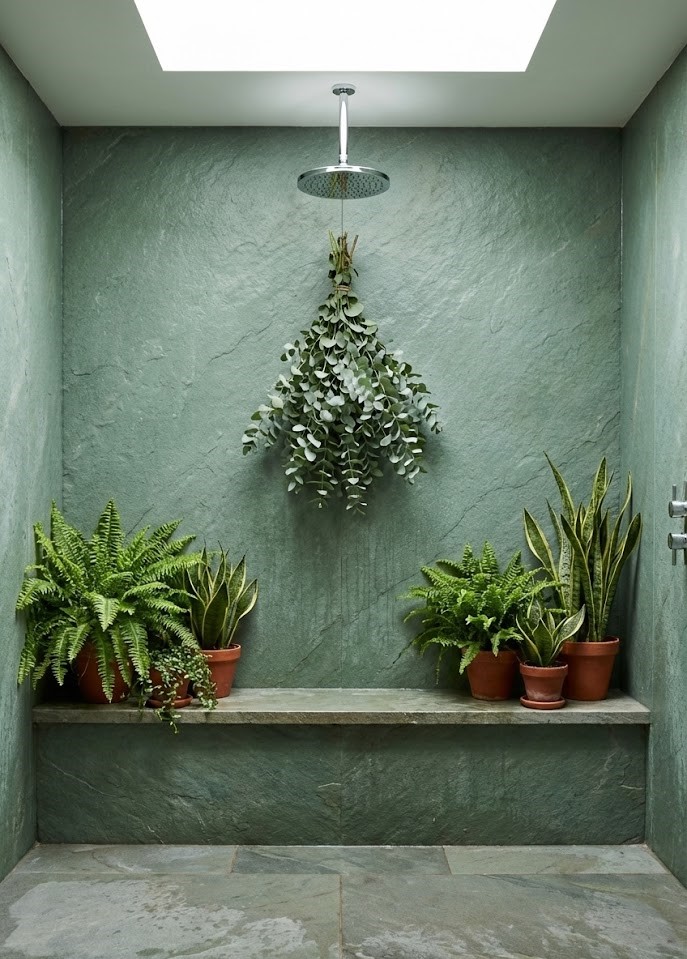
Biophilic design is the practice of connecting interior spaces with nature. The bathroom is the perfect environment for this because of the naturally high humidity levels, which many tropical plants crave.
The Design Impact: Plants soften the hard, cold lines of stone and ceramic. Placing a ledge for potted ferns in the shower, or hanging eucalyptus bundles from the showerhead, turns a daily rinse into a sensory experience.
Styling Tip: If your bathroom lacks a window, you can still participate! Use high-quality faux plants for the visual effect, or install a "grow bulb" in one of your recessed light fixtures to keep real plants alive.
Pros & Cons:
Pros: Cleans the air; reduces stress; adds a pop of vibrant color.
Cons: Real plants can attract pests (gnats) if overwatered; requires maintenance.
Real-World Example: A Boston Fern placed on a teak shower bench, or a pothos vine trailing from the top of a medicine cabinet.
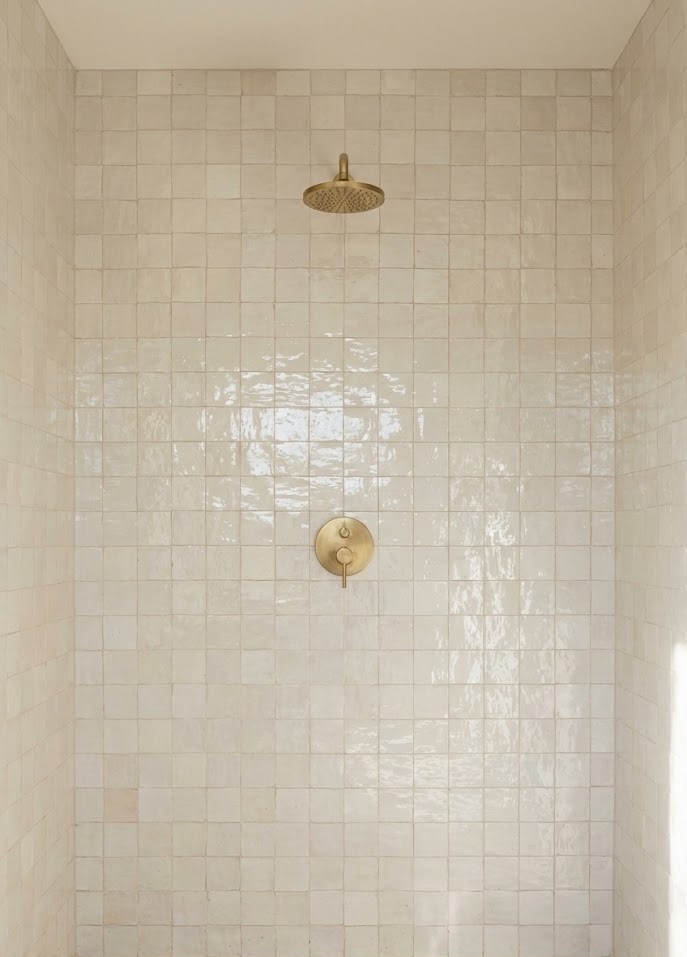
5. Zellige Tiles: The Beauty of Imperfection
Uniform, machine-cut subway tiles are classic, but they can feel a bit flat. Handmade Moroccan Zellige tiles are currently dominating luxury design because of their irregular surface and glazed finish.
The Design Impact: Because no two tiles are exactly flat or the same shade, they catch the light in shimmering, water-like ripples. They add an artisanal, "old-world" texture that feels incredibly expensive and bespoke.
Styling Tip: Do not use spacers when installing Zellige. They are designed to be jammed close together to create a raw, organic look.
Pros & Cons:
Pros: Reflects light beautifully; adds instant character; masks water spots better than flat glass.
Cons: Difficult to install (requires a skilled tiler); the uneven edges can be harder to clean than flat tile.
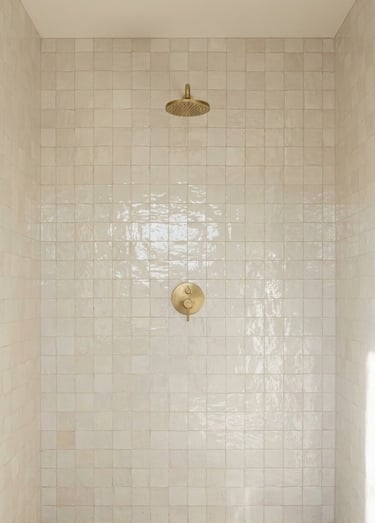
Real-World Example: "Weathered White" Zellige tiles in a shower, paired with unlacquered brass fixtures. The slight variations in white, cream, and pearlescent grey create a stunning visual depth.
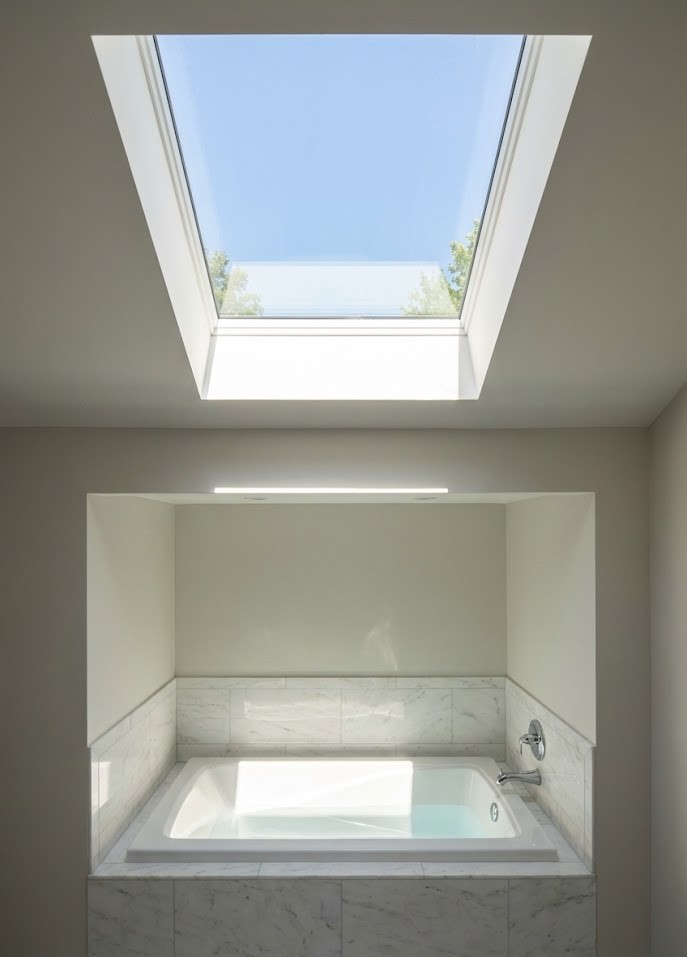
15. Skylights and Solar Tubes
There is no substitute for natural light. It renders colors accurately (crucial for makeup) and helps regulate your circadian rhythm, waking you up naturally in the morning.
The Design Impact: A skylight placed directly over a bathtub or shower creates a dramatic connection to the outdoors without sacrificing privacy from neighbors. Watching the rain fall on the glass while you are in a warm bath is a peak luxury experience.
Styling Tip: If you don't have the roof structure for a full skylight, consider a "Solar Tube." These are reflective pipes that channel sunlight from the roof into the room through a small, recessed fixture that looks like a regular light. They deliver an astonishing amount of light for a fraction of the cost.
Pros & Cons:
Pros: Free lighting during the day; reduces mold by drying the room with sunlight; improves mood.
Cons: Another potential spot for roof leaks; can add heat to the bathroom in summer.
Real-World Example: A motorized venting skylight over the shower that opens to let steam escape.
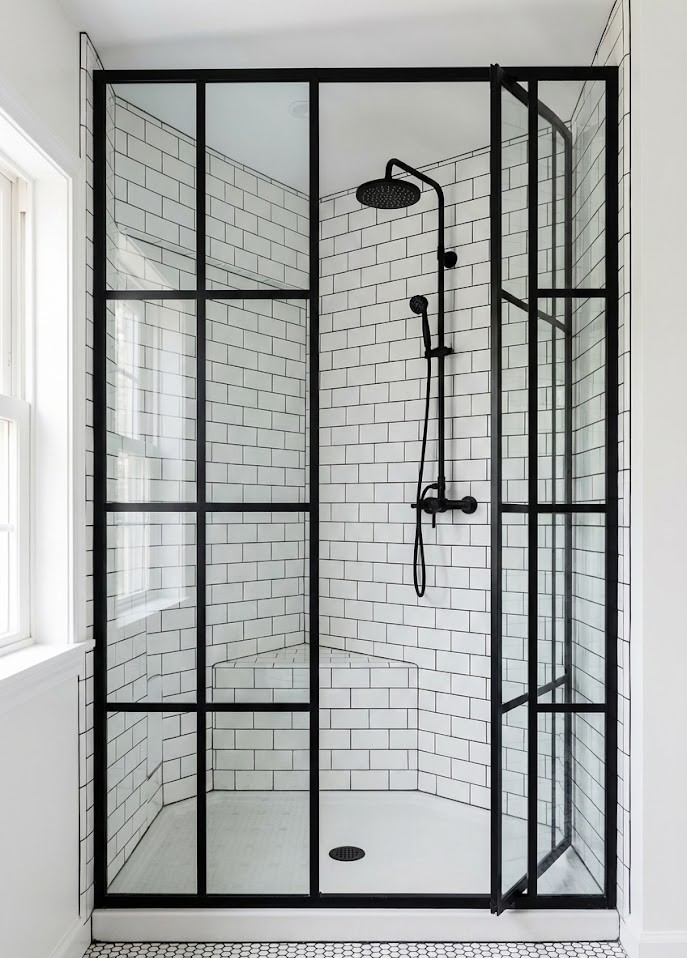
11. Crittall-Style Shower Enclosures
While frameless glass has been popular for decades for its "invisible" look, the pendulum is swinging back toward bold framing. Grid-patterned black metal frames (Crittall style) are surging in popularity.
The Design Impact: These frames add a strong, industrial-graphic edge to the bathroom. They frame the shower like a work of art and pair beautifully with white marble or subway tile, acting as an anchor in a bright room.
Styling Tip: Ensure the grid is on the outside of the glass, leaving the inside surface smooth. This makes squeegeeing the glass much easier and prevents soap scum buildup in the corners of the frames.
Pros & Cons:
Pros: A major style statement; defines the shower zone clearly.
Cons: Hard water deposits show up easily on black metal; can make a small room feel busier.
Real-World Example: A shower enclosure with matte black aluminum grids paired with white subway tiles and grey grout.
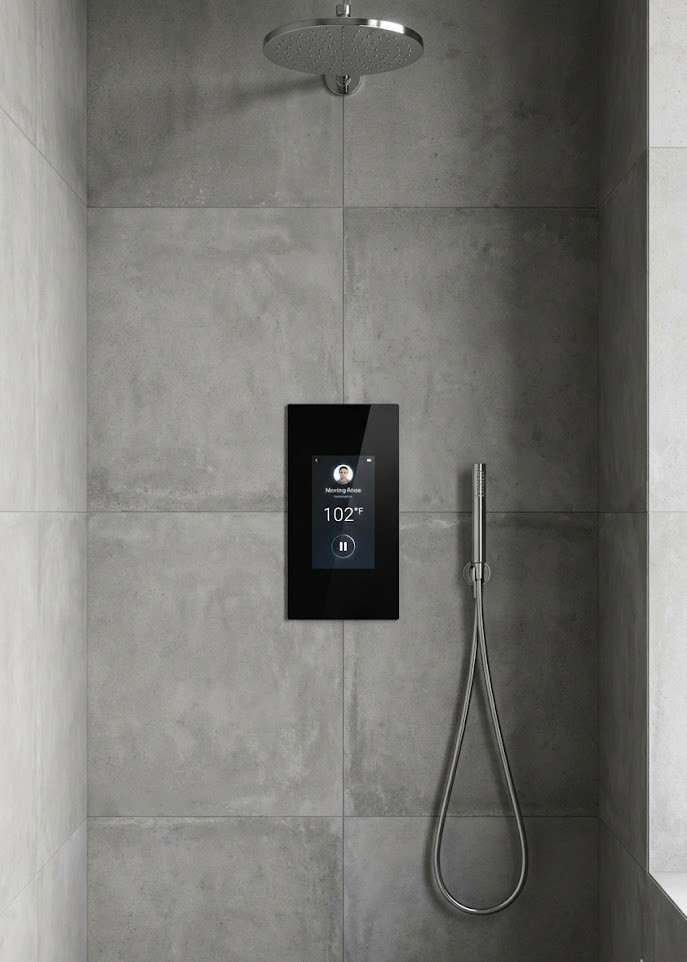
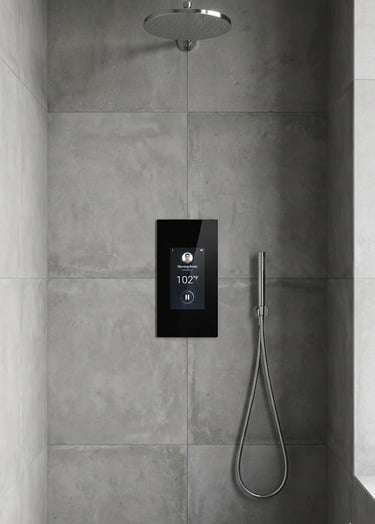
12. Smart Digital Showering
Thermostatic valves are great, but digital showers are the future. These systems allow you to set your precise preferred water temperature and flow rate to a user profile.
The Design Impact: No more fiddling with knobs to find that "goldilocks" temperature. You can start the shower from your phone while you are still in bed, and the system will pause the water once it is hot, waiting for you to step in.
Styling Tip: Look for systems that integrate with your smart home ecosystem (Alexa or Google Home). This allows for voice commands like "Start my morning shower."
Pros & Cons:
Pros: Unbeatable precision and consistency; water-saving features; looks very high-tech.
Cons: Requires electricity (battery backup needed for power outages); expensive upfront cost.
Real-World Example: The Moen or Kohler smart shower systems, utilizing a sleek digital touchscreen pad mounted on the wall instead of traditional knobs.
13. Eye-Level Lighting (Banish the Shadows)
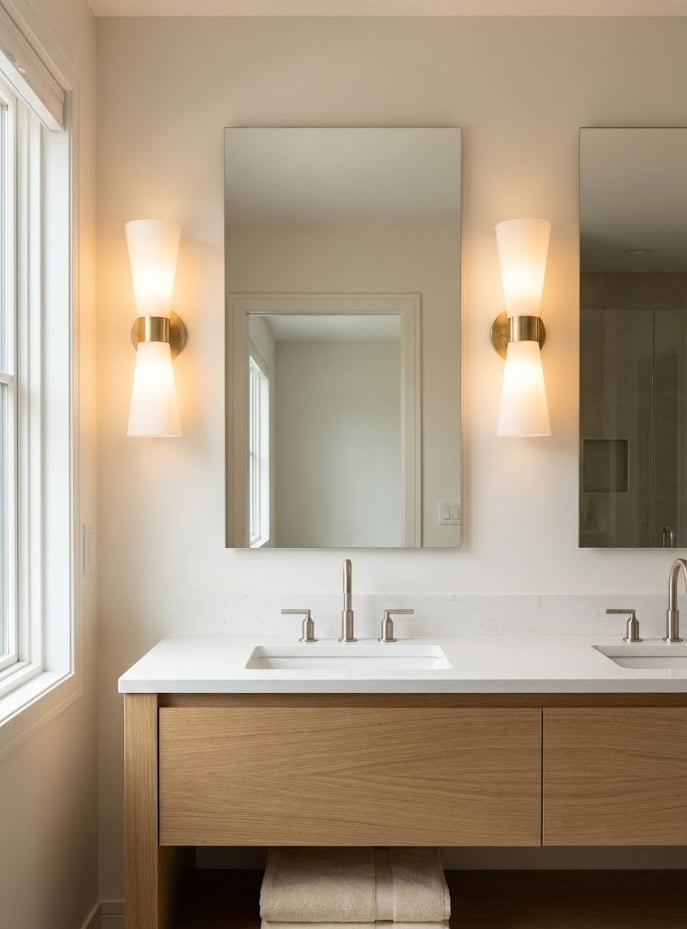
The most common bathroom design mistake is relying solely on recessed can lights in the ceiling. This creates unflattering shadows under the eyes and nose (the "raccoon effect"), making shaving or makeup application frustrating.
The Design Impact: Install sconces on the wall at eye level, flanking the mirror. This provides cross-illumination that washes the face in even, flattering light. It mimics the lighting found in professional dressing rooms.
Styling Tip: Choose fixtures with frosted glass or linen shades to diffuse the light bulb, preventing glare. Clear glass shades with "Edison" bulbs look cool, but they cast harsh, wiry shadows.
Pros & Cons:
Pros: Makes you look better in the mirror; better for grooming tasks.
Cons: Requires electrical wiring behind the wall at specific heights, which can be tricky in renovations.
Real-World Example: Two tall, vertical tube sconces in polished nickel placed on either side of a frameless rectangular mirror.
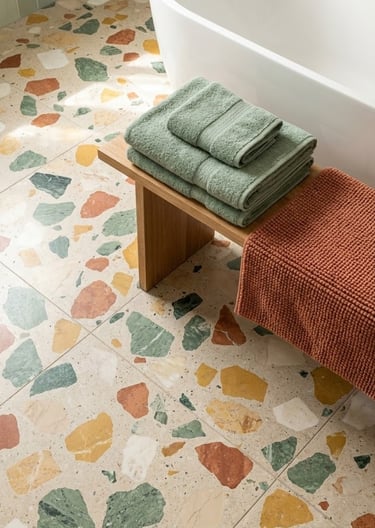
14. The Terrazzo Revival
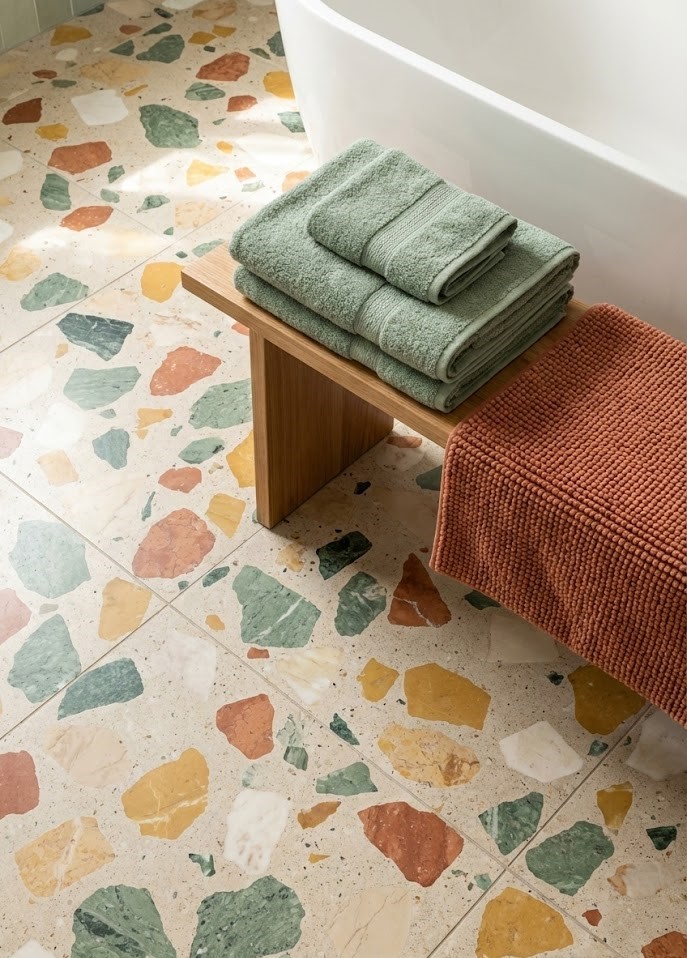
Terrazzo, a composite material made of chips of marble, quartz, granite, and glass set in concrete, has made a massive comeback from its mid-century origins.
The Design Impact: Terrazzo is incredibly durable and hides hair, dust, and water spots much better than solid white tile. It adds a playful, confetti-like energy to the floor that can tie together various color palettes in the room.
Styling Tip: Pull accent colors from the chips in your terrazzo floor. If there are flecks of sage green or terracotta in the floor, use those exact colors for your towels, soap dishes, and bath mats to create a cohesive look.
Pros & Cons:
Pros: Extremely durable; low maintenance; unique color combinations.
Cons: Can be slippery when wet if not sealed with a non-slip finish; busy patterns can overwhelm small spaces.
Real-World Example: A large-aggregate terrazzo floor featuring chunks of white marble and amber glass set in a pale grey concrete base.
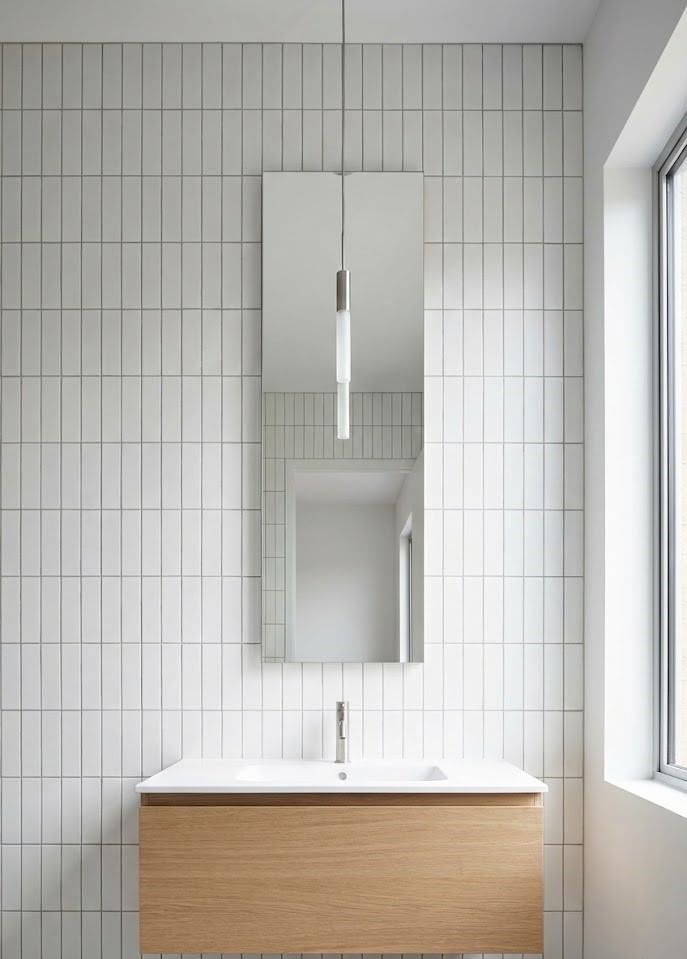
16. Vertical Stacked Tile Patterns
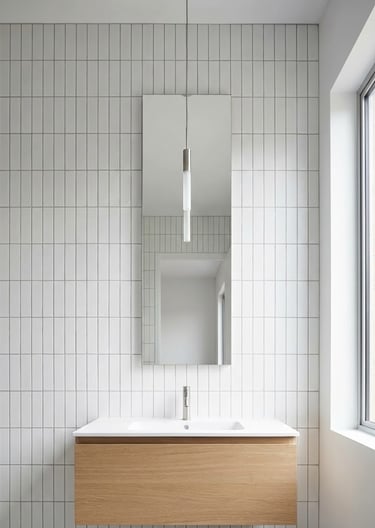
Instead of the traditional "running bond" (brick pattern), try stacking rectangular tiles vertically in straight columns.
The Design Impact: This simple layout change draws the eye upward, accentuating the height of the room and making low ceilings feel loftier. It feels decidedly modern, orderly, and architectural compared to the staggered brick look.
Styling Tip: Use a "Kit-Kat" or "Finger" tile (long, thin mosaic rectangles). These are very trendy right now and look fantastic when stacked vertically on a curved wall or shower niche.
Pros & Cons:
Pros: visual trick to increase ceiling height; looks contemporary.
Cons: Requires a very skilled tiler—if the wall isn't perfectly straight, the vertical lines will waver and look terrible.
Real-World Example: Matte sage green rectangular tiles stacked vertically behind the vanity, paired with a round mirror to break up the straight lines.
17. The "Unfitted" Furniture Look
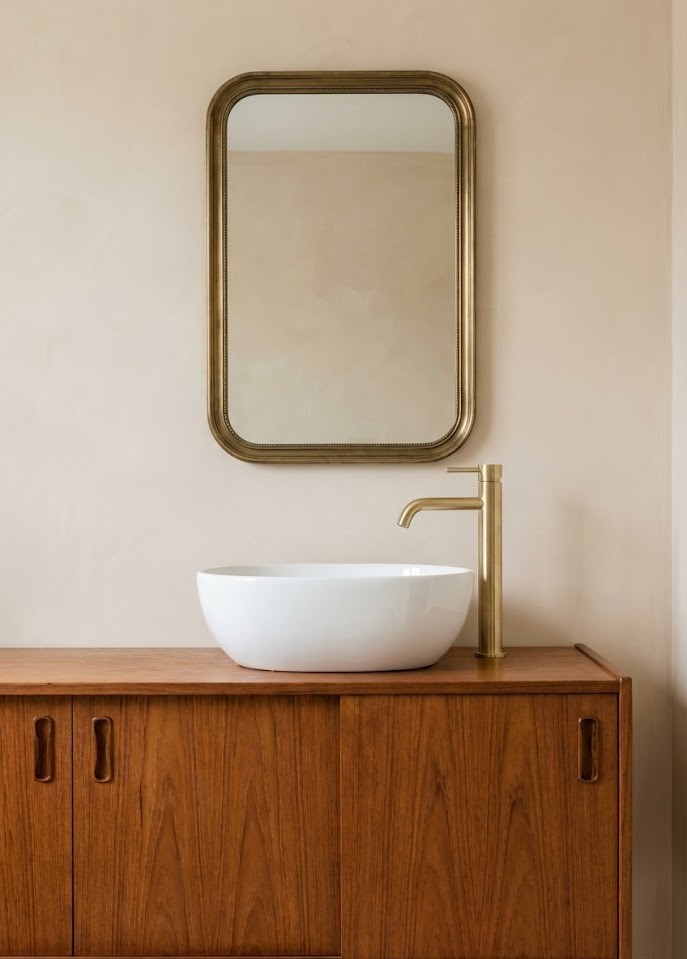
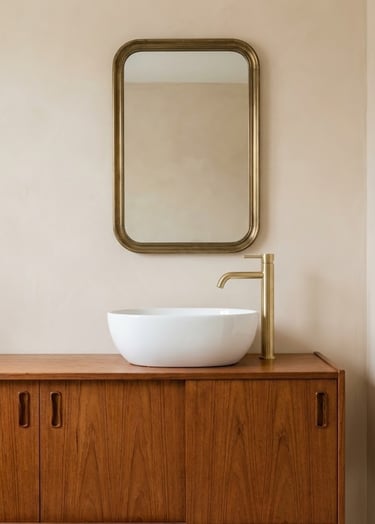
To make a bathroom feel cozy and less sterile, repurpose a vintage piece of furniture into a vanity. An antique dresser, a mid-century sideboard, or a rustic console table can be modified to hold a sink.
The Design Impact: This adds "soul" and history to the room. It ensures your bathroom is unique and custom, rather than looking like a page out of a generic big-box catalog.
Styling Tip: Because wood and water don't mix well, ensure the top is sealed with a high-grade marine varnish, or—even better—top the furniture piece with a custom-cut slab of stone or quartz for durability.
Pros & Cons:
Pros: One-of-a-kind design; eco-friendly (upcycling); warm aesthetic.
Cons: Drawers often need to be cut or shortened to accommodate plumbing; not as durable as factory-made vanities.
Real-World Example: An oak Victorian chest of drawers with a vessel sink sitting on top, and wall-mounted faucets.
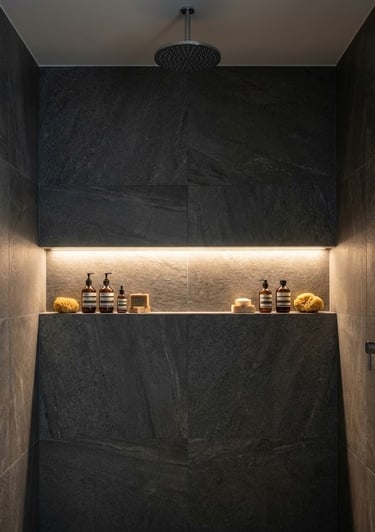
18. Illuminated Shower Niches
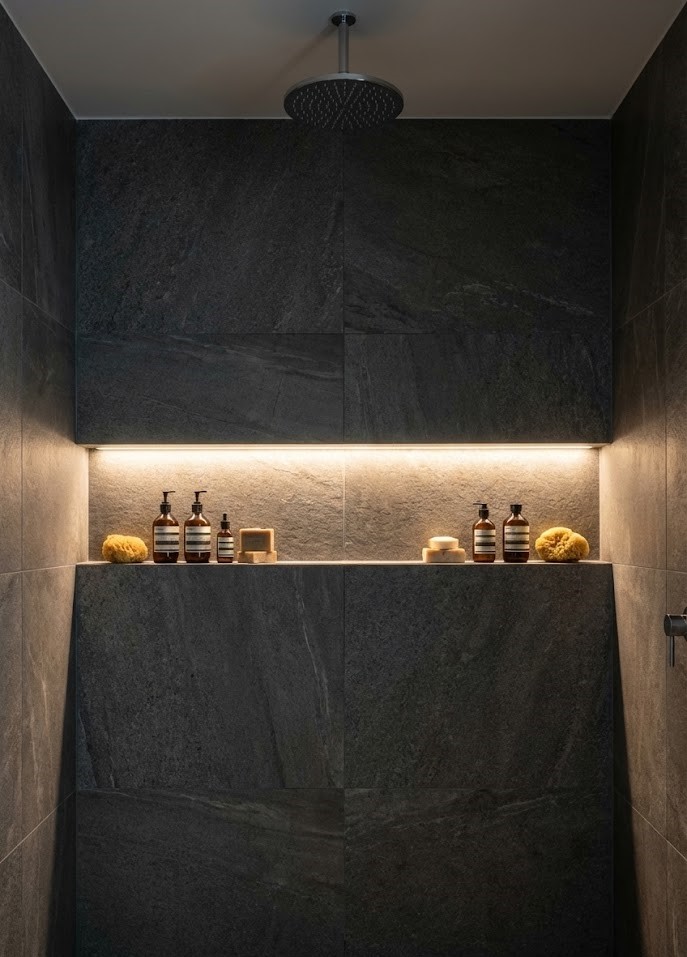
Don't just build a box in the wall for your shampoo bottles—turn it into a feature architectural element.
The Design Impact: By installing a waterproof LED channel inside the top of the shower niche, you turn your toiletries into a display. This also functions as excellent mood lighting for relaxing showers where you don't want the bright main lights on.
Styling Tip: Instead of a small square niche, run a long, linear niche across the entire width of the shower wall. This provides ample storage for everyone's products and looks like a luxury hotel feature.
Pros & Cons:
Pros: adds high-end drama; practical ambient lighting.
Cons: Requires precise electrical planning before tiling; highlights your shampoo bottles (so buy pretty bottles!).
Real-World Example: A horizontal niche running the full length of the shower wall, backed with a contrasting penny tile and lit from above with a warm 3000K LED strip.
19. Partition Walls Instead of Doors
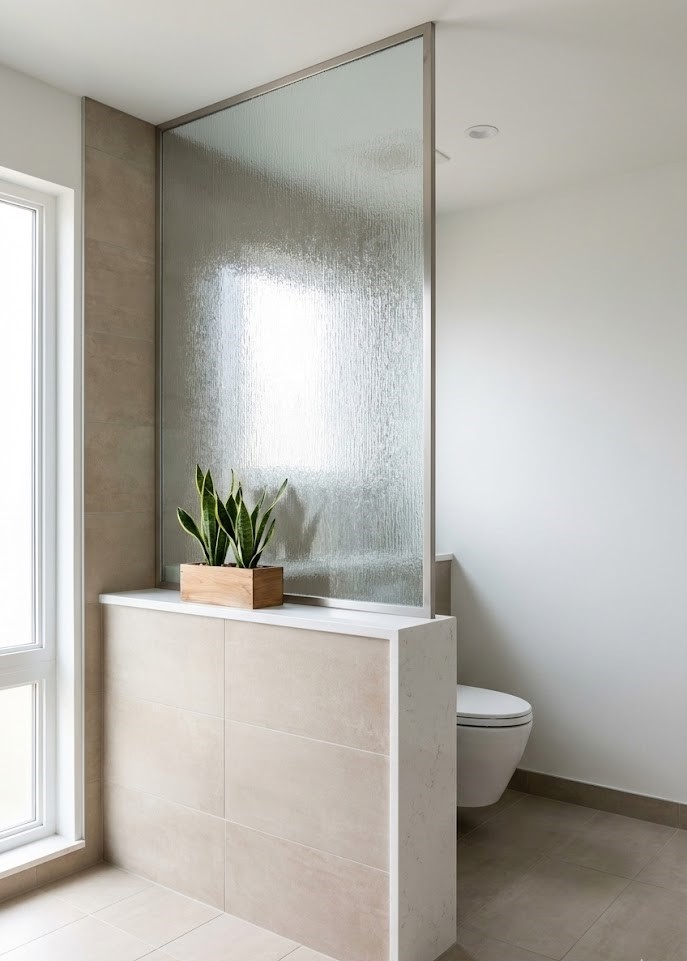
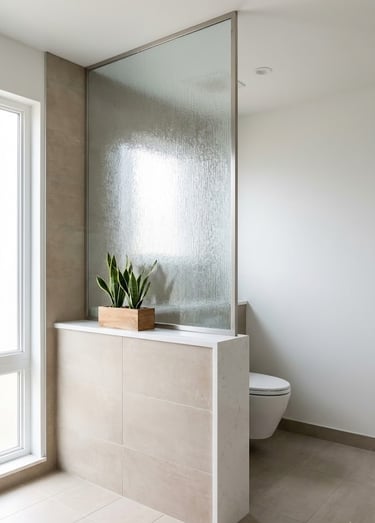
In the toilet area, consider a pony wall (half wall) or a frosted glass partition instead of a solid door.
The Design Impact: Solid doors can make a toilet room feel like a coffin—dark and airless. A partition wall provides the necessary visual privacy while keeping the air circulation open and allowing the room to feel spacious and connected to the main bath.
Styling Tip: Top a tiled pony wall with a piece of quartz or a custom planter box to finish the look elegantly. Alternatively, use reeded (fluted) glass, which distorts the view for privacy but lets light pass through.
Pros & Cons:
Pros: Better airflow; makes the room feel bigger; allows natural light to reach the toilet area.
Cons: Less sound privacy than a solid door.
Real-World Example: A 4-foot tall tiled wall topped with a 3-foot panel of reeded glass framed in black steel.
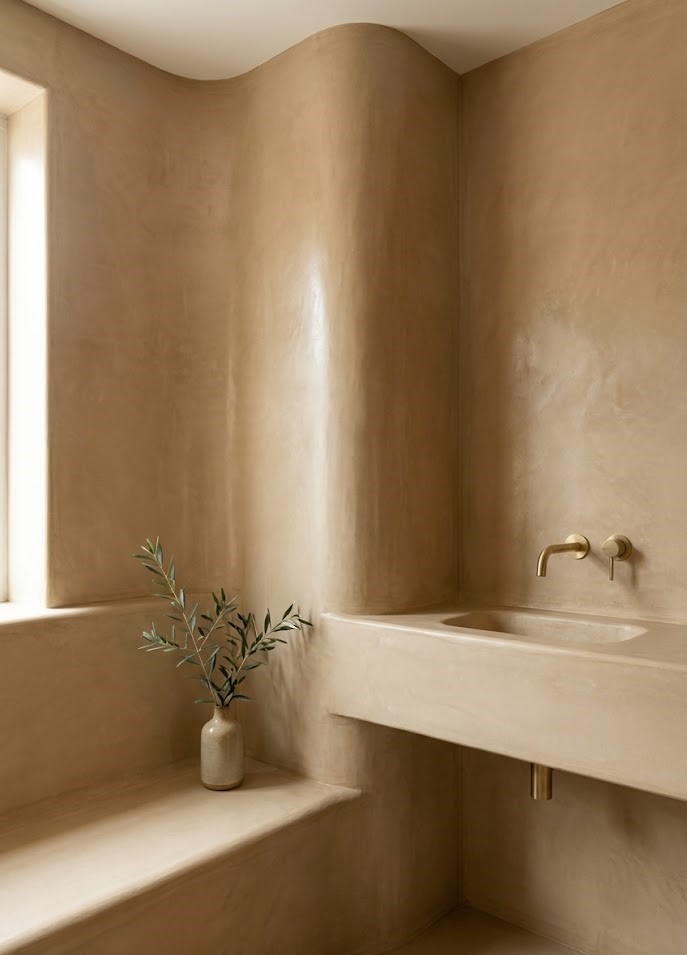
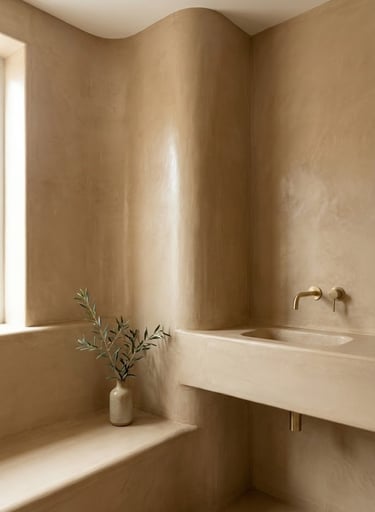
20. Tadelakt and Plaster Walls
Tadelakt is a traditional Moroccan plaster technique that is polished with river stones and olive oil soap to create a waterproof, seamless surface.
The Design Impact: It eliminates grout lines entirely. The result is a smooth, sensual, earthy surface that feels incredible to the touch and looks organic and soft. It is perfect for creating a seamless, spa-like cocoon.
Styling Tip: Stick to earthy tones like terracotta, beige, sand, or soft grey to maintain the organic aesthetic. This finish looks best when it curves around corners rather than meeting at sharp 90-degree angles.
Pros & Cons:
Pros: No grout to clean (mold resistant); stunning, unique texture; naturally waterproof.
Cons: Very expensive; requires highly specialized artisans to apply; cannot be easily patched if chipped.
Real-World Example: A walk-in shower completely covered in a warm "Sand" colored waterproof plaster, including the ceiling.
21. The Steam Shower Upgrade
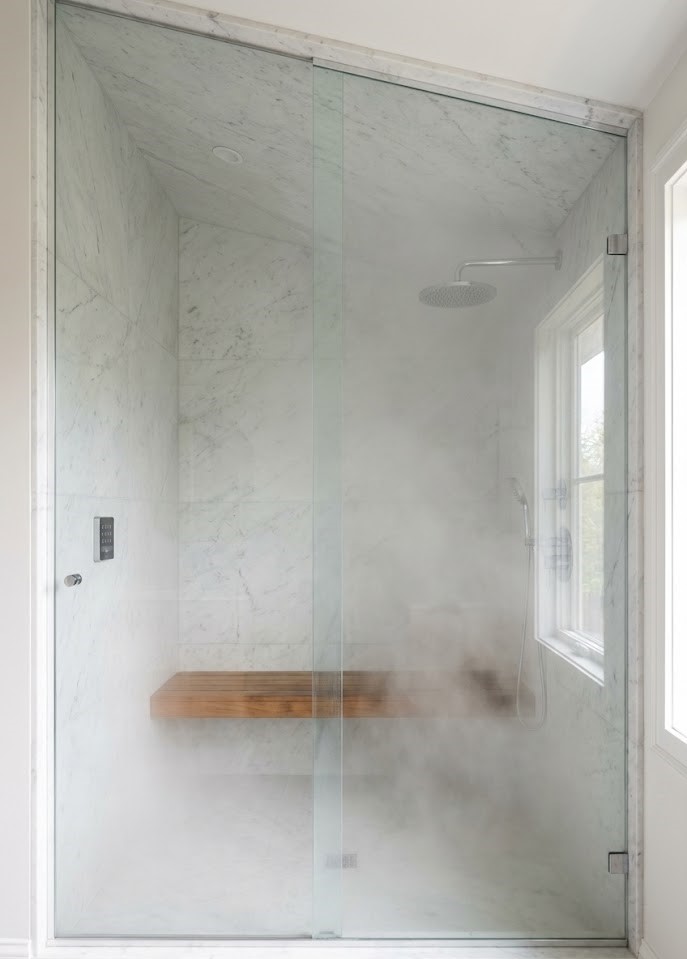
If you are enclosing your shower with glass, consider taking the glass all the way to the ceiling and installing a steam generator.
The Design Impact: This turns your home into a legitimate wellness retreat. Steam offers proven health benefits, including improved circulation, clearing sinus congestion, skin health, and muscle relaxation.
Styling Tip: If installing a steam shower, the ceiling must be tiled and sloped slightly. This prevents hot condensation from dripping down onto your head; instead, it will roll harmlessly down the wall. You also need a transom (moveable glass panel) to let steam out when you are done.
Pros & Cons:
Pros: Genuine health benefits; high resale value; ultimate relaxation.
Cons: Expensive (requires generator, specialized electrical, and vapor-proofing); uses more water and electricity.
Real-World Example: A floor-to-ceiling glass enclosure with a built-in teak bench seat for lounging during a 20-minute steam session.
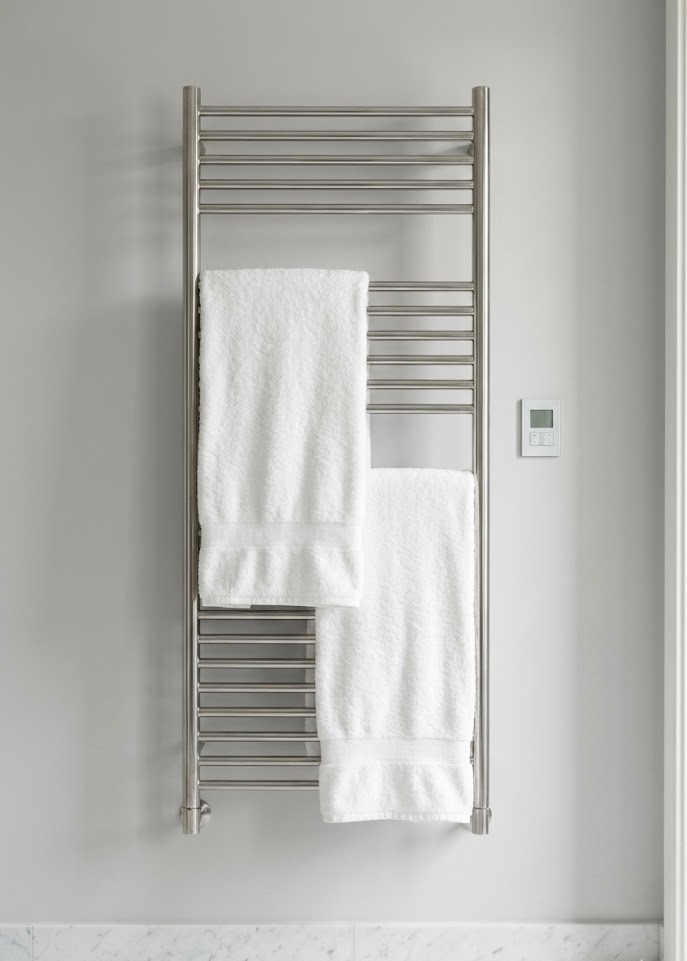
22. Hardwired Towel Warmers
In Europe, heated towel racks are standard; in the US, they are an underutilized luxury. However, once you try one, you will never go back.
The Design Impact: There is no feeling quite like wrapping yourself in a hot towel after a shower. Beyond the comfort, a warmer dries damp towels quickly, preventing that musty, mildew smell that damp towels get in humid bathrooms. It also adds a nice supplemental heat source to the room.
Styling Tip: Choose a hardwired model (hidden wires going directly into the wall) rather than a plug-in model for a cleaner look. Put it on a programmable timer so it warms up 20 minutes before your alarm goes off.
Pros & Cons:
Pros: unparalleled comfort; keeps towels fresh longer (less laundry); reduces dampness in the room.
Cons: Wall space can be an issue in small baths; hardwired models require an electrician.
Real-World Example: A brushed gold "ladder style" warmer with widely spaced rungs, allowing you to easily thread thick bath sheets through it.
Conclusion: Investing in Your Sanctuary
Renovating a primary bathroom is a significant investment, often second only to the kitchen in terms of cost. However, it is an investment that pays dividends in your daily quality of life. This is the space where you begin and end your day; it should be designed to support your well-being, efficiency, and relaxation.
By incorporating elements like layered lighting, organic textures, and smart water features, you move beyond the concept of the bathroom as a mere "utility room" and enter the realm of the personal spa. Whether you choose the bold drama of a wet room, the tactile joy of Zellige tiles, or the quiet comfort of heated floors, these 22 ideas prove that your primary bathroom can—and should—be the most beautiful room in the house.
Ready to start? Pick just one of these ideas—perhaps the eye-level lighting or the heated towel rack—and sketch out how it would look in your current space. Even one luxury upgrade can change the entire feel of your morning routine.