
Budget-Friendly Small Bedroom Decor: 13 Proven Ideas for a Cozier, Larger-Feeling Space
A small bedroom can easily feel chaotic. Piles of laundry, furniture that doesn't quite fit, and a general lack of space can make the room feel stressful instead of restful. The solution isn't always a complete, expensive overhaul. It’s about a thoughtful reset. It begins with understanding your room's actual dimensions and letting those constraints guide you to smarter decisions. The best approach is to take it one step at a time: measure your space, edit your belongings, arrange your furniture, and then soften the look with textiles. This method avoids the overwhelming feeling of a massive project. This guide offers a practical checklist of budget-friendly moves and simple edits to make your room feel larger, promote better sleep, and stay tidy with minimal daily effort. These are proven tips, not just trends, designed to give you a clear plan for a bedroom that works for you, even with a limited budget and square footage.
BEDROOM
1. Rethink Your Bed (It’s Not What You Think)
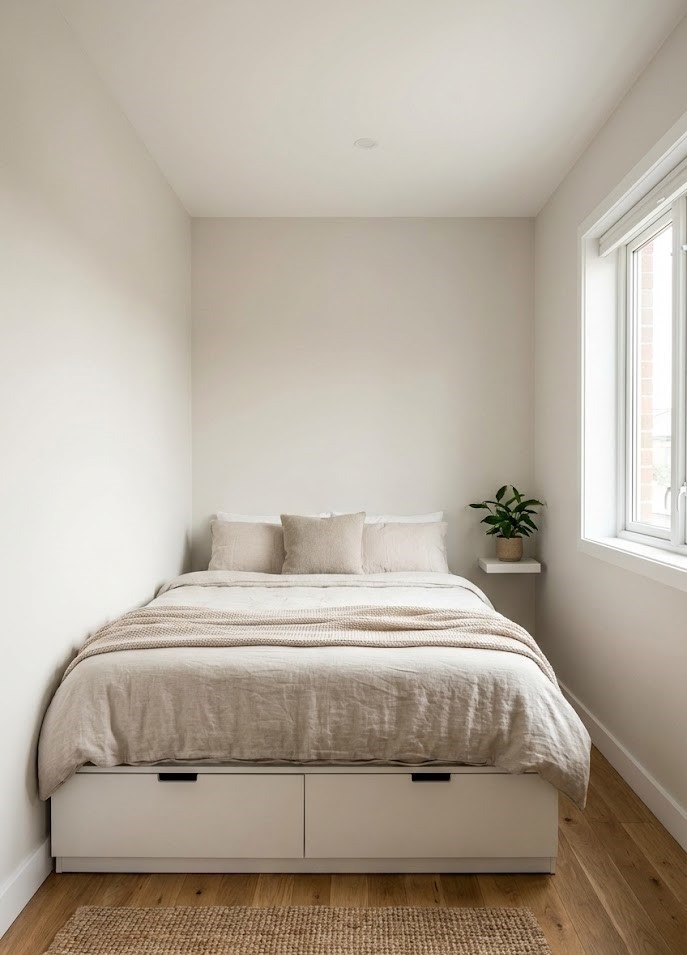
Many people default to the smallest possible bed in a small room. However, a standard double bed can often work beautifully if it's placed correctly. The key factor is your ability to move around it. I once helped a client simply by rotating their bed, placing the headboard against the longest wall. This simple change opened up a clear walkway to the closet and made the room feel instantly more spacious.
Pro tip: Before you move anything, sketch your room's dimensions. Try to leave at least 60 cm (24 inches) of walking space on the open sides of the bed.
Avoid this: Shoving the bed into a corner. While it seems like a space-saver, it often makes the room feel more cramped and makes changing sheets difficult.
Budget move: If you're in the market for a new bed, a platform frame with built-in drawers offers valuable, hidden storage.
Categories
2. Choose the Right Nightstand (Or Skip It)
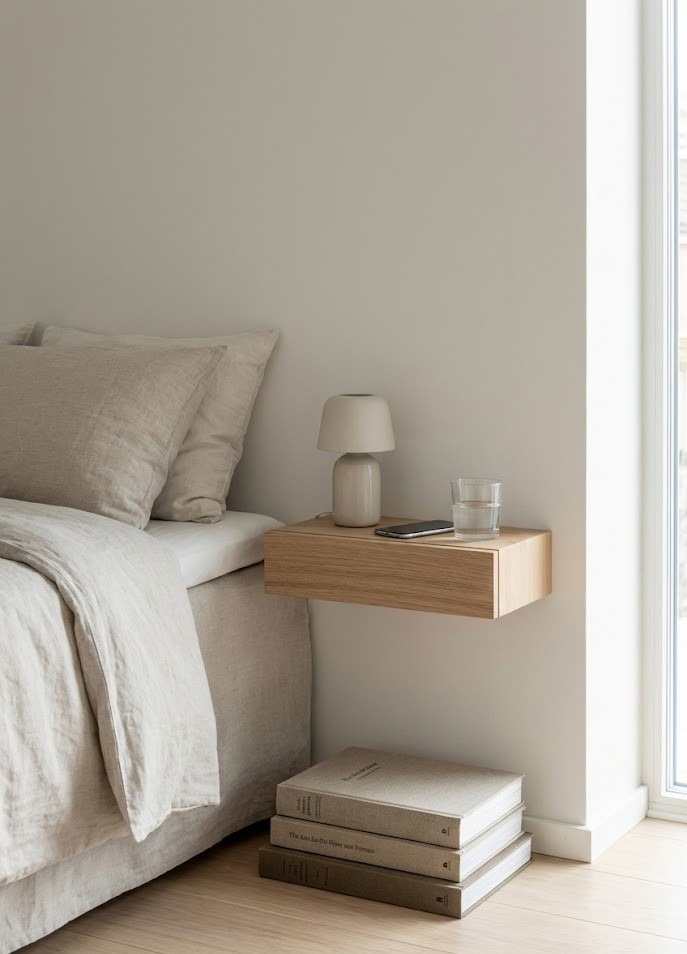
Matching bedroom sets are often a poor choice for small spaces. A bulky nightstand can consume valuable floor space. I frequently recommend a simple floating shelf (around 25 cm deep) mounted to the wall instead. It provides just enough space for a lamp, your phone, and a glass of water without obstructing the path. If you must have a drawer, search for a slim, tall unit that has a small footprint.
Pro tip: Mount your shelf so it's level with your mattress or just a few inches above, ensuring it's within easy reach from the bed.
Avoid this: A cluttered nightstand. Limit it to the absolute essentials.
Budget move: Get creative. A stack of sturdy, attractive books or a repainted wooden stool can serve as a stylish and minimal nightstand.
3. Use Light, But Not White, Paint
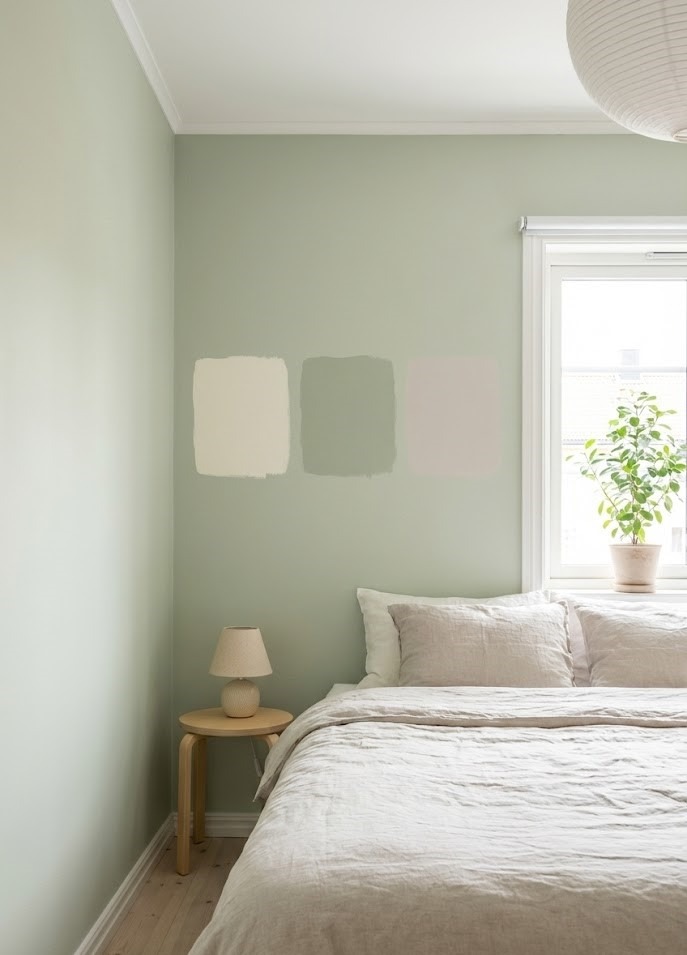
The standard advice is to paint a small room bright white to make it feel bigger. In my experience, this can often make a room feel sterile and cold, not cozy. I prefer using soft, warm neutrals. Colors like a creamy off-white, a pale sage green, or a very light taupe reflect light while also adding personality and warmth. These tones create an airy yet inviting atmosphere.
Pro tip: Always test paint samples on your wall. Observe how the color looks in the morning, afternoon, and at night with your lights on.
Avoid this: Dark accent walls. While stylish in larger rooms, they tend to make a small space feel like it's closing in.
Budget move: A sample pot of paint is inexpensive and often all you need for touch-ups or a small project.
4. Maximize Vertical Space
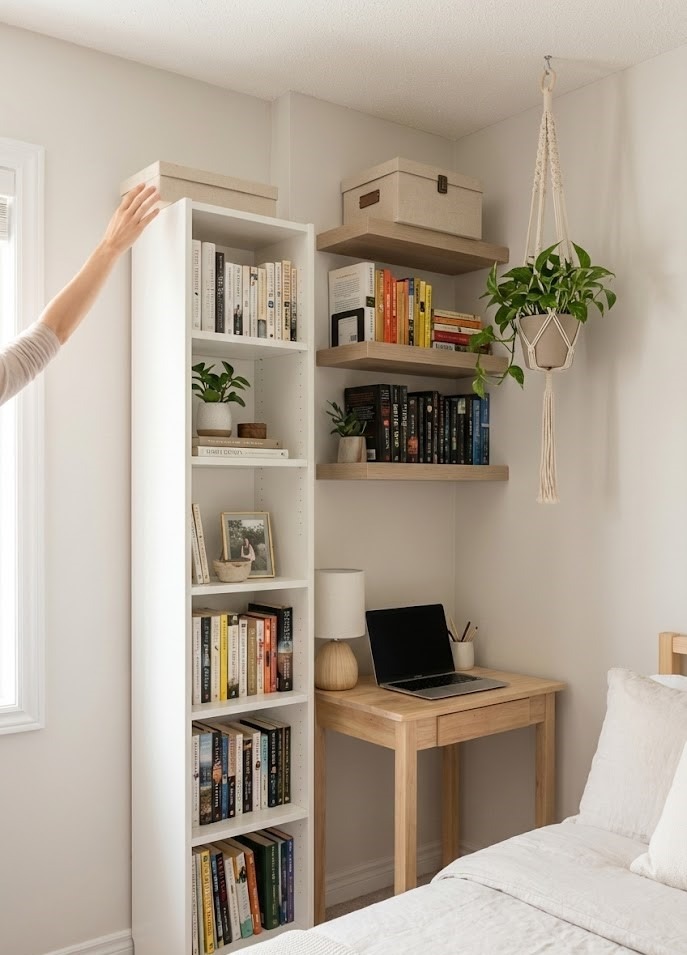
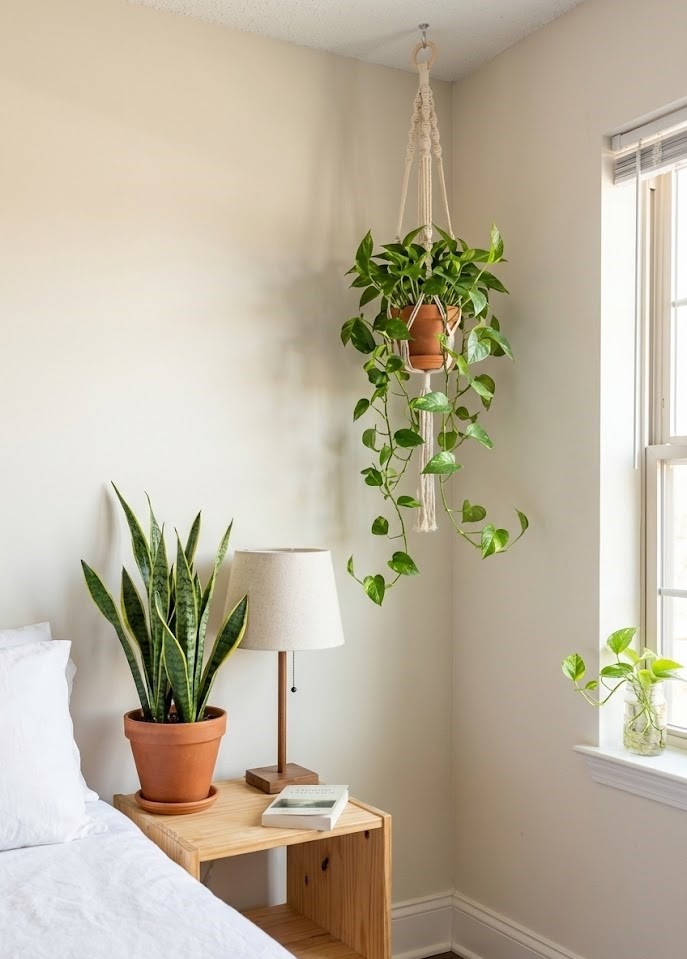
In a compact bedroom, the floor is prime real estate. The solution is to look up. Use your walls for storage. I often install floating shelves above a dresser or desk to hold books and a few decorative items. A tall, narrow bookshelf (around 30 cm wide) can store a surprising amount without taking up much floor space. Even a hanging plant in a corner adds life without using a tabletop.
Pro tip: Use higher shelves for items you don't need daily, such as seasonal decor or keepsake boxes.
Avoid this: Over-cluttering the shelves. A few well-placed items look intentional; too many just look messy.
Budget move: Use strong, removable adhesive hooks and strips for lightweight items, which avoids drilling holes.
9. Use Multi-Functional Furniture
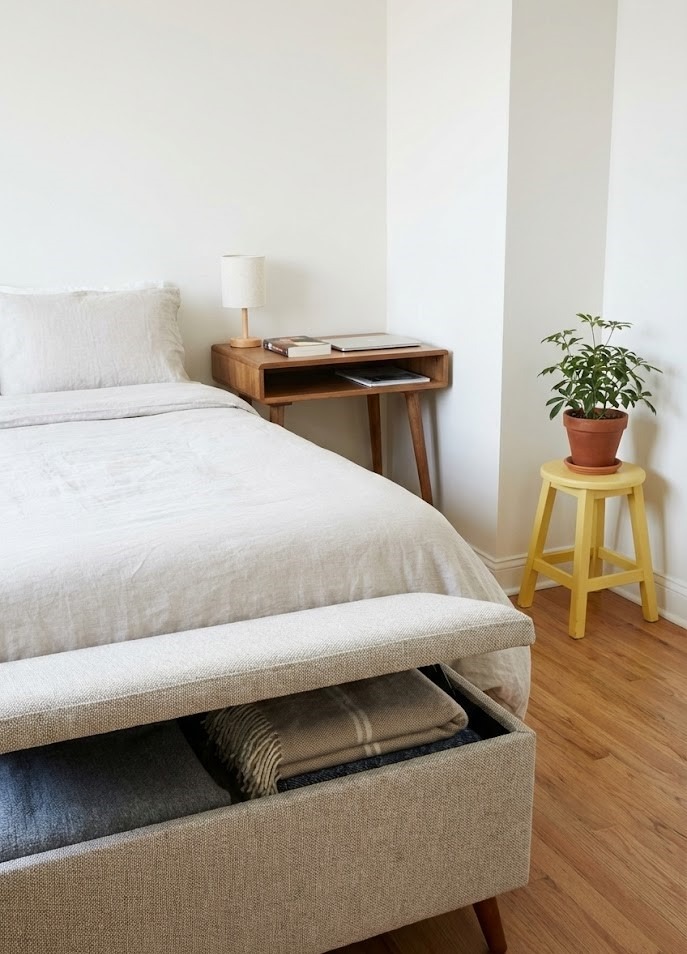
In a truly small bedroom, every piece of furniture should serve at least one, if not two, purposes. A storage ottoman can act as a bench for putting on shoes while also hiding extra blankets. A small desk can double as a nightstand, creating a compact spot for work or study.
Pro tip: Whenever possible, choose furniture with visible legs (like a dresser on legs). This allows you to see the floor underneath, which creates a sense of openness and space.
Avoid this: Oversized or bulky items like armchairs or wide benches that eat up valuable floor space without offering much in return.
Budget move: A simple, repainted stool is incredibly versatile. It can be a nightstand, a plant stand, or extra seating in a pinch.
10. Embrace Texture, Not Just Color
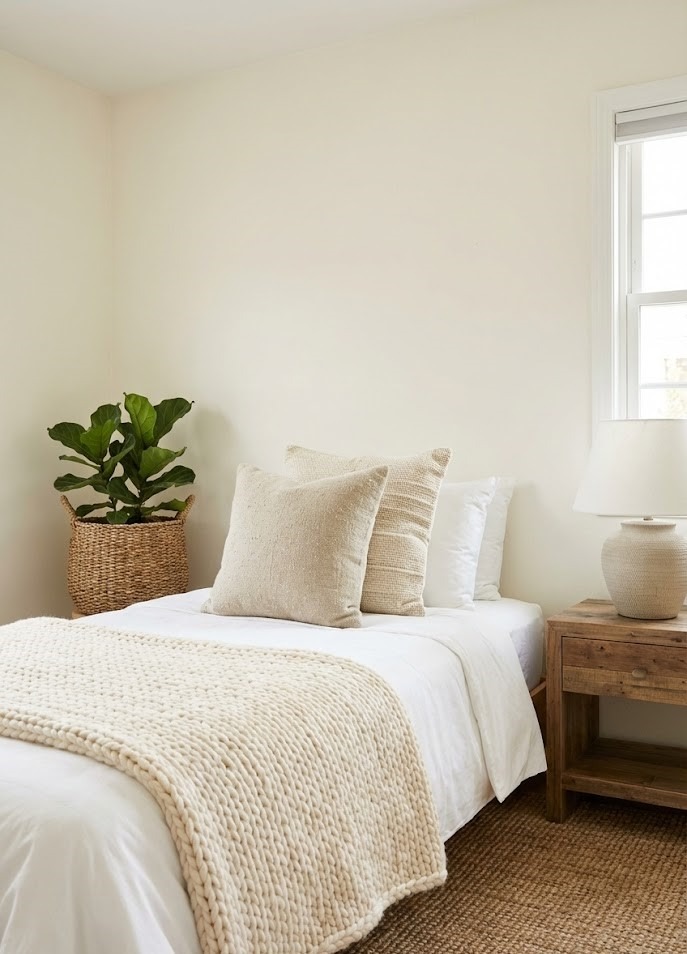
While color is important, texture is the secret to making a small, neutral room feel rich and layered. Mix different materials to add depth without adding clutter. Combine a soft, chunky knit throw blanket with smooth cotton sheets and a woven basket for plants. These varied surfaces create interest and make the room feel cozy and sophisticated.
Pro tip: Start with a neutral color base for your main items (walls, bedding) and introduce texture through your accessories.
Avoid this: Too many competing, bold patterns, which can easily overwhelm a small space.
Budget move: Shop end-of-season clearance sales for high-quality throws and cushion covers.
6. Let In (and Reflect) Natural Light
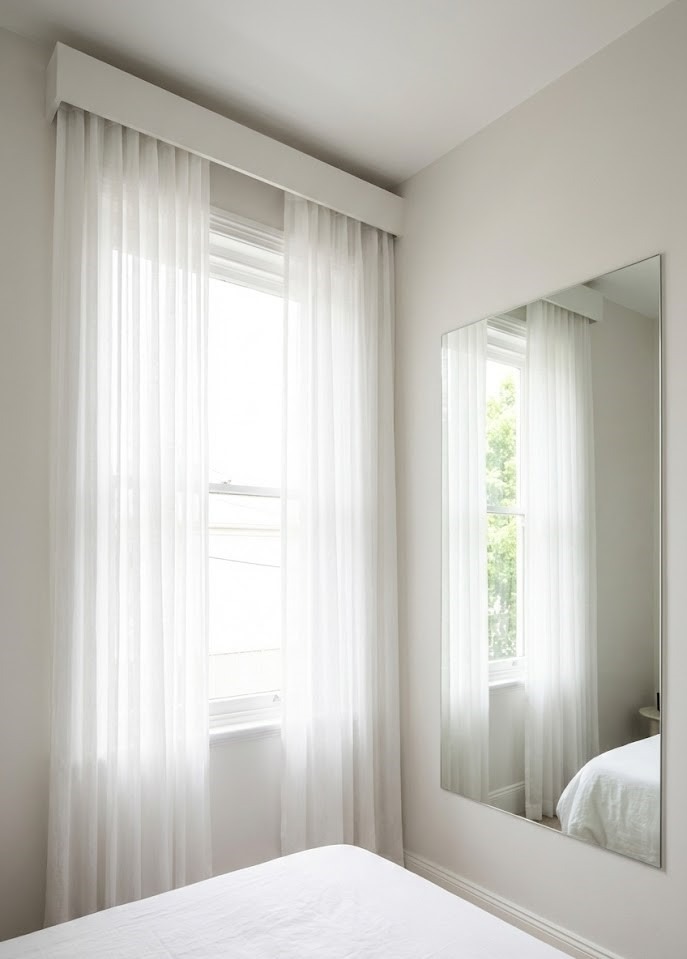
A small room needs as much light as it can get. I always recommend lightweight, sheer curtains. They provide privacy while still allowing sunlight to filter through, which makes the space feel bright and airy. To amplify this effect, hang a large mirror on the wall opposite the window. This will reflect the light and the view, creating a powerful illusion of depth.
Pro tip: Hang your curtain rod as high and wide as possible—close to the ceiling and extending past the window frame. This visual trick makes the window (and the room) feel taller.
Avoid this: Heavy, dark-colored drapes. They absorb light and can make the room feel heavy and enclosed.
Budget move: Look for large, simple mirrors at thrift stores or discount home goods stores. Even a basic, frameless mirror can make a huge impact.
7. Curate Your Decor (Less Is More)
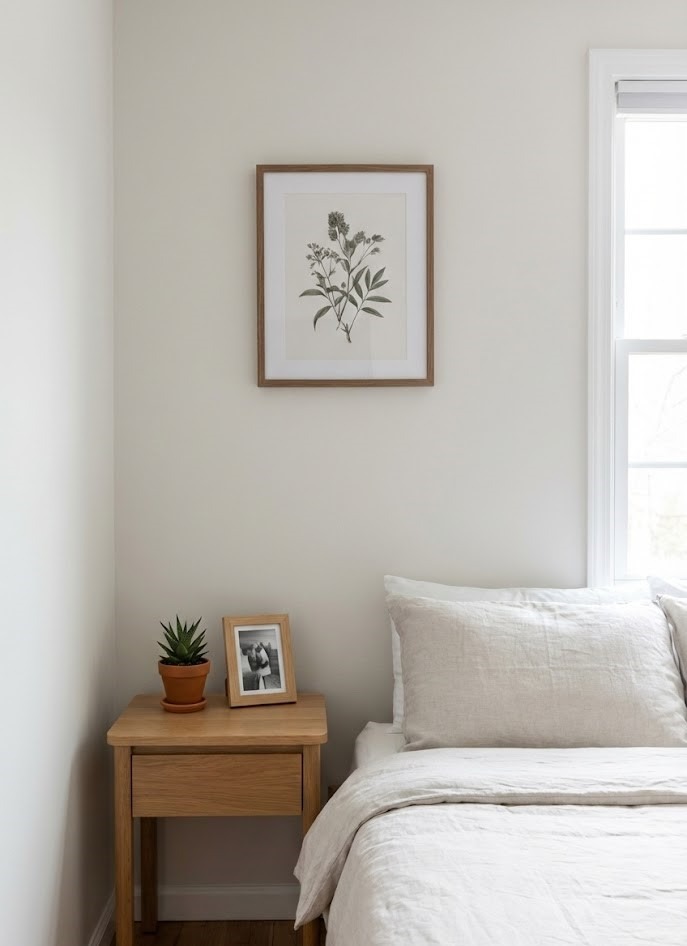
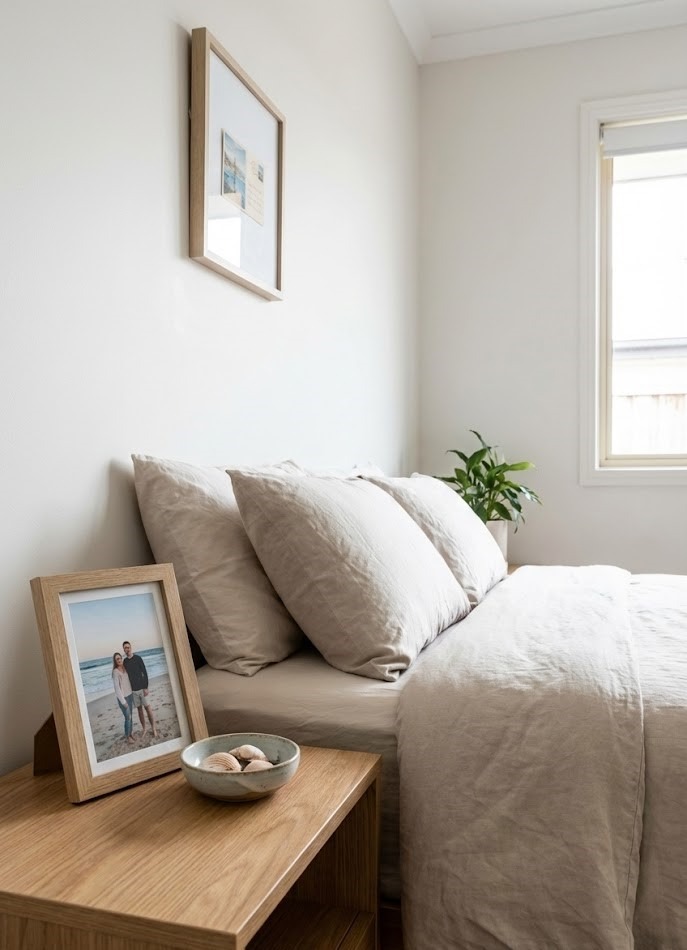
It’s easy to fill a small room with too many small decorative items, but this can quickly lead to visual clutter. Restraint is key. I advise clients to limit their bedside decor to one or two essentials, like a small plant and a framed photo. For wall art, a single, impactful medium-to-large piece above the bed often works better than a busy gallery wall of tiny frames.
Pro tip: Try rotating your decor with the seasons. This keeps the room from feeling stale and prevents you from overcrowding your surfaces.
Avoid this: Using too many small frames or objects, as this creates visual "noise" and makes the room feel busy.
Budget move: Find high-resolution images online (from free-use archives) and have them printed at a local shop. Frame them in simple, inexpensive frames.
8. Pick the Right Rug (Size and Placement Matter)
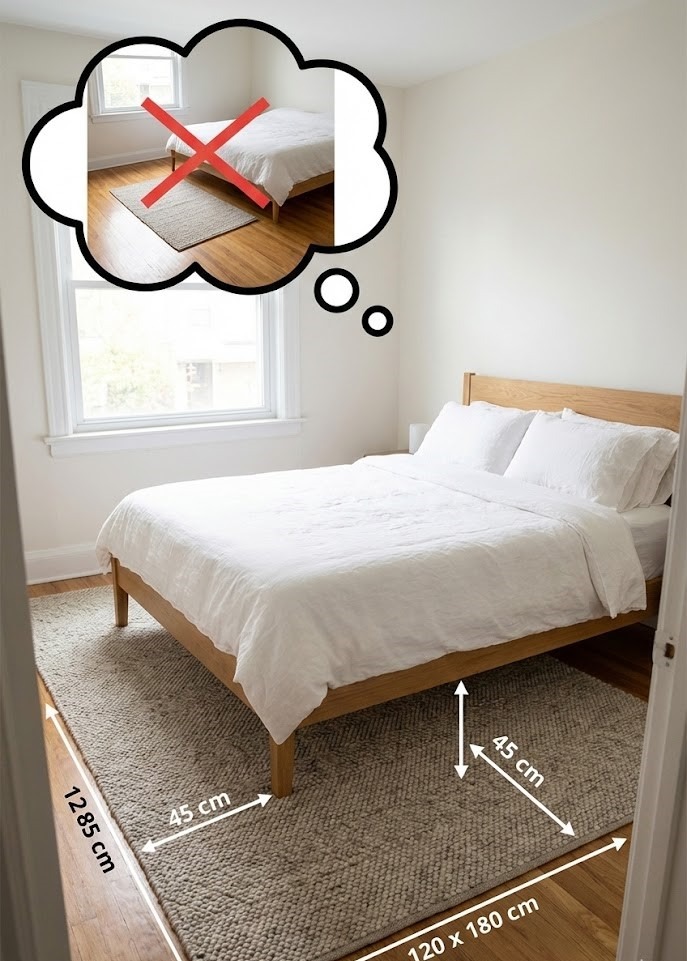
A rug is essential for anchoring a room and adding coziness, but choosing the wrong size can backfire. A tiny rug floating in the middle of the floor makes the room look smaller. Ideally, you want a rug that is large enough to extend at least 45 cm (18 inches) beyond the sides of the bed. For a double bed, a 120 x 180 cm (4 x 6 foot) rug is often a good minimum size.
Pro tip: Low-pile or flat-weave rugs are generally better for small spaces. They are less bulky and easier to clean.
Avoid this: "Postage stamp" rugs that stop right at the edge of the bed. This visually chops up the floor and makes the space feel disjointed.
Budget move: Check online marketplaces for high-quality secondhand rugs, which are often sold for a fraction of their original price.
5. Fold, Hang, or Tuck: Smart Storage Solutions
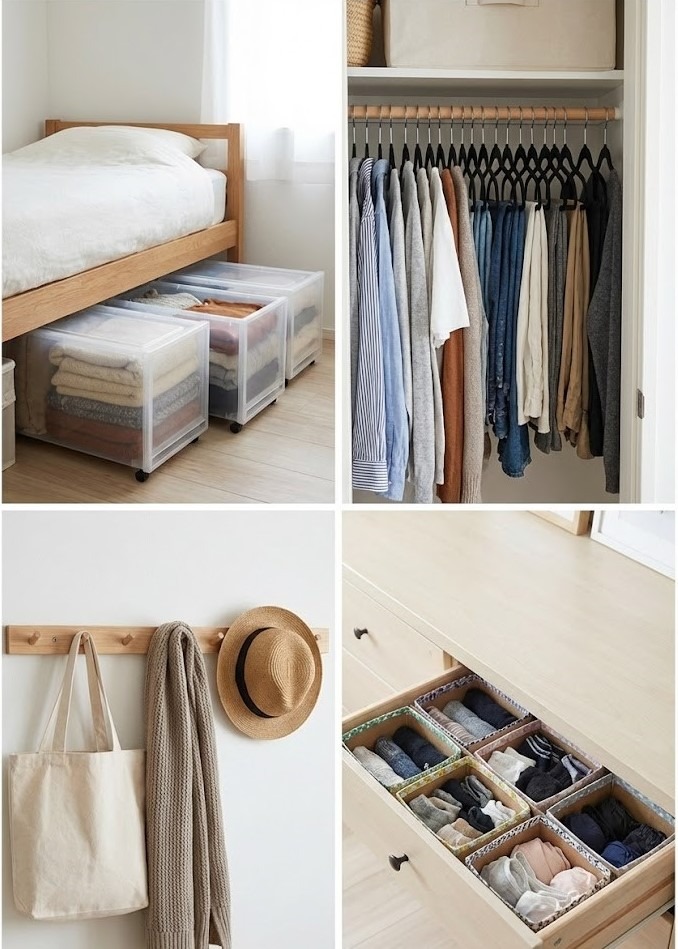
Clutter is the number one enemy of a small, peaceful bedroom. My favorite solution is using slim, rolling boxes designed to fit under the bed—they're perfect for storing extra bedding or off-season clothing. Inside the closet, switch to thin velvet hangers. They take up significantly less rod space than bulky plastic or wooden ones. A peg rail mounted on the wall is another great addition for hanging bags, scarves, and hats.
Pro tip: Before buying under-bed bins, measure the clearance from your floor to your bed frame.
Avoid this: Storing items haphazardly under the bed without containers. It becomes a dust magnet and looks chaotic.
Budget move: Make your own drawer dividers by cutting down cardboard boxes. You can cover them in wrapping paper or fabric for a custom look.
FAQs: Small Bedroom Decor Questions I Hear All the Time
Q: Can I really fit a queen bed in a small room? A: It's possible, but it's all about the measurements. You need to prioritize walking space. If placing a queen bed leaves you with less than 60 cm (24 inches) to move around it, you might be better off with a double bed for a more open feel.
Q: What’s the best color for a small bedroom? A: Light and warm neutrals are a safe bet. Think soft beige, pale grey, or light earthy tones. Don't be afraid of a hint of color, but try to avoid very dark or saturated shades, which can absorb light.
Q: How do I make a small room feel luxurious? A: Focus on texture and quality, not quantity. Invest in one set of really soft bed linens, a plush throw blanket, and warm, layered lighting. A tidy, uncluttered space always feels more luxurious.
Q: Is there a way to add storage without buying new furniture? A: Absolutely. Go vertical. Use over-the-door organizers for shoes or accessories, add a peg rail for bags, and install floating shelves. Don't forget the space under your bed.
Q: What’s the biggest mistake in small bedroom decor? A: Overcrowding. This includes too much furniture, furniture that is too large for the scale of the room, and too much decor on every surface.
Q: How often should I rearrange my small bedroom? A: There's no set rule, but if the room starts to feel stale or dysfunctional, don't be afraid to experiment. Sometimes just rotating the bed or swapping the dresser and a bookshelf can completely change the flow for the better.
11. Keep Surfaces Clear (Really)
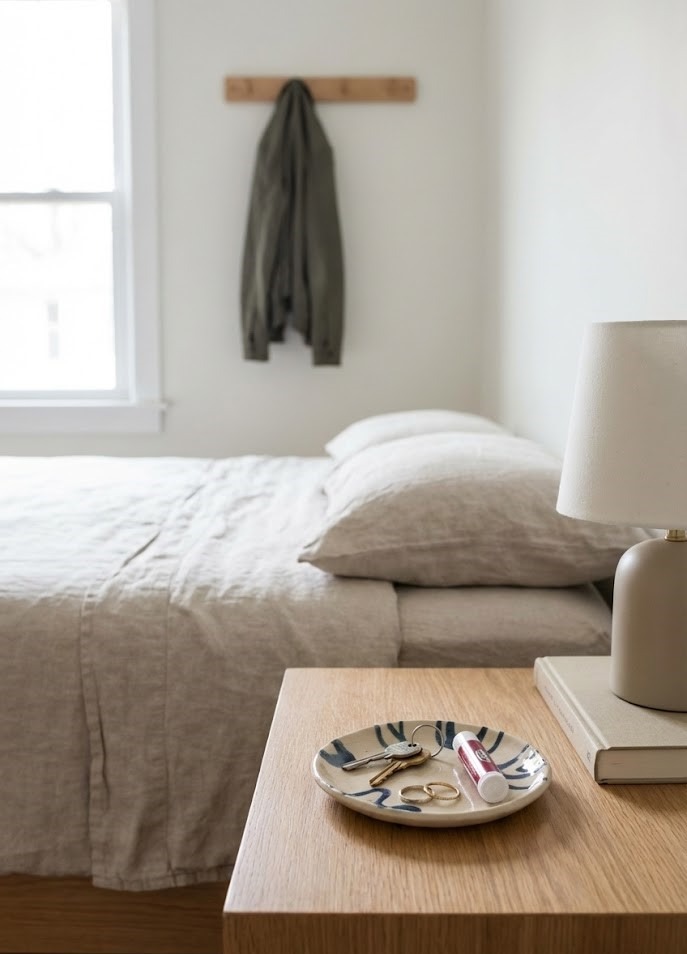
This may seem obvious, but it is the most important rule for a small bedroom. Cluttered surfaces instantly make a small room feel tiny and stressful. Make it a daily habit to clear off your dresser and nightstand. It only takes a minute, but the psychological impact is huge.
Pro tip: Use a small, decorative tray or a pretty bowl to corral essentials like keys, jewelry, or lip balm. It keeps items contained and looks intentional.
Avoid this: Letting the "laundry chair" happen. Find a dedicated spot for clothes that aren't clean but aren't dirty, like a hook on the back of the door.
Budget move: Use attractive boxes (even fabric-covered shoeboxes) to hide daily-use items and keep surfaces looking clean.
12. Add a Touch of Greenery
Plants are one of the best ways to breathe life and fresh air into a small room. You don't need a jungle; one or two well-placed plants are enough. Hardy, low-light options like snake plants, pothos, or ZZ plants are perfect for bedrooms. A small pot on a windowsill or a hanging planter in a corner adds a pop of color and nature.
Pro tip: If you're a new plant owner, a pothos plant is a great starter. It's resilient and will visibly droop when it needs water, taking the guesswork out of it.
Avoid this: Overcrowding your limited surfaces with too many plants.
Budget move: Ask a friend for a cutting from their plant. Many common houseplants, like pothos, are incredibly easy to propagate in a jar of water.
13. Make It Yours (Personality Without Clutter)
Your bedroom should, above all, feel like your personal sanctuary. Don't be so focused on minimalist rules that you erase your personality. Choose one or two things that you truly love—a favorite piece of art, a special framed photo, or a collection of shells—and give them a place of honor. The rest of the room can remain simple.
Pro tip: Rotate these personal items every few months to keep the space feeling fresh and new.
Avoid this: Trying to perfectly replicate a photo you saw online. Your room needs to function for your real life.
Budget move: Frame inexpensive items that have personal meaning, such as postcards from a trip, a beautiful fabric swatch, or even a greeting card.
Conclusion
Creating a sanctuary in a small footprint doesn't require knocking down walls or spending a fortune. It simply requires a shift in perspective. You are trading clutter for clarity and chaotic layouts for intentional design.
Remember, you don't need to tackle all 13 of these ideas at once. Start with just one small "budget move" this weekend. Maybe it’s clearing off your nightstand, moving your curtain rod higher, or finally buying those under-bed storage bins. These small, consistent edits add up to a massive transformation. Your bedroom is the last thing you see at night and the first thing you see in the morning; regardless of its square footage, it deserves to be a place that brings you peace.