
Design Your Sanctuary: The 12 Interior Trends Set to Define 2026
We are entering a new era of home design that prioritizes 'slow living' over perfection. I’ve compiled the definitive guide to the 12 trends that will shape 2026, including the shift away from white kitchens to earthy spice tones and the return of 'Neo-Deco' glamour. Find out how to create a home that truly heals.
LIVING ROOMNEW YEAR
As we approach 2026, the philosophy of home design is undergoing a significant transformation. We are witnessing a departure from the era of "pure aesthetics"—where homes were curated solely for Instagram likes—and stepping into a period where emotional resonance, physical comfort, and personal identity take center stage.
The upcoming year is less about following a rigid set of rules and more about creating a "blank canvas" that reflects who you truly are. It is a rebellion against fast furniture and fleeting micro-trends. After consulting with industry leaders from Etsy, Dulux, and Pinterest, it is clear that 2026 will be defined by a "slow living" movement that prioritizes the home as a refuge from the digital world.
If you are planning a renovation or a simple refresh, here is your definitive guide to the trends that will shape our living spaces in the year ahead, ranked by their impact on the modern home.
1. The Overarching Mood: Restorative Slow Living
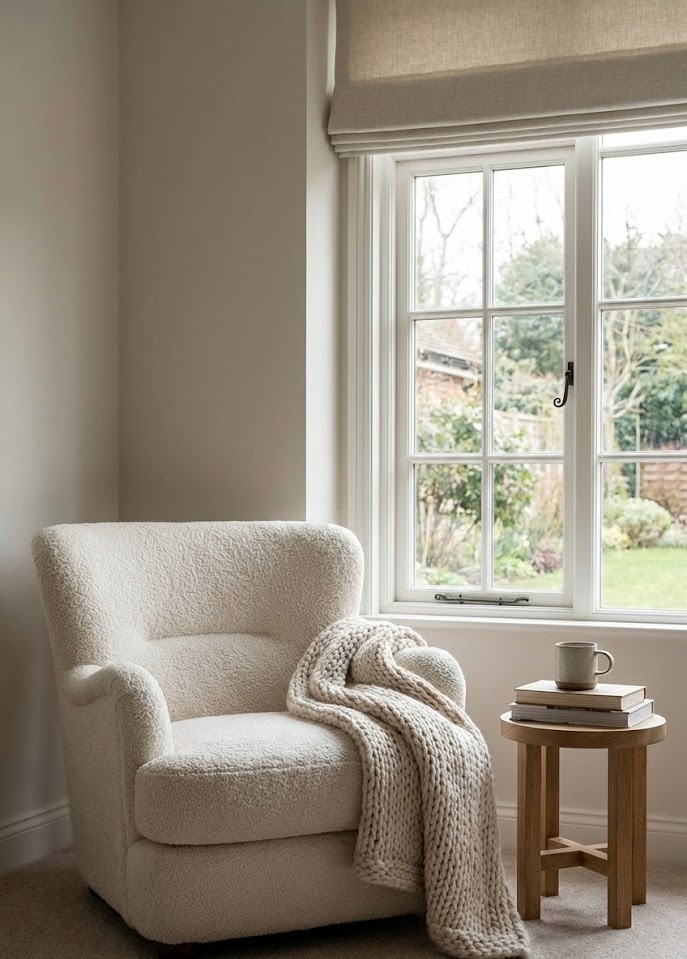
The most significant shift for 2026 is a move toward comfort and relaxation. As the pace of life accelerates outside our doors, experts note that we are no longer just "decorating"—we are actively engineering our homes to counteract stress. This "slow living" aesthetic focuses on creating a quiet, calming environment that shields us from digital noise and sensory overload.
This trend is deeply rooted in neuroaesthetics—the study of how our brain responds to beauty and design. The goal is to lower cortisol levels through soft transitions, hushed acoustics, and layouts that encourage deceleration.
How to Style This Trend:
Acoustic Softening: Use heavy drapes, wool rugs, and upholstered wall panels to dampen sound. A quiet room immediately feels more luxurious and restorative.
Flow and Layout: Arrange furniture to create "pause points"—a reading nook by a window or a dedicated tea station—rather than focusing solely on the TV.
Materiality: Opt for matte finishes over high gloss. Shiny surfaces reflect light and stimulate the brain, whereas matte surfaces absorb light, creating a softer visual experience.
Pros and Cons:
Pro: Significantly improves mental well-being and sleep quality.
Con: Can feel too minimal or "sleepy" if not balanced with textural interest.
Categories
2. A Shift Toward Radical Personalization
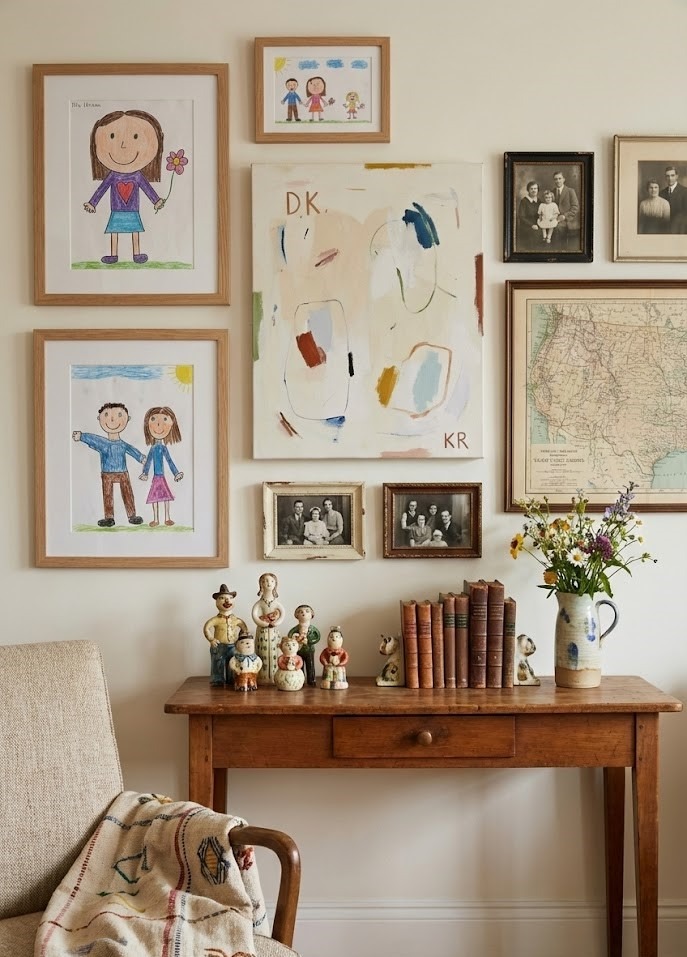
Individuality is the new standard. With searches for personalized decor reportedly up by over 300%, 2026 is the year to let your home tell your specific story. We are seeing a mass rejection of the "showroom look" where everything matches perfectly. This means moving away from "catalogue" styling and embracing custom artwork, curated collections of meaningful items, and bespoke textiles that make a space feel uniquely yours.
This trend is about storytelling. If you traveled to Morocco, display the rug you bought. If your grandmother painted watercolors, frame them. Your home should be a biography, not a generic display.
How to Style This Trend:
The "Un-Gallery" Wall: Instead of buying generic prints to fill a wall, mix mediums. Combine a framed photo, a hanging ceramic plate, a textile weaving, and a vintage mirror.
Heirloom Revival: Reupholster an inherited chair in a wild, modern fabric. It keeps the history but updates the aesthetic.
Display Collections: Whether it’s vintage cameras or sea glass, group your collections together. A clustered collection looks like intentional design; scattered items look like clutter.
Pros and Cons:
Pro: Your home will never look like anyone else’s; it fosters a deep sense of belonging.
Con: Requires time and patience to curate; it cannot be bought "instantly" from a big-box store.
3. The Dominant Color Palette: The Blue Revolution
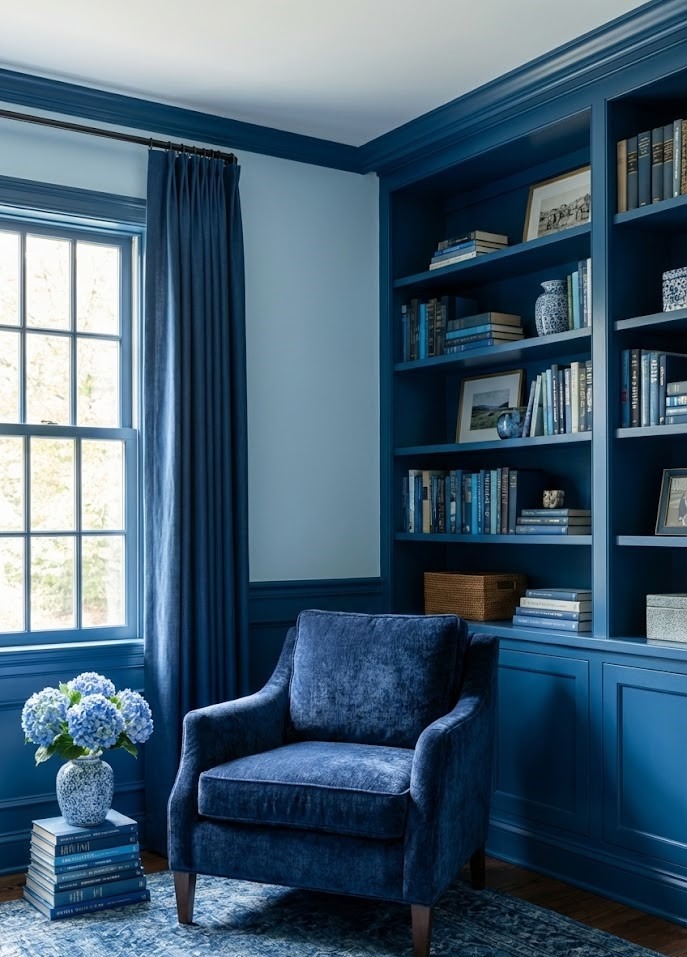
Blue is set to be the "it" color of 2026. Major brands like Dulux and Pinterest have highlighted blue as the defining tone of the year. Specifically, look for "The Rhythm of Blues"—a collection of shades ranging from quiet, clear tones for focus to deep, joyful blues that spark creative energy. It is a timeless, emotionally responsive choice for walls and woodwork alike.
Unlike the cool, grey-toned blues of the early 2010s, the blues of 2026 are warmer and more complex. Think endless sky blue, deep indigo, and vibrant periwinkle.
How to Style This Trend:
Color Drenching: For a bold look, paint the walls, trim, and even the ceiling in the same shade of mid-tone blue. This blurs the boundaries of the room and makes it feel infinite and enveloping.
The 60-30-10 Rule: Use a soft "airy blue" as your dominant color (60%), a deep navy for upholstery (30%), and a contrasting warm accent like mustard or terracotta (10%).
Pairing: Blue loves wood. Pair these shades with warm oak or walnut to prevent the room from feeling cold.
Pros and Cons:
Pro: Blue is universally liked and proven to lower blood pressure and heart rate.
Con: In North-facing rooms with low light, certain blues can look grey or depressing. Test paint swatches at different times of the day.
4. Kitchens Reimagined in Earthy Spice Tones
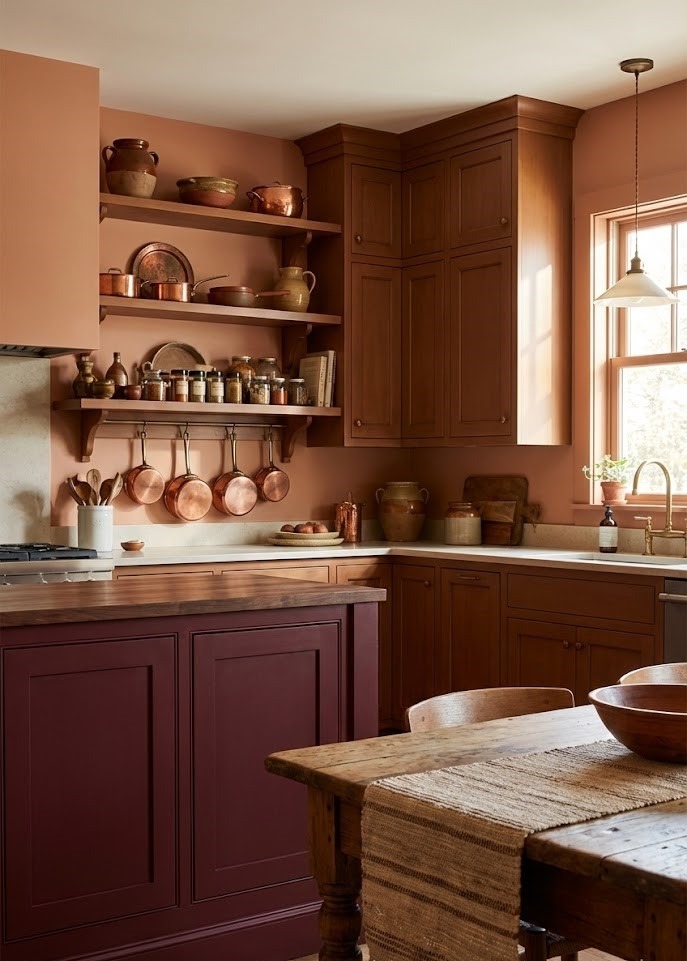
The era of the clinical white kitchen is fading. While white kitchens will always be classic, they often fail to evoke emotion. In 2026, the heart of the home will embrace deep earthy shades like burgundy, terracotta, and spice-inspired browns. These colors create a "lived-in" warmth that encourages people to linger.
Design experts suggest using burgundy on kitchen islands to add depth without overwhelming the space. This shift mirrors our desire for comfort food and communal gathering; the kitchen is returning to its roots as a warm hearth rather than a sterile laboratory.
How to Style This Trend:
Two-Tone Cabinetry: If painting the whole kitchen feels risky, keep your upper cabinets neutral (cream or mushroom) and paint the lower cabinets in a rich Merlot or roasted paprika shade.
Natural Stone: Replace stark white quartz with stones that have warm veining, such as soapstone or travertine with brown undertones.
Hardware: Swap chrome hardware for unlacquered brass or oil-rubbed bronze to complement the warm spice tones.
Pros and Cons:
Pro: Darker, earthy cabinets hide scuffs and fingerprints much better than white matte finishes.
Con: Dark colors can make a small kitchen feel smaller if there isn't adequate natural or artificial lighting.
9. Sculptural and Retro-Inspired Lighting
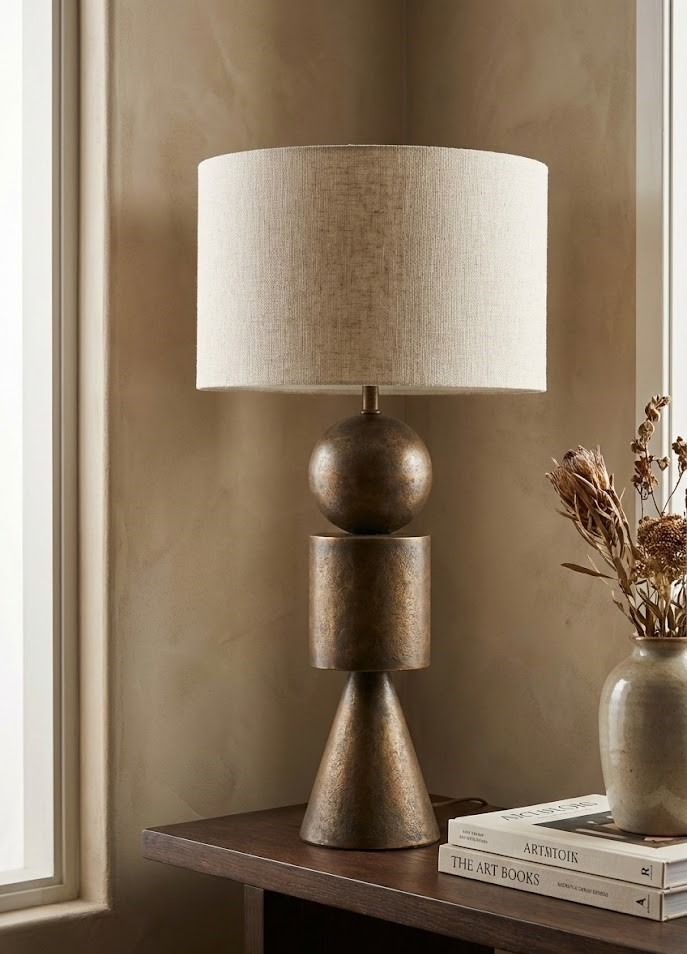
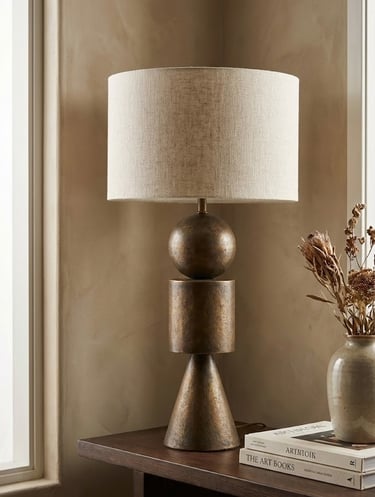
Lighting is being treated as functional sculpture. In 2026, expect to see vintage silhouettes with updated proportions. High-shine finishes are being replaced by tactile metals like patinated brass and textured bronze, creating "totem-shaped" lamps that serve as focal points even when the lights are off.
Lighting is the "jewelry" of the room. This year, we are moving away from recessed can lighting (the "Swiss cheese ceiling") and relying more on floor lamps, table lamps, and low-hanging pendants to create pools of atmosphere.
How to Style This Trend:
The "Mushroom" Lamp: The dome-shaped metal lamp is a key silhouette. Use it on a desk or side table for a retro-modern touch.
Paper Lanterns: For a softer, Japandi-inspired look, oversized rice paper pendants offer a gentle, diffused glow that is easy on the eyes.
Layering Light: Ensure every room has at least three sources of light: ambient (general), task (reading), and accent (highlighting art).
Pros and Cons:
Pro: Changing a light fixture is the fastest, most cost-effective way to update a room’s era.
Con: Sculptural lights often use specific bulbs or offer lower lumen output, meaning they are more for mood than practical brightness.
10. The "Neo-Deco" Era
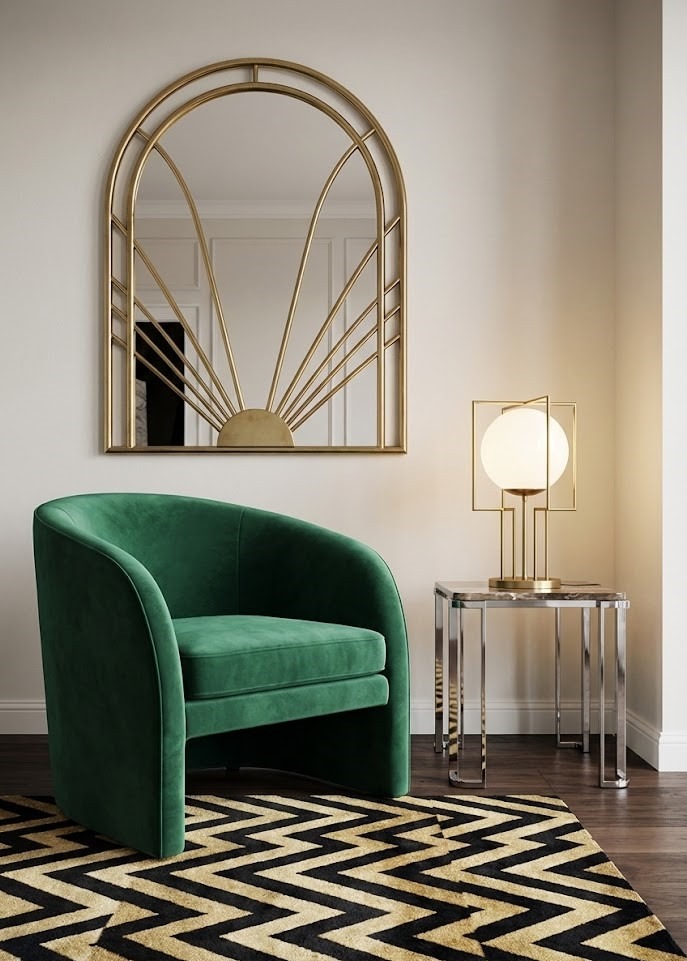
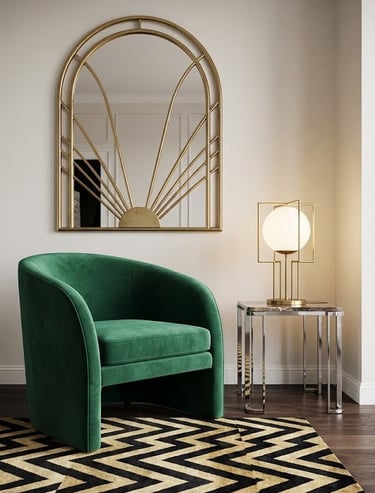
A modern take on the 1920s is emerging under the name "Neo-Deco." This trend revives Art Deco's glamour—think fan arches, chevrons, and geometric patterns—but updates them with chrome, brass, and velvet for a look that feels fresh and luxurious rather than dated.
While the original Art Deco was about rigid symmetry and opulence, Neo-Deco is softer. It keeps the arches and the fluting but pairs them with the pastel colors and soft textures of 2026.
How to Style This Trend:
Fluted Details: Look for fluting (vertical grooves) on vanity units, glass shower doors, or kitchen islands. It adds rhythm and catches the light beautifully.
Geometric Mirrors: Swap a plain rectangular mirror for one with an arched top or a stepped geometric frame.
Chrome Accents: Mix silver and gold. A chrome side table next to a brass lamp is a very Neo-Deco power move.
Pros and Cons:
Pro: Adds a sense of history, architecture, and structural interest to plain boxy rooms.
Con: Can veer into "kitsch" territory if you use too many thematic elements at once.
6. The Rise of Burl Wood Furniture
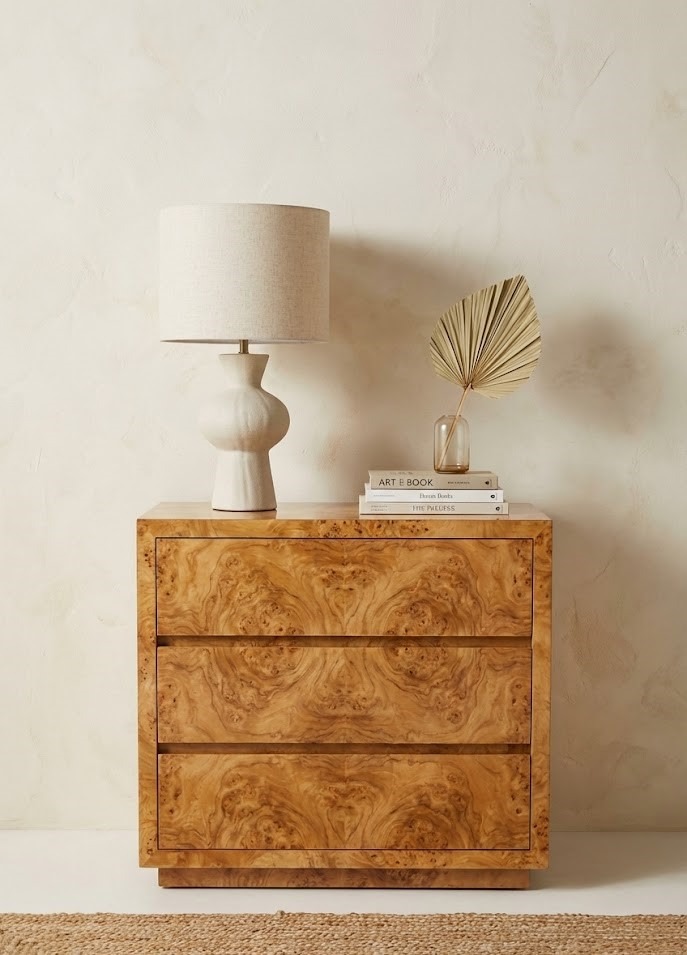
Natural luxury is making a comeback through burl wood. Known for its swirling, marble-like grain, burl wood furniture offers a unique, organic texture that feels like a piece of art. Whether it is a statement bedside table or a small lamp base, this material adds immediate character and a sense of high-end craftsmanship to any room.
Burl comes from a tree growth in which the grain has grown in a deformed manner, resulting in complex, beautiful patterns. It was huge in the 1970s and is back as the perfect counterpoint to modern minimalism.
How to Style This Trend:
Start Small: Burl is visually heavy. Start with a burl wood coffee table or a jewelry box on a dresser.
Contrast is Key: Burl wood looks incredible next to soft, solid colors. Place a burl chest against a sage green wall or on top of a cream wool rug.
Mix Woods: Don't be afraid to mix burl with straight-grain woods like oak. The contrast in grain patterns adds sophistication.
Pros and Cons:
Pro: Burl hides dust and scratches incredibly well due to its complex pattern.
Con: Authentic burl is expensive. While veneers are available, they can be delicate and sensitive to water damage.
7. A Return to Organic and Tactile Textures
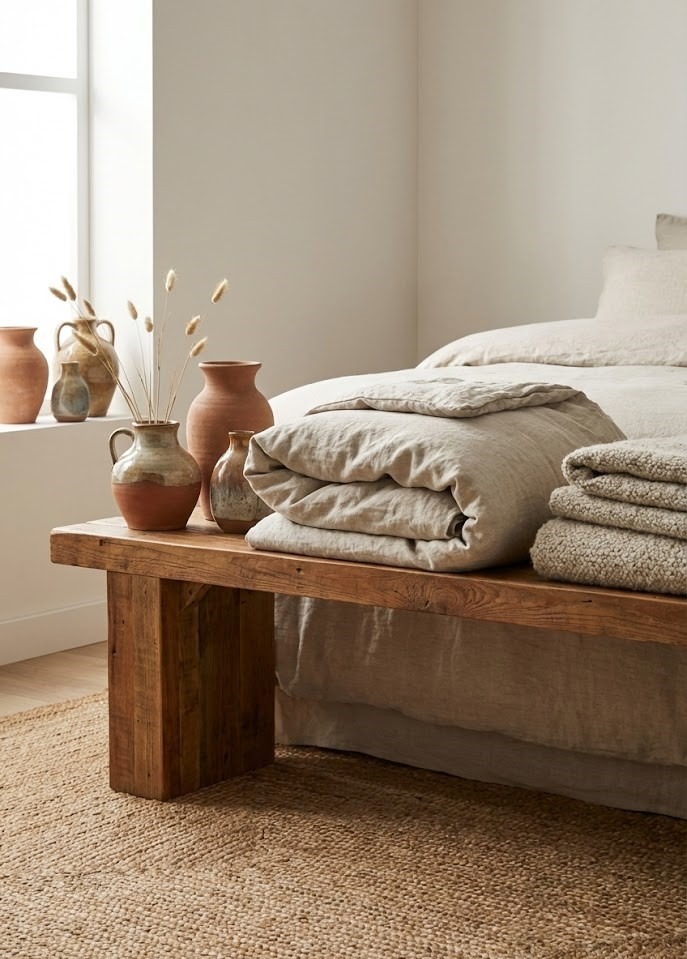
Texture is so vital this year that "Washed Linen" has been named a top material trend for 2026. Beyond linen, we are seeing a surge in handcrafted ceramics, terracotta vases, and warm timbers. These materials are valued for their "grounding" effect, inviting us to touch and interact with our surroundings.
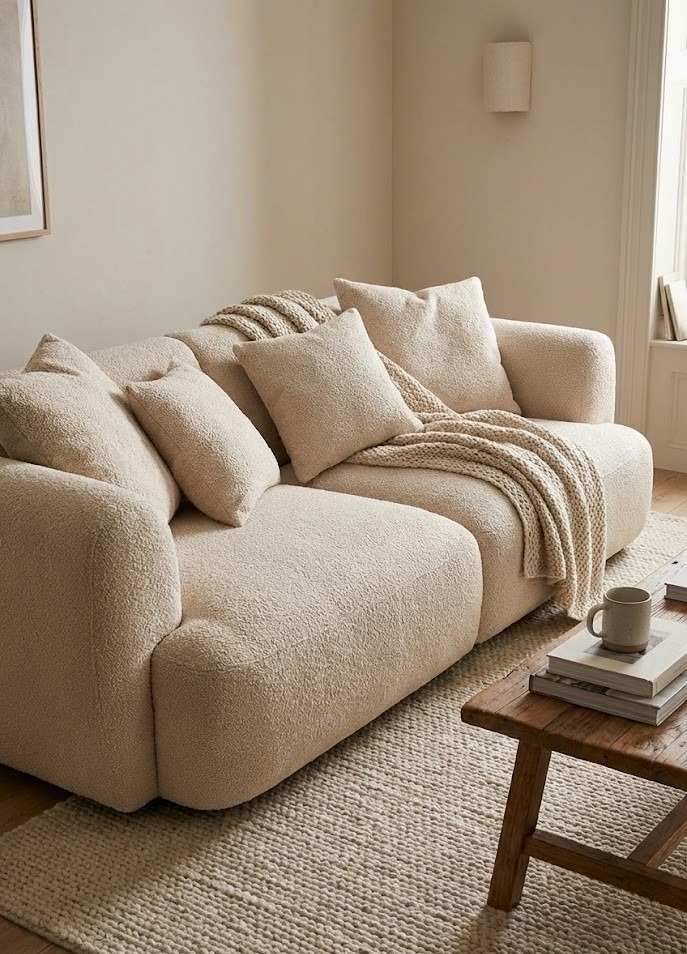
In a digital age where we touch smooth glass screens all day, our fingers crave the resistance of rough stone, the weave of boucle, and the grain of wood. This creates a multi-sensory home experience.
How to Style This Trend:
Layering: The secret to a cozy room is layering different textures in the same color palette. Think: a jute rug, topped with a velvet sofa, topped with a chunky knit throw, topped with a linen pillow.
Imperfection: Choose ceramics that look handmade—slightly wonky shapes and glazes that aren't perfectly uniform are highly desirable.
Wall Treatments: Consider Limewash paint or Roman Clay for walls. These add a suede-like texture that flat paint simply cannot achieve.
Pros and Cons:
Pro: Adds visual warmth and depth without needing clutter or bright colors.
Con: Heavily textured surfaces (like boucle or raw wood) can be difficult to clean and may trap dust.
8. The Sofa Trend: Prioritizing Deep-Seated Comfort
In line with the focus on relaxation, the "modern" sofa of 2026 features generous depths and softened contours. We are seeing a move away from stiff, formal seating toward furniture that offers a "sanctuary-like" invitation to sink in and stay a while.
The low-slung, 1970s-inspired sectional is the hero piece here. These sofas often have wide arms (perfect for balancing a laptop or tea) and depths of over 40 inches, allowing you to sit cross-legged or lie down completely.
How to Style This Trend:
Performance Fabrics: Because these sofas are meant for heavy lounging, opt for performance velvets or crypton fabrics that resist stains.
The Float: These large sofas look best "floating" in the center of a room rather than pushed against a wall. This anchors the space.
Round it Out: Look for sofas with curved edges or kidney-bean shapes to facilitate flow and conversation.
Pros and Cons:
Pro: Unmatched comfort; turns the living room into a true relaxation zone.
Con: Deep sofas can be difficult for elderly guests or those with mobility issues to stand up from.
5. Bathrooms That Feel Like Living Rooms
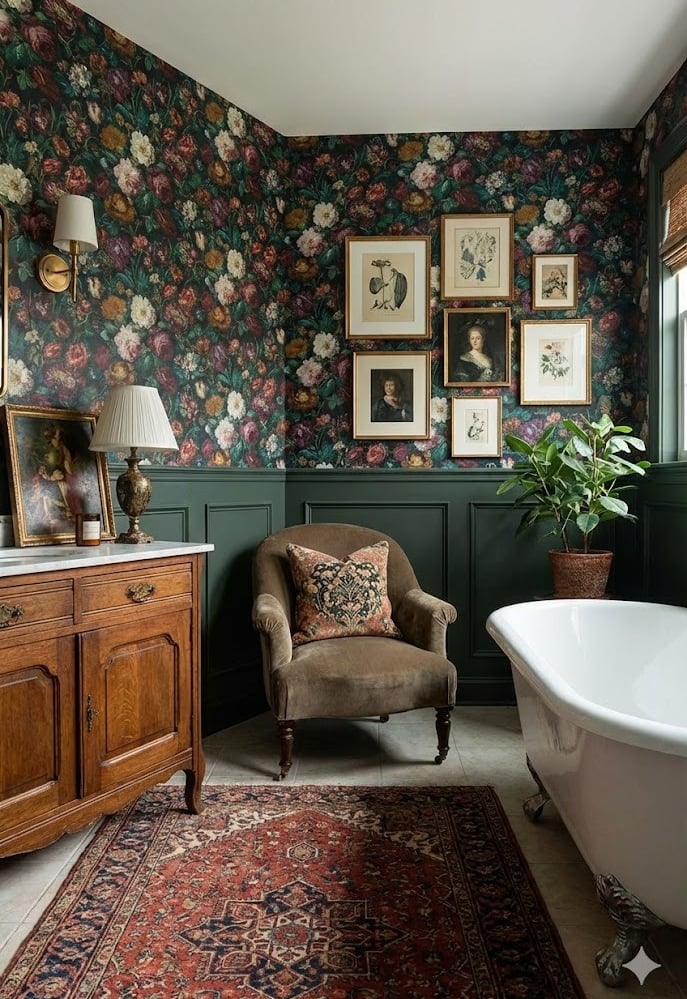
One of the most surprising trends for 2026 is the "non-bathroom" bathroom. We are closing the gap between the bathroom and the rest of the house by introducing elements like patterned tiles, maximalist wallpaper, and even furniture like stools or small armchairs. The goal is to make the bathroom a cozy, inhabited room rather than a cold, sterile utility space.
This "Resimercial" (residential meets commercial spa) vibe treats the bathroom as a place to hang out, not just wash up. It’s about softness in a room traditionally defined by hard surfaces.
How to Style This Trend:
Hang Real Art: Move away from generic "bathroom art." Hang a vintage oil painting (in a ventilated spot) or framed sketches.
Soft Lighting: Ditch the singular bright overhead light. Add wall sconces with fabric shades or even a small table lamp on the vanity counter for a soft glow.
Window Treatments: Replace plastic blinds with heavy linen curtains or Roman shades to add texture and sound absorption.
Pros and Cons:
Pro: Creates a luxurious, high-end hotel feel instantly.
Con: Moisture management is key. You must have excellent ventilation to prevent mold on fabrics and art.
Conclusion
The interior landscape of 2026 is a beautiful blend of heritage and modern mindfulness. It rejects the pressure to be perfect in favor of the permission to be personal. By focusing on deep-seated comfort, earthy palettes, and the "blue revolution," you can create a home that isn't just a place to live, but a place to heal and express your true self.
From the painted "6th wall" to the "Neo-Deco" curves, 2026 invites you to be bold, be personal, and above all, be comfortable. As you plan your updates for the coming year, remember that the best trend to follow is the one that makes you smile when you walk through your front door.
11. Immersive Art Mural Wallpapers
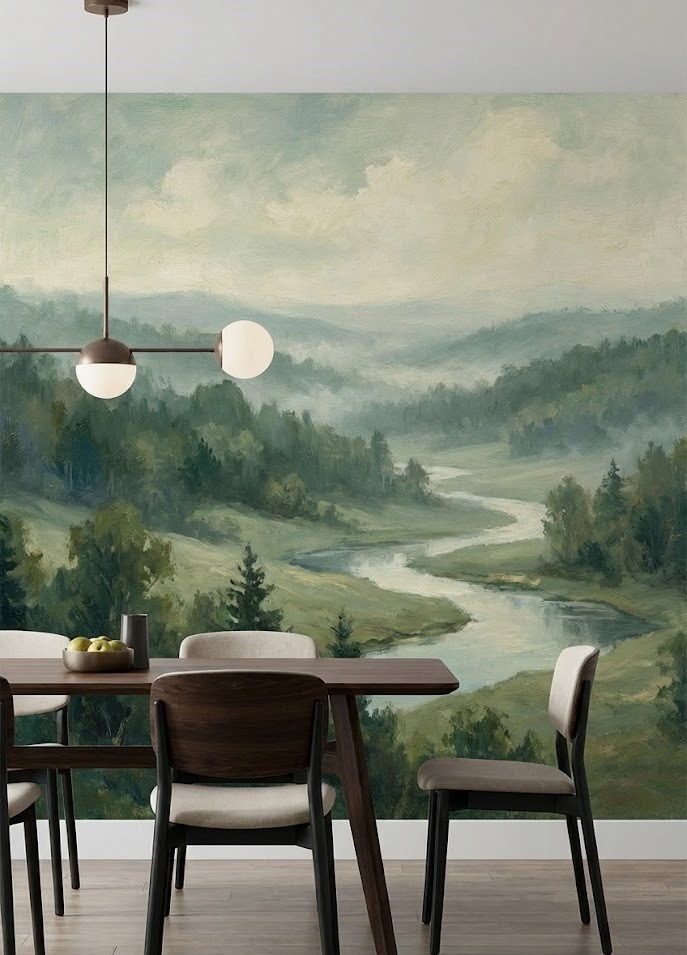
Feature walls are evolving into art-inspired murals. Instead of repetitive patterns (like a standard floral repeat), 2026 will favor large-scale scenic landscapes and painterly panoramas. These murals create an immersive experience, turning an entire wall into a creative statement that adds depth and narrative to the room.
These murals often depict etched landscapes, cloudscapes, or jungle scenes. They act as a window to another world, effectively "erasing" the wall and making the room feel larger.
How to Style This Trend:
Small Spaces: Paradoxically, large-scale murals work best in small rooms, like a powder room or a dining nook. They distract the eye from the tight dimensions.
Tonal Palettes: To keep it from feeling busy, choose a mural that is monochromatic or sepia-toned (Grisaille style).
Ceiling Height: Ensure the mural is scaled correctly to your ceiling height so the main subject isn't cut off by furniture.
Pros and Cons:
Pro: Delivers the biggest "wow factor" for your budget; eliminates the need for expensive framed art on that wall.
Con: Installation is tricky. Pattern matching a mural is more difficult than standard wallpaper and may require professional help.
12. Painting the "6th Wall" (The Floor)
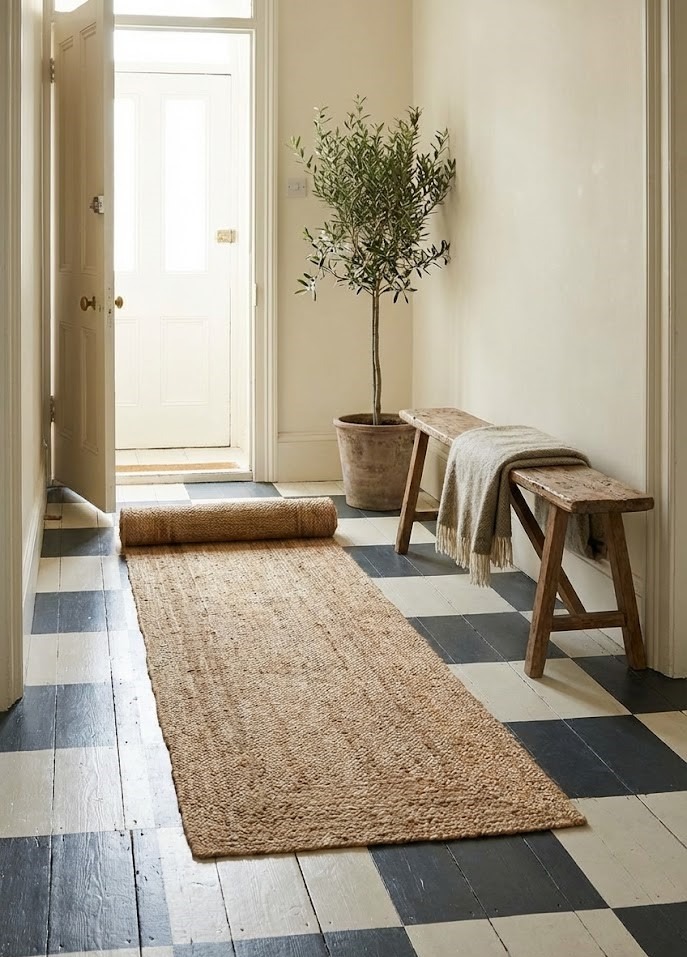
While 2025 was the year of the painted ceiling, 2026 turns its attention to the floor. Painted floors are being hailed as a cost-effective way to transform a space. Whether you choose a bold solid color or a classic pattern like checkers or stripes, treating your floor as a canvas is the final frontier of the 2026 interior.
This is particularly popular for reviving tired hardwoods that are too thin to sand down again, or for sprucing up linoleum in laundry rooms and entryways.
How to Style This Trend:
The Classic Checkerboard: You cannot go wrong with a diagonal checkerboard pattern. Soften the contrast by using cream and sage green instead of stark black and white.
Solid Gloss: For a modern look, paint floorboards in a solid, high-gloss white or light grey. It bounces light around the room, making it feel massive.
Stenciling: Use tile stencils on concrete or linoleum to mimic the look of encaustic cement tiles for a fraction of the cost.
Pros and Cons:
Pro: Extremely budget-friendly renovation that can be done as a DIY weekend project.
Con: Durability. Even with porch and floor paint, high-traffic areas will eventually chip or scuff and will require touch-ups.