Elevate Your Green Space: 19 Design Essentials for the Perfect Greenhouse Interior
A greenhouse is a unique hybrid space—part functional garden, part personal sanctuary. It is more than just a utilitarian structure for wintering plants; it is a dedicated room that connects you with nature, regardless of the weather outside. However, the challenge lies in making it both a productive workspace for your horticulture and a beautiful retreat for your peace of mind. The key to a successful greenhouse is smart interior design. It requires blending function (growing healthy plants) with form (creating a space you genuinely love). Whether you are working with a sprawling Victorian glasshouse or a modest lean-to, the goal is to create a "garden room" rather than a storage shed. This comprehensive guide explores 19 essential elements to help you organize, decorate, and optimize your greenhouse interior, turning it into a harmonious haven.
OUTDOOR
1. Infuse Personality with Art and Sculptures
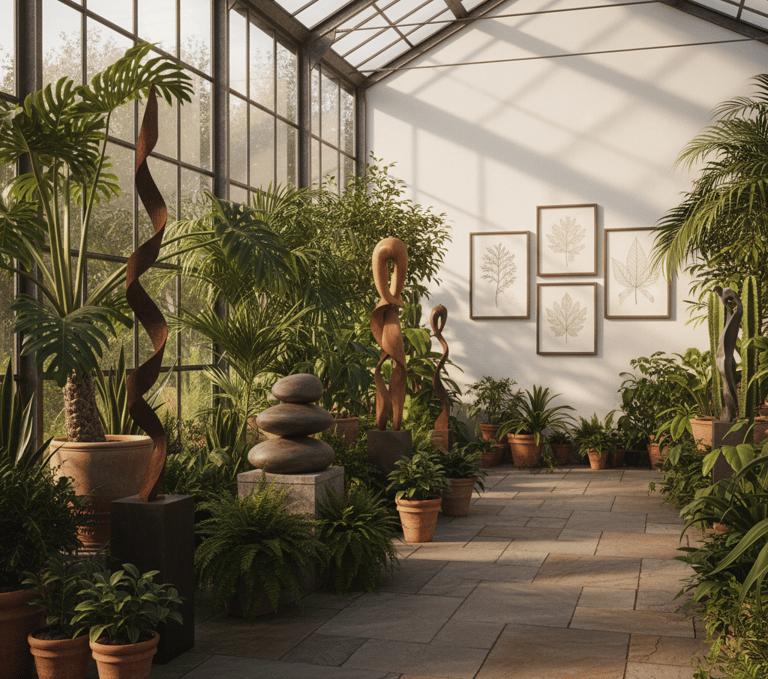
Don't let your greenhouse walls remain bare. Incorporating art and sculptures transforms a simple growing area into a curated gallery. Because greenhouses are humid and subject to temperature fluctuations, standard canvas art may not survive. Instead, look for weather-resistant materials that add a layer of sophistication and personal history to the space.
Material Recommendations: Opt for stone bas-reliefs, resin castings, or metal wall art that develops a patina over time.
Styling Tip: Create a focal point by placing a classical stone bust amidst feathery ferns. The contrast between the rigid stone and the organic, soft foliage creates a timeless, "secret garden" aesthetic.
Caution: If you use framed botanical prints, ensure they are sealed behind glass and the frames are treated with a marine-grade varnish to prevent warping from humidity.
2. Optimize Seating and Storage with Built-in Benches
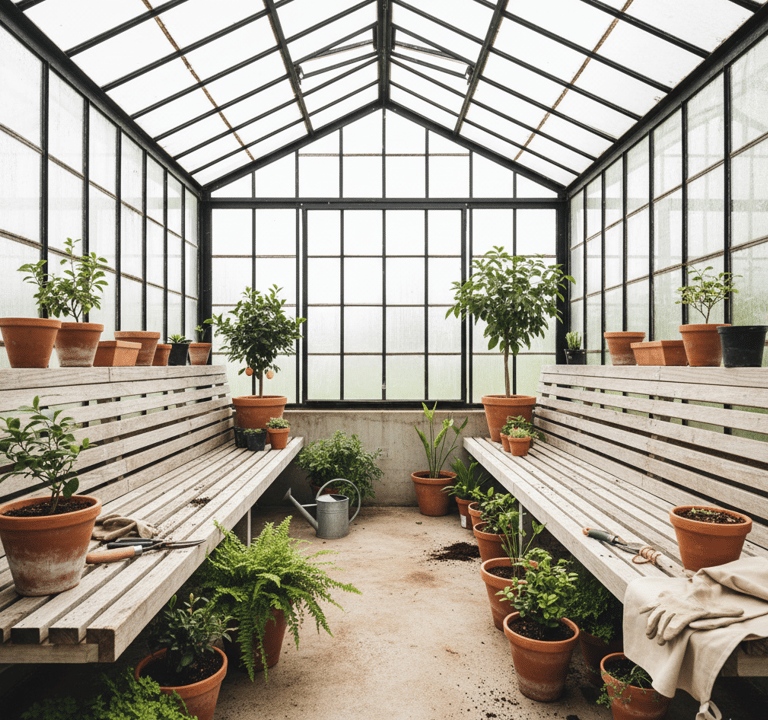
Efficiency is vital in a greenhouse. Built-in benches provide a streamlined look that maximizes floor space while offering a dual purpose. Unlike freestanding tables, built-ins can be customized to the exact width of your greenhouse, eliminating "dead zones" where dirt accumulates.
Design Advice: Choose rot-resistant woods like cedar or redwood. Consider slatted tops for your benches; this allows water to drain through freely when you water your plants, preventing puddles and wood rot.
Storage Hack: Utilize the space underneath for heavy storage. Place large plastic bins on rollers beneath the bench to hold soil, perlite, and pots. Skirt the bench with a heavy linen fabric if you prefer to hide the clutter completely.


3. Master Climate Control Using Fans and Ventilation
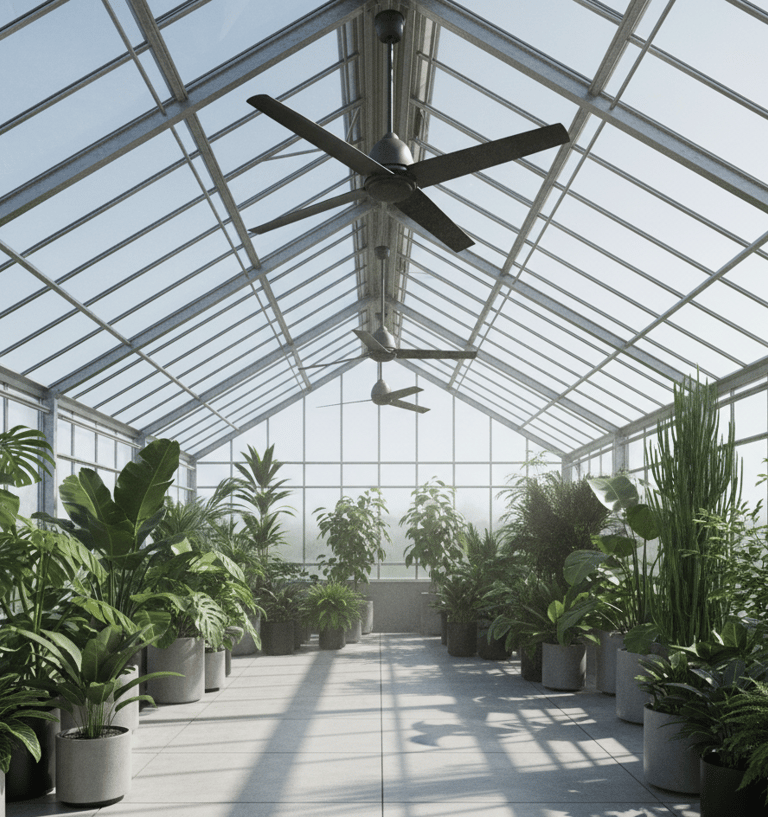
A healthy greenhouse requires air circulation. Installing ceiling fans or vents is crucial for regulating temperature and preventing plant diseases caused by stagnant air, such as powdery mildew or botrytis. While this is a functional necessity, it doesn't have to look industrial or ugly.
Modern Aesthetics: Look for "damp-rated" ceiling fans with sleek blades in matte black or brushed nickel. These merge the practical need for ventilation with modern design aesthetics.
Placement Strategy: For optimal airflow, install fans near the peak of the roof to push rising hot air down in the winter or exhaust it out vents in the summer.
Why It Matters: Without air movement, plant stems become weak. The "exercise" from the breeze creates stronger, sturdier plants.
4. Anchor the Room with a Centerpiece Table
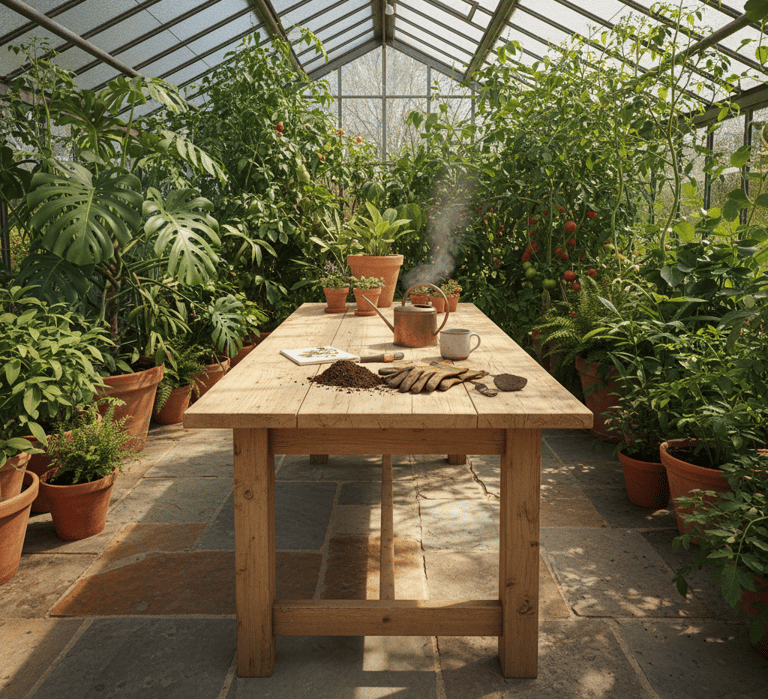
Just like a dining room, a large greenhouse benefits from a focal point. A rustic wooden centerpiece table acts as a communal hub for potting, dining, or displaying your finest specimens. It grounds the room and invites people to gather, blurring the line between a garden workspace and a social area.
Material Choice: A reclaimed farmhouse table is ideal here. Imperfections, scratches, and water rings only add to the character of the piece. If you prefer a more industrial look, a galvanized metal table works well and is easy to hose down.
Styling Idea: Treat this table as an ever-changing display. In spring, it’s a potting surface full of seedlings. In summer, clear the center and set it with candles and wine glasses for an alfresco dinner protected from the breeze.


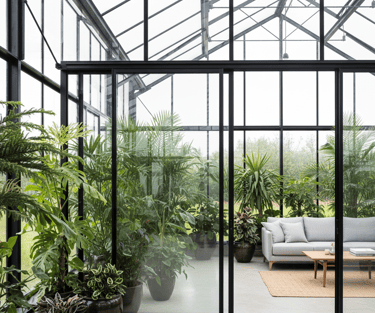


9. Define Zones with Elegant Glass Partitioning
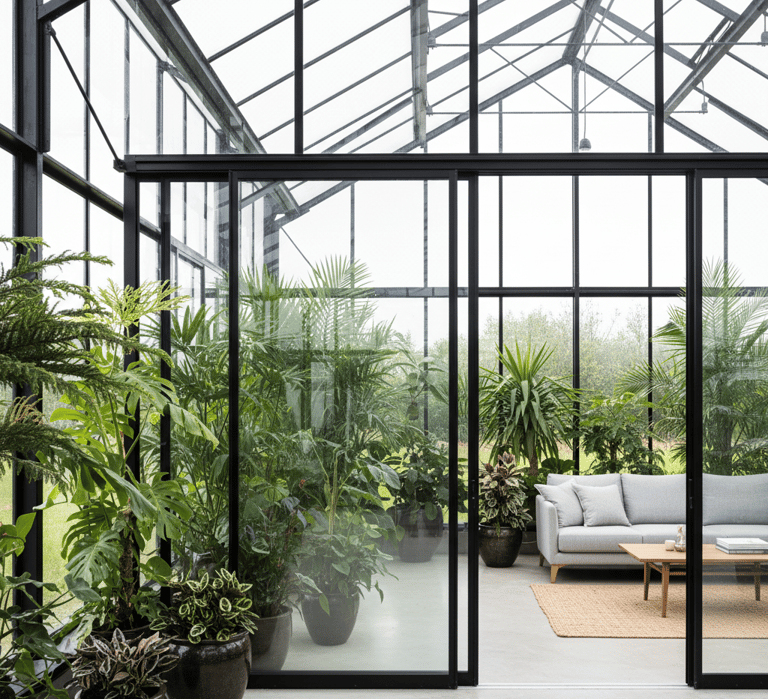
If you have a large greenhouse, consider breaking up the space. Glass partitioning allows you to create separate climate zones—perhaps one for tropicals that need high humidity and one for arid plants that need dry air—without blocking the light.
Architectural Interest: Use salvaged vintage windows or French doors to build these partitions. The peeling paint and old hardware add instant charm and history.
Functional Zoning: This is also excellent for pest control. If one section gets an infestation of aphids, the partition helps prevent them from spreading to your entire collection.
Layout Tip: Keep the "living" zone (seating) separate from the "working" zone (potting and watering) to keep your furniture dry and clean.
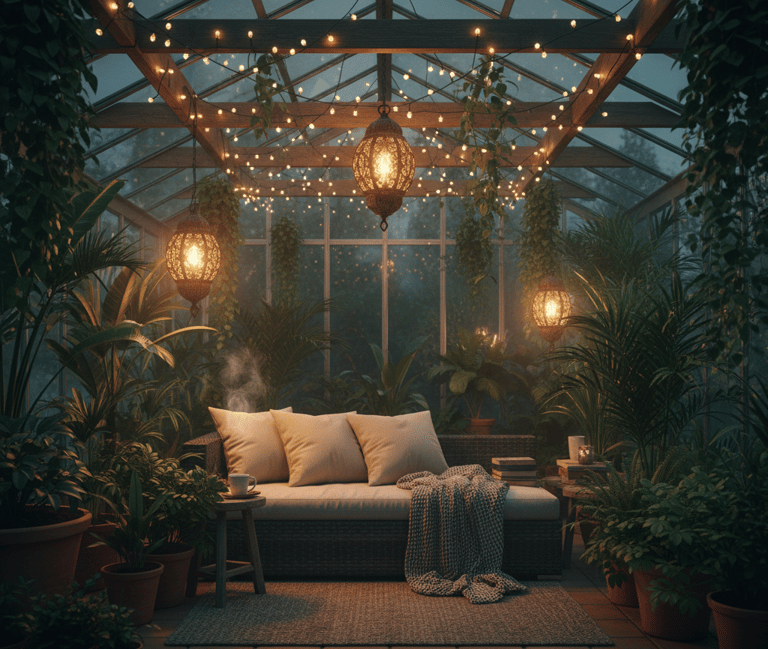
10. Create a Relaxation Nook with a Sofa or Daybed
Turn your greenhouse into a living room by adding a sofa or daybed. Placed amidst the greenery, soft seating invites you to read, nap, or simply enjoy the view. It transforms the greenhouse from a place of labor into a place of leisure.
Fabric Selection: Durability is non-negotiable. Use fabrics rated for outdoor use, such as Sunbrella or high-performance canvas. These resist fading from the intense UV exposure and won't rot if they get splashed during watering.
Frame Materials: Wicker, rattan, and powder-coated aluminum are excellent choices. Avoid untreated pine or indoor iron, which will rust quickly in the humid environment.
Cozy Factor: Pile on throw pillows and blankets. Having a soft place to land encourages you to spend time in the greenhouse even when you aren't gardening.
6. Add Vibrancy with Colorful Pots and Containers
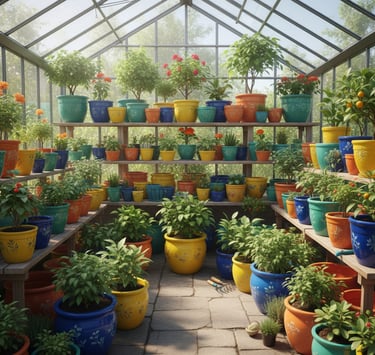
While terracotta is a classic choice, don't be afraid to mix in colorful pots and containers. Using glazed pots in shades of blue, yellow, or teal can brighten up the lower levels of your greenhouse and create visual interest even when plants are not in bloom.
Design Logic: In a room dominated by green foliage and brown soil, a pop of Cobalt blue or Mustard yellow guides the eye through the space.
Functional Difference: Remember that glazed pots hold moisture longer than porous terracotta. Use glazed pots for moisture-loving plants like ferns and peace lilies, and stick to unglazed terracotta for succulents and cacti that need to dry out quickly.
Budget Tip: Buy cheap plastic nursery pots and place them inside larger, decorative ceramic "cachepots." This allows you to swap plants easily without repotting.
7. Maintain Sustainability via a Composting Station
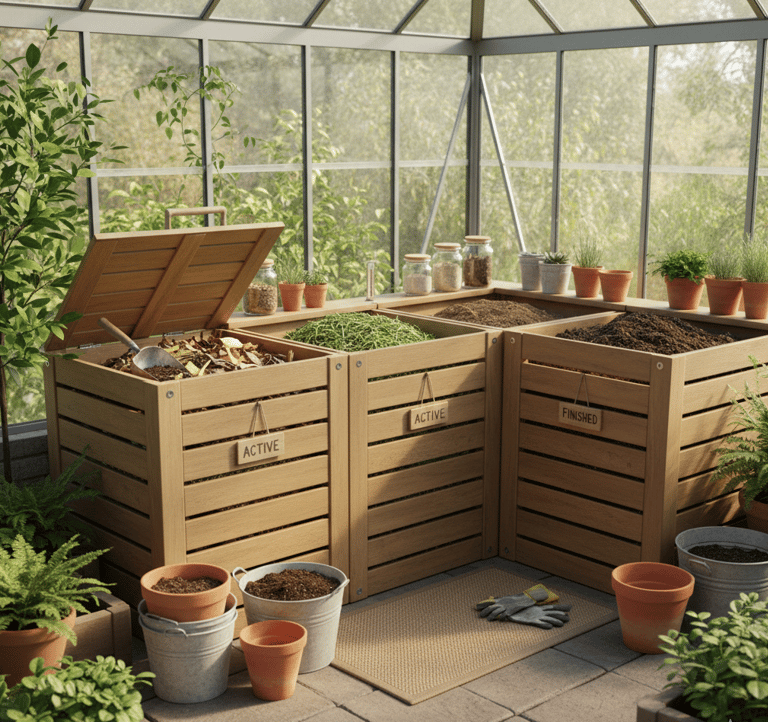
For the serious gardener, a functional cycle of nutrients is essential. A dedicated composting station, housed in neat wooden bins, allows you to recycle organic waste directly on-site. This keeps your workspace sustainable and ensures you always have nutrient-rich soil ready for your potting needs.
Odor Control: To keep the interior smelling fresh, opt for a sealed "Bokashi" system or a vermicompost (worm) bin, both of which are low-odor and compact enough for indoor use.
Aesthetic Integration: Hide the compost setup inside a wooden chest or a wicker hamper lined with plastic. It serves a dirty purpose but doesn't need to look dirty.
The Benefit: You save money on fertilizer and reduce household waste, closing the loop on your greenhouse ecosystem.
8. Warm Up the Floors with Decorative Rugs
Stone or concrete floors can feel cold and industrial. Layering decorative rugs adds immediate warmth and texture to the greenhouse. They define seating areas and make the space cozy enough for barefoot relaxation, effectively signaling that this is a "room," not just a garden.
Material is Key: Never use wool or cotton rugs in a greenhouse; they will mold. Instead, opt for polypropylene (recycled plastic) rugs. They are water-resistant, mold-resistant, and can be cleaned with a garden hose.
Visual Trick: Use a rug with a geometric pattern to contrast against the wild, organic shapes of the plants. This juxtaposition makes the design feel intentional and modern.
5. Soften the Edges with Lush Climbing Plants
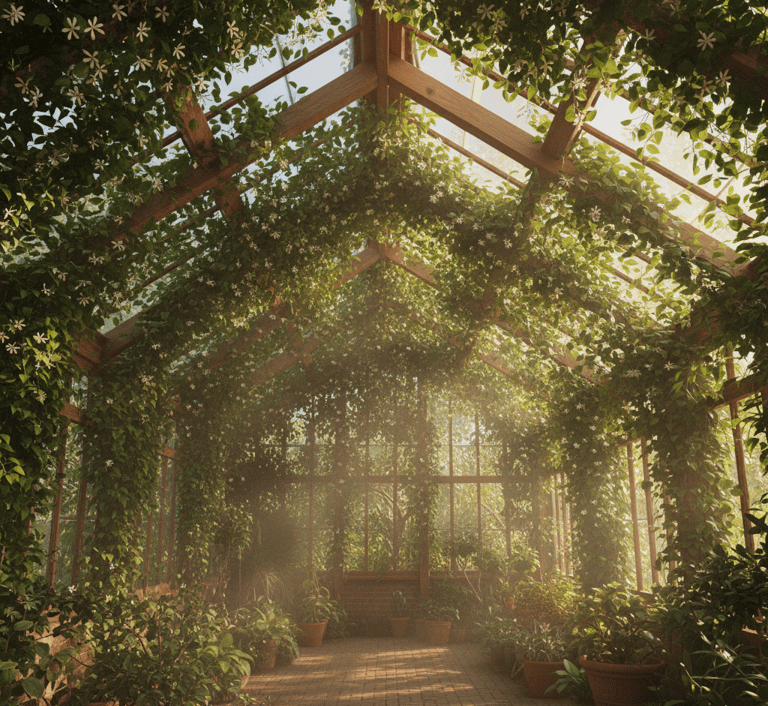
To make the structure feel organic, encourage nature to take over. Training climbing plants to grow up the walls or across the rafters softens the hard lines of the glass and metal structure. Vines create a canopy effect that provides dappled shade and an immersive "jungle" feel.
Best Plants for Coverage:
Jasmine: For incredible fragrance in the evenings.
Passionflower: For exotic, intricate blooms that look like art.
Grapevines: For a productive crop that also provides dense summer shade (and loses leaves in winter to let light in).
Installation Tip: Run tension wires or attach eye-hooks along the metal framing of the greenhouse. Avoid letting heavy vines attach directly to glass panes, as the weight can cause damage during high winds.


15. Save Space with Clever Multi-functional Furniture
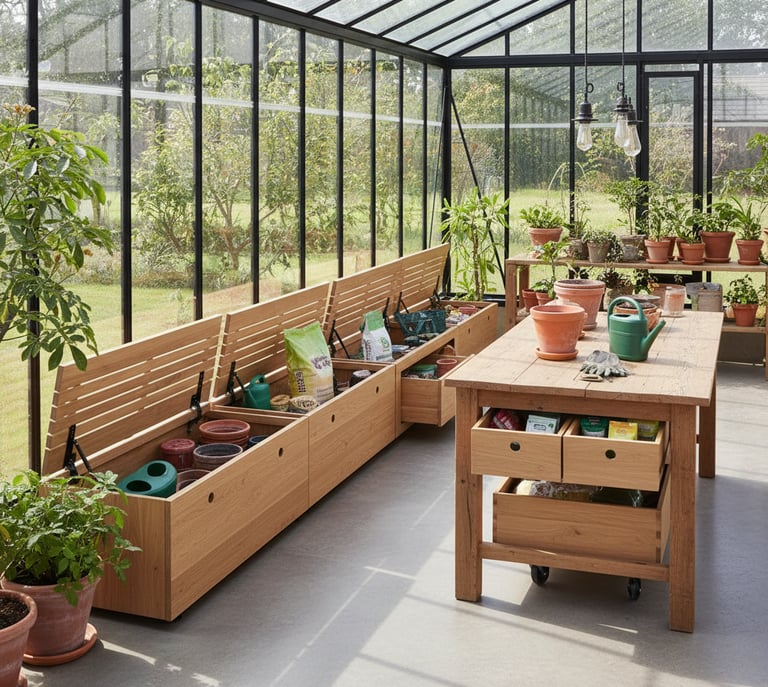
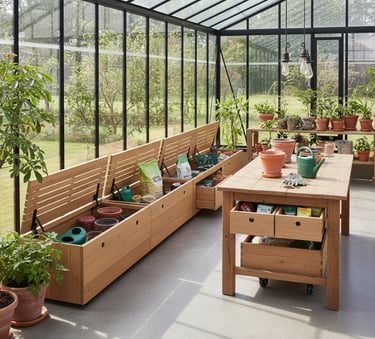
In smaller greenhouses, every inch counts. Multi-functional furniture keeps the workspace uncluttered and adaptable to different tasks. The goal is to reduce the footprint of your gear so there is more room for plants.
The Potting Bench: Look for a bench with a removable top that reveals a soil bin underneath. Or, choose one with a fold-down leaf to extend the workspace only when needed.
Rolling Carts: A kitchen island cart on wheels is a game-changer. You can wheel it to the center for a potting session, then tuck it into a corner when you're done.
Hidden Storage: Use hollow ottomans for seating that store your trowels, gloves, and seed packets inside.
16. Ground the Design with Natural Stone Flooring
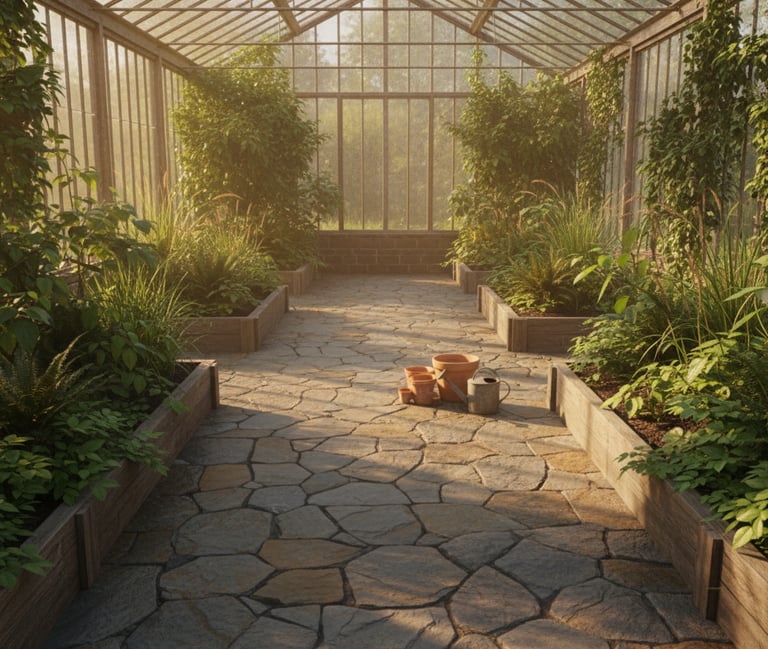
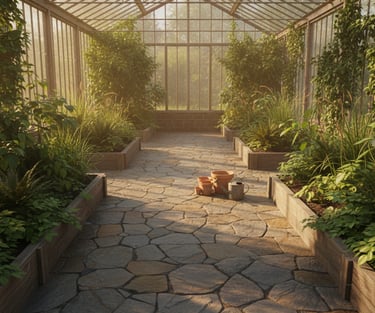
The foundation of your greenhouse sets the tone. Natural stone flooring provides a durable, earth-toned base that complements the greenery perfectly. Unlike concrete, natural stone offers unique textures and color variations that age beautifully over time.
Material Pros & Cons:
Flagstone/Slate: Beautiful and creates a flat surface for furniture, but can be expensive and slippery when wet.
Pea Gravel: Very affordable and offers excellent drainage (water goes right through). However, it is difficult to roll carts over and furniture legs may sink.
Brick: Classic and retains heat well, releasing it at night. Ideal for a "cottage core" aesthetic.
Design Note: Avoid glazed tiles, which become dangerously slick with water and humidity. Always opt for textured, honed, or tumbled finishes.
17. Improve Ergonomics with Raised Plant Beds
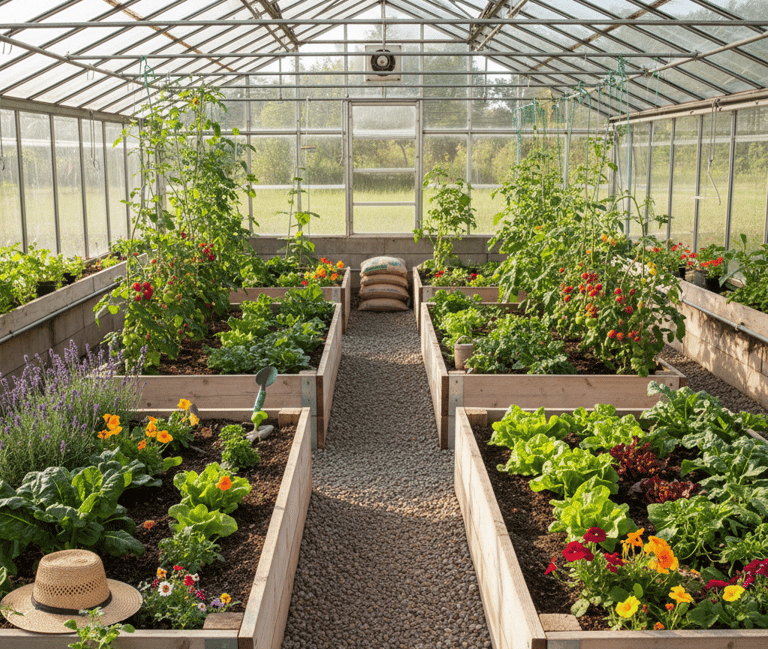
Gardening shouldn't be back-breaking work. Raised plant beds bring the soil up to a comfortable working height, reducing strain on your back and knees. This is particularly helpful for vegetable gardening within the greenhouse.
Soil Control: Raised beds allow you to control the soil mix perfectly. You can create a sandy mix for one bed and a rich, loamy mix for another, depending on what you are growing.
Materials: Corrugated metal beds look modern and industrial. Rough-sawn cedar looks rustic. Ensure the beds have drainage holes at the bottom if they are sitting on a solid floor.
Depth: A depth of 12-18 inches is sufficient for most salad greens and herbs, but go for 24 inches if you plan to grow root vegetables or larger perennials.
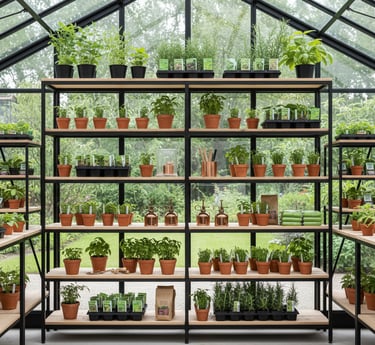
18. Organize Your Collection with Tiered Shelving
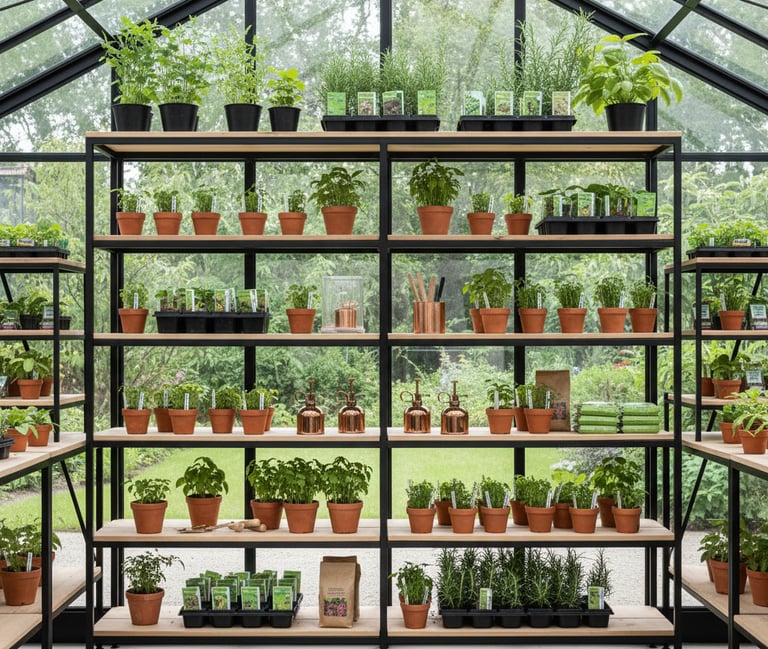
To fit more plants into a compact footprint, use verticality. Tiered shelving units allow you to stack plants, ensuring that those on lower shelves still receive adequate light. This is ideal for displaying collections of succulents, herbs, or seedlings in an organized, visually appealing way.
The "Stadium" Effect: Use shelves that step back (like stadium seating) rather than sitting directly on top of one another. This prevents the top plants from shading the bottom ones.
Materials: Wire shelving is often the best choice for greenhouses because it doesn't block light and allows air to circulate around the pots.
Styling: Group plants by species on shelves (e.g., a "cactus shelf" or a "begonia shelf") to create a cohesive, curated look rather than a cluttered jumble.
Conclusion
Designing the interior of a greenhouse is about finding the sweet spot where horticulture meets habitation. It is about creating a micro-world where the air smells sweeter, the pace is slower, and the connection to nature is uninterrupted.
By integrating these 19 essentials—from practical workstations and ventilation to cozy rugs and ambient lighting—you can create a space that nurtures both your plants and your well-being. Whether you are potting seedlings on a rainy Sunday or curling up with a book under the canopy of a passionflower vine, your greenhouse can—and should—become the most cherished room in your home.
11. Utilize Vertical Space with Hanging Planters
When floor space is at a premium, look up. Hanging planters allow you to utilize the rafters and roof structure to display trailing plants like pothos, string of pearls, or ferns. This technique draws the eye upward and adds layers of depth to the interior foliage.
Design Styles:
Boho: Macramé hangers add texture and a relaxed, 1970s vibe.
Modern: Sleek metal geometric hangers or simple wire baskets suit a contemporary glasshouse.
Watering Logistics: Ensure you can reach them! Install a pulley system for high-up plants so you can lower them for watering, or invest in a high-quality pump sprayer wands.
Light Levels: Remember that plants near the roof will get the most intense heat and light. Choose species that can handle the scorch, or use sheer shade cloth in summer.
12. Extend the Season with a Reliable Heating System
To make your greenhouse a true year-round sanctuary, you need to manage the cold. A heating system ensures the space remains usable in winter and protects your tender perennials from frost.
Option A: The Wood Stove: Installing a small wood-burning stove creates a focal point and unbeatable dry heat. It adds a cozy, cabin-like ambiance that makes winter evenings magical. (Ensure professional installation for venting).
Option B: Electric Heaters: For a lower-maintenance option, use a thermostatically controlled electric fan heater. It turns on only when the temperature drops below freezing, saving energy.
Passive Solar Tip: Paint water barrels black and fill them with water. They absorb heat during the day and release it slowly at night, naturally moderating the temperature.
13. Introduce Serenity through Integrated Water Features
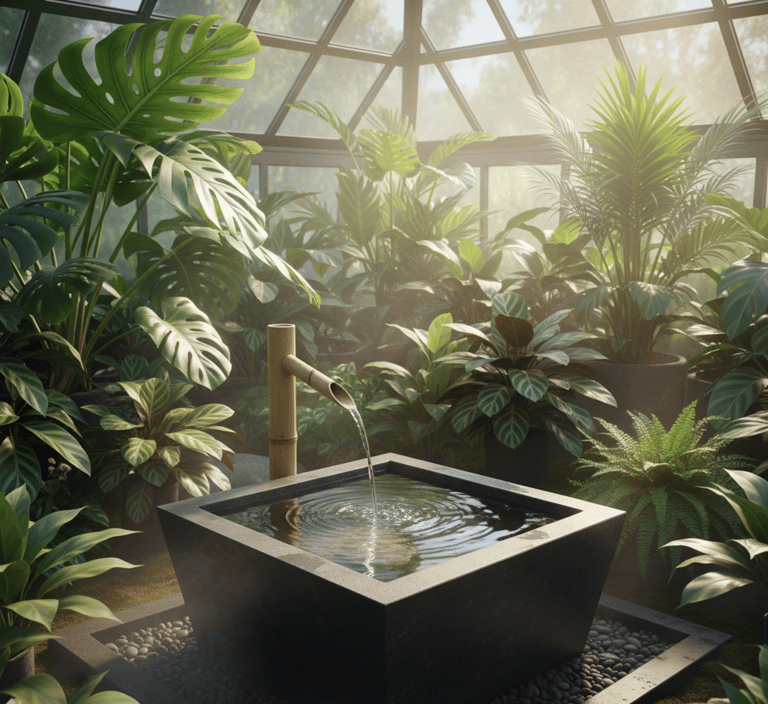
The sound of trickling water enhances the sensory experience of a garden. Integrated water features, such as modern square basins or small fountains, add a calming auditory element that masks outside traffic noise.
Humidity Boost: Beyond aesthetics, water features naturally increase humidity through evaporation. This is incredibly beneficial for orchids, ferns, and tropical aroids that struggle in dry air.
Style Ideas: A simple stone bowl with a solar-powered bubbler is easy to install and requires no wiring. For a more elaborate look, a wall-mounted fountain can serve as a living art piece.
Maintenance: Ensure the water keeps moving to prevent mosquito breeding, or use "mosquito dunks" which are safe for plants and pets.
14. Set the Mood with Ambiance Lighting Fixtures
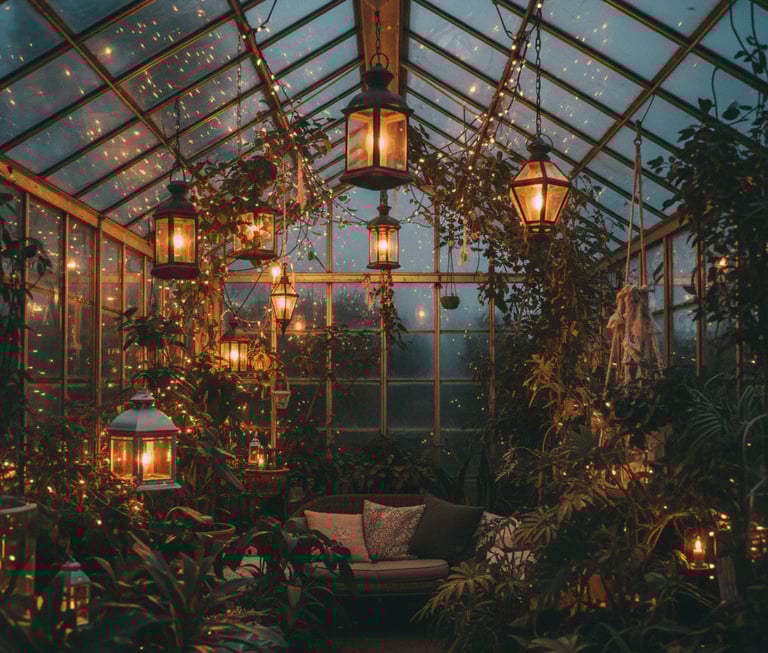
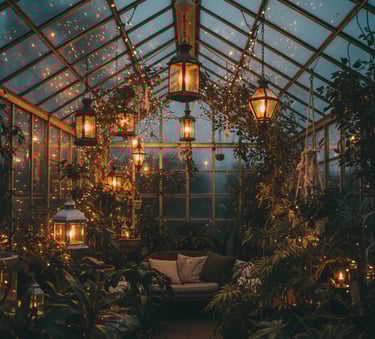
Your greenhouse shouldn't go dark when the sun sets. Installing lighting fixtures, such as string lights, lanterns, or pendant lamps, transforms the space into an evening retreat. Warm lighting highlights the textures of the leaves and makes the glass structure glow beautifully from the outside like a jewel box.
Lighting Types:
Bistro Lights: String these across the rafters for a festive, café-style atmosphere.
Solar Lanterns: Place these on the floor or tables for a soft, candle-like glow without the fire hazard.
Grow Lights: Modern LED grow lights now come in "warm white" spectrums that look like regular home lighting but still provide photosynthesis energy for plants.
Color Temperature: Always aim for 2700K to 3000K (Warm White). Cool white lights can make the space feel like a laboratory or hospital.
19. Streamline Maintenance with a Dedicated Workstation
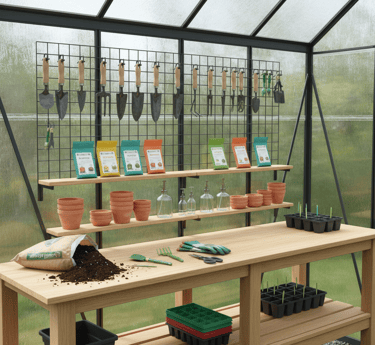
Finally, a productive greenhouse needs a command center. A dedicated workstation with tools, complete with a flat surface for potting and a grid for hanging trowels and shears, keeps your workflow smooth.
The Pegboard Solution: Install a pegboard behind your potting bench. Outline your tools in marker so you know exactly where everything goes. This prevents the frustration of losing your favorite pruners in a pile of dirt.
Clean-Up Station: If possible, plumb a sink into your workstation. Being able to wash pots and hands without leaving the greenhouse is a luxury that significantly improves the gardening experience.
Surface: A stainless steel or galvanized metal countertop is ideal for the workstation. It is easy to sanitize, immune to water damage, and can handle the rough scraping of clay pots.