
Is Your Living Room Naked? 13 Farmhouse Curtain Ideas That Instantly Fix a "Boring" Space
Naked windows are the 'silent killer' of coziness. I’ve curated the ultimate guide to farmhouse window treatments, featuring budget-friendly DIYs, the best fabrics for texture (hello, grain sack stripes!), and how to choose between blackout functionality and breezy sheers for a home that feels truly lived-in.
LIVING ROOM
Let’s be honest: you can buy all the reclaimed wood furniture, distressed shiplap, and vintage Persian rugs in the world, but if your windows are bare—or worse, sporting those generic, rattle-prone aluminum blinds—your living room will never truly feel "finished."
In the world of interior design, naked windows are often referred to as the "silent killer" of coziness. They leave a room feeling echoey, cold, and visually unanchored. Windows are the eyes of the home, and just like eyes, they need the right framing to express emotion.
Achieving that authentic farmhouse aesthetic isn't about rigid perfection or buying a matching set from a catalog; it’s about layering texture, honoring history, and cultivating a lived-in warmth that invites guests to take off their shoes. But navigating the vast world of window treatments can be incredibly overwhelming. Do you go for bold patterns or safe solids? Heavy velvets or breezy sheers?
Put down the overwhelming sample books and stop scrolling aimlessly through Pinterest. As professional design editors, we have curated the ultimate list of 13 curtain styles that will take your space from "sterile box" to "cozy sanctuary." Here is how to give your living room that irresistible rustic edge.
1. The Unmatched Elegance of Washed Linen
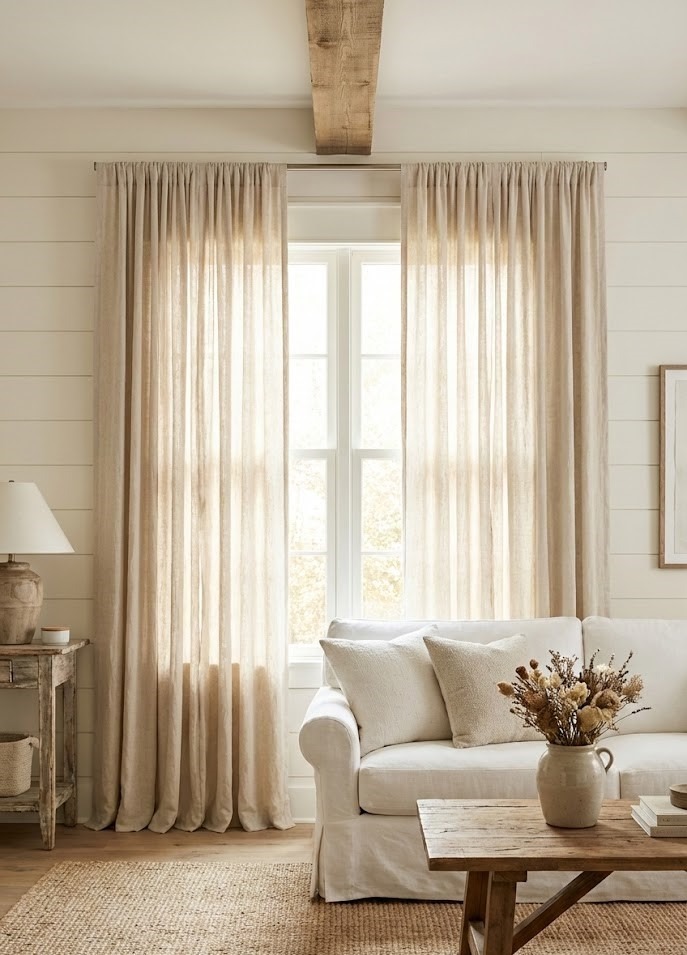
If there is a Holy Grail of farmhouse fabrics, it is undoubtedly pure, washed linen. This ancient textile has been the gold standard for centuries, and for good reason. Unlike synthetic polyester blends that hang stiffly and shine unnaturally under artificial light, linen offers a relaxed, heavy drape that looks expensive yet approachable. It filters sunlight into a warm, ethereal glow that instantly softens the hard edges of a room.
Why It Works: The true magic of linen lies in the "slubs." These are tiny, natural irregularities, knots, and variations in thickness within the weave. These imperfections are not defects; they are the soul of the fabric, adding immediate visual texture and depth that ensures the fabric never looks flat or manufactured.
Practical Styling Advice:
The "Puddle" Effect: For a truly romantic farmhouse look, order your linen curtains 2 to 3 inches longer than the floor-to-ceiling measurement. Let the fabric "puddle" slightly on the floor. This emphasizes the relaxed nature of the material and breaks the rigid lines of the wall.
Color Choice: While white is classic, consider "oatmeal," "flax," or "greige" (grey-beige) shades. These hide dust better than stark white and add an earthy warmth that bridges the gap between white walls and wood floors.
Pros and Cons:
The Upside: Linen is breathable, antibacterial, and has a timeless appeal that defies trends. It actually becomes softer and more beautiful with every wash.
The Downside: Pure linen is an investment and can be pricey. It also wrinkles easily. However, in a farmhouse setting, a slightly rumpled look is a badge of authenticity—it says the home is lived in, not a museum.
Categories
2. The DIY Drop Cloth Miracle
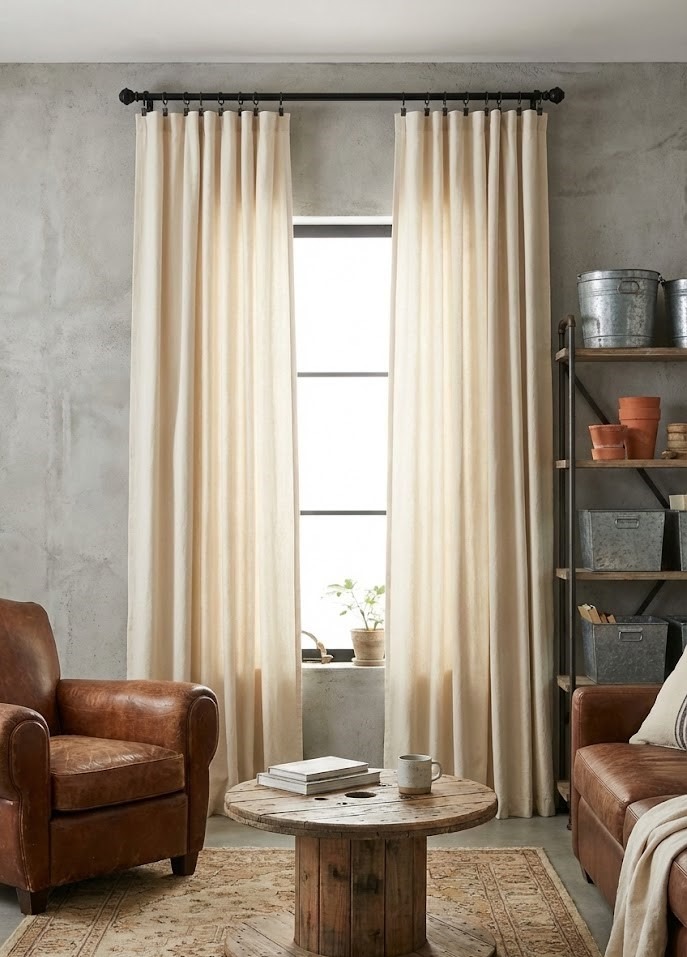
Believe it or not, some of the most stunning farmhouse curtains usually start in the hardware store paint aisle. Cotton canvas drop cloths have become a secret weapon for interior designers and DIY enthusiasts on a budget. When treated properly, these utilitarian sheets soften into a thick, durable fabric that rivals high-end textiles costing ten times as much.
The Transformation Process: You cannot simply hang them straight from the package (they will look stiff and smell like a warehouse). To transform them:
Wash & Dry: Wash them in hot water with baking soda to break down the stiff fibers. Dry them on high heat to "preshrink" them, as canvas shrinks significantly.
Bleaching (Optional): Drop cloths naturally come in a dark oatmeal color. If you want a creamy off-white, soak them in a bathtub with a water-bleach solution for 2-4 hours before washing.
The Vibe: The look is utilitarian, tough, and effortlessly cool. The heavy canvas creates deep, architectural folds that look custom-made. Because the fabric is thick, it naturally blocks drafts and dampens sound, making your living room quieter.
Pro Tip: Use curtain clips with rings for a "no-sew" installation. Since drop cloths are already hemmed on all sides to prevent fraying, you simply clip them up and slide them onto the rod. If they are too long for your windows, fold the top over to create a valance effect before clipping.
3. Historic Grain Sack Stripes
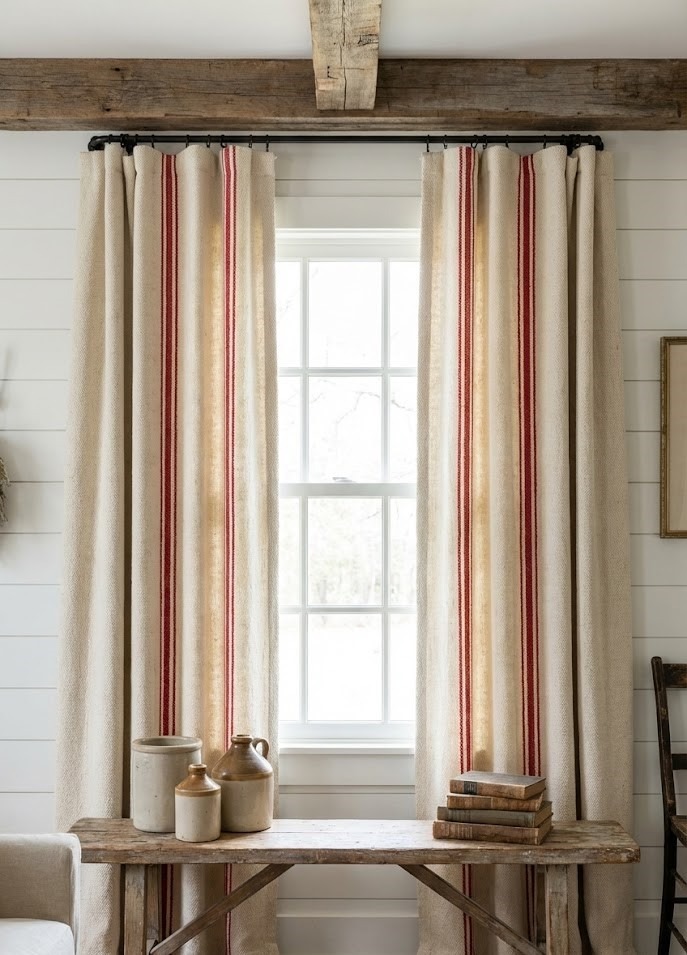
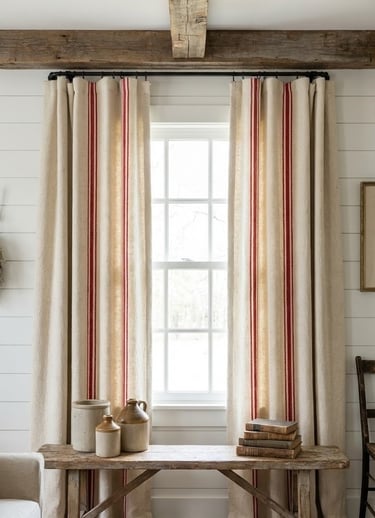
Nothing screams "authentic farmhouse" quite like the grain sack aesthetic. Historically, European farmers used these heavy-duty fabrics to store flour, grains, and feed. To identify their specific sacks at the mill, they wove distinct, simple stripes (usually red, blue, or black) into the neutral cream background.
Why It Works: It adds a necessary pop of color without breaking your neutral palette. It introduces history and narrative to the room. Unlike printed patterns which can fade, authentic-style grain sack stripes are woven into the fabric, providing texture you can feel.
The Look: Grain sack curtains are heavyweight and substantial. These aren't flimsy sheets that flutter in a draft; they frame a window with authority and structure. They work particularly well in living rooms that feature other raw elements like exposed beams or stone fireplaces.
Real-World Example: In a living room dominated by beige sofas and wood tones, a grain sack curtain with a faded navy blue stripe anchors the space. It pairs exceptionally well with matte black iron curtain rods and reclaimed wood coffee tables, creating a cohesive "modern rustic" look.
4. Refined Burlap (Sans the Itch)
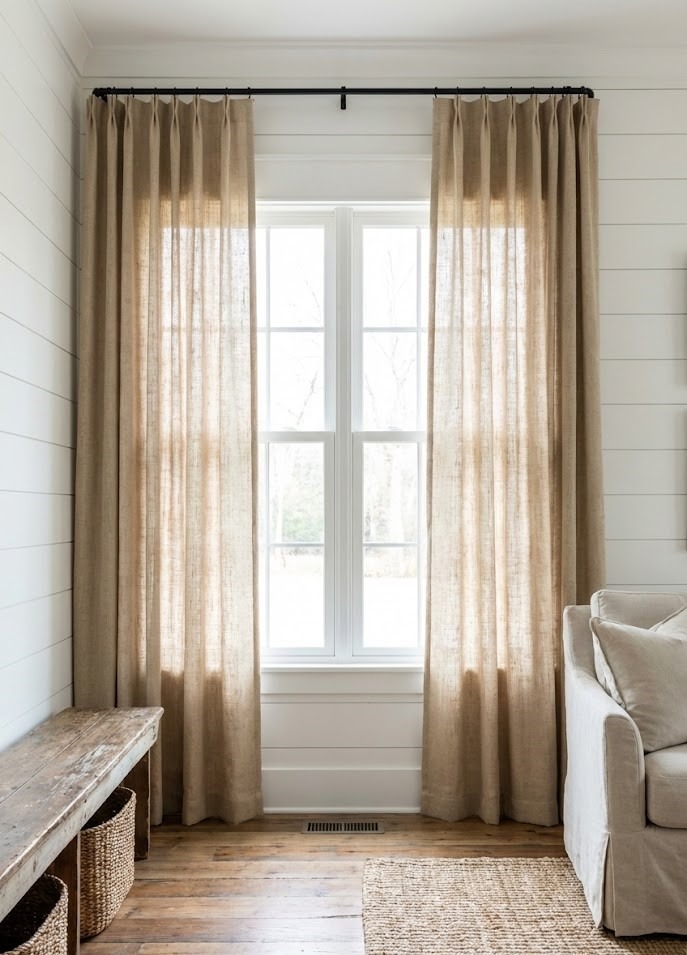
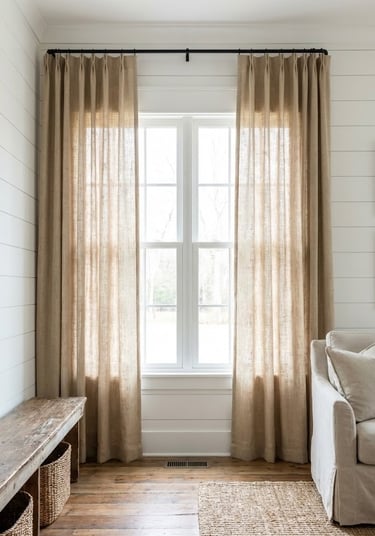
Forget the scratchy potato sacks of the past that shed fibers everywhere and smelled like a barn. Modern interior design burlap (often essentially a refined jute or faux-burlap blend) is softer, tighter, and significantly more sophisticated. It brings an earthy, raw texture that contrasts beautifully against smooth white walls, shiplap, or glass.
Crucial Detail: Always buy lined burlap. This is non-negotiable. Unlined burlap is see-through in a jagged, unattractive way and offers zero privacy. A cotton lining protects the jute from sun rot, prevents it from fading, and gives the curtain the weight it needs to hang straight rather than bowing out.
Styling Strategy:
Height is Key: Because burlap is a visually "heavy" fabric, you must hang the rod 4–6 inches above the window frame (or as close to the ceiling as possible). This prevents the heavy fabric from making the window look small or squat.
Color Palette: Stick to "oatmeal," natural tan, or soft cocoa shades. Dyed burlap (like bright colors) often looks cheap and artificial.
Cleaning Note: The texture of burlap loves to hold onto dust. Do not machine wash these curtains. Instead, vacuum them regularly using the brush attachment on your vacuum cleaner to keep them fresh.
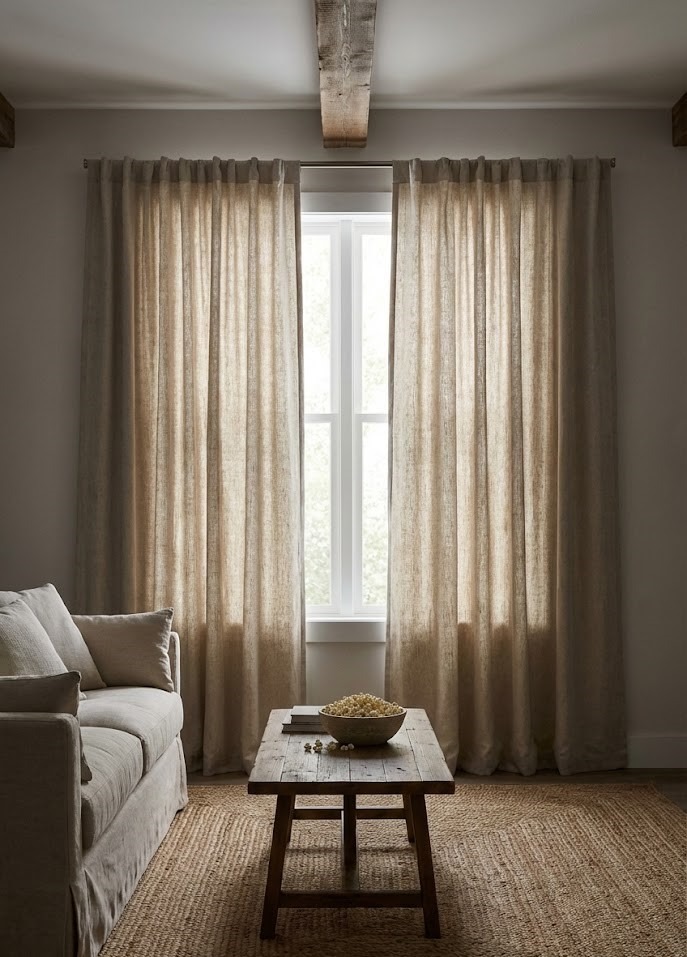
9. Modern Blackout Linen
You don't have to sacrifice sleep or movie-watching quality for style. In the past, blackout curtains were stiff, plastic-feeling monstrosities. New fabric technologies now allow for curtains that look like textured, breezy linen on the front but feature a thick, woven thermal backing.
Functionality: These are essential for media rooms where glare is an issue, or living rooms that face the street. They block streetlights and provide 100% privacy, meaning no silhouettes are visible from the outside.
Energy Saver: The thermal backing (often acrylic foam or a triple-weave fabric) traps a layer of air, significantly reducing energy bills. It prevents the "greenhouse effect" in summer and stops heat loss in winter.
Appearance Tip: Ensure the backing is white. This ensures that from the street side, your windows look uniform and clean, regardless of whether you chose blue, grey, or beige curtains for the interior.
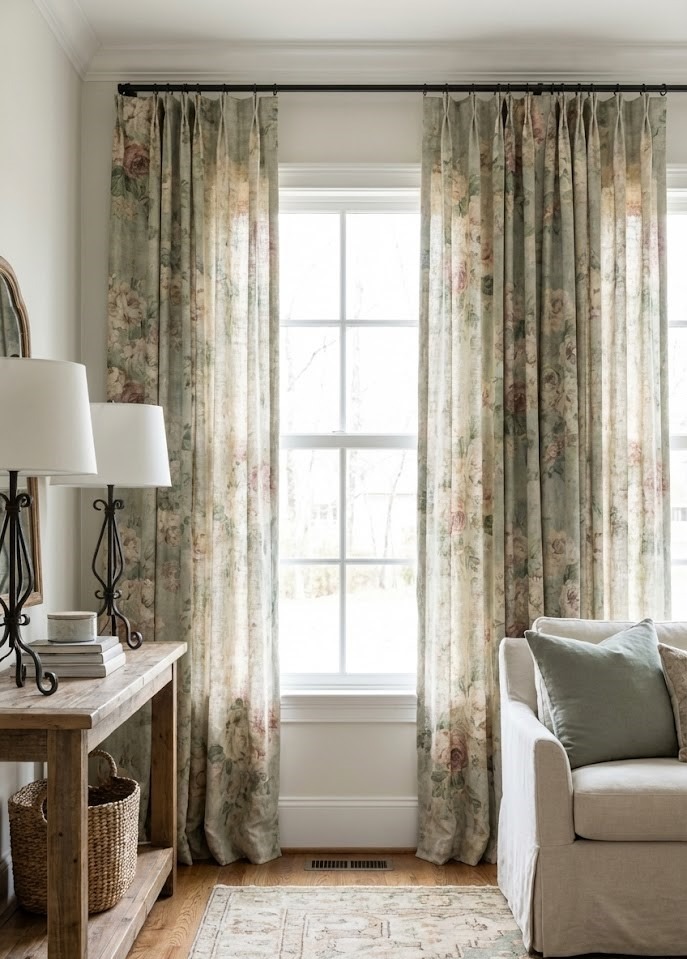
10. Vintage-Style Faded Florals
To soften a room full of heavy wood beams, metal industrial accents, and leather, introduce a "faded" floral print. The key word here is faded. You want the fabric to look like it has been washed a hundred times, with muted colors and soft edges—almost like a watercolor painting.
Scale & Pattern:
Scale: Choose medium-to-large prints. Tiny, busy flowers (calico) can look too much like a dollhouse or quilting fabric. You want the pattern to read clearly from across the room.
Palette: Look for tea-stained or beige backgrounds with Sage greens, Dusty roses, and Muted blues. Avoid neon or primary colors.
The Vibe: This style leans towards "Grandmillennial" or French Countryside Cottage. It adds a romantic, soft touch that balances out the masculine energy of rustic wood and iron furniture. It brings a sense of garden freshness indoors, even in the middle of winter.
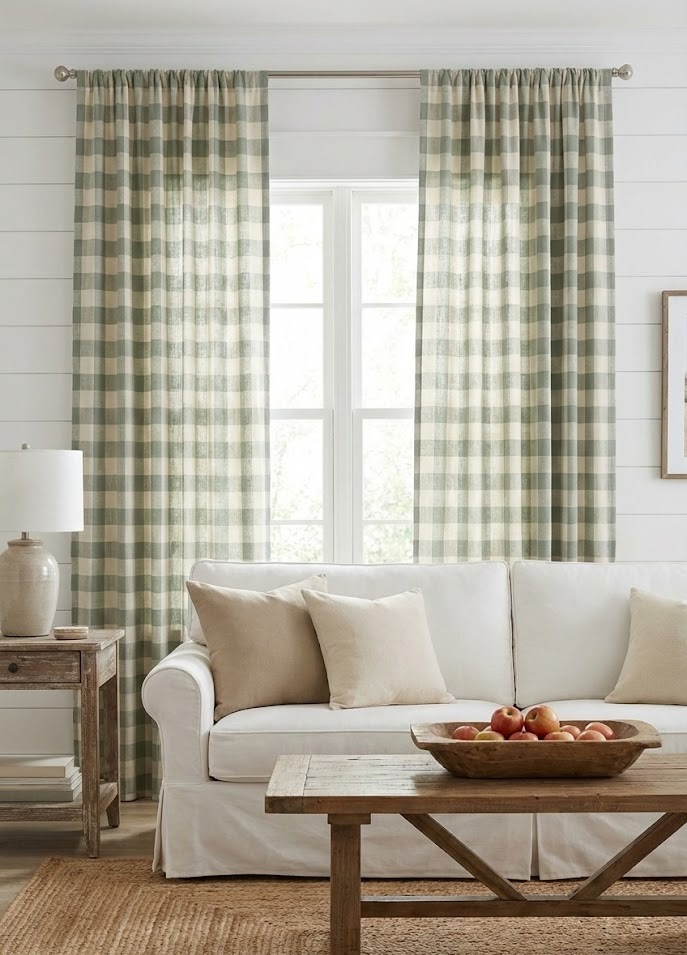
6. Classic Buffalo Check (Gingham)
For a touch of nostalgia and bold geometry, buffalo check is the way to go. While large checks can sometimes read "picnic blanket" if you aren't careful, a well-chosen gingham check feels sophisticated and grounded.
Why It Works: It bridges the gap between English cottage style and American rustic farmhouse. It’s graphic and bold, serving as art for your walls. If your furniture is solid-colored (like a grey sectional or a brown leather chair), buffalo check adds the excitement the room is missing.
Choosing the Right Color & Scale:
Scale: Go for a larger check (3-4 inches wide). Tiny gingham looks like a kitchen towel; large checks look like deliberate drapery.
Color: Avoid bright red unless you are specifically decorating for Christmas. Instead, choose Charcoal Grey, Sage Green, or Taupe. These muted tones keep the look grown-up and versatile throughout the seasons.
Balance Is Key: Because the pattern is busy, keep the rest of your decor relatively simple. If you have buffalo check curtains, avoid a buffalo check rug. Let the windows be the star of the show to prevent the room from feeling dizzying.
7. The Double-Layer Design
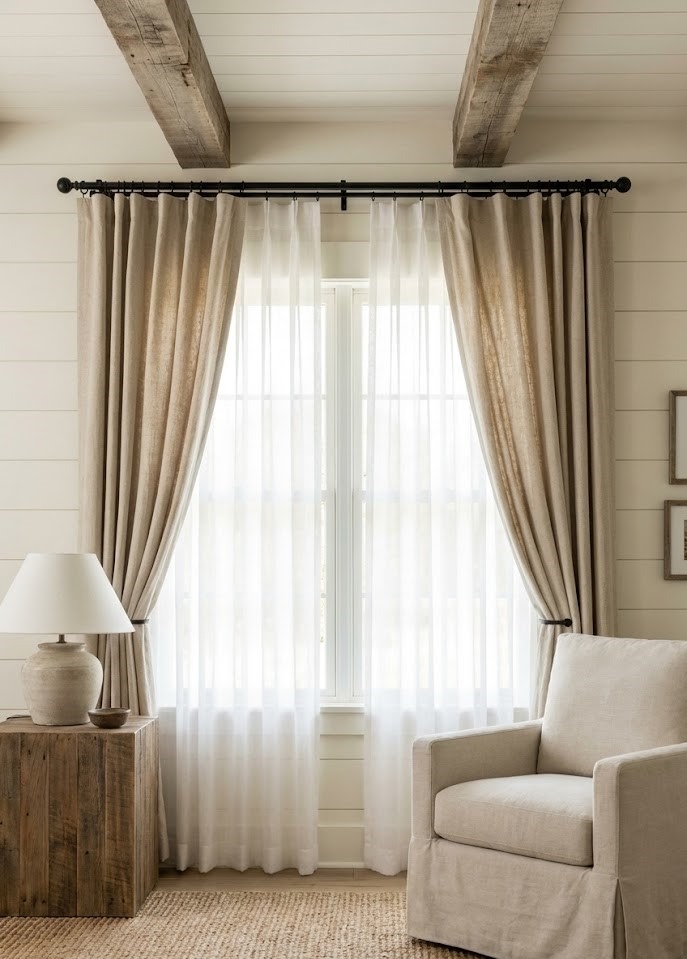
Why choose one style when you can have functionality and fashion? Layering a sheer linen panel under a heavier, textured drape gives you total control over light and privacy while doubling the texture factor. This is the standard for luxury hotels, and it works perfectly in homes.
The Benefit:
Daytime: Keep the heavy drapes open and let the sheers filter the harsh sunlight. This protects your expensive furniture and floors from UV fading while still letting the room feel bright.
Nighttime: Close the outer drapes for absolute privacy and a "cocooning" effect that makes the room feel safe and warm.
Material Mix Examples: Try a white cotton sheer (inner layer) paired with a heavy beige canvas or velvet drape (outer layer). The contrast between the ethereal sheer and the rugged outer curtain creates a sophisticated, multi-dimensional look.
Hardware Note: You will need a double curtain rod bracket to achieve this. Ensure your wall anchors are strong, as you are hanging twice the weight of a standard curtain setup.
8. Matte Velvet for Depth
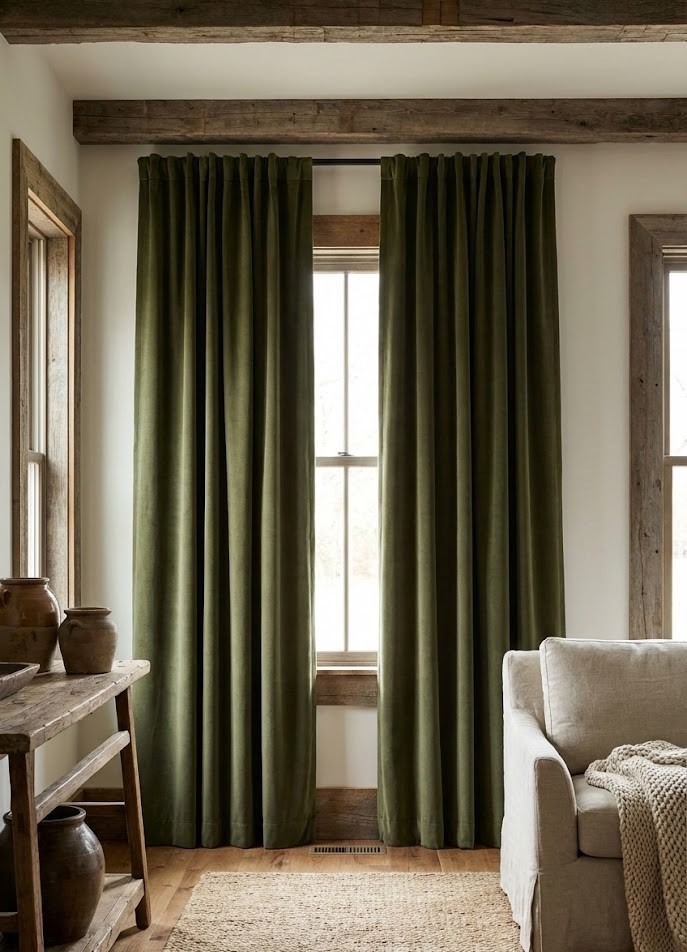
Farmhouse style isn't just about cotton and linen; it’s about contrast. A matte (non-shiny) velvet curtain in a deep earth tone adds incredible warmth, especially in the colder months. It breaks up the monotony of wood and white surfaces.
The Rule of Velvet: The key is to avoid "crushed" or high-shine velvet, which looks too "glam" or Hollywood Regency. You want a flat, dry cotton velvet. It should look soft to the touch but not sparkly.
Color Psychology:
Olive Green: Brings the outdoors in and pairs perfectly with indoor plants.
Rust/Terra Cotta: Adds warmth to grey or white rooms and mimics the color of bricks or clay.
Slate Blue: Adds a moody, calming sophistication that works well in evening relaxation spaces.
Best For: Drafty windows that need extra insulation. The high density of velvet acts as a thermal barrier, keeping heat in during winter and blocking heat in the summer. It also has excellent sound-dampening qualities, reducing echoes in rooms with high ceilings.
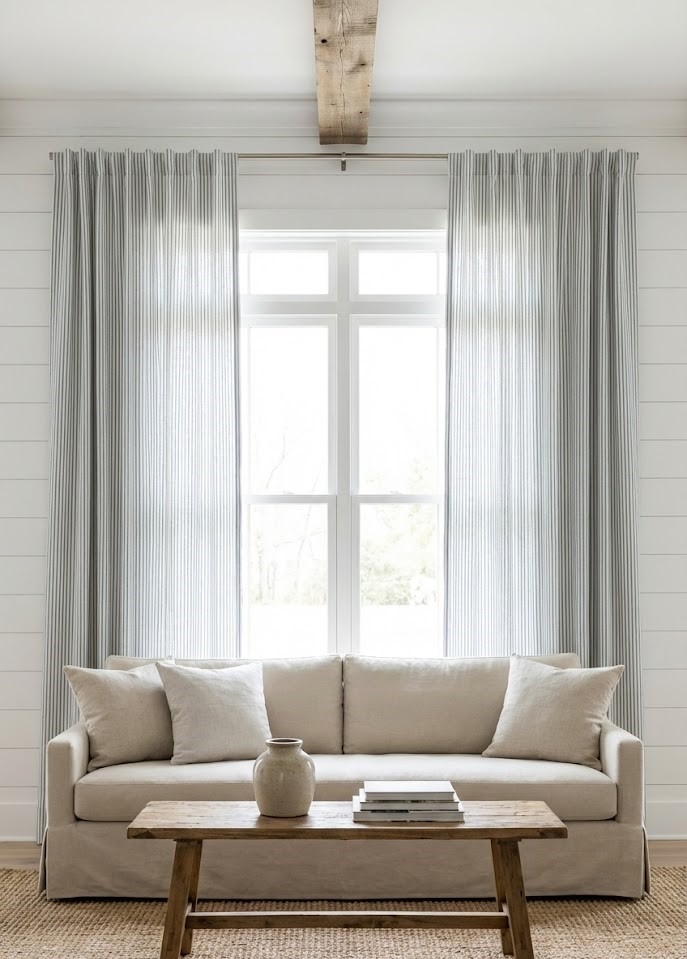
5. Subtle Textured Ticking Stripes
If the bold, wide lines of grain sack stripes feel too heavy or aggressive for your space, opt for the delicate "ticking" stripe. Ticking fabric was originally designed to cover mattresses (the tight weave prevented feathers from poking through). These are thin, repetitive lines often woven into cotton or linen blends.
Visual Trick: Vertical ticking stripes create a powerful optical illusion. They draw the eye upward, effectively making your ceilings appear higher than they actually are. If you have a small living room with low ceilings, this is your best option.
The Vibe: This is "Clean Farmhouse." It feels tailored, organized, and calming rather than chaotic. It provides a visual rhythm to the room without dominating the design scheme.
Pairing Advice: Ticking stripes are considered a "neutral pattern." This means you can easily mix them with floral throw pillows, a plaid blanket, or a Persian rug without the patterns clashing. It serves as a polite backdrop, allowing other elements in the room to shine.
11. Pastoral Toile Patterns
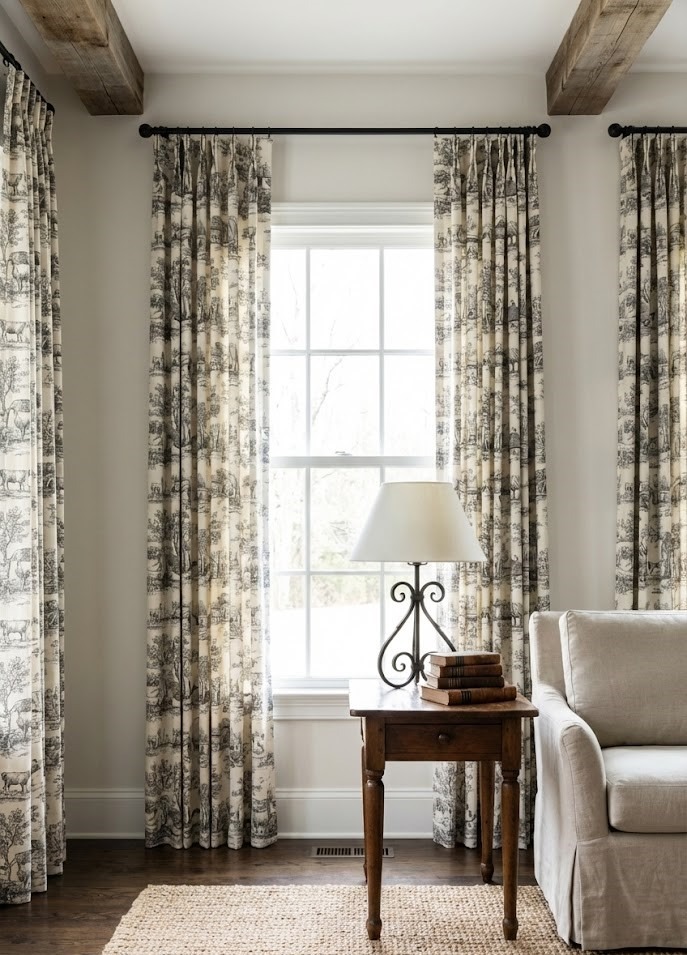
Toile de Jouy (usually just called "Toile") features complex, sketched scenes of pastoral life—shepherds, farm animals, windmills, and rolling landscapes. While traditionally very formal, a monochromatic toile fits perfectly into a sophisticated farmhouse living room.
The Story: These curtains literally tell a story. They turn your window treatments into a piece of art that demands closer inspection. They create an intellectual, curated vibe, suggesting an appreciation for antiques and history.
Placement Strategy: Because the pattern is intricate, these work best as stationary panels on the sides of large windows, rather than curtains you open and close constantly. They are meant to frame the view, not hide it.
Style Match: Toile pairs exceptionally well with wrought iron curtain rods, antique wooden furniture, and ticking stripe upholstery. Stick to classic colorways like Charcoal on Cream or Blue on White to keep it timeless.
12. Boho-Rustic Fringe
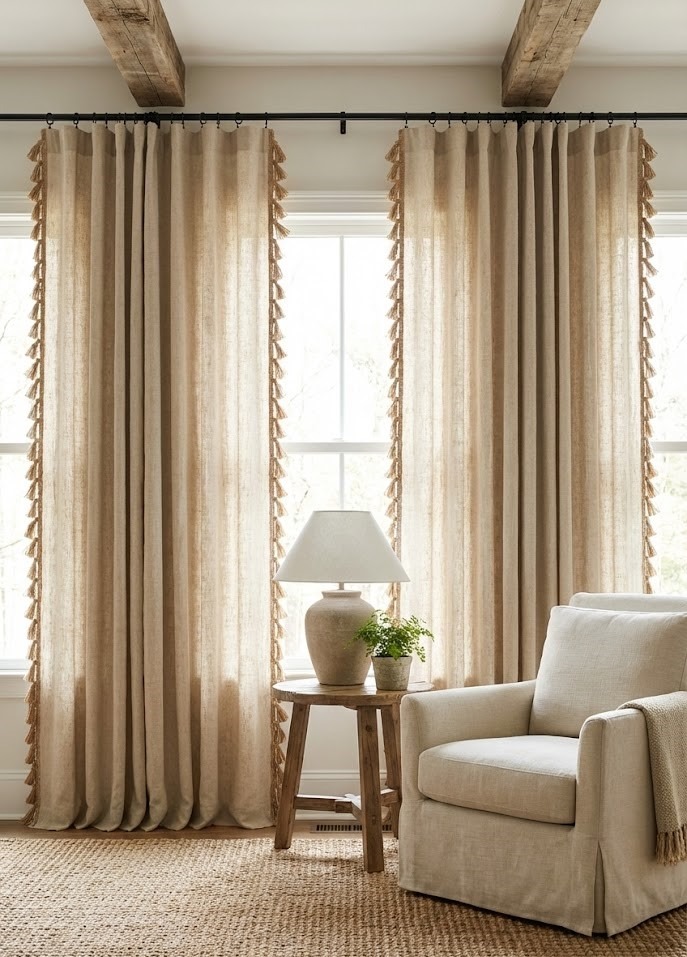
Details matter. A simple, budget-friendly canvas or linen curtain can be elevated instantly with a row of fringe, tassels, or pom-poms along the leading edge (the inside edge where the curtains meet). This introduces a "boho" element that feels collected and handmade.
The Look: Choose a macramé, jute, or cotton tassel trim in a natural color. Avoid shiny synthetic trims. The goal is texture, not bling. The trim adds weight to the edge of the curtain, helping it hang straighter.
Why It Works: It adds movement and tactile interest without introducing a printed pattern. It creates a bespoke, custom look that suggests you hired an interior designer. It’s playful without being childish.
DIY Potential: This is an incredibly easy weekend project. You can upgrade plain IKEA curtains by attaching a trim using fabric glue (no-sew) or a simple straight stitch on a sewing machine. It’s a low-risk, high-reward design hack.
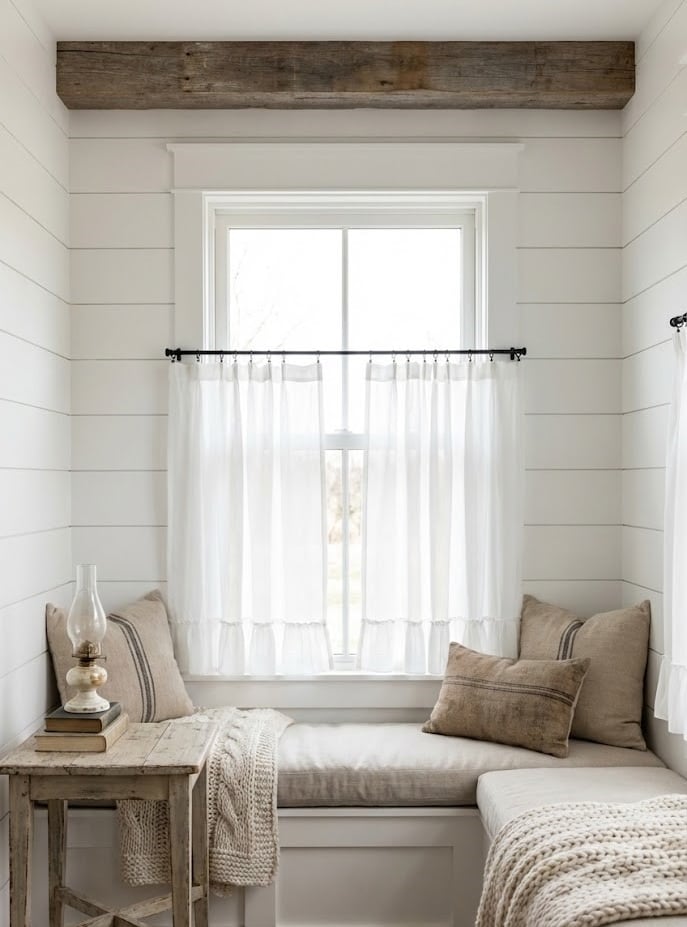
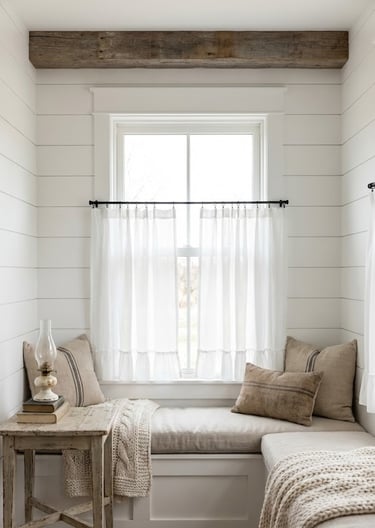
13. The Tiered Cottage Look
If you have smaller windows in your living room, or perhaps a window seat or breakfast nook, tiered curtains (often called "café style") are a charming option. They cover only the bottom half of the window, offering privacy from passersby while leaving the top open to flood the room with natural light.
Caution: Keep the ruffles minimal. Too many frills can push the look from "rustic cottage" to "dated country." Clean, straight lines or simple pleats are best for a modern farmhouse vibe.
Fabric Choice: Stick to very light, airy cottons (like voile, muslin, or eyelet lace). Since these curtains are small, a heavy fabric will look stiff and awkward. You want them to flutter in the breeze when the window is open.
Best For: Creating an intimate, cozy nook vibe. This is excellent for homes close to the street or sidewalk where you need privacy but don't want to live in the dark.
The Final Verdict
Your curtains are the eyebrows of your living room—they frame the view, control the light, and set the facial expression of the house. Whether you choose the rugged durability of drop cloths, the moody luxury of matte velvet, or the breezy simplicity of washed linen, the goal remains the same: texture over perfection.
Start by assessing your practical needs (Do you need blackout capabilities? Do you need privacy from neighbors?) and your color palette. Pick a style that creates a sense of warmth, and don't be afraid to mix high and low elements—like pairing expensive linen with a DIY iron pipe rod.
Your Next Step: Go to your living room right now and measure your windows. Tip: Measure from the floor almost to the ceiling (not just the window frame!) to see what length you truly need. Hanging curtains higher makes the room feel bigger. Once those windows are dressed properly, you’ll be amazed at how the "naked" feeling vanishes, replaced by the cozy, rustic haven you’ve been aiming for all along.