Stop Ignoring the Fifth Wall: 15 Jaw-Dropping Accent Ceiling Ideas to Transform Your Home
We spend hours picking rug textures and wall colors, but often leave the ceiling blank. I’m changing that with 15 incredible accent ceiling ideas, including the rustic charm of exposed beams, the drama of 'color drenching,' and how to use shiplap to make a room feel larger.
LIVING ROOM
When planning a home renovation or a quick seasonal refresh, we tend to obsess over the obvious eye-level elements: the wall color (Greige or Swiss Coffee?), the flooring material (Hardwood or LVP?), and the furniture layout. We spend hours curating gallery walls and selecting rug textures. Yet, there is a massive surface area directly above our heads—often accounting for one-sixth of the room's total surface—that is criminally overlooked.
Interior designers refer to the ceiling as the "fifth wall." Leaving it a standard, builder-grade flat white is more than just a safe choice; it is a missed opportunity to elevate your home’s value and aesthetic. Treating your ceiling as a canvas can instantly alter the perceived proportions of a room, correcting architectural flaws like low height or awkward angles. It adds surprising architectural depth and injects a level of personality that standard wall decor simply cannot achieve.
Whether you want to create a cozy, enclosed feeling in a cavernous living room or a grand, airy atmosphere in a small study, there is a design solution waiting for you. Here are 15 distinct and inspiring accent ceiling ideas, ranked from popular classics to bold artistic statements, complete with the practical know-how to get the look.
1. The Rustic Charm of Exposed Wooden Beams
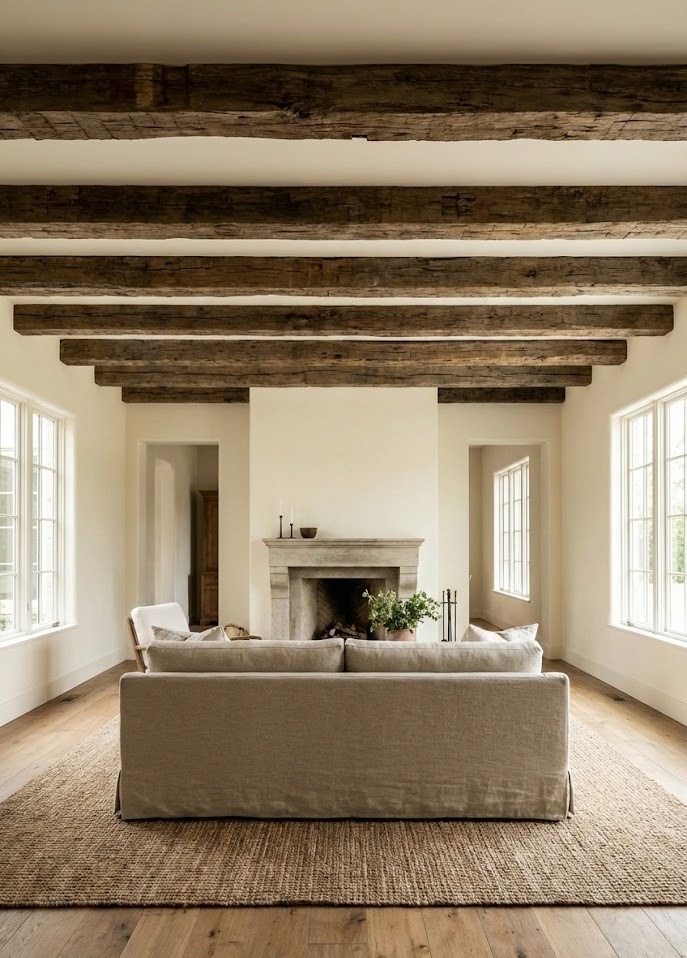
There is a reason exposed beams remain one of the most coveted features in interior design. Whether they are authentic structural timber reclaimed from an 1800s barn or lightweight faux-wood installations, beams instantly ground a room and provide a sense of history.
Why it works: The wood tones introduce organic warmth and heavy texture to otherwise sterile drywall. This look is arguably the most versatile on the list, fitting perfectly into Modern Farmhouse kitchens, Scandinavian living rooms, and Industrial lofts alike.
Real-World Application: For a rich, traditional look, opt for a "Dark Walnut" or "Espresso" stain on rough-hewn pine. For a breezy, coastal California vibe, choose White Oak or leave the wood raw and sealed with a matte clear coat.
Pros: Increases perceived property value; hides ceiling imperfections; offers a convenient place to route electrical wiring for pendant lights.
Cons: Solid wood beams are extremely heavy and require structural reinforcement; dark beams can make low ceilings feel lower.
Styling Tip:For a modern optical illusion, run beams horizontally across the short width of the room. This tricks the eye and makes narrow rooms feel significantly wider. If you are on a budget, look for "box beams"—hollow U-shaped planks that look solid but are lightweight and easy to install over existing drywall anchors.
Categories
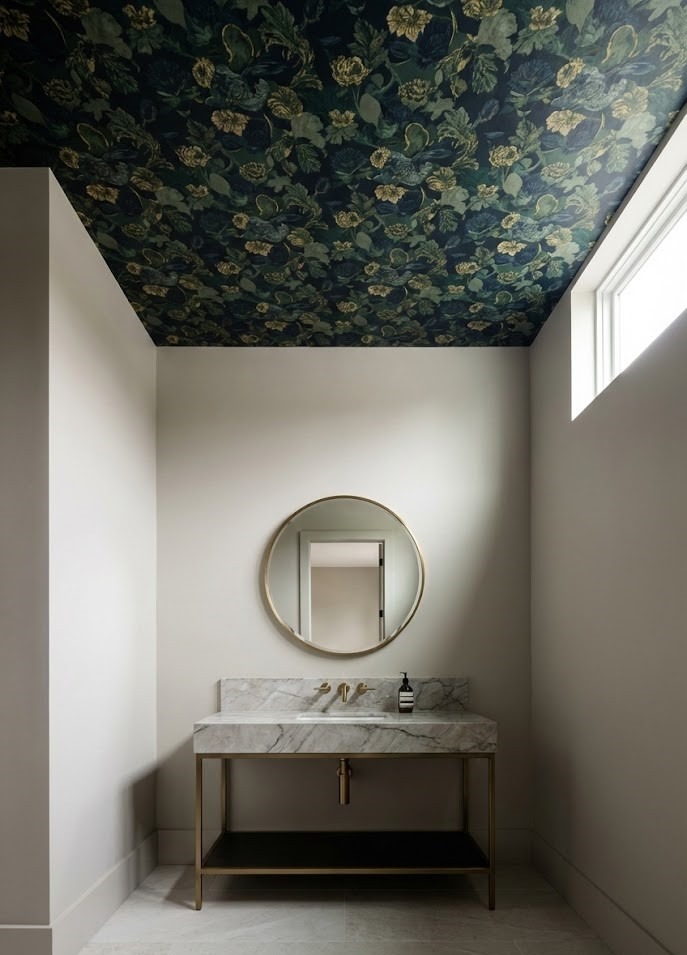
2. Bold Statement Wallpaper
Who says wallpaper is only for vertical surfaces? Wallpapering the ceiling is a brilliant way to draw the eye upward without shrinking the room visually. It is often referred to as the "jewelry box" effect.
Why it works: It creates an element of surprise. In a bedroom or a powder room, a patterned ceiling adds a layer of boutique-hotel luxury. From moody, dark florals to sharp Art Deco geometric lines, the options are limitless.
Real-World Application: In a nursery, a whimsical cloud or star pattern works wonders. In a dining room, a metallic trellis pattern reflects candlelight, creating a romantic ambiance.
Pros: Peel-and-stick options make this a renter-friendly upgrade; covers minor hairline cracks in plaster; creates a focal point without taking up floor space.
Cons: Installation is physically demanding (working against gravity); requires a smooth surface (texture must be skim-coated first).
Styling Tip: If you use a busy pattern on the ceiling, keep the walls neutral (think soft creams or warm grays) to avoid visual clutter. To ensure longevity, always use a wallpaper primer on the ceiling before application to ensure the adhesive bonds properly against gravity.
3. Cozy Shiplap Paneling
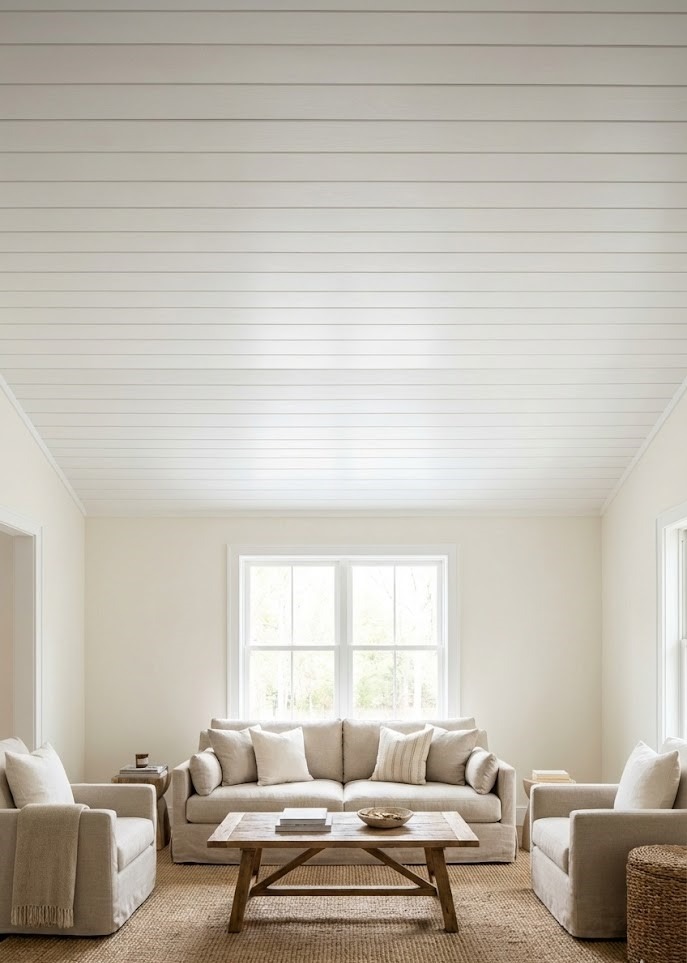
If you love the Coastal, Cottage, or Modern Farmhouse aesthetic, shiplap is the ultimate texture tool. Installing horizontal wooden planks painted in crisp white or soft cream creates a clean, lined look that feels both historic and fresh.
Why it works: The lines guide the eye, often making a room feel longer. Unlike heavy beams, shiplap offers a subtle texture (shadow lines) that doesn't overwhelm low ceilings (standard 8-foot heights).
Real-World Application: Use 6-inch MDF planks with a "nickel gap" spacing for a modern look. Painted in "Chantilly Lace" (Benjamin Moore), it reflects light beautifully.
Pros: Durable and hard-wearing; easy to clean compared to textured drywall; covers ugly popcorn ceilings without the mess of scraping.
Cons: Can feel dated if not styled correctly; installation is labor-intensive involving nail guns and significant caulking.
Styling Tip: Install the planks perpendicular to your windows. This draws the natural light further into the room, maximizing brightness. For a moodier library feel, skip the white and paint the shiplap a deep charcoal or forest green.
4. Sophisticated Coffered Architecture
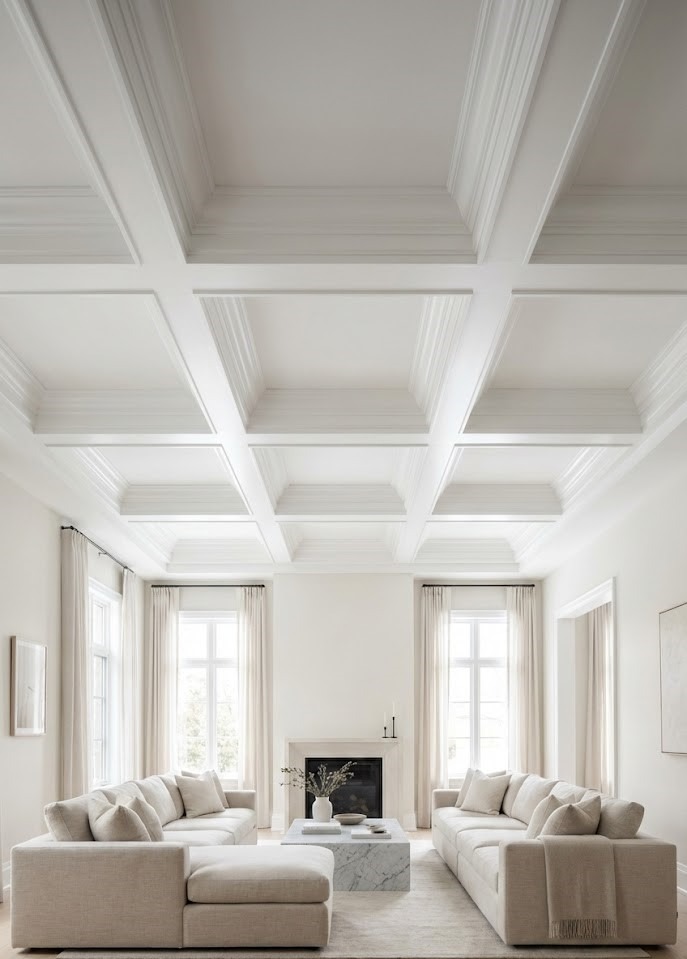
Coffered ceilings feature a grid of recessed panels framed by beams. Historically found in libraries and grand estates, this style brings immediate prestige and architectural weight to a home.
Why it works: It adds physical depth and sound-dampening qualities by breaking up sound waves. While traditionally heavy and dark, modern coffered ceilings painted in all-white reflect light beautifully while retaining that 3D visual interest.
Real-World Application: A traditional "9-box" grid layout works well in square living rooms. For a transitional look, keep the beams white but paint the inner recessed flat panel a soft gray (like "Repose Gray") to highlight the depth.
Pros: exceptional sound absorption; adds high-end custom home value; defines zones in open-concept floor plans.
Cons: Expensive to install (requires skilled carpentry); significantly reduces ceiling height (not recommended for ceilings under 9 feet).
Styling Tip: This style is best suited for rooms with average to high ceilings (8.5 feet and up) to avoid feeling claustrophobic. Ensure your ceiling fan or chandelier is centered exactly within the central coffer for symmetry.
9. Modern Geometric Paneling
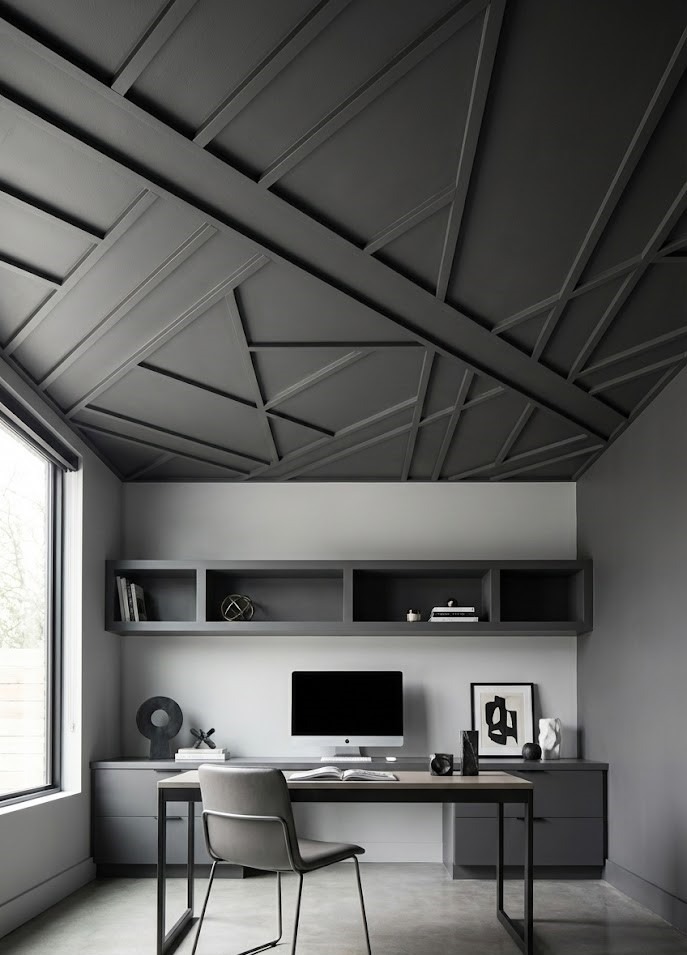
Move over, standard crown molding. Geometric paneling uses thin strips of wood (often lattice strips or MDF rip-cuts) to create abstract shapes, honeycombs, or asymmetry across the ceiling.
Why it works: It is contemporary art for your home structure. This look is particularly effective in home offices or media rooms where you want to stimulate creativity and energy.
Real-World Application: Create a random intersecting line pattern for a "shattered glass" effect. Paint the entire assembly in a monochromatic, dark satin finish for a moody, high-design look.
Pros: completely customizable; materials are cheap (basic pine or MDF); hides wavy drywall.
Cons: Very difficult to paint (lots of angles to cut in with a brush); difficult to patch if you decide to remove it later.
Styling Tip: Paint the paneling and the ceiling the exact same color. This ensures the design is defined by shadow and depth rather than jarring color contrast, keeping the look sophisticated rather than chaotic.
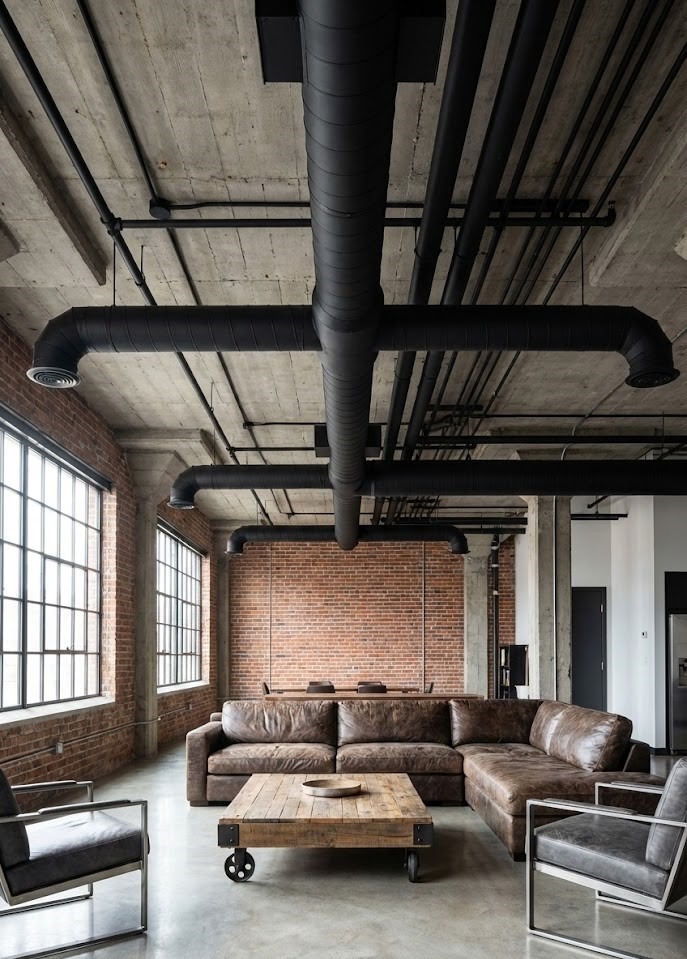
10. Industrial Chic Exposed Ductwork
Instead of boxing in your HVAC systems with bulky drywall soffits, embrace the "unfinished" look. Exposed ductwork, pipes, and electrical conduit are hallmarks of the Industrial aesthetic.
Why it works: It adds a raw, edgy grit to a space. It suggests an urban loft environment and pairs exceptionally well with brick walls, concrete floors, and metal furniture.
Real-World Application: Spiral galvanized ductwork is the standard here. It looks best in spaces with high ceilings where the mechanicals won't interfere with headroom.
Pros: Easier access for repairs; adds height by removing drop ceilings/soffits; distinctive aesthetic.
Cons: No sound insulation (you will hear the air rushing and mechanical noises); requires keeping the ducts very clean (dust magnets).
Styling Tip: Paint the ducts matte black for a sleek, modern look that makes the ceiling recede, or keep them galvanized silver to reflect light. If painting, be sure to use "Dry Fall" paint, which is specifically designed for spray-painting industrial ceilings.
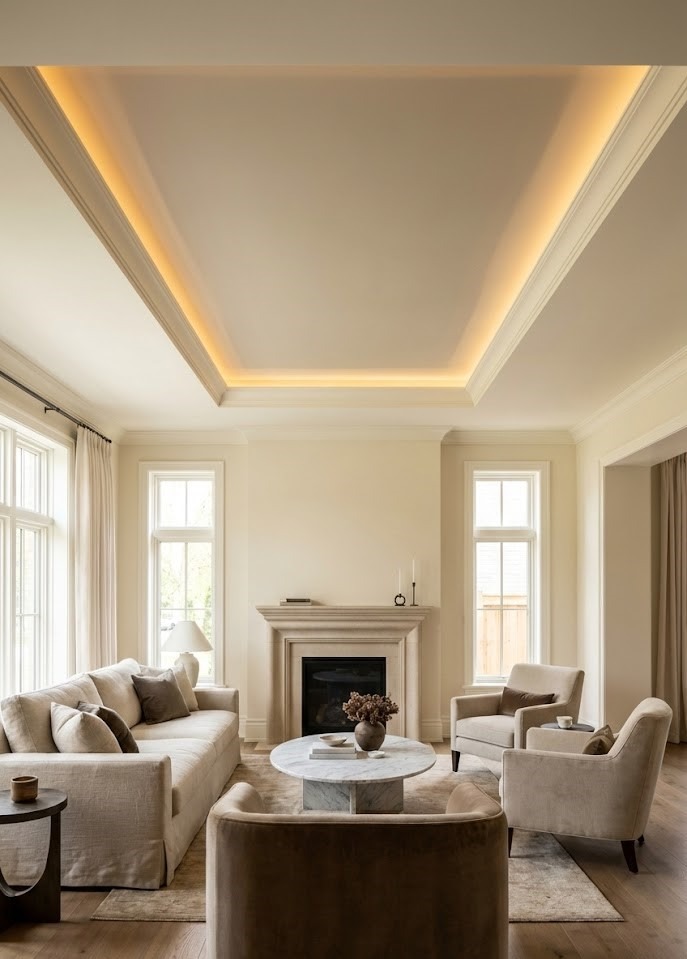
6. Layered Elegance with Tray Ceilings
A tray ceiling features a recessed central section that is higher than the perimeter, creating an inverted "tray" look. This is a staple in master suites and formal dining rooms, popularized in the early 2000s but seeing a modern resurgence.
Why it works: It breaks up a large, flat expanse of drywall and provides a perfect hiding spot for ambient lighting. It adds height to the center of the room where it matters most.
Real-World Application: Avoid the multi-step "wedding cake" look. Stick to a single, clean step-up. Paint the vertical strip of the tray a contrasting color to accentuate the height difference.
Pros: Adds perceived height; allows for hidden, indirect lighting; defines the sleeping area in a bedroom.
Cons: Can collect dust in the crevices; can look dated if the molding is too ornate or heavy.
Styling Tip: Install hidden LED strip lighting (tape lights) inside the cove of the tray facing upward. This creates a soft, hotel-like glow that bounces off the ceiling, eliminating the need for harsh overhead bulbs—perfect for winding down in the evening.
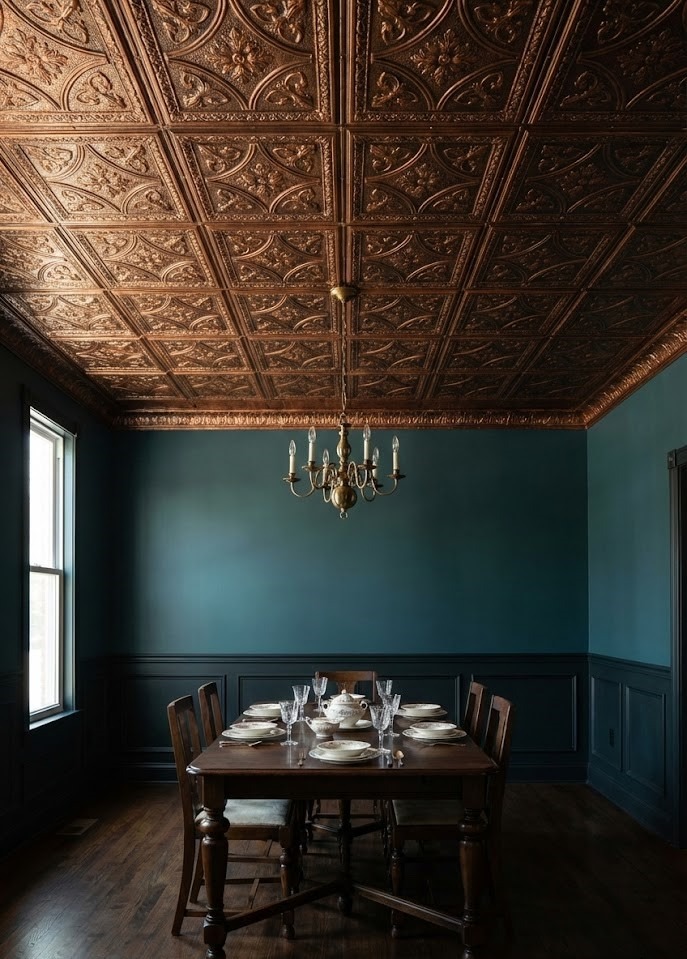
7. Vintage Glamour Using Tin Tiles
Transport your kitchen or dining area back to the Victorian era with pressed tin tiles. While originally made of steel dipped in tin to prevent rust, modern versions are available in lightweight aluminum or even paintable PVC.
Why it works: The intricate patterns and metallic finishes bounce light around the room, making small spaces feel brighter and more dynamic. It adds a nostalgic, speakeasy vibe that pairs beautifully with vintage hardware.
Real-World Application: Use a "Nail-up" installation for authentic metal tiles over a wood substrate, or "Drop-in" tiles if you have a suspended ceiling grid. Copper finishes look incredible in kitchens with dark cabinetry.
Pros: Fire-resistant (if metal); easy to clean grease and smoke (great for kitchens); hides uneven drywall surfaces perfectly.
Cons: Metal tiles can be echoey/noisy; cutting tiles around light fixtures requires tin snips and protective gloves.
Styling Tip: Use a copper or antique brass finish for warmth, or paint the tiles matte white for a subtle, textured look that resembles ornate plasterwork. If using metal, ensure your under-cabinet lighting is warm (2700K) to catch the glint of the metal.
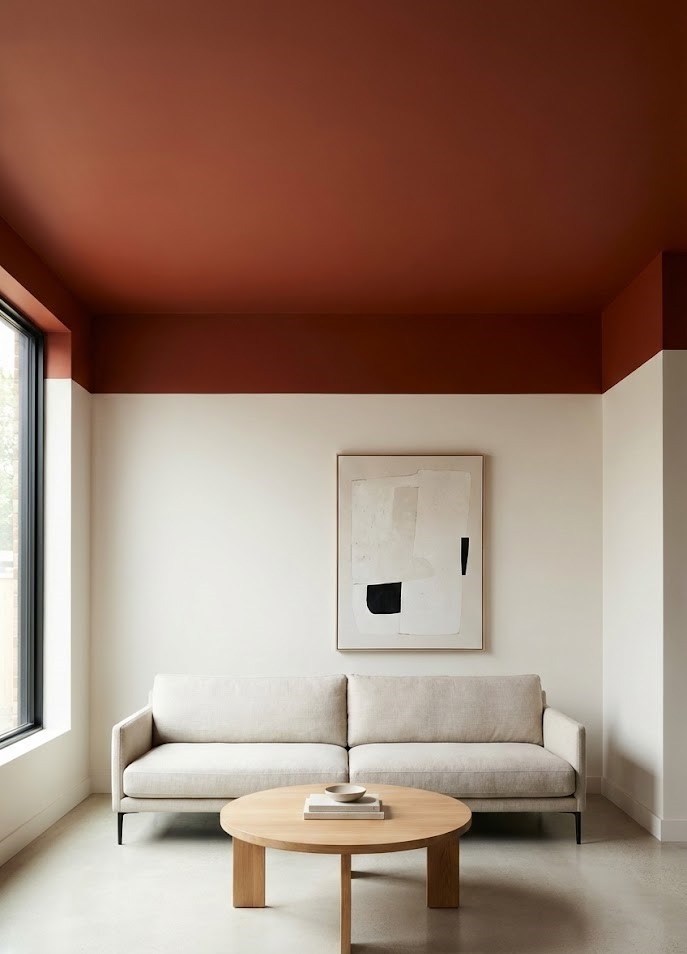
8. Drenched Color Blocking
Paint is the most affordable way to transform a ceiling, but the "Color Drenching" or "Color Block" trend takes it a step further. This involves painting the ceiling a bold, contrasting color—like navy, emerald, or terracotta—while leaving the walls neutral, or vice versa.
Why it works: A dark ceiling can actually make a room feel infinite, like the night sky, or incredibly cozy and intimate. It is a high-impact, low-risk design choice that costs only the price of a gallon of paint.
Real-World Application: "Hale Navy" (Benjamin Moore) or "Iron Ore" (Sherwin Williams) are popular choices for media rooms or dens. For a nursery, a soft "Palladian Blue" ceiling brings the sky indoors.
Pros: Extremely cost-effective; DIY-friendly; easily reversible if you sell the home.
Cons: Dark colors can absorb light, requiring you to add more lamps; shows roller marks more easily than flat white.
Styling Tip: Bring the ceiling color down the wall about 12 inches to create a "canopy" effect. This tricks the eye into thinking the ceiling is higher than it is by blurring the boundary where the wall meets the ceiling.
5. Dramatically Vaulted Architecture
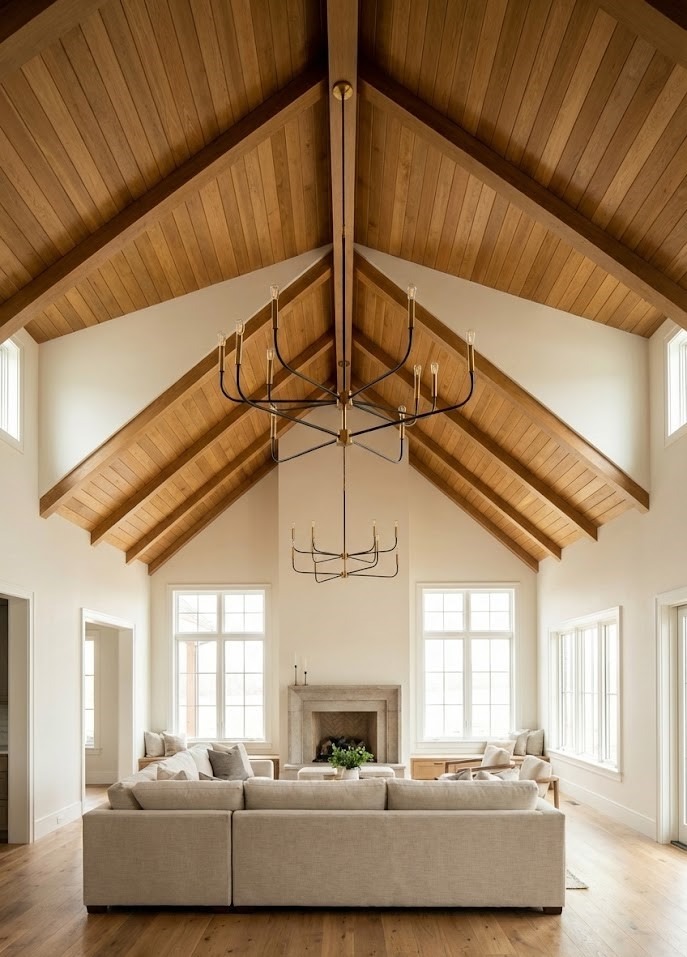
If you are lucky enough to have cathedral or vaulted ceilings, you need to highlight them rather than hide them. A vaulted accent strategy involves using contrasting colors or materials to emphasize the slope and height.
Why it works: It celebrates the volume of the space. By cladding the slope in wood or painting it a shade darker than the walls, you turn the architecture itself into the focal point.
Real-World Application: In a master suite, cladding a vaulted ceiling in Cedar or Tongue-and-Groove Pine creates a ski-lodge aesthetic. Alternatively, painting the vault a soft sky blue can make the roof feel like it has vanished.
Pros: Makes the room feel massive and airy; increases natural light distribution; allows for oversized lighting fixtures.
Cons: Increases heating and cooling costs (heat rises); difficult to paint or clean (requires scaffolding).
Styling Tip: Hang a large, statement chandelier that drops down into the center of the vault. This "bridges the gap" between the soaring ceiling and the living space, ensuring the furniture doesn't feel lost in the cavernous volume.
15. Bespoke Artistic Murals
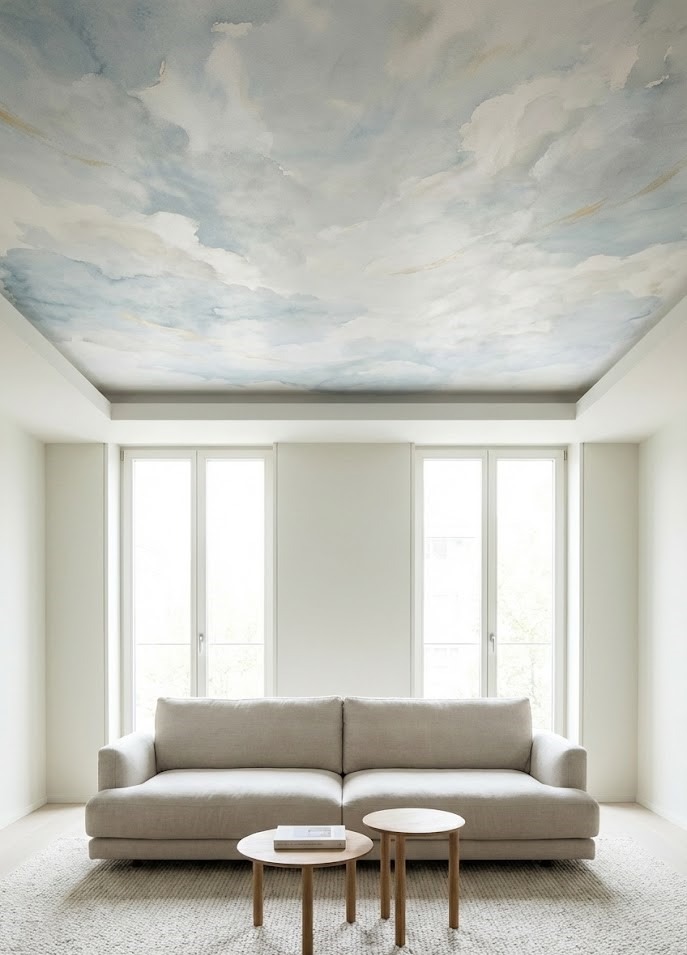
The ultimate statement is a hand-painted mural. Whether it is a Renaissance-style cloudy sky, a floral canopy, or an abstract wash of watercolors, a mural turns your ceiling into a literal work of art.
Why it works: It tells a story. A mural makes the room feel bespoke and one-of-a-kind. It draws the gaze upward and encourages contemplation—perfect for spaces where you lie down, like bedrooms or bath nooks.
Real-World Application: If you aren't an artist, custom vinyl decals or hiring a local art student can achieve this look. Abstract watercolor "clouds" are forgiving and easier to DIY than realistic scenes.
Pros: Unmatched personalization; creates an emotional connection to the space; serves as the room's primary art piece.
Cons: Expensive if hiring a professional; very specific taste (might hurt resale value if the buyer doesn't like the style).
Styling Tip: Keep the furniture low-profile so it doesn't obstruct the view of the masterpiece above. If painting a sky mural, extend the clouds slightly down the top of the walls to create an immersive, domed effect.
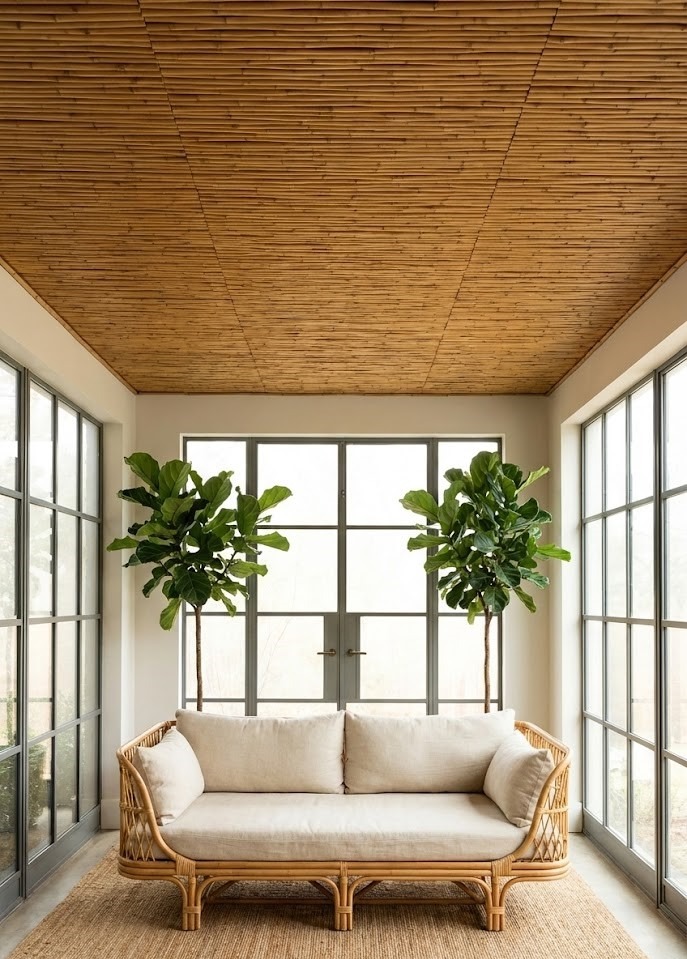
11. Organic Bamboo Textures
For a touch of Zen, Boho, or tropical flair, bamboo reeds, woven rattan mats, or cane webbing can be installed flush against the ceiling.
Why it works: This introduces an organic, eco-friendly element that visually softens the room. It is perfect for sunrooms, bathrooms, or spaces where you want to promote relaxation and a connection to nature (Biophilic design).
Real-World Application: Bamboo fencing rolls (available at garden centers) can be unrolled and stapled to the ceiling between beams for a budget-friendly texture hack.
Pros: Eco-friendly and sustainable; excellent at hiding ugly popcorn textures; adds instant warmth.
Cons: Flammability can be a concern (check local codes); humidity in bathrooms can cause natural fibers to mold if not sealed properly.
Styling Tip: Pair this ceiling with plenty of indoor hanging plants (like Pothos or Ferns) and rattan furniture. Finish the edges with bamboo quarter-round molding to hide the staples and create a polished frame.
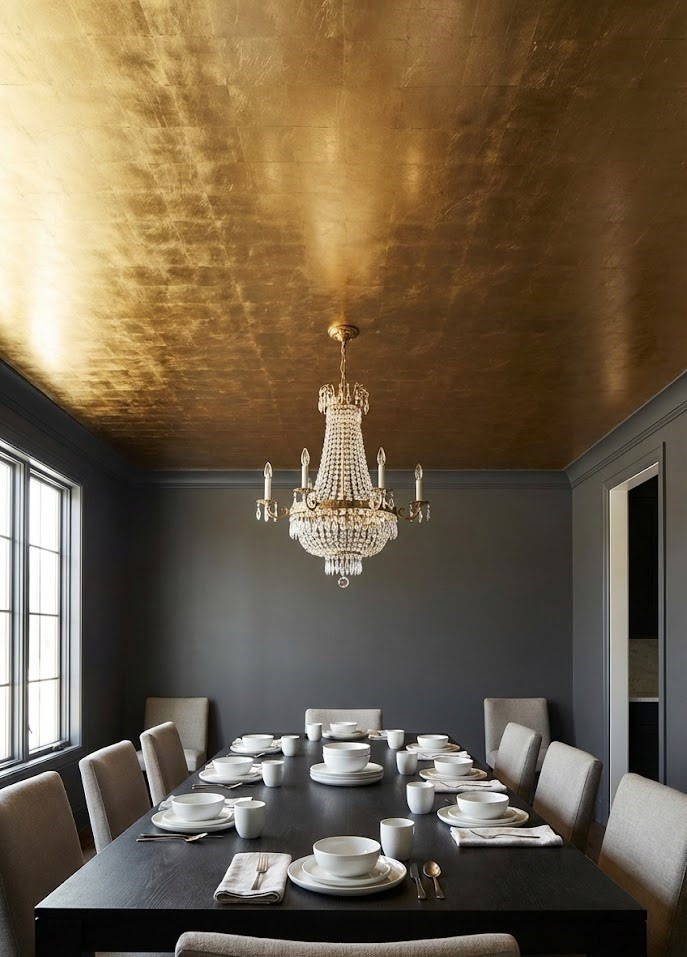
12. Shimmering Metallic Finishes
If you want pure opulence, consider a metallic ceiling. This can be achieved through gold leaf application (for the very patient), metallic specialty paints, or polished Venetian plaster.
Why it works: A gold, silver, or bronze ceiling acts as a giant reflector. In a dining room lit by a chandelier or candlelight, a metallic ceiling casts a warm, shimmering glow over the table that is unmatched by flat paint.
Real-World Application: Champagne Gold or soft Pewter are more livable than bright yellow gold. This works exceptionally well in small powder rooms or formal dining areas.
Pros: Maximizes light; creates a sense of luxury; distinct "Wow" factor.
Cons: Highlights every single imperfection in the drywall (requires a "Level 5" smooth wall finish prep); can be difficult to touch up.
Styling Tip: Keep the rest of the room's decor relatively matte (velvet upholstery, matte wall paint) to let the ceiling be the star. If using metallic paint, apply it in a "cross-hatch" pattern with a brush rather than a roller to create a textured, suede-like effect.
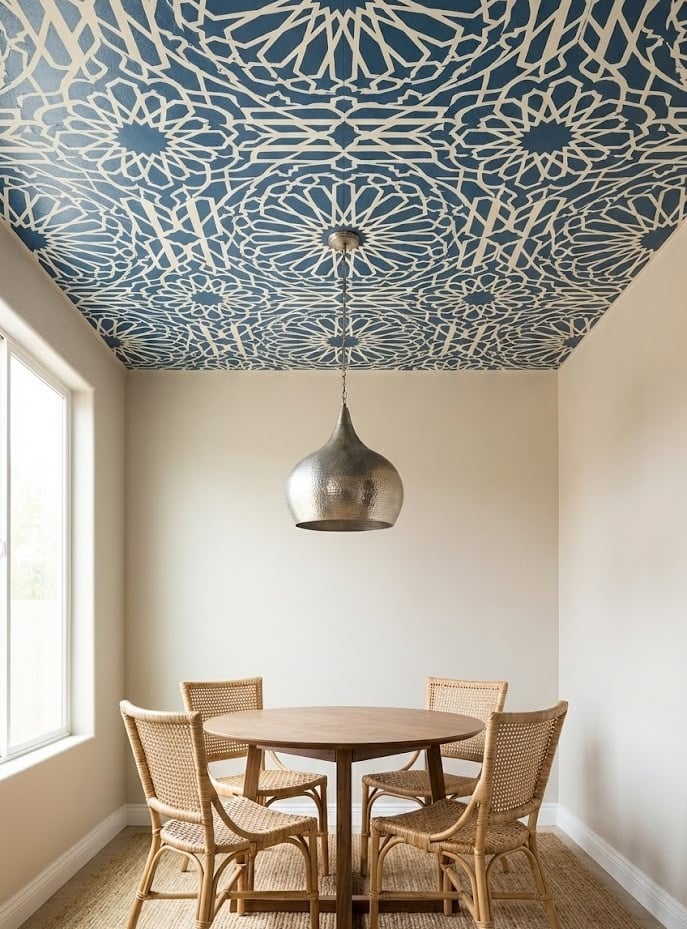
13. Intricate Hand-Stenciled Designs
If wallpaper is out of the budget, stencils are a fantastic alternative. Using a large-scale stencil pattern and a contrasting paint color, you can create the look of encaustic tiles or intricate Moroccan designs.
Why it works: It allows for total customization of color and scale. You can create a "medallion" effect around a light fixture or cover the entire surface for a fraction of the cost of wallpaper.
Real-World Application: A subtle "Tone-on-Tone" stencil (e.g., flat white base with gloss white stencil) adds elegance without visual noise.
Pros: extremely low cost (reusable stencil + paint); customizable colors; easier to correct mistakes than wallpaper.
Cons: Physically exhausting (overhead work); potential for paint bleed if the stencil isn't secured tightly.
Styling Tip: Use a matte paint for the base and a semi-gloss or metallic paint for the stencil. This difference in sheen creates a dynamic look that changes depending on where you stand in the room. Always use a dry brush (very little paint) to prevent bleeding under the stencil edges.
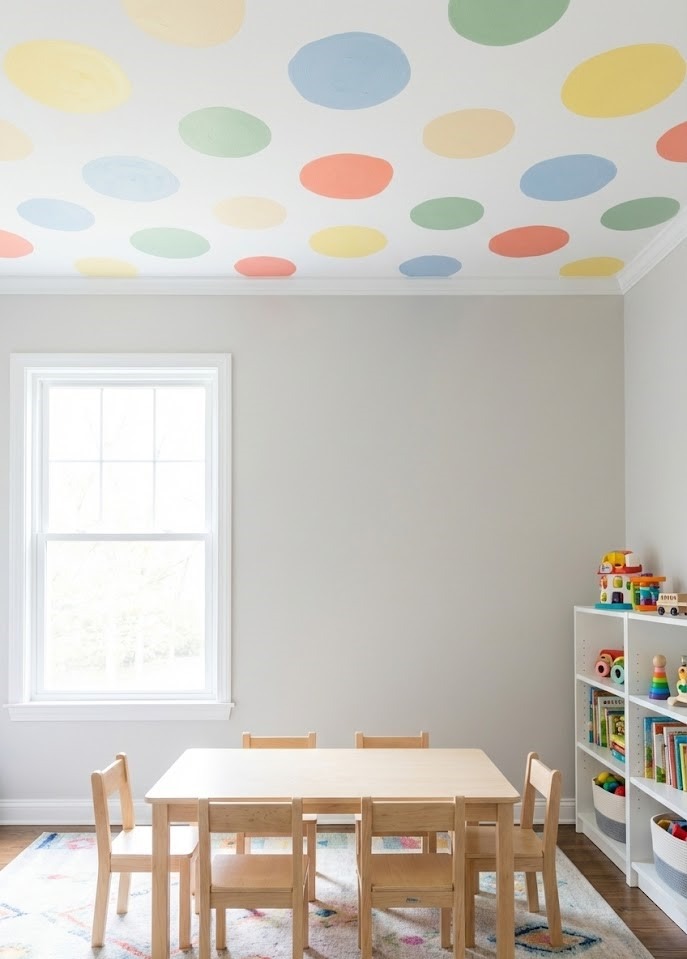
14. Playful Hand-Painted Patterns
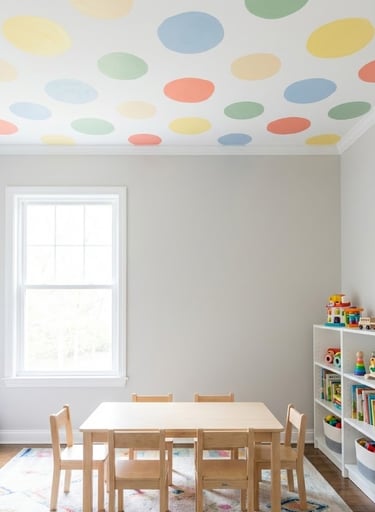
Different from a detailed mural, this involves repetitive, simple motifs like stripes, polka dots, chevrons, or scallops painted directly onto the ceiling.
Why it works: This adds high energy and whimsy. It is particularly effective in children's playrooms, nurseries, or creative studios where traditional rules of design don't apply.
Real-World Application: Cabana stripes (thick white and yellow stripes) in a sunroom evoke a resort feel. Hand-painted polka dots in a playroom feel fun and organic.
Pros: Just requires tape and paint; makes a space feel custom and playful; easy to paint over later.
Cons: Requires precise measuring and taping for geometric patterns; can be visually overwhelming in small spaces.
Styling Tip: Wide stripes on a ceiling can visually manipulate the room's dimensions. Run stripes parallel to the long wall to make a short hallway feel longer. Use "Frog Tape" (green tape) rather than standard blue tape to ensure crisp, sharp lines on textured surfaces.
Conclusion: Look Up and Be Bold
Accent ceilings are more than just a fleeting trend; they are a fundamental shift in how we perceive interior space. By treating the fifth wall with the same respect and budget as the flooring and walls, you elevate your home from "builder-grade" to "custom-designed."
From the warmth of rustic beams to the drama of high-gloss paint, there is a solution for every budget, skill level, and architectural style. The ceiling is the one surface in your room that isn't covered by furniture or rugs—it is a blank canvas begging for attention.
Ready to start? Walk into the room you find most "boring" in your house right now. Look up. Would a coat of dark paint or a simple faux beam change the entire feeling of the space? Your next big design breakthrough is waiting right above you.